Gear

Space gear I recommend

Smart telescopes and rocket models.

Hi, I'm Chetan

I'm Chetan Kale, and I run The Space Road from Pune, India. The channel covers space-launch news: Elon's Starship tests, ISRO missions, NASA's Artemis programme and the companies trying to make getting to orbit routine. I watch a lot of launches, often at odd hours, and I get the same two questions in the comments again and again: "What telescope should I buy?" and "Where can I get a good rocket model?"

This page is my answer to both. Instead of repeating myself in every comment, I keep one list here and update it when prices, products or my opinions change.

How I pick what goes on this page

  • Official numbers only. Prices and specs come from each brand's own store or a clearly named independent source. If I couldn't check something, I leave it out or say so.
  • A real reason for each pick. Every product has a short "why I picked it" note. If I can't explain who something is for, it doesn't go on the list.
  • Researched picks, not hands-on tests. I don't own any of these products. Each pick is based on official specs, independent reviews and the questions viewers ask me. In my view lines are my opinion, not a test result.
  • Short list, not a catalogue. I would rather show you seven good options than seventy average ones.
  • Prices change. Every price shows the date I checked it and the currency. Always check the final price at checkout.

Smart telescopes

A smart telescope is a small telescope, a camera and a computer in one box. You put it on a tripod, open an app on your phone, and pick a target. It finds that target by itself, tracks it as the sky turns, and stacks many short exposures into one clear image on your screen. You don't need to learn star charts or align a mount by hand, and it works surprisingly well from towns and cities where the naked-eye sky is washed out.

They are not magic. You will see galaxies and nebulae as photos building up on your phone, not as bright colourful views through an eyepiece. For many people, that's the point: it's the quickest way from "I'm curious" to "I took a picture of the Orion Nebula tonight".

How to choose a smart telescope

  1. Aperture (lens or mirror size). Bigger collects more light and shows more detail on small, faint targets. The range here goes from 30 mm (DWARF mini, Seestar S30 Pro) to 114 mm (Unistellar eQuinox 2 and eVscope 2).
  2. Field of view. A wide view fits big targets such as the Andromeda Galaxy, large nebulae or two planets close together. A narrow view gets closer to small galaxies. The Seestar S30 Pro is the widest on this page at about 4 degrees; the Unistellar models are the narrowest at about 0.75 degrees.
  3. Weight and size. If it's too heavy to carry outside on a work night, you won't use it. These range from 0.85 kg (DWARF mini) to 9 kg (eQuinox 2 and eVscope 2).
  4. Battery life. Long winter nights add up. The figures here run from about 4 hours to 11 hours.
  5. Tripod and eyepiece. Some include a tripod, some don't. Only the eVscope 2 on this page also has an eyepiece you can look through.
  6. Total cost. Budget for the telescope plus any tripod, filter or case you need, and for import duty if you are buying from outside the seller's country.

In my view, most first-time buyers should start with portability and price, not maximum aperture. The telescope that comes outside with you every clear night beats the bigger one that stays in its box.

Which one should you get?

If you...GetPrice (USD, checked 2 Nov 2026)
Want the cheapest real smart telescope, or a giftDWARF mini$419
Travel a lot and want a backpack-sized scope with city-sky filtersDWARF 3$549
Want a wide view for big nebulae and planet pairsSeestar S30 Pro$699
Want the all-rounder most beginners are happy withSeestar S50 Pro$999
Want a bigger Unistellar at the lowest Unistellar priceUnistellar Odyssey$2,079 (20% off to 1 Dec 2026)
Want 114 mm and the longest battery hereUnistellar eQuinox 2$2,319 (20% off to 1 Dec 2026)
Want to look through an eyepiece too, and budget isn't the questionUnistellar eVscope 2$3,999 (20% off to 1 Dec 2026)

Specs below are from Skies & Scopes' smart telescope comparison table (October 2026) and the brands' own pages.

Unistellar

Unistellar's Black Friday sale takes 20% off automatically until 1 Dec 2026. Refurbished units, spare parts and ENVISION are excluded.

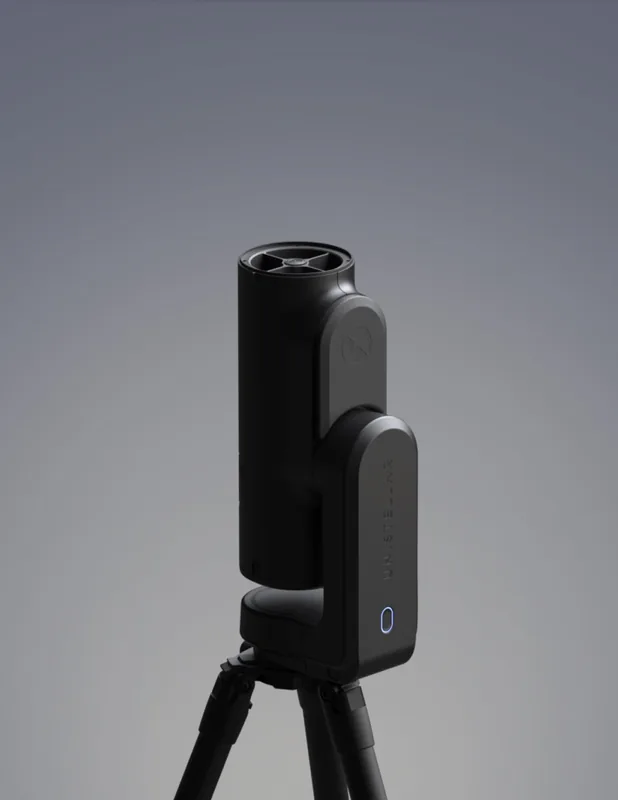
Unistellar Odyssey smart telescope on its tripod
Image: Unistellar

Unistellar

Unistellar Odyssey

$2,079 USD, as of 2 Nov 2026

List $2,599, 20% off until 1 Dec 2026. Checked on shop.unistellar.com.

Why An 85 mm smart telescope with a 5-hour battery and a tripod included, for people who want galaxies and nebulae from the backyard with very little setup.

Why I picked it It's the lowest-priced Unistellar on this page, and the 20% Black Friday discount brings it to $2,079 until 1 Dec 2026. In my view it suits someone who wants a "set it down and press start" experience more than a gadget to tinker with. It weighs 6.5 kg, so it's for the garden or terrace, not the hiking trail.

Check price at Unistellar (affiliate link, opens in a new tab)
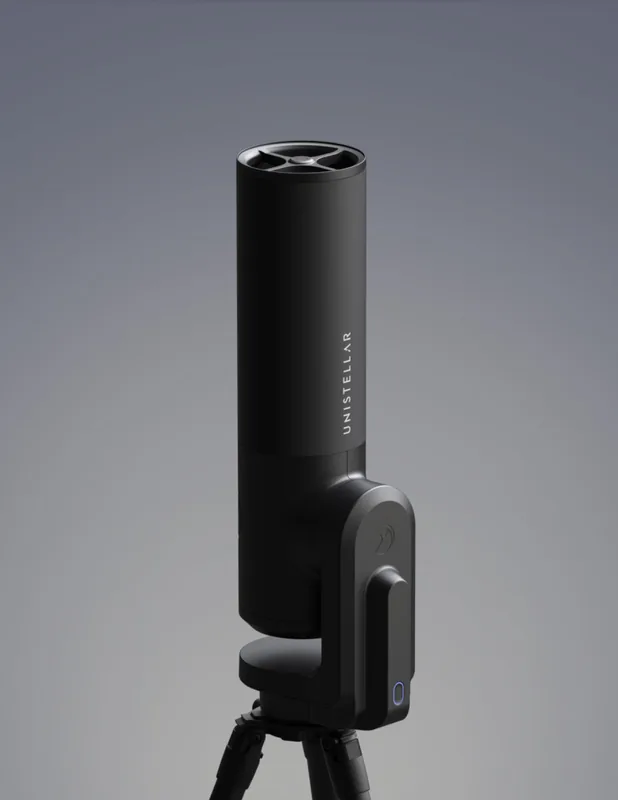
Unistellar eQuinox 2 smart telescope on its tripod
Image: Unistellar

Unistellar

Unistellar eQuinox 2

$2,319 USD, as of 2 Nov 2026

List $2,899, 20% off until 1 Dec 2026.

Why A 114 mm mirror, the same size as the eVscope 2, with an 11-hour battery, the longest on this page.

Why I picked it For $240 more than the Odyssey you get a bigger mirror and more than double the battery. It has no eyepiece, so everything is viewed on your phone or tablet. In my view this is the sweet spot in the Unistellar range for people who image a lot.

Check price at Unistellar (affiliate link, opens in a new tab)
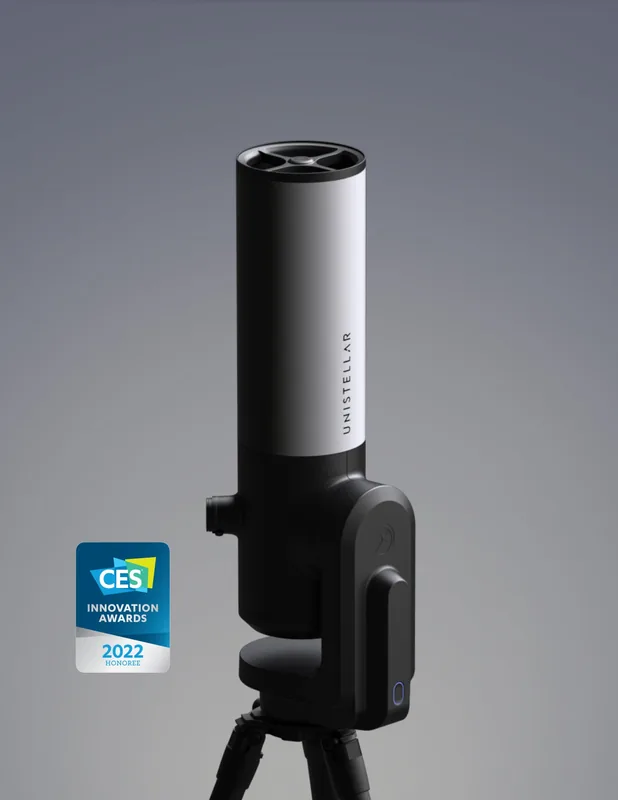
Unistellar eVscope 2 smart telescope with eyepiece, on its tripod
Image: Unistellar

Unistellar

Unistellar eVscope 2

$3,999 USD, as of 2 Nov 2026

List $4,999, 20% off until 1 Dec 2026.

Why The 114 mm mirror plus a real eyepiece, so you can look through the telescope as well as at your phone.

Why I picked it It's the only telescope on this page with an eyepiece, which matters if you are sharing it with family or a class and people want to put their eye to it. It weighs 9 kg and has a 9-hour battery. In my view it's only worth the extra over the eQuinox 2 if that eyepiece really matters to you.

Check price at Unistellar (affiliate link, opens in a new tab)
DWARFLAB

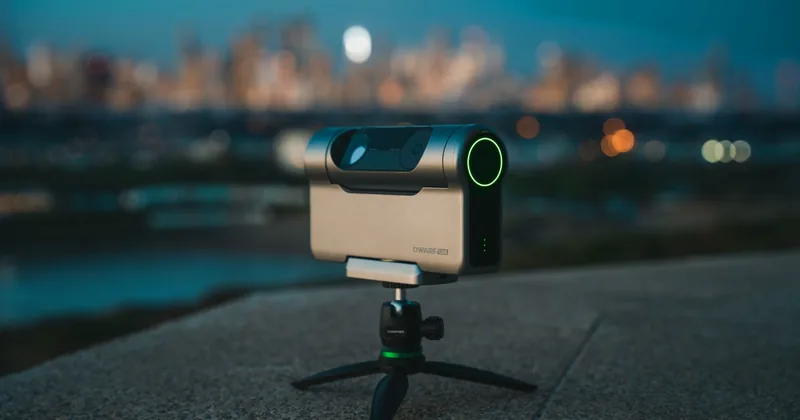
DWARF 3 smart telescope on a small tripod at dusk, with a city skyline behind
Image: DWARFLAB

DWARFLAB

DWARF 3

$549 USD, as of 2 Nov 2026

Checked on dwarflab.com (US store). No Black Friday price was listed yet.

Why A 35 mm smart telescope weighing 1.3 kg, with switchable built-in filters (visible, astro and a dual-band filter for nebulae under light-polluted skies).

Why I picked it It's small enough for a backpack, and the built-in dual-band filter helps from cities and towns. Its view is about 2.9 degrees wide, enough to fit two planets close together in one frame. It has a 5.5-hour battery and no tripod included. In my view it's the best value if portability matters most.

Check price at DWARFLAB (affiliate link, opens in a new tab)

DWARF mini smart telescope on a tripod at dusk
Image: DWARFLAB

DWARFLAB

DWARF mini

$419 USD, as of 2 Nov 2026

Checked on dwarflab.com (US store).

Why The lowest-priced smart telescope on this page: 30 mm, 0.85 kg, a 4-hour battery.

Why I picked it If you want to try smart-telescope astronomy without spending a lot, or you're buying a gift, this is the entry ticket. It suits the Moon, star fields and bright nebulae. DWARFLAB sells a magnetic ND filter for imaging the Sun. Never point any telescope at the Sun without a proper solar filter. No tripod is included.

Check price at DWARFLAB (affiliate link, opens in a new tab)
Seestar (ZWO)

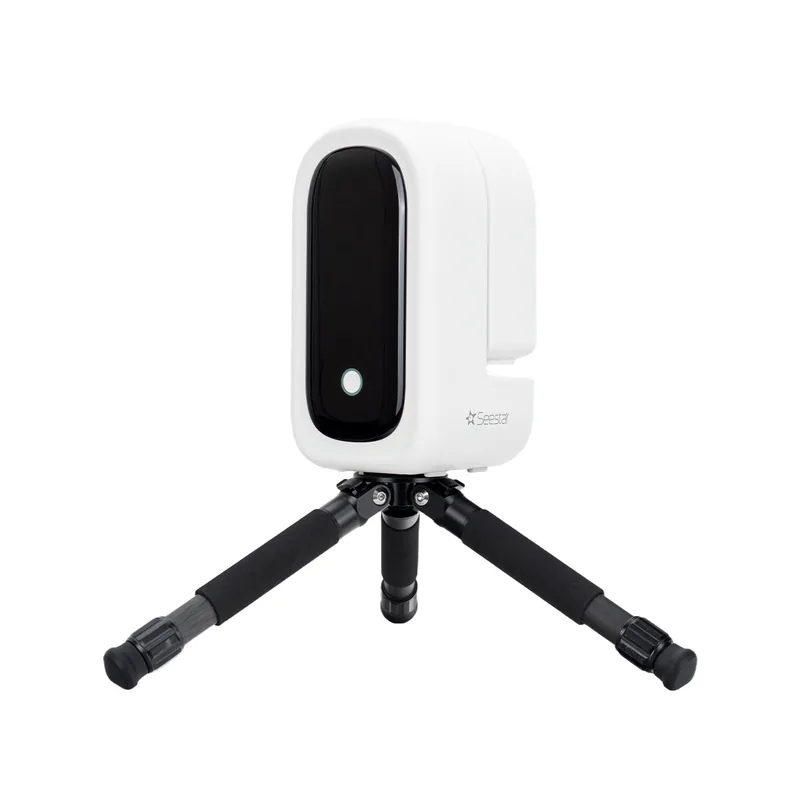
Seestar S50 Pro smart telescope on its tripod
Image: Seestar

Seestar

Seestar S50 Pro

$999 USD, as of 2 Nov 2026

Checked on seestar.com.

Why A 50 mm all-rounder with a 9-hour battery and a tripod included.

Why I picked it The independent review site Skies & Scopes calls it its pick for most people. It has a bigger aperture than the DWARF models and a tripod in the box, at about half the Odyssey's sale price. It weighs 2.8 kg.

Check price at Seestar (affiliate link, opens in a new tab)
Opens the Seestar store. Choose the S50 Pro there.

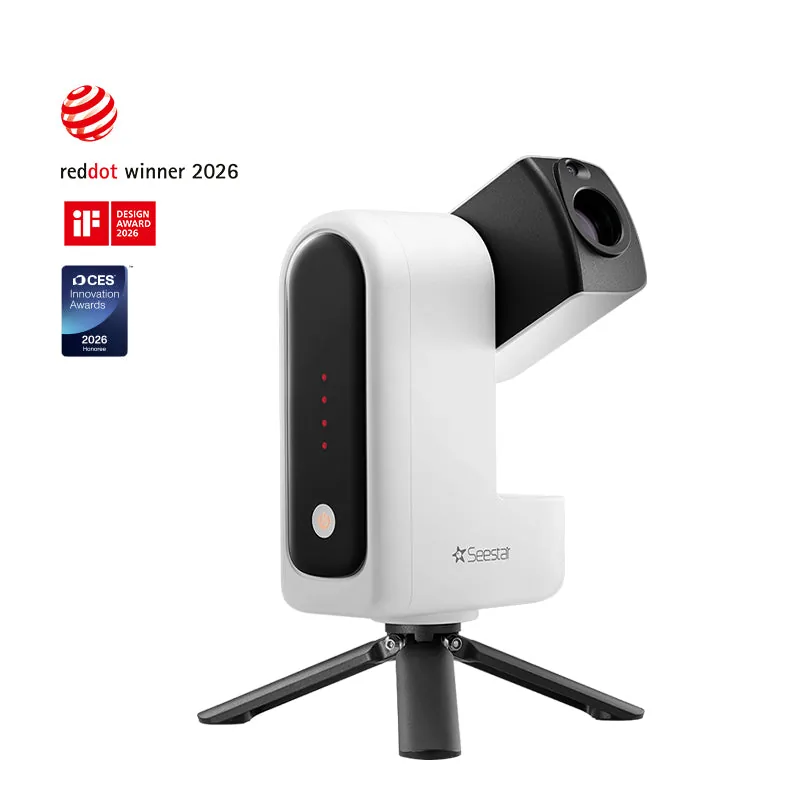
Seestar S30 Pro smart telescope on its tripod
Image: Seestar

Seestar

Seestar S30 Pro

$699 USD, as of 2 Nov 2026

Checked on seestar.com.

Why The widest view on this page, about 4 degrees, in a 1.65 kg body with a tripod included and a 6-hour battery.

Why I picked it Big targets such as the Andromeda Galaxy and large nebulae fit easily, and you get the same Seestar app as the S50 Pro. In my view it's the better Seestar if you care more about wide views and carrying it around than about detail on small galaxies.

Check price at Seestar (affiliate link, opens in a new tab)
Opens the Seestar store. Choose the S30 Pro there.

Rocket models

Why a display model?

When you follow launches, most of the hardware is on screen for a few seconds: a camera view of the engines at ignition, a long shot of the stack on the pad, then a dot in the sky. A good display model lets you take your time. You can count the engines, see where the stages separate and understand how the vehicle fits together. It's also a reminder on your shelf of the missions you stayed up to watch.

What makes a good rocket model

  • Accurate scale and proportions. A stated scale (for example 1:144) means the model matches the real vehicle, and other models at the same scale line up next to it.
  • Detail you can recognise. Panel lines, separation rings, engine bells and markings that match the real vehicle.
  • Printed markings, not stickers. Markings printed directly onto the parts don't peel or yellow the way decals can.
  • A stable display base. Tall, thin models need a solid base. A launch-platform base also adds context.
  • Clear details from the maker. Size with and without the base, what's included, when it ships and what happens if you change your mind.
  • Shipping and duties. Large models are fragile and costly to ship, so check where the maker ships for free and whether import duties apply where you live.
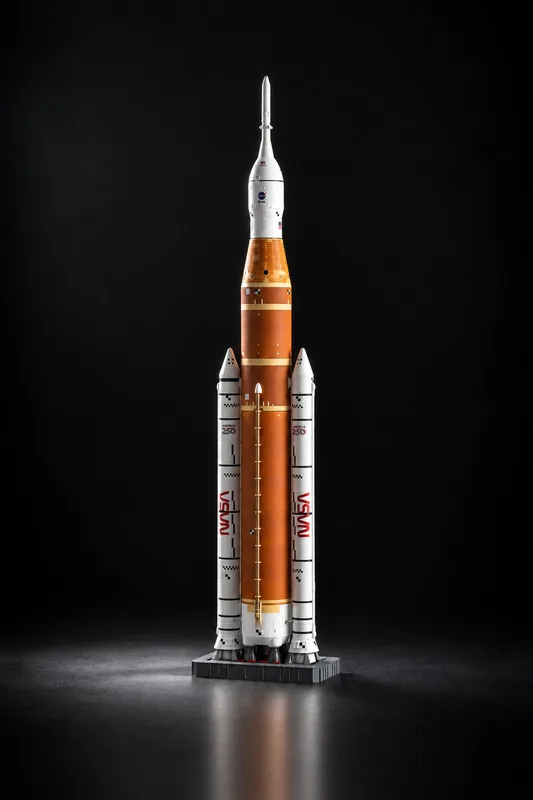
Space Rocket Lab 1:144 model of NASA's SLS rocket on its launch-platform base
Image: Space Rocket Lab

Space Rocket Lab

Space Rocket Lab SLS 1:144

$599 USD, as of 2 Nov 2026

As shown on spacerocketlab.com (US store). This is a pre-order: you pay today. The maker shows estimated shipping of 13–27 Sep 2027 and offers a full refund any time before it ships.

What it is A 1:144 model of NASA's Space Launch System, the Artemis Moon rocket. It stands 72 cm (28 in) tall on its launch-platform base and 68 cm (27 in) without it. It is painted and finished by hand in Italy, arrives pre-assembled in sections that fit together, and comes with an engraved aluminium certificate. Each model is numbered.

Why I picked it It meets almost everything on the list above. The markings are UV-printed onto the parts rather than applied as decals, and the upper stage (ICPS) can be separated so you can look at it outside the full stack. The maker says it finishes one SLS per working day. In my view it's the closest you'll get to having the Artemis stack on your shelf, but the price and the September 2027 ship date mean it's for committed fans, not an impulse buy.

Campaign details Checked 2 Nov 2026. Orders are open until 10 December 2026. Other options are SLS plus an extra second stage in a display case ($879), two SLS models ($1,179) and the second stage on its own ($299). Space Rocket Lab lists free shipping to Italy, the EU, the UK and the US, and no import duties for the US, Italy and the EU. Buyers elsewhere, including India, should check shipping and duties before ordering.

Pre-order at Space Rocket Lab (affiliate link, opens in a new tab)

More rocket-model makers are coming. I only list models I can link to through a live partnership, and I'll add more as those are confirmed.

Questions?

If you're stuck between two telescopes or want to know whether a model is worth it, email me at [email protected] or ask in the comments on any Space Road video.

This page is updated over time as prices, products and my picks change. Prices shown are the ones I saw on the date given; the store's checkout price is the one that counts.

Last updated: 2 Nov 2026