Every Starship flight so far: what each one tried and what happened
Starship has flown 14 test flights since April 2023. What each one tried, how the booster and ship did, and what changed, from Flight 1 to Flight 14.
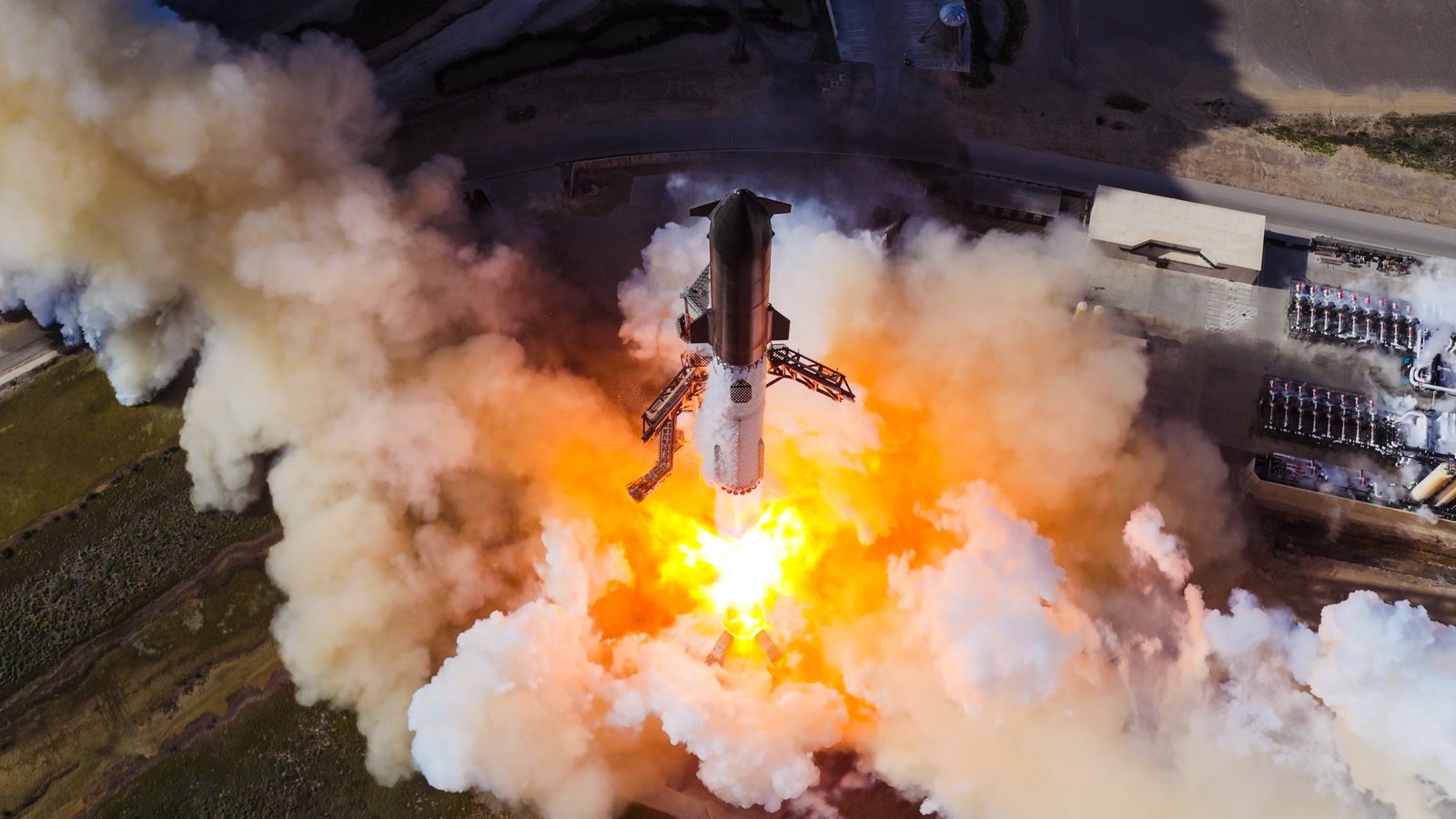
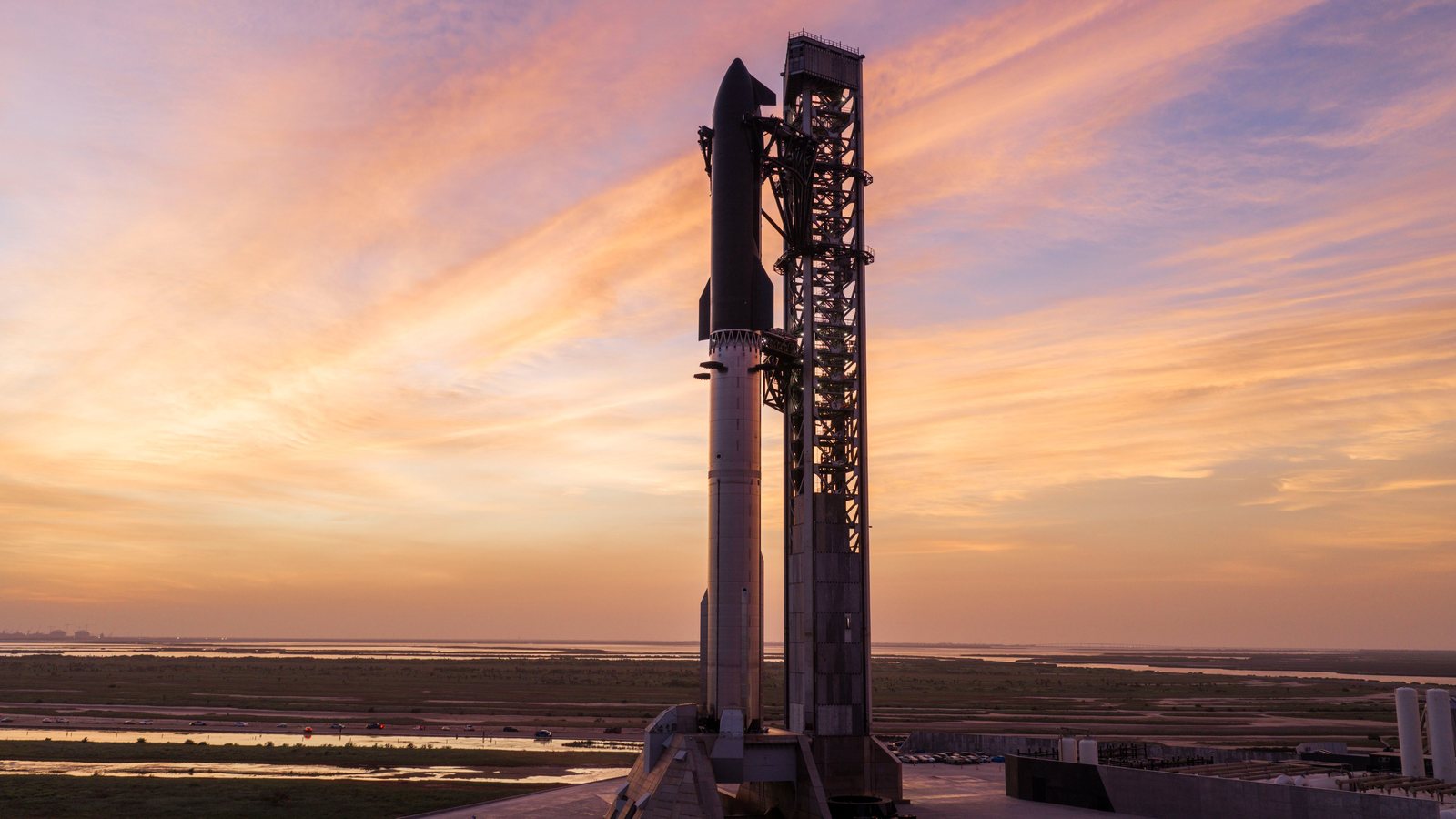
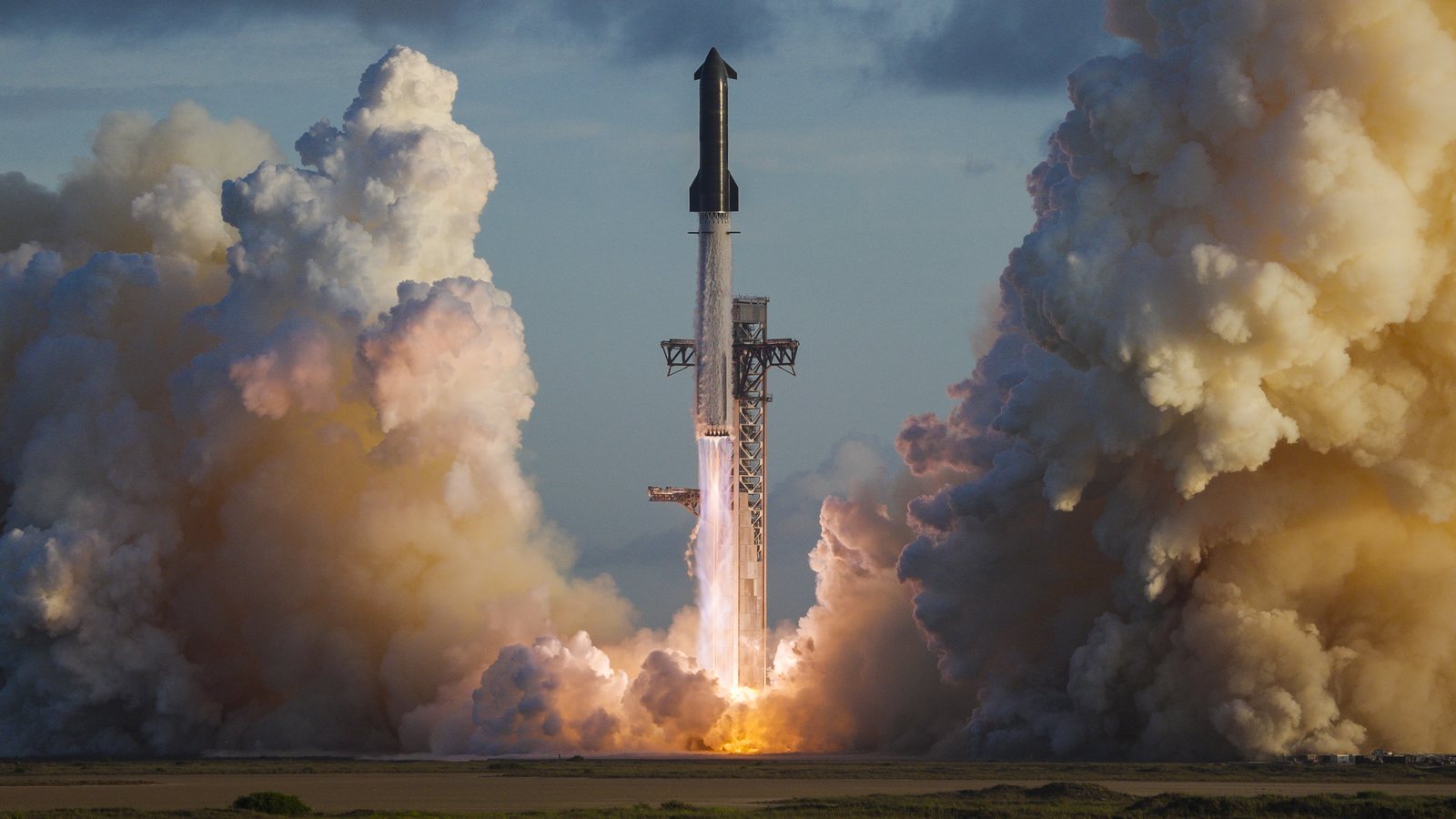
Starship has flown 14 test flights, all from Starbase, Texas. The first was on 20 April 2023 and the latest, Flight 14, was on 28 September 2026. The launch tower has caught the Super Heavy booster, Starship's first stage, three times, on Flights 5, 7 and 8. Flight 14 was the first to reach orbit. No ship, the upper stage, has been caught yet.
Status as of 19 October 2026. Each summary below comes from SpaceX's own page for that flight, all listed on its launches page. New to Starship? Start with What is Starship?, and for what comes next, see When is Starship Flight 15?
Prefer to watch? Our video, Every Failure That Got Starship to Orbit, walks through Starship's development from Starhopper to Flight 14.
What happened on each Starship flight?
Times are liftoff times at Starbase, in US Central Time: Central Standard Time (CST) in winter and Central Daylight Time (CDT) in summer. "V3" means Version 3, the third and largest generation of the rocket.
| Flight | Date | Liftoff (Starbase time) | Booster | Ship |
|---|---|---|---|---|
| 1 | 20 Apr 2023 | 8:33 a.m. CDT | Lost before stage separation | Never separated |
| 2 | 18 Nov 2023 | 7:02 a.m. CST | Broke up during boostback | Reached space, then lost |
| 3 | 14 Mar 2024 | 8:25 a.m. CDT | Broke up during landing burn | First full ascent burn, lost during reentry |
| 4 | 6 Jun 2024 | 7:50 a.m. CDT | Soft splashdown | First soft splashdown |
| 5 | 13 Oct 2024 | ≈7:26 a.m. CDT* | First tower catch | Splashdown on target |
| 6 | 19 Nov 2024 | ≈4:01 p.m. CST* | Catch called off, splashdown | First in-space engine relight |
| 7 | 16 Jan 2025 | 4:37 p.m. CST | Caught | Lost during ascent |
| 8 | 6 Mar 2025 | 5:30 p.m. CST | Caught | Lost during ascent |
| 9 | 27 May 2025 | 6:36 p.m. CDT | First reflown booster, broke up | Payload door failed, then lost |
| 10 | 26 Aug 2025 | 6:30 p.m. CDT | Hover and splashdown | First payload deploy, soft splashdown |
| 11 | 13 Oct 2025 | 6:23 p.m. CDT | Hover and splashdown | Soft splashdown |
| 12 | 22 May 2026 | 5:30 p.m. CDT | Hard splashdown | First V3 ship, splashdown |
| 13 | 24 Jul 2026 | 5:51 p.m. CDT | Hard splashdown | First Starlink V3 deploy, landed intact |
| 14 | 28 Sep 2026 | 7:48 a.m. CDT | Splashdown | First orbit, 26 Starlink V3 |
*Liftoff times for Flights 5 and 6: SpaceX's pages for those flights give no liftoff time. These are the times of SpaceX's "Liftoff of Starship!" posts on X.
How did the early flights go (Flights 1 to 3)?
Flight 1 (20 April 2023). The first launch of the full rocket. SpaceX says it climbed to about 39 km over the Gulf, lost several engines and began to tumble. The flight termination system, the safety system that destroys a rocket that goes off course, was triggered on both stages.
Flight 2 (18 November 2023). All 33 booster engines burned for the full ascent for the first time. It was also the first hot staging, where the ship lights its engines before it lets go of the booster. The booster then broke up during its boostback burn, the engine firing that turns it back towards home, at about 90 km. The ship reached about 150 km and became the first Starship in space. SpaceX lost contact near the end of its engine burn, and the ship was destroyed on command.
Flight 3 (14 March 2024). The ship completed its full ascent burn for the first time and opened and closed its payload door. It also started a propellant transfer demonstration, an early test of moving fuel between tanks in space. It skipped a planned engine relight because it was rolling too much. It made the first Starship entry from space, and the last signal came about 49 minutes in. The booster broke up at about 462 m, during its first landing burn.
When did Starship first land softly and catch a booster (Flights 4 to 6)?
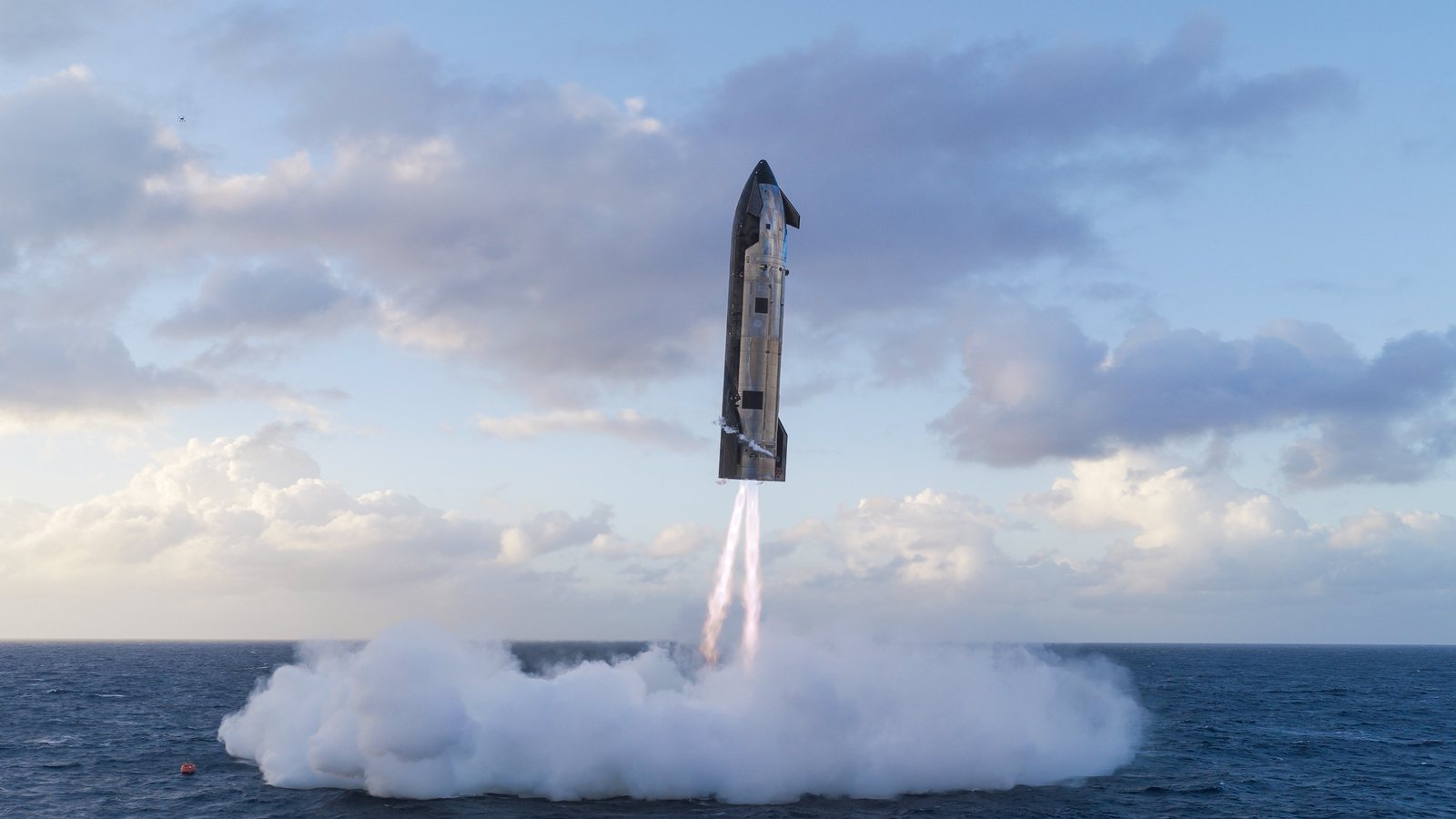
Flight 4 (6 June 2024). Both stages came down under control for the first time. The booster made a soft splashdown in the Gulf. The ship survived peak heating on reentry, steered with its flaps, then flipped upright and fired its engines. It made a soft splashdown in the Indian Ocean 1 hour 6 minutes after launch.
Flight 5 (13 October 2024). "On our first try, Mechazilla caught the booster," SpaceX wrote. The returning Super Heavy was caught by the tower's "chopstick" arms. SpaceX says thousands of checks on the rocket and the pad had to pass first. The ship splashed down at its target in the Indian Ocean.
Flight 6 (19 November 2024). The booster headed back for a catch, but automated health checks on the tower called it off. The booster diverted and splashed down in the Gulf instead. The ship restarted one Raptor engine in space for the first time, a key step before true orbital flights. It then splashed down in the Indian Ocean.
Why were Flights 7 to 9 setbacks for the ship?
Flight 7 (16 January 2025). The first flight of a redesigned, upgraded ship. The booster was caught for the second time. The ship was lost about eight and a half minutes into flight. SpaceX says early data pointed to a fire in its aft section.
Flight 8 (6 March 2025). The booster was caught for the third time. Near the end of the ship's climb, SpaceX says, "an energetic event in the aft portion" cost it several engines. (The aft is the rear of the ship.) It lost control, and contact ended about 9 minutes 30 seconds after liftoff.
Flight 9 (27 May 2025). The booster had already flown on Flight 7, making this the first reflight in the Starship program. It tested a steeper descent angle, then broke up shortly after starting its landing burn. The ship completed its ascent, but its payload door would not open. Its eight Starlink simulators stayed on board. A problem with keeping the ship pointed the right way led SpaceX to skip the engine relight. Contact was lost about 46 minutes into the flight.
What did Flights 10 and 11 prove?
Flight 10 (26 August 2025). SpaceX says every major objective was met. The ship released eight Starlink simulators, dummy satellites of a similar size and weight. It was its first successful payload release. It also relit an engine in space. It came through a reentry designed to stress its heat shield and made a soft splashdown. The booster tested landing with one of its centre engines switched off, then hovered and splashed down.
Flight 11 (13 October 2025). This was the last flight of the second-generation ship and the first-generation booster. It was also the last launch from Pad 1 in its original form. The ship repeated the payload deployment and engine relight. In its final minutes it flew a banking turn that copies the path future flights will take back to Starbase. It then splashed down in the Indian Ocean.
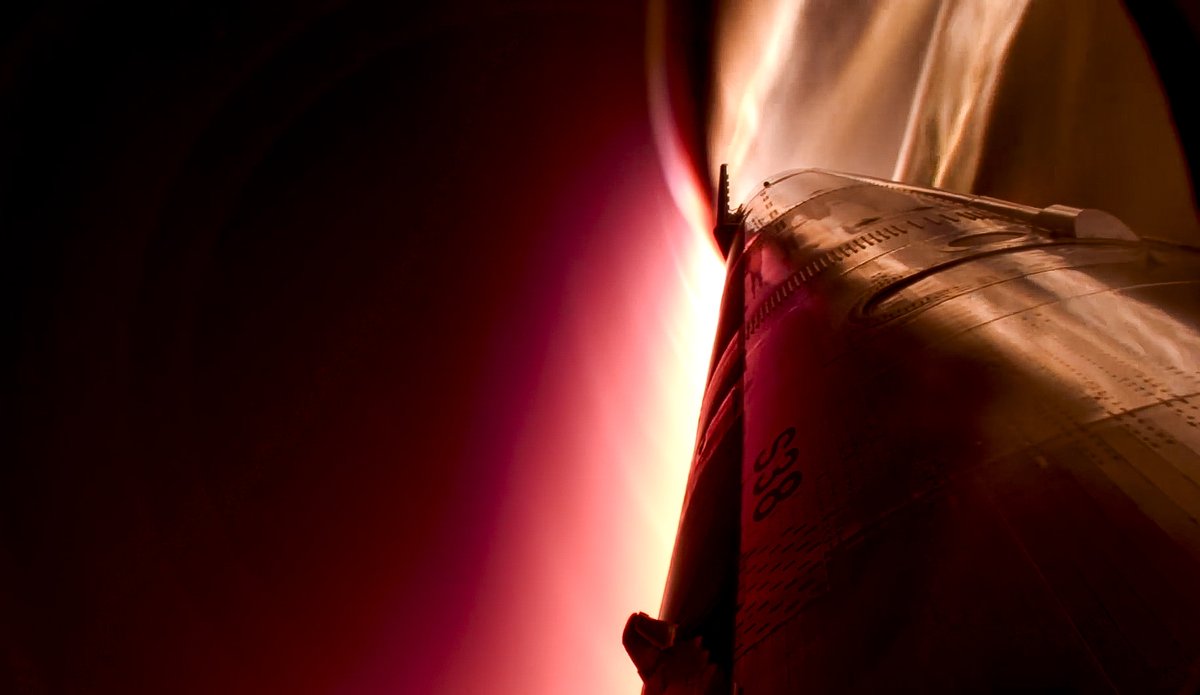
What changed with Starship V3 (Flights 12 and 13)?
Flight 12 (22 May 2026). This was the first flight of the bigger V3 vehicles and the new Raptor 3 engines. It was also the first launch from Pad 2. One booster engine shut down on ascent. The booster cut its boostback burn short and hit the water hard. The ship lost one of its vacuum engines but still reached its planned path. It deployed 20 Starlink simulators and two modified Starlink satellites, which took pictures of Starship in space. It splashed down on two engines.
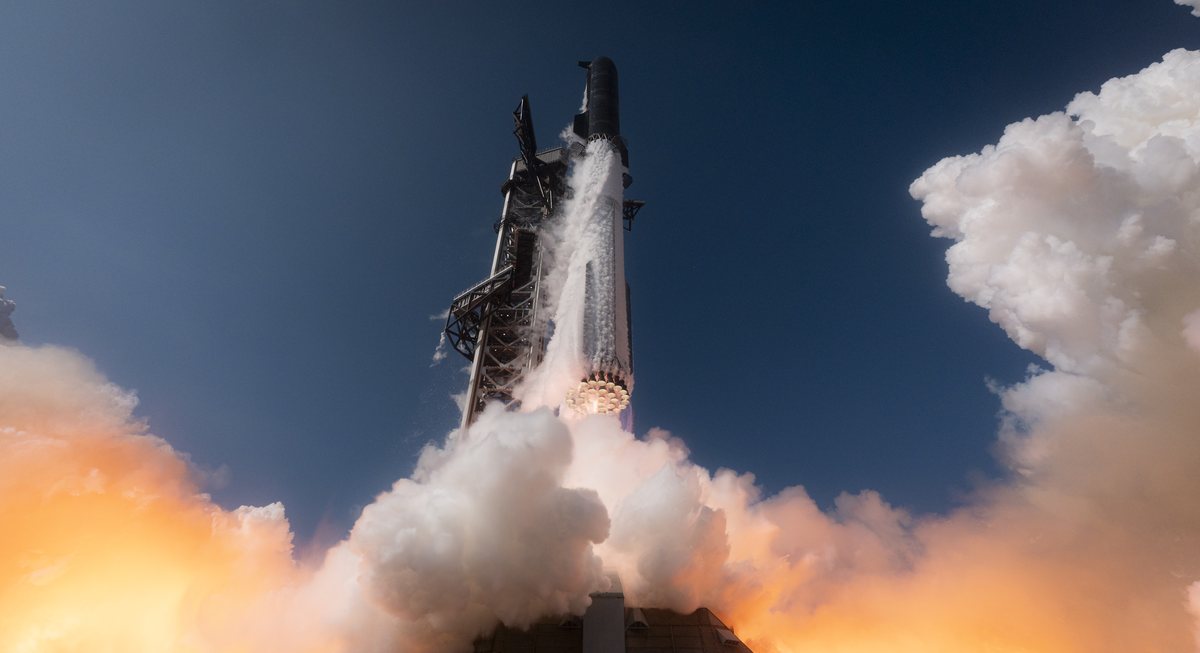
Flight 13 (24 July 2026). The ship deployed 20 Starlink V3 satellites, the first of the next-generation Starlinks to fly on Starship. They were on a path that SpaceX expected to burn up about 20 minutes later. The ship relit an engine, flew the banking turn again, and made a soft splashdown. It came "to rest intact" in the Indian Ocean, giving SpaceX its first views of an intact heat shield after a flight. That ship, Ship 40, has since been brought back to Starbase. The booster again ended with a hard splashdown.
How did Starship finally reach orbit (Flight 14)?
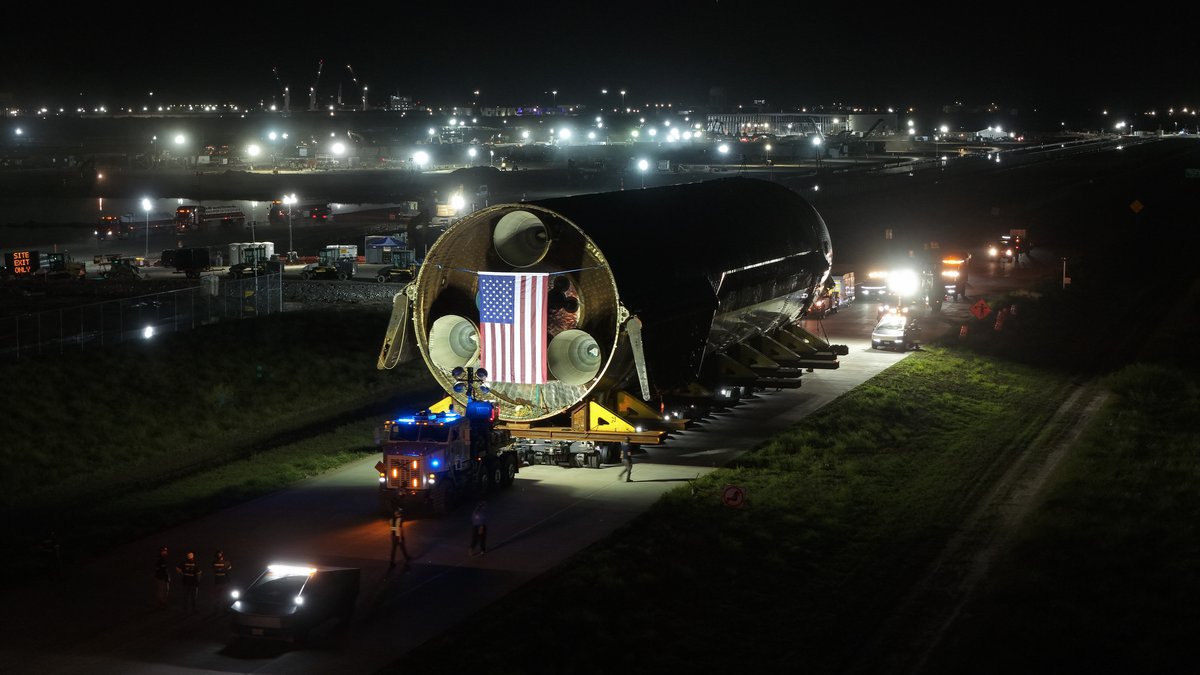
Flight 14 (28 September 2026). On its first try at orbit, SpaceX says, the ship fired one sea-level Raptor to enter orbit. It then deployed 26 Starlink V3 satellites, its first useful payload in orbit. A vacuum engine had shut down early on the way up, so the other five burned longer to make up for it. Because of that, SpaceX kept the time in orbit short. The ship made its first deorbit burn, the engine firing that drops it out of orbit, and splashed down on target in the northern Pacific about 9 hours 50 minutes after launch.
The booster had one engine shut down on ascent. During boostback it burned off its leftover liquid oxygen to test its limits, then splashed down in the Gulf. Afterwards, SpaceX triggered its flight termination system on purpose, as a safety-hardware demonstration.
What patterns show up across 14 flights?
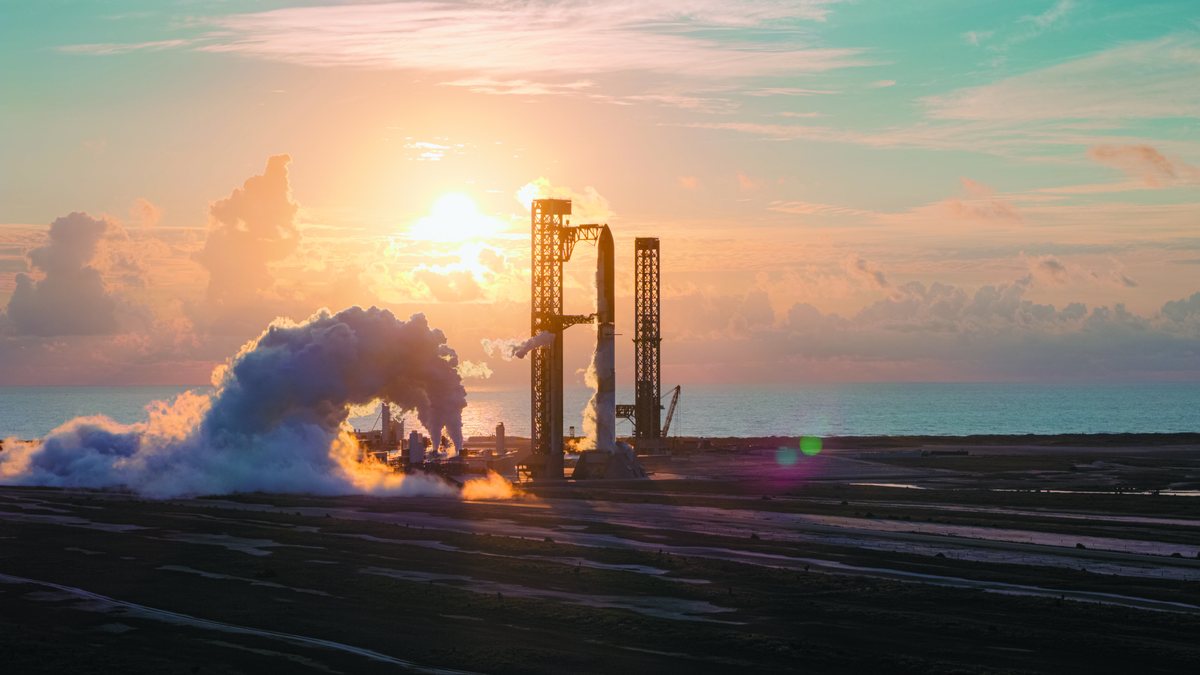
- The booster learned to come home first. Breakups on Flights 2 and 3 gave way to splashdowns, then three catches. Since Flight 9 the boosters have been aimed at the sea.
- The ship took longer. Flights 7, 8 and 9 were all lost. Since Flight 10, every ship has ended in a controlled splashdown.
- Payloads moved from simulators to real satellites. Flights 10 to 12 carried Starlink simulators, Flight 13 carried real V3 satellites on a path that burned up, and Flight 14 put 26 into orbit.
- The ship catch is still ahead. On Flights 11, 12 and 13, the ship flew the banking manoeuvre that copies a return to Starbase. A ship catch has not been tried yet. SpaceX founder Elon Musk says it will be attempted on Flight 15. SpaceX hasn't confirmed this. See our Flight 15 preview.
We will add each new flight to this page as it happens.
Sources
- SpaceX: Starship mission pages, one per flight (launches)
- SpaceX: Starship Flight 14, the first orbital flight (28 Sep 2026)
- SpaceX: Starship's Fifth Flight Test, the first booster catch (13 Oct 2024)
- SpaceX: Starship's Thirteenth Flight Test (24 Jul 2026)
- SpaceX on X: Ship 40, the first Starship to return to its launch site (13 Oct 2026)
Free newsletter
Get the Starship briefing.
Every Saturday, plus alerts when something big happens. Unsubscribe any time. Privacy