What is Starship? SpaceX's giant reusable rocket, explained
Starship is SpaceX's two-stage, fully reusable rocket for Earth orbit, the Moon and Mars. How it works, what it's for and where it stands in 2026.
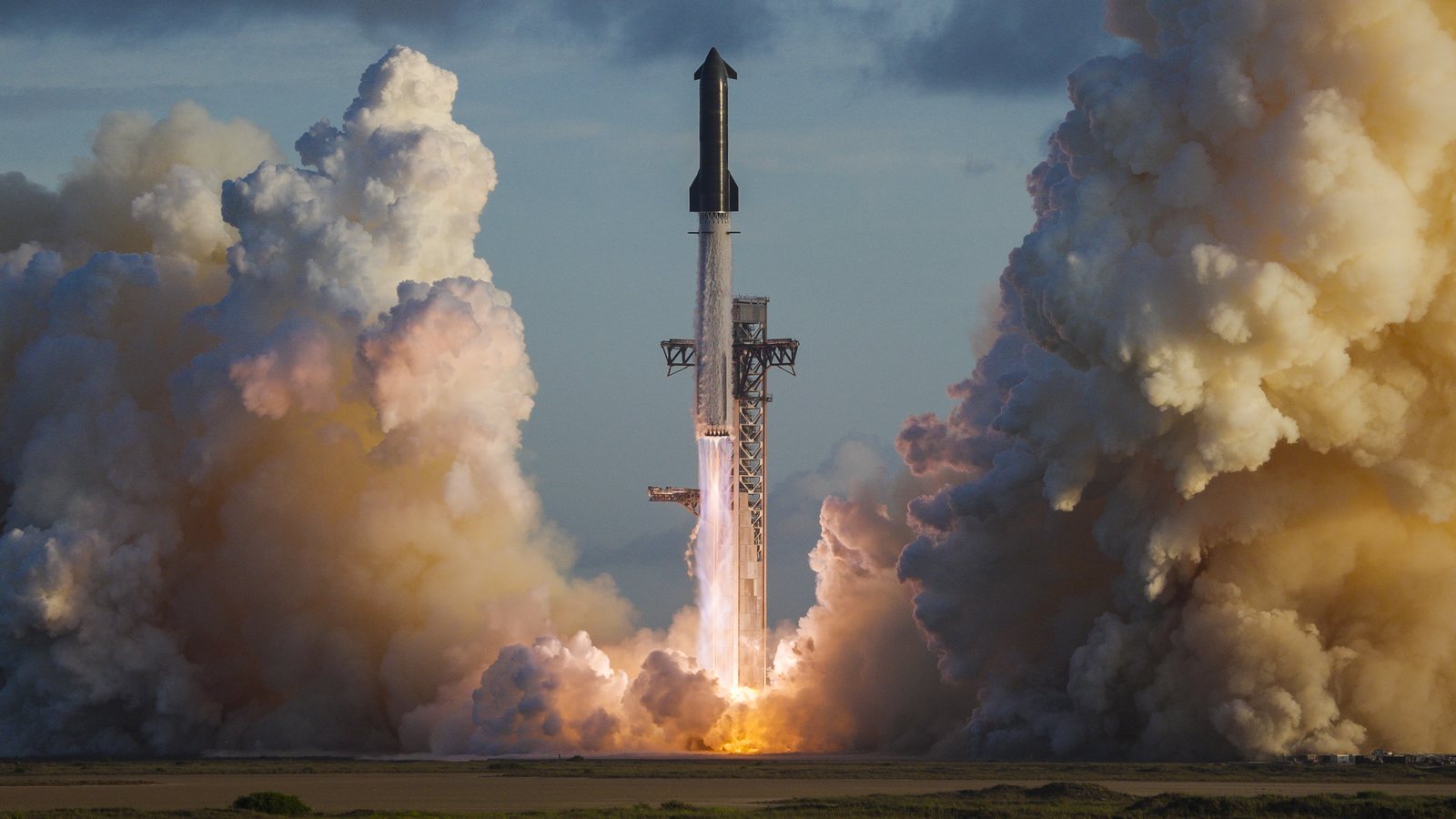
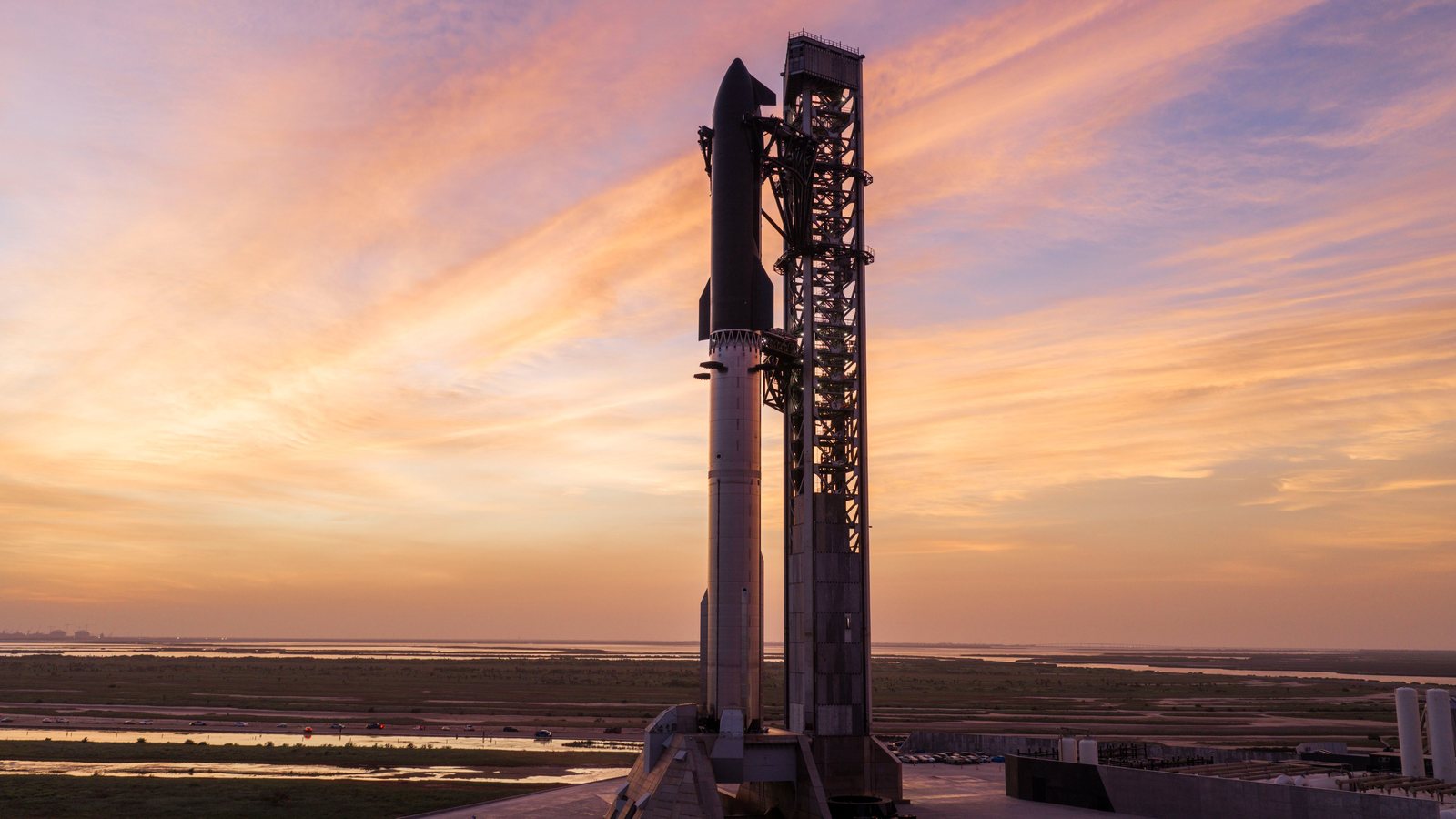
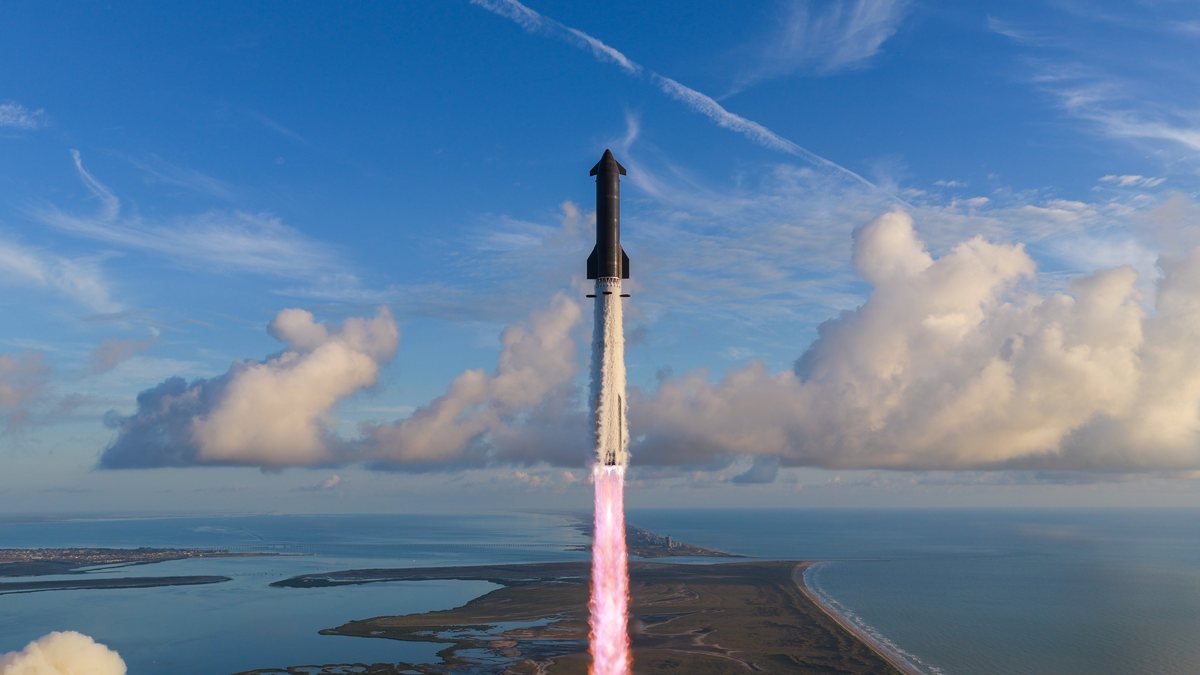
Starship is SpaceX's giant two-stage rocket, designed to be fully reusable and to carry crew and cargo to Earth orbit, the Moon and Mars. It is made up of the Super Heavy booster and an upper stage, also called Starship. Stacked, they stand 124 metres tall. As of 19 October 2026 it has flown 14 test flights, and it reached orbit for the first time on Flight 14, on 28 September 2026.
What are the two parts of Starship?
The name means two things: the whole rocket, and its upper stage. SpaceX's vehicle page breaks it down like this:
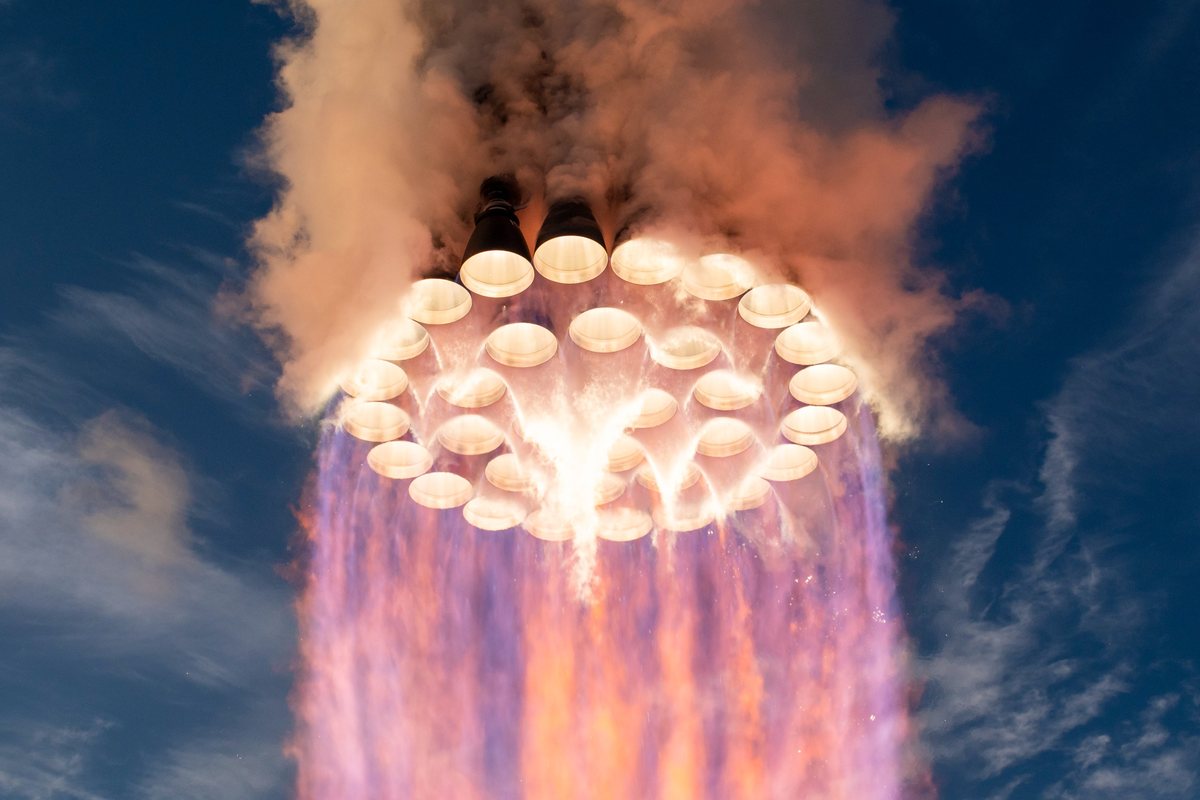
- Super Heavy (the booster). The 72 m first stage, with 33 Raptor engines. It does the heavy lifting for the first few minutes, then separates and flies back. It holds about 3,650 tonnes of propellant, the fuel and the oxygen needed to burn it.
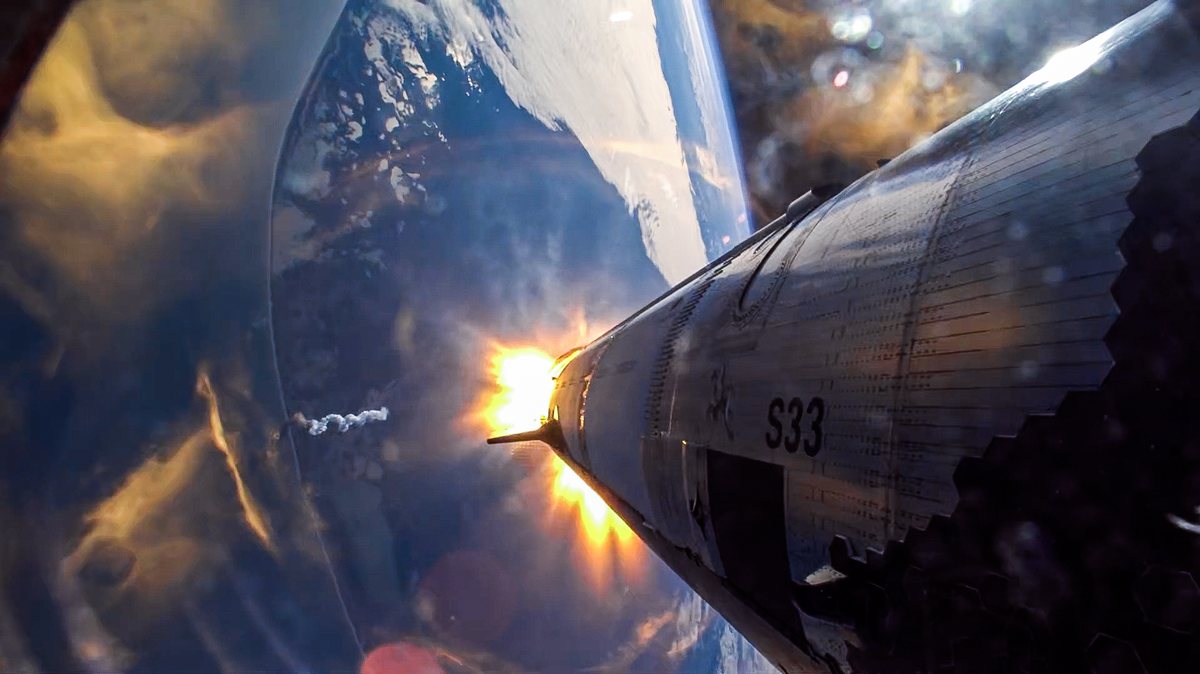
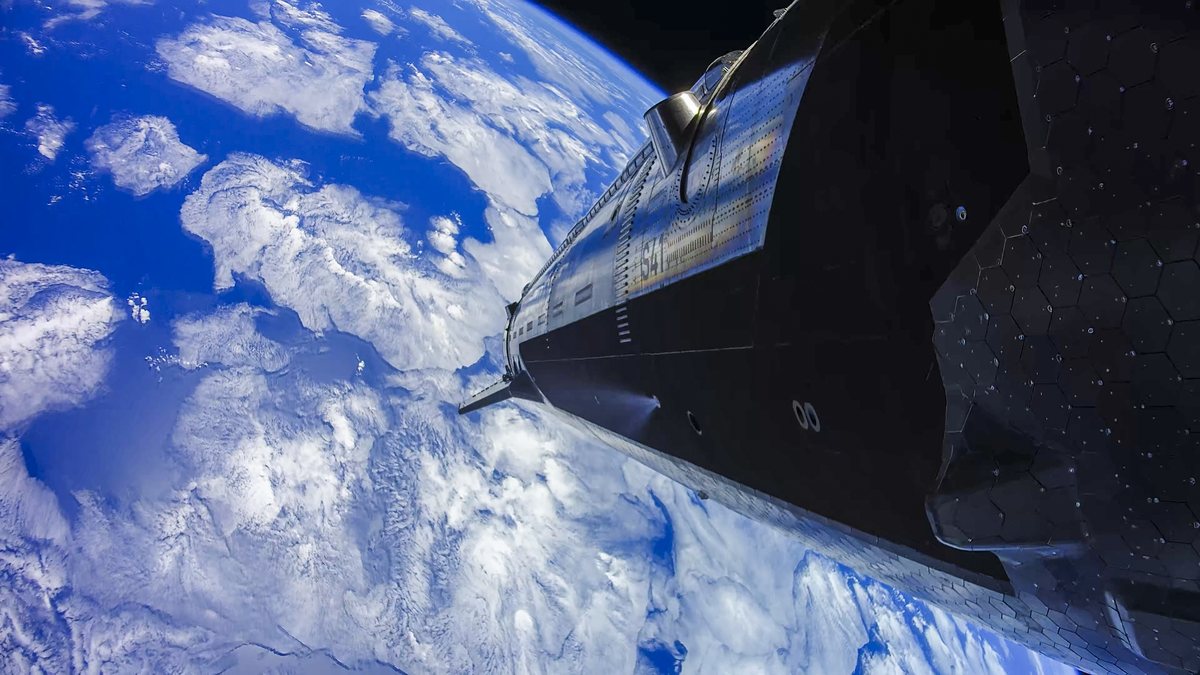
- Starship (the ship). The 52 m upper stage. It has six engines: three standard Raptors and three Raptor Vacuum engines built for space. It carries the payload, the satellites or cargo on board, to orbit and then comes back through the atmosphere. It holds about 1,600 tonnes of propellant.
Both stages are 9 m wide and built from stainless steel. SpaceX calls the full stack "the world's most powerful launch vehicle ever developed."
How does a Starship flight work?
Every Raptor engine burns liquid methane and liquid oxygen. SpaceX says each one has twice the thrust of the Merlin engine that powers Falcon 9.
The Flight 14 summary shows the basic sequence. For what happened on each flight, see every Starship flight so far.
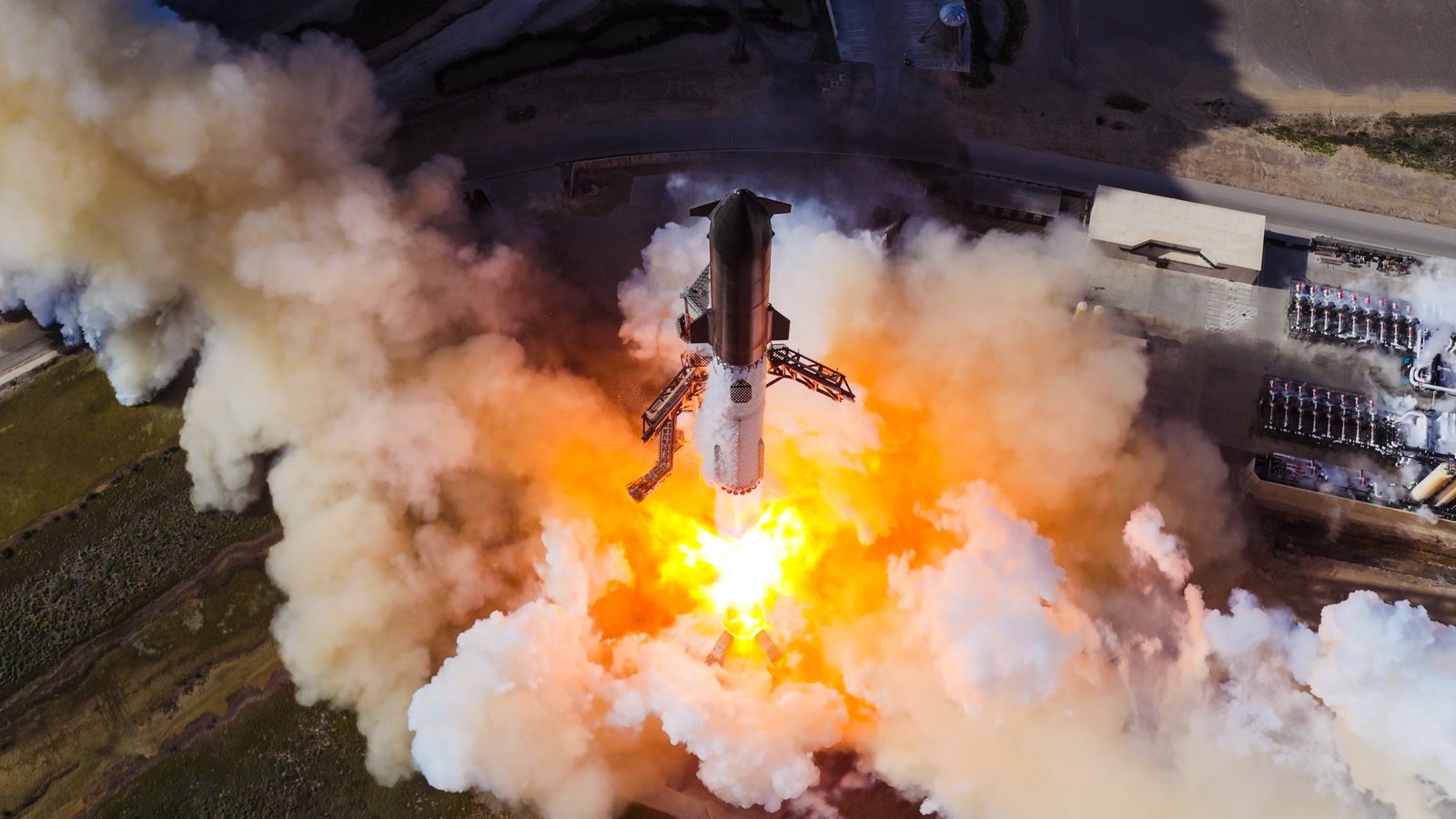
- Liftoff. All 33 booster engines ignite at Starbase, Texas, and the rocket climbs out over the Gulf.
- Hot staging. The ship lights its own engines while still attached to the booster, then pulls away.
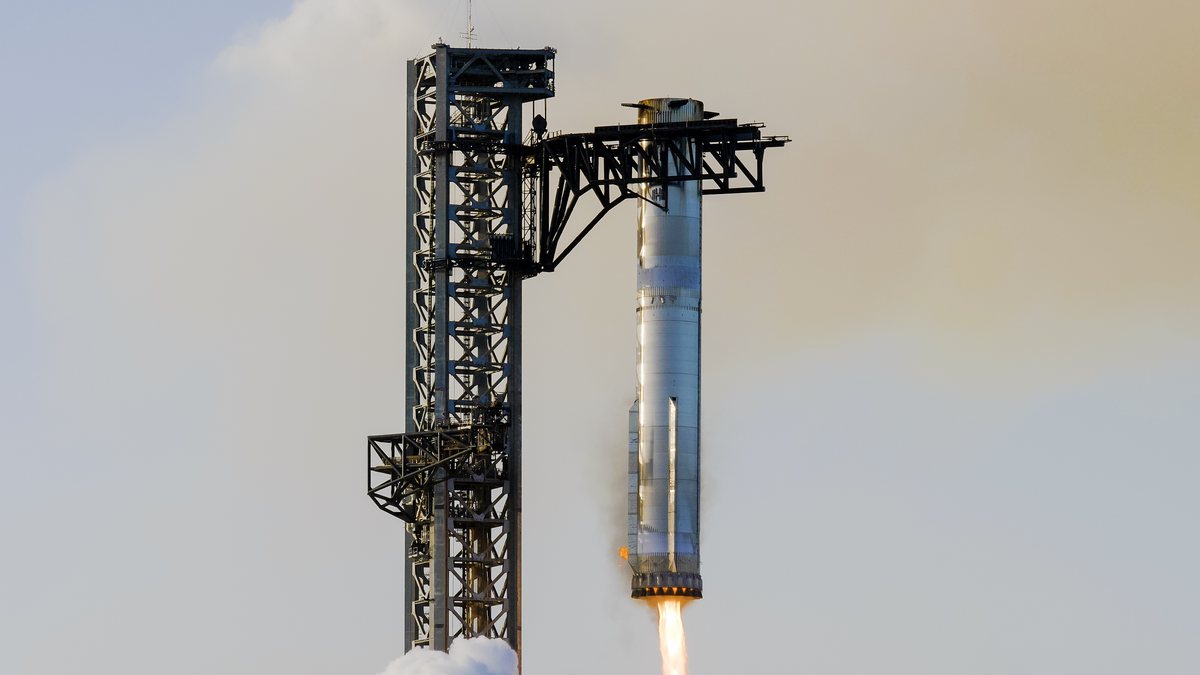
- Booster return. Super Heavy flips, relights engines for a "boostback" burn to head home, then does a landing burn. On some flights it is caught by the launch tower. On others it splashes down at sea.
- Ship to space. The ship burns on to space, deploys its payload and later fires its engines to come out of orbit.
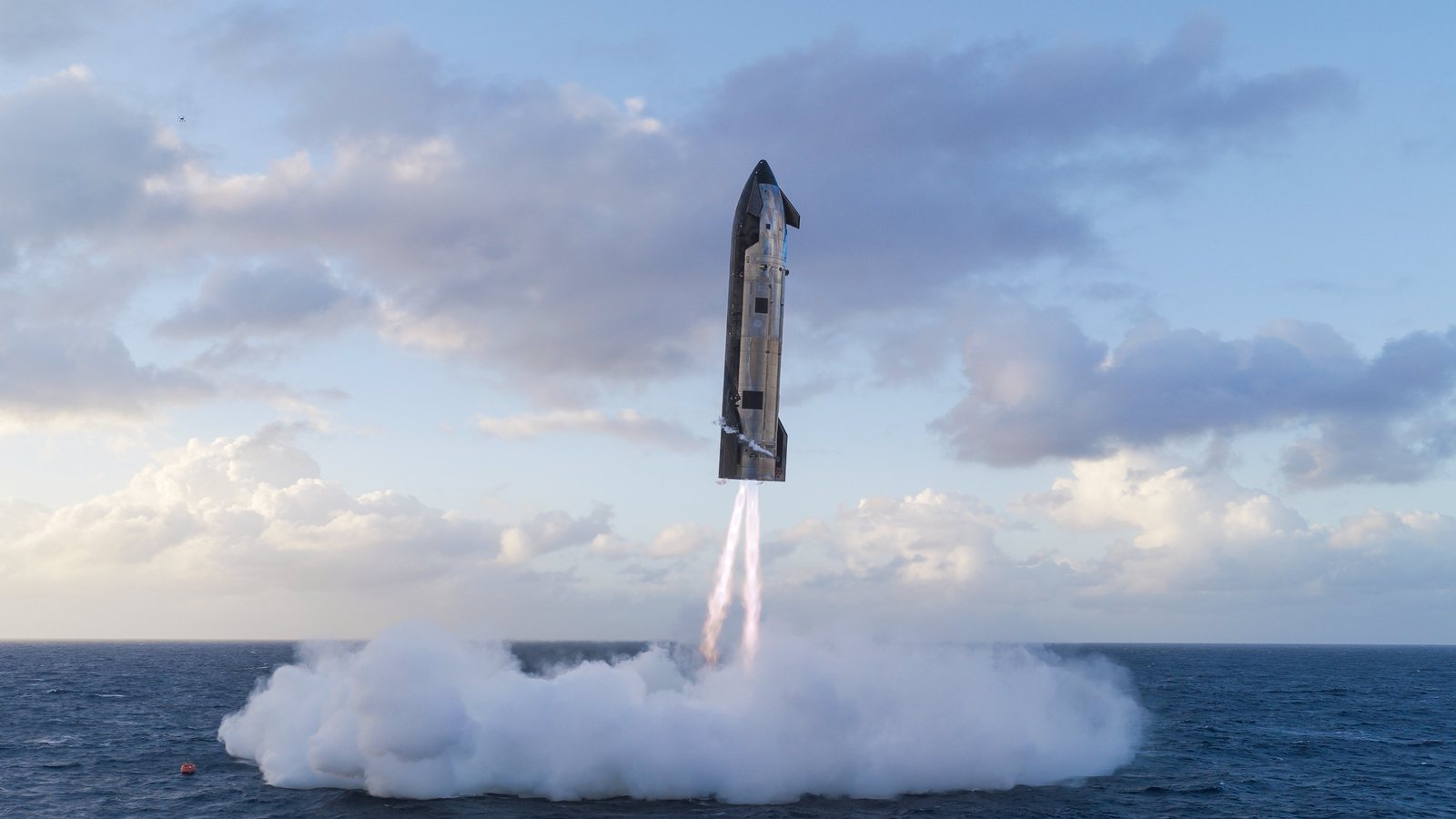
- Reentry and landing. A heat shield protects the ship through reentry. Then it flips upright and fires its engines for a landing burn. So far every ship has ended its flight in the ocean.
Why does reusability matter?
Starship is designed so that both stages fly back to the launch site, are caught by the tower and fly again "without refurbishment". SpaceX says this should let it carry payloads farther, and for less money per launch, than its Falcon rockets. When fully reusable, it is designed to lift more than 100 tonnes to orbit.
Half of that already works. On Flight 5, on 13 October 2024, the tower's "chopstick" arms caught a returning Super Heavy booster for the first time. No ship has been caught yet. SpaceX founder Elon Musk says SpaceX will try on Flight 15 and calls it "a super big deal". SpaceX itself has not confirmed that plan. Our Flight 15 preview covers the details.
What is Starship for?
Starlink. Flight 14 deployed the first 26 Starlink V3 satellites, SpaceX's third-generation internet satellites, to orbit. Space.com reports that V3 satellites are bigger and heavier than earlier ones, and that only Starship can launch them efficiently. That makes Starlink Starship's first regular job.
The Moon. The National Aeronautics and Space Administration (NASA) has chosen a version of Starship as one of two Moon landers for its Artemis program. The other is Blue Origin's Blue Moon. According to NASA, Artemis III in 2027 will be a rehearsal in Earth orbit. A third-generation Starship fitted with a docking system on its nose will dock with NASA's Orion capsule, and astronauts will not go inside it. NASA is aiming for a crewed Moon landing in 2028.
Starmind. SpaceX is planning Starmind, a large group of satellites that would run artificial intelligence (AI) computing in orbit. According to SpaceX's Starmind page, they would run on solar power and send their results back to Earth by laser through Starlink. Elon confirmed the name in June 2026, Space.com reports. In a February 2026 update, he described a future group of up to a million satellites working as data centres in orbit. SpaceX says Starship's full reusability and carrying capacity are "critical for deploying large, heavy AI satellites into orbit". It also says a planned Gigasat Factory in Bastrop should let it launch thousands of them "starting as soon as late 2027".
Mars and paid cargo. The Federal Aviation Administration (FAA), which licenses US launches, describes Starship's goal as travelling to the Moon and Mars. The SpaceX website lists cargo flights to both the lunar and Martian surfaces starting "no earlier than 2028", at $100 million per tonne. That is a sales offer, not a scheduled mission.
How does Starship refuel in space?
Deep-space trips need a step that hasn't been done yet: refilling a ship in orbit. SpaceX plans to use tanker versions of Starship to top up a ship's tanks in orbit before it leaves for the Moon or Mars. In a progress update, SpaceX said it was aiming for a long-duration flight and a test of moving propellant from one ship to another in 2026. As of mid-October 2026, no ship-to-ship transfer has been attempted.
Where does Starship stand in October 2026?
- 20 April 2023: the first full Starship flight climbed to about 39 km, lost several engines and was destroyed by its flight termination system, the safety system that destroys a rocket that goes off course.
- 13 October 2024: Flight 5 had the first booster catch.
- 22 May 2026: Flight 12 was the first flight of the bigger Version 3 (V3) vehicles and Raptor 3 engines, and the first launch from Starbase's Pad 2.
- 24 July 2026: on Flight 13, the ship made a soft splashdown and came to rest intact in the Indian Ocean.
- 28 September 2026: Flight 14 lifted off at 7:48 a.m. Central Daylight Time (CDT), Starbase time. It reached orbit and deployed 26 Starlink V3 satellites. One of its Raptor Vacuum engines shut down early on the way up. So SpaceX cut the time in orbit short and brought the ship down on target in the Pacific.
- Next: Flight 15 has no official date yet. See When is Starship Flight 15?
What does Starship still have to prove?
- Catching a ship. Elon says this is planned for Flight 15.
- Flying the same vehicles again quickly. Elon has called flying a caught booster and a caught ship again "the next big milestone."
- Refuelling in orbit. NASA's lander plan depends on it. NASA's inspector general, its internal watchdog, reported in March 2026 that both Moon lander makers face delays and technical problems.
- Flying often. The FAA currently allows up to 25 Starship launches a year from Starbase. It is now reviewing a proposal for up to 100 a year, and later up to 456. That review has only just started, and none of it is approved.
Starship has now shown it can reach orbit and deliver real satellites. The next steps are catching ships, flying them again quickly and refuelling in orbit. They will decide whether the Moon and Mars plans can work. We will update this page as each milestone happens.
Sources
- SpaceX: Starship vehicle page (specifications, reuse, refilling, Moon and Mars cargo)
- SpaceX: Starship Flight 14 mission summary (28 Sep 2026)
- SpaceX: Starmind AI satellite page
- NASA: How NASA's Artemis III lander test will pave way for Moon landings (15 Jul 2026)
- FAA: SpaceX Starship Super Heavy project at the Boca Chica launch site
Free newsletter
Get the Starship briefing.
Every Saturday, plus alerts when something big happens. Unsubscribe any time. Privacy