Starship glossary: 42 terms explained, from NET to static fire
What hot staging, boostback, Mechazilla, cryoproof, static fire, NET (no earlier than) and 36 other Starship terms mean, in plain English, with sources.
This glossary explains 42 words you'll hear on a Starship webcast or in launch news, in plain English. Each definition comes from SpaceX's own website and posts where possible, then from the US Federal Aviation Administration (FAA) and the National Aeronautics and Space Administration (NASA). The terms are grouped by topic: the rocket, a flight, the catch, testing, schedules and rules, and the Moon and Mars.
New to Starship? Start with What is Starship?. To see these terms in action flight by flight, read Every Starship flight so far.
What are the parts of the Starship rocket called?
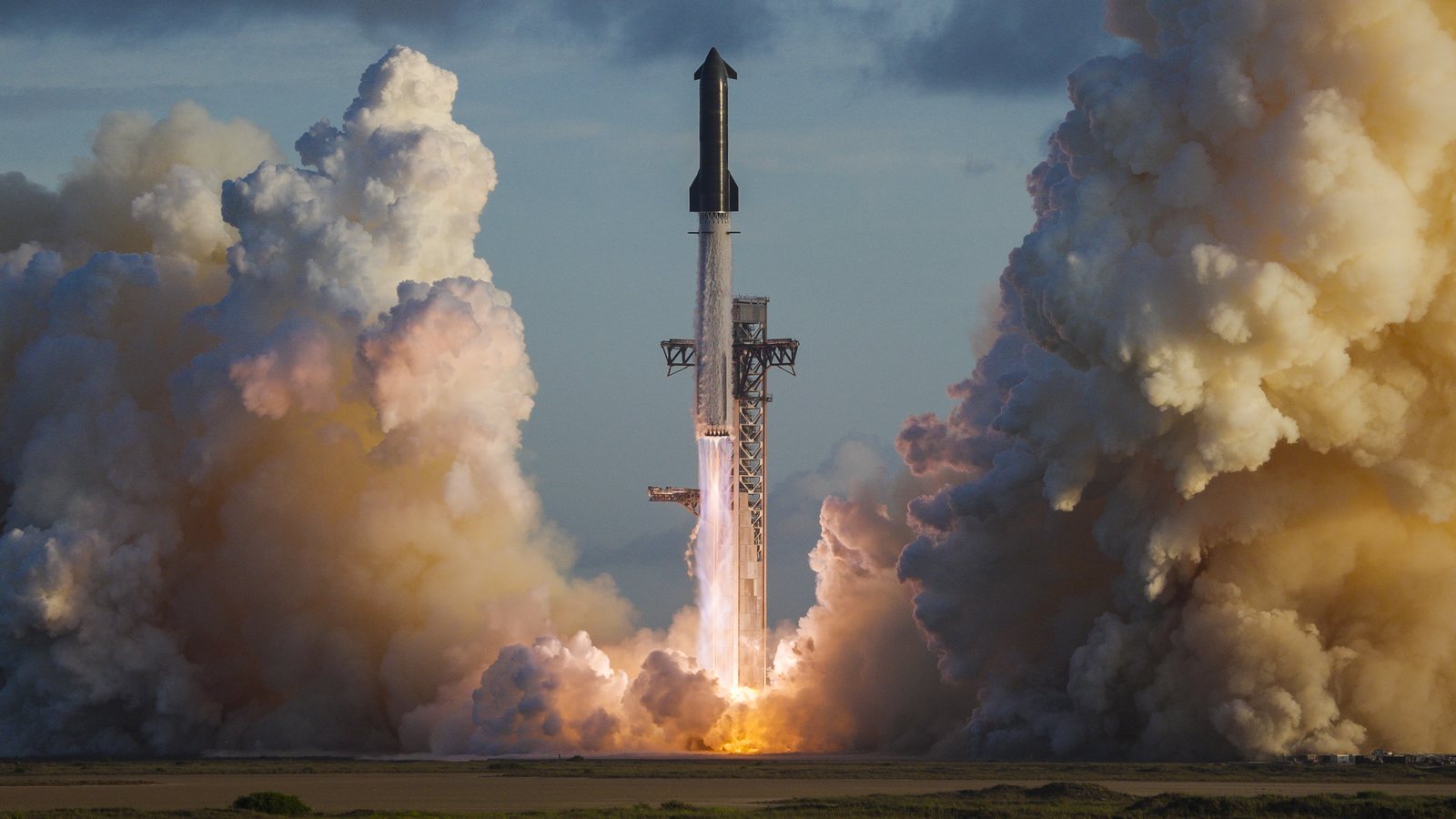
- Starship. The name of the whole rocket and of its upper stage. SpaceX's Starship page says the ship and the Super Heavy booster, "collectively referred to as Starship", form a fully reusable system. It is 124 m tall and designed to carry more than 100 tonnes to orbit.
- Super Heavy (the booster). The 72 m first stage, with 33 Raptor engines. It is built to fly back to the launch site, be caught by the tower and fly again. SpaceX also calls it the Super Heavy booster.
- Ship. The 52 m upper stage and spacecraft, with six engines. It goes on to space after separation and carries the payload.
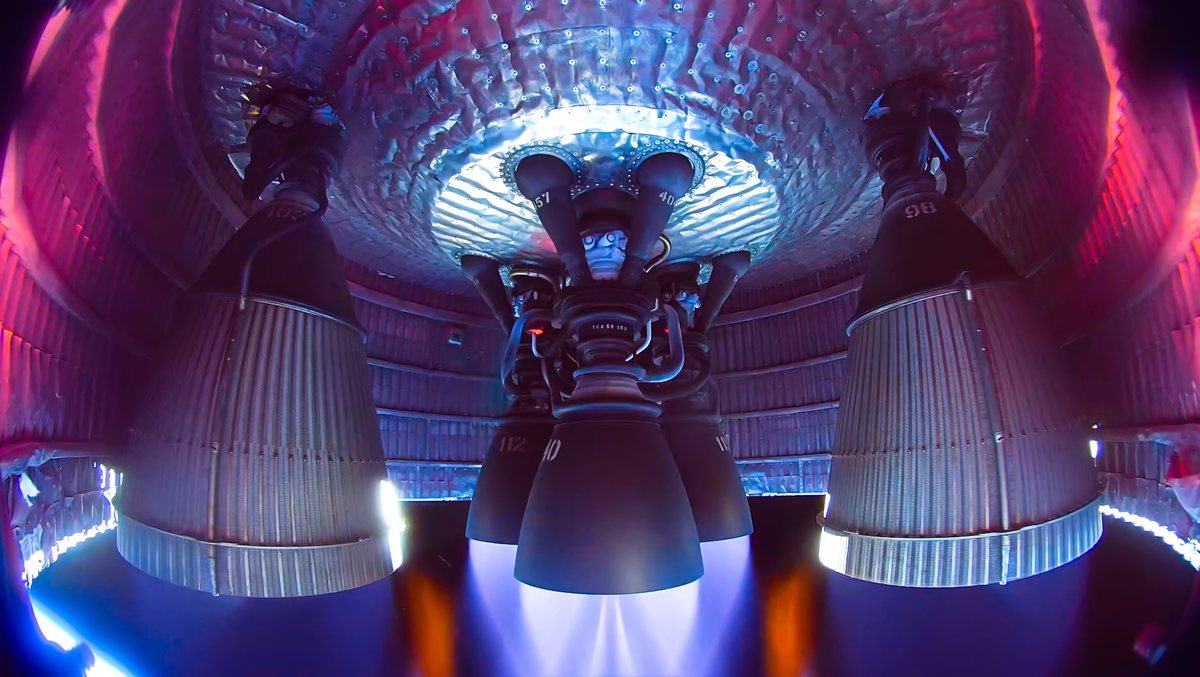
- Raptor. SpaceX's reusable engine, which burns methane and oxygen. SpaceX says it has twice the thrust of Falcon 9's Merlin engine. On the booster, 13 Raptors in the centre can steer; the other 20 ring the outside.
- Raptor Vacuum (RVac). A version of Raptor designed for use in the vacuum of space. The ship carries three of these alongside three standard Raptors.
- Raptor 3. The newest Raptor version. It first flew on Flight 12, in May 2026.
- Liquid methane and liquid oxygen. Starship's propellants. SpaceX says the booster uses "sub-cooled" liquid methane and liquid oxygen, chilled to below their boiling points. Super Heavy holds about 3,650 tonnes of propellant and the ship about 1,600 tonnes.
- V3 (Version 3). The third generation of Starship and Super Heavy. SpaceX says Flight 11, in October 2025, was the last flight of the second-generation ship and first-generation booster. V3 first flew on Flight 12. NASA's Artemis III test lander will also be a Starship V3.
- Flaps. The ship's four moving fins. SpaceX says the ship uses them to control itself as it falls through the atmosphere.
- Heat shield tiles. The black hexagonal tiles that form the ship's heat shield and protect it during reentry. SpaceX says its automated "bakery" in Florida can make thousands of them a day. Flight 13 was the first time SpaceX got views of an intact heat shield after a flight.
- Payload door ("Pez dispenser"). The slot in the ship's side that releases satellites. On Flight 3 SpaceX called it "the pez dispenser", after the sweet dispenser. It jammed shut on Flight 9.
What happens during a Starship flight?
- Max Q. The moment when the push of the air against the climbing rocket is strongest, about a minute after liftoff. SpaceX's flight timelines list it by name.
- MECO (main engine cutoff). The moment the main engines shut down. On Starship, SpaceX's timelines say Super Heavy MECO means "most engines cut off", because a few keep running for hot staging.
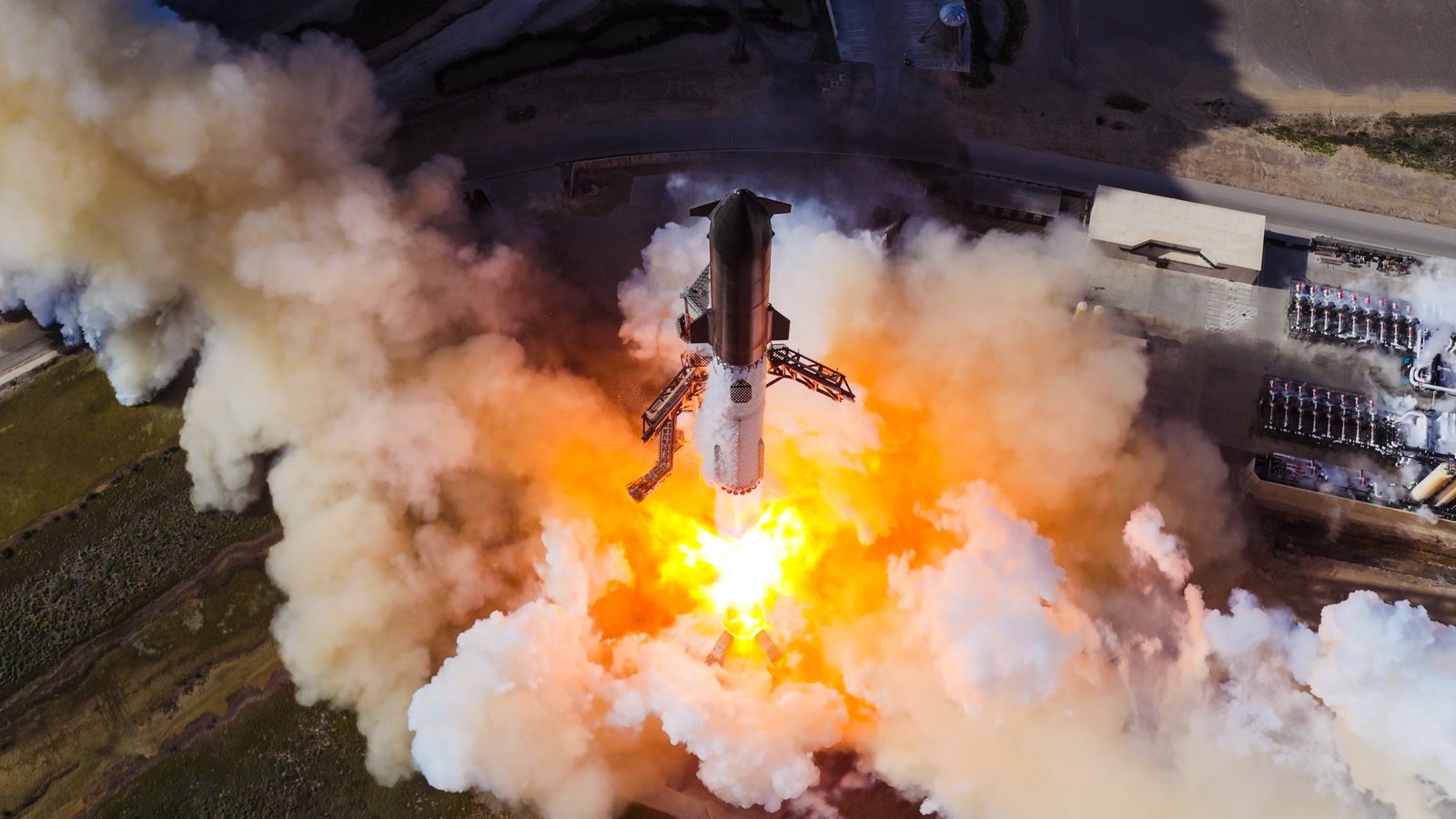
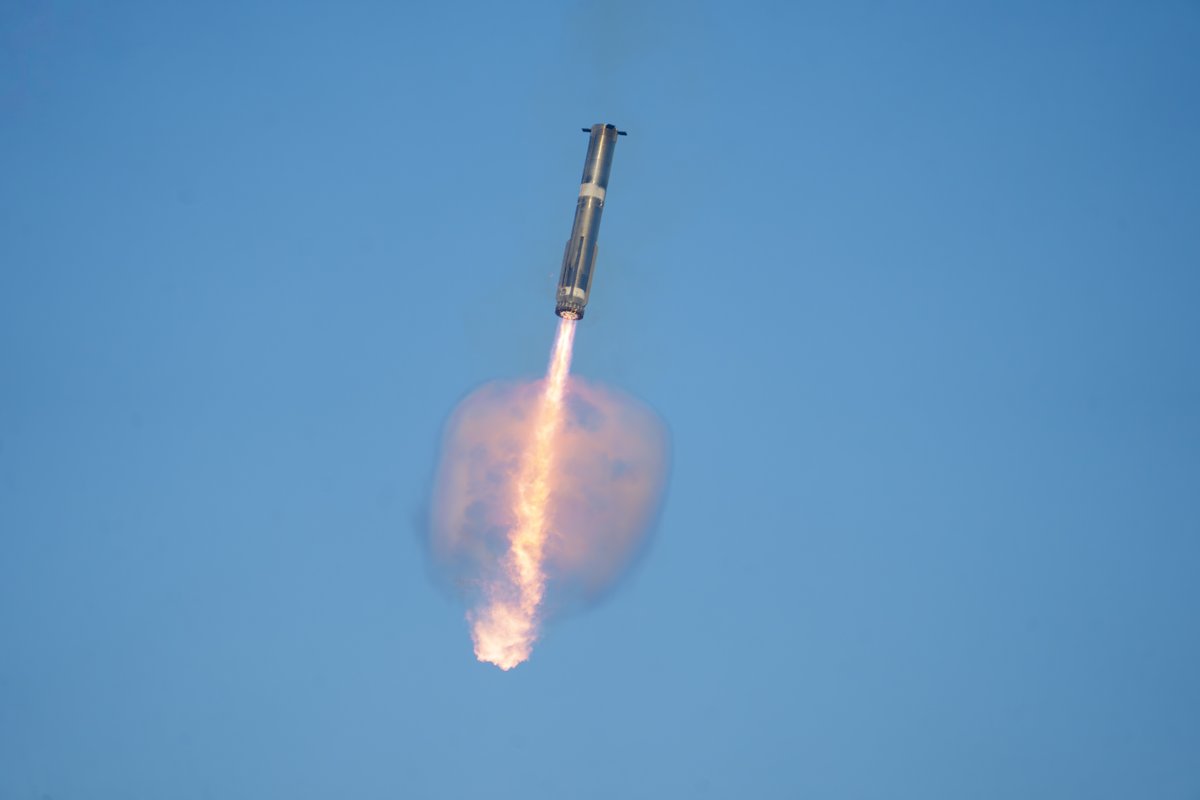
- Hot staging. How Starship separates. The booster shuts down all but three engines, and the ship lights its six engines while still attached, then pulls away. SpaceX first did this on Flight 2 and called it a first for a vehicle this size. Since Flight 4, the booster has dropped its hot-stage adapter, the ring between the two stages, after its boostback burn.
- Flip. Right after separation, the booster turns around to point back towards home. SpaceX's recent flight pages call it a "directional flip".
- Boostback burn. The booster relights some of its engines to reverse course. It heads either for the launch site or for a splashdown zone at sea.
- Landing burn. The booster's last engine burn to slow down before a catch or a splashdown. On catch flights it started the burn on up to 13 engines, then used the three centre engines to steer into the tower, SpaceX says.
- Orbit insertion burn. A ship engine burn that turns a path that would fall back to Earth (a suborbital path) into a real orbit. Flight 14 was the first to do one.
- In-space relight. Restarting a Raptor engine in space. SpaceX first did it on Flight 6, calling it a capability required for deorbit burns.
- Deorbit burn. An engine burn that slows the ship so it drops out of orbit and comes home. The first one was on Flight 14.
- Reentry (or "entry"). The fall back through the atmosphere at hypersonic speed, more than five times the speed of sound. The heat shield faces peak heating and the flaps keep the ship under control.
- Belly flop. The ship falls through the lower atmosphere flat, belly first, using its flaps to steer. "Starship is in a subsonic belly flop," SpaceX posted during Flight 5. Subsonic means slower than the speed of sound.
- Landing flip. At the end of the belly flop, the ship relights its engines and swings upright for its landing burn.
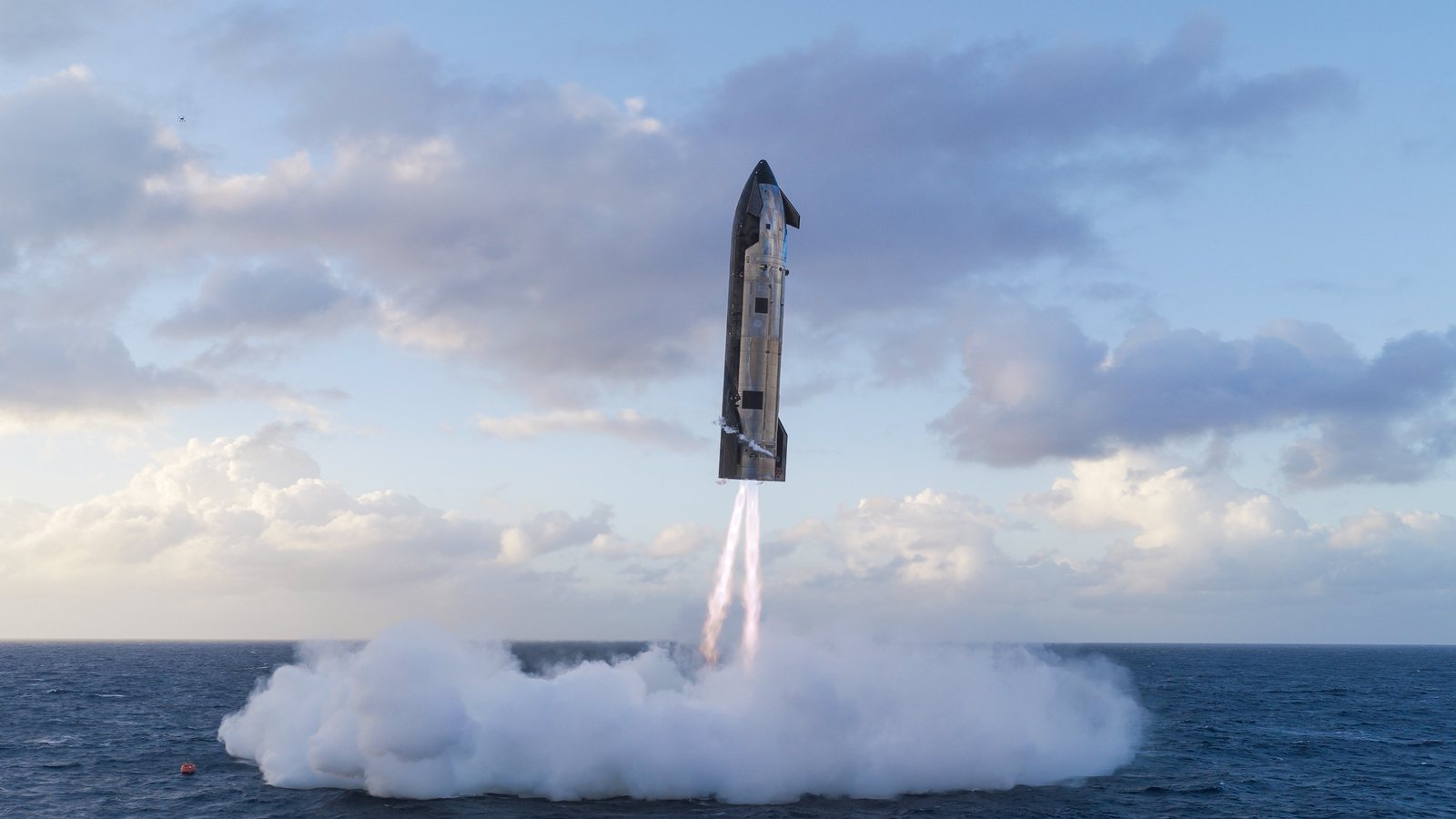
- Soft or hard splashdown. A soft splashdown is a controlled touchdown in the sea after a landing burn. A hard splashdown means the vehicle hit the water without a full landing burn, as Super Heavy did on Flights 12 and 13.
- RUD (rapid unscheduled disassembly). The vehicle broke apart. SpaceX's Flight 3 page calls the phrase "SpaceX-speak".
- Flight termination system (FTS). Safety equipment that destroys a vehicle if it goes off course. It was used on both stages on Flight 1. On Flight 14 SpaceX triggered it on purpose after the booster splashed down, as a demonstration.
What do the catch words mean?
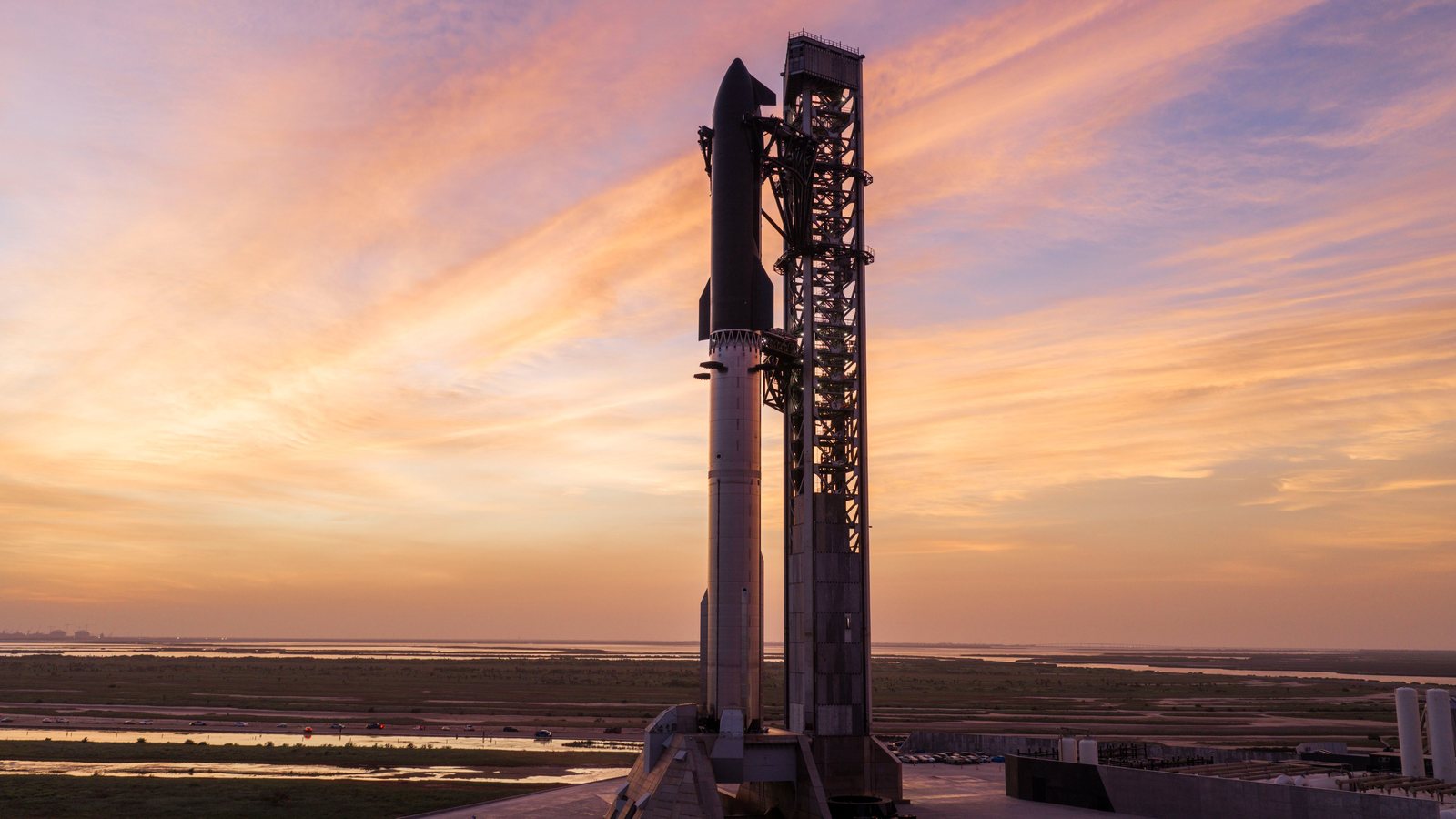
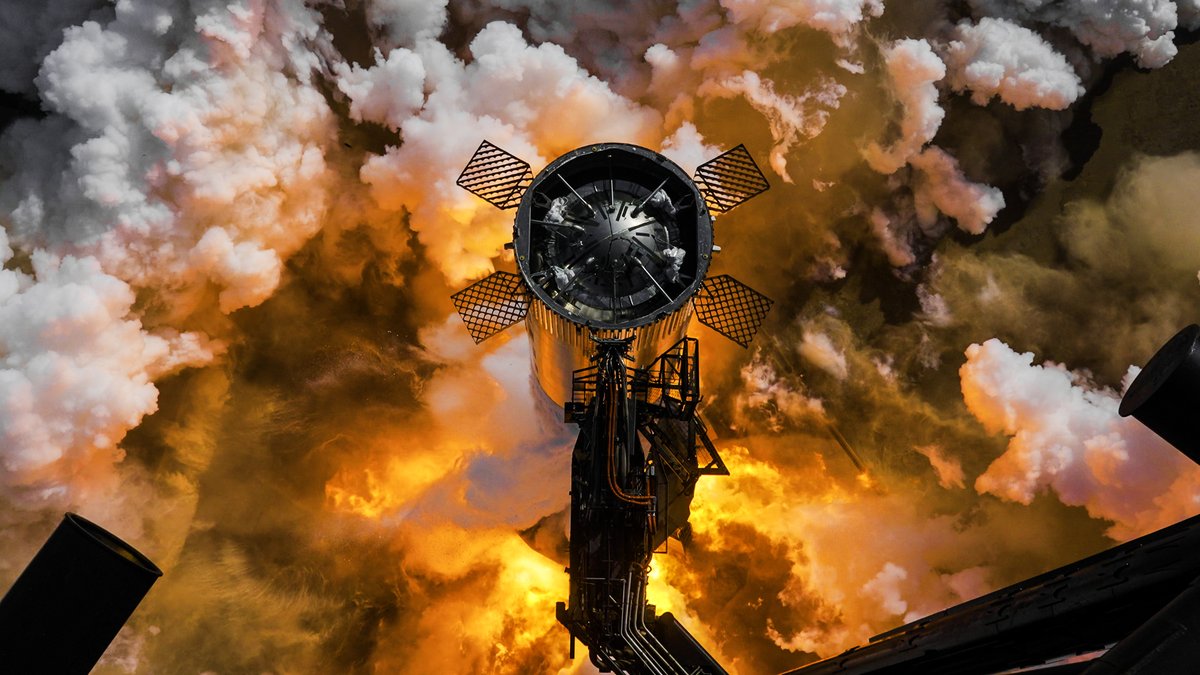
- Mechazilla. SpaceX's nickname for the launch and catch tower. "On our first try, Mechazilla caught the booster," SpaceX wrote after Flight 5, on 13 October 2024.
- Chopsticks. The tower's two huge arms. They catch the booster as it descends beside the tower. SpaceX's onboard video shows a "catch fitting" on the booster making contact with the chopsticks' catch beams. The tower has caught three boosters, on Flights 5, 7 and 8.
- RTLS (return to launch site). Flying a stage back to where it launched from, rather than to the sea. SpaceX called Flight 8's catch "the third successful return to launch site and catch". The FAA has completed an environmental review covering Starship return-to-launch-site flights at Starbase.
- Banking manoeuvre. On Flights 11, 12 and 13 the ship flew a turn that, SpaceX says, mimics the path future missions will take back to Starbase. That is groundwork for the first ship catch, which SpaceX founder Elon Musk says will be tried on Flight 15. SpaceX hasn't confirmed this.
What do the test and pad words mean?
- Static fire. A test where a booster or ship fires its engines while held down on the ground. SpaceX runs them before flights, from short tests on a few engines to a "full duration static fire" of Super Heavy.
- Cryoproof (cryo test). Filling a vehicle's tanks with super-cold (cryogenic) liquid to test its tanks, pipes and strength. SpaceX said Ship 39's cryoproof campaign also included "squeeze tests to mimic the forces of future ship catches".
- Wet dress rehearsal (WDR). A full countdown practice with propellant loaded, stopping before the engines light. SpaceX completed Starship's "first full flight-like wet dress rehearsal" in January 2023.
- Propellant load ("prop load"). Filling both stages with methane and oxygen during the countdown. In V3 countdowns, SpaceX polls for a "go" for propellant load 50 minutes before launch. The Raptors start their "engine chill" about 21 minutes before liftoff.
- Pad 1 and Pad 2. The two launch pads at Starbase, each with its own tower. Flight 11 was the last launch from Pad 1 in its original form. Flight 12 was the first from Pad 2.
- Massey's. A test site at Starbase where boosters and ships go for cryoproof tests and ship static fires. Starbase trackers on X, including LabPadre and RGV Aerial Photography, regularly show vehicles moving there. SpaceX does not describe the site on its website.
- Mega Bay. Starbase's giant assembly buildings, where boosters and ships are stacked and fitted with engines. SpaceX posted in October 2026 that Ship 40 was standing "vertical alongside three other Starships in a Megabay".
- Starbase. SpaceX's site in Texas, where Starship is built, tested and launched. SpaceX says it is home to SpaceX headquarters and one of the world's first commercial spaceports designed for orbital missions.
What do NET, the FAA licence and other schedule words mean?
- NET (no earlier than). The earliest a launch could happen. It is not a promise. SpaceX uses it in posts like "Now targeting no earlier than Tuesday, October 20". When you see "Flight 15 NET 8 November", read it as "not before 8 November, and possibly later".
- FAA licence. Permission from the FAA, the US government agency that oversees commercial launches, to fly. The FAA says SpaceX needs an experimental permit or a vehicle operator licence for Starship flights. Reviewing it covers public safety, national security, insurance and environmental impact. The current approval allows up to 25 Starship launches a year from Starbase.
What do the Moon and Mars words mean?
- Propellant transfer (on-orbit refilling). Moving propellant from one Starship to another in orbit. SpaceX plans to use "tanker" ships, which it describes as "essentially the Starship spacecraft minus the windows", to refill a ship before it heads for Mars. Flight 3 started an early propellant transfer demonstration. SpaceX's flight pages up to Flight 14 describe no ship-to-ship transfer yet.
- HLS (Human Landing System). NASA's name for the Moon landers in its Artemis program. A version of Starship is one of them. For Artemis III, NASA says a Starship V3 test article will dock with the Orion capsule in Earth orbit, and astronauts will not go inside it.
We will add new terms as Starship's flights bring them up.
Sources
- SpaceX: Starship vehicle page (Super Heavy, Starship, Raptor, reuse, refilling, Starbase)
- SpaceX: Starship Flight 14 (orbit insertion and deorbit burns, flight termination system demo)
- SpaceX: Starship flight pages, Flights 1 to 14 (launches)
- FAA: SpaceX Starship Super Heavy project at the Boca Chica launch site
- NASA: How NASA's Artemis III lander test will pave way for Moon landings (15 Jul 2026)
Free newsletter
Get the Starship briefing.
Every Saturday, plus alerts when something big happens. Unsubscribe any time. Privacy