


The best smart telescope for most people is the Seestar S30 Pro. It is light, it comes with a tripod, it has a built-in filter for town skies, and it costs far less than the premium models. That is our judgement from the makers' specifications and the reviews we read, not a lab test. If you would rather look through an eyepiece than at a phone screen, skip smart telescopes. Buy a regular Dobsonian (a simple tube on a swivelling base that you push by hand), such as the Orion SkyQuest XT8.
This guide covers nine picks, from binoculars under $50 to a premium smart telescope at about $2,000 and up. All prices are in US dollars and are approximate, from the makers' US stores on 23 November 2026. They change often, and Black Friday sales are starting, so check the live price before you buy.
Updated 23 November 2026. As an Amazon Associate I earn from qualifying purchases. If you buy through my links I earn a commission at no extra cost to you. The buttons go to Amazon.com. If you live outside the United States, check that the seller ships to you and what import tax applies, or buy from the maker's own store or a local shop. More store options are on our gear page.
Which telescope should you buy? Quick picks
Find your situation, then jump to the full write-up.
| If you want | Buy | Type |
|---|---|---|
| Photos from a backyard, balcony or town street at a fair price | Seestar S30 Pro | Smart |
| More detail and a longer battery, and you can pay more | Seestar S50 Pro | Smart |
| One small device for travel, wildlife by day and the sky at night | DWARF 3 | Smart |
| Hands-off, all-night imaging with a bigger budget | Vaonis Vespera 3 | Smart |
| A live view to share with a group on their phones | Unistellar Odyssey | Smart |
| A first telescope you look through, with phone-guided finding | StarSense Explorer DX 130AZ | Regular |
| The cheapest real telescope we would recommend | Sky-Watcher Heritage 130 | Regular |
| The best views for the money, if you have space | Orion SkyQuest XT8 | Regular |
| A cheap first step before a telescope | Celestron Cometron 7x50 | Binoculars |
Not sure which type you want? The next section is the choice that matters most.
Should you buy a smart telescope or a regular telescope?
Decide this first. It matters more than the brand.
A smart telescope is a telescope, a camera and a motorised mount in one body. You put it on its tripod, open an app on your phone and pick a target. It finds the target, tracks it, takes many short pictures and stacks them into one clean image that builds up on your screen. Most smart telescopes have no eyepiece, so you do not look into them.
A regular telescope is the classic kind. You aim it by hand and look through an eyepiece with your own eye. It has no camera, no battery and no app unless you add them.
Buy a smart telescope if you:
- want colour pictures of nebulae (glowing clouds of gas) and galaxies with little setup;
- live under town or city lights;
- want to share a picture the same night;
- do not want to learn the sky first.
Buy a regular telescope if you:
- want to see the real thing with your own eye, especially the Moon, Jupiter and Saturn;
- want the most light-gathering power for your money;
- do not want a phone, Wi-Fi or a battery between you and the sky;
- like learning the sky by hand.
Here is the honest part. A smart telescope does not give you a bigger or brighter live view than a regular one. It gives you a finished picture. ZWO's own Amazon listing for the Seestar S50 Pro says it is not suitable for viewing planets. A regular telescope shows Saturn's rings and Jupiter's cloud bands in an eyepiece, which is exactly what Orion promises for the SkyQuest XT8. Pick the one that matches what you want to do, not the one with the longer feature list.
What actually matters when you choose?
Five things decide whether you will love a telescope or leave it in a cupboard.
Aperture: how much light it collects
Aperture is the width of the main lens or mirror. A wider one collects more light, so you see fainter objects and finer detail. It is why regular telescopes win on price. The Orion XT8 has a 200 mm mirror (about 8 inches) for about $600. The Seestar S30 Pro has a 30 mm lens. Smart telescopes make up for small apertures by stacking many frames, which brings out faint detail and colour that your eye cannot pick up on its own. You will also see numbers such as f/5 in the specifications. That is the focal length divided by the aperture, and you can ignore it at first.
Mount and tripod
The mount holds and aims the telescope. A wobbly mount ruins a good telescope. Smart telescopes have a motorised mount built in. Regular beginner telescopes use either a Dobsonian base, which is simple and steady, or a small tripod. Check that a tripod is in the box. The Amazon listing for the DWARF 3 shows no tripod in the box, and DWARFLAB sells one separately. The Seestars, the Vespera 3 and the Odyssey list one.
Light pollution
Light pollution is the glow of streetlights and buildings that washes out the sky. It hurts faint objects most. It hardly bothers the Moon and bright planets. Smart telescopes with a built-in light pollution filter cope best in town, and the Seestars and the DWARF 3 list one. The Vespera 3 does not include one: Vaonis sells light pollution and dual-band filters as extras. A regular telescope shows bright targets well from a city, but faint galaxies and nebulae need dark skies.
Weight and portability
If you cannot carry it, you will not use it. The DWARF 3 weighs about 1.35 kg (3 lb) and the Seestar S30 Pro about 1.65 kg (3.6 lb). The Vespera 3 is about 5 kg (11 lb). The XT8 is 55.6 lb (about 25 kg) in two pieces and needs a car. Smart telescopes mostly fit in a backpack.
App, phone and battery
Every smart telescope needs a phone or tablet. You connect to the telescope's own Wi-Fi, so you can use it in a field with no signal. ZWO's FAQ for the original Seestar S50 says the internet is needed only for activation, accounts and updates. The Unistellar app is free on iOS and Android, according to Unistellar. For the others, read the app store page for in-app purchases before you buy.
Makers rate the batteries at about 5 hours (Odyssey), 5.5 hours (DWARF 3), 6 hours (Seestar S30 Pro), up to 9 hours (Seestar S50 Pro) and up to 11 hours (Vespera 3). Cold weather shortens them. The Seestars and the Vespera 3 can take power from a USB-C power bank.
What will you actually see?
With a smart telescope, you will see the Moon, bright star clusters and, over a few minutes, colour pictures of nebulae and galaxies building up on your phone. Planets stay small. Unistellar says the Odyssey shows Saturn and its rings. ZWO says the Seestars are not for planets. ZWO also lists rocket launches as a daytime use for the S50 Pro's telephoto camera, so a smart telescope can double as a long lens. For when and where to watch, see our launch times and our guide to watching a rocket launch.
With a regular telescope, you will see the Moon, Jupiter, Saturn, star clusters and a few brighter deep-sky objects such as the Andromeda Galaxy. Those are the targets Orion lists for the XT8. Craters on the Moon, the rings of Saturn and the cloud bands of Jupiter are the classic sights. Through an eyepiece, most nebulae and galaxies look like faint grey smudges, not the colourful pictures you see online. That surprises many beginners.
The Moon is the target every telescope here handles well. If Artemis made you curious about it, our Artemis explainer covers where crews are headed.
Safety: never point any telescope, binoculars or camera at the Sun without a proper solar filter. ZWO says pointing the Seestar at the Sun without its filter fitted is strictly prohibited, and Vaonis says to fit the filter first.
How much should you spend?
These are approximate prices from the makers' US stores on 23 November 2026.
- Under $50: binoculars, such as the Cometron 7x50.
- About $250 to $300: the Sky-Watcher Heritage 130 tabletop (about $270).
- About $500 to $600: the StarSense Explorer DX 130AZ (about $500) or the Orion XT8 (about $600).
- About $550 to $700: the DWARF 3 (about $550) or the Seestar S30 Pro (about $665 to $700).
- About $1,000: the Seestar S50 Pro.
- About $2,000 and up: the Vespera 3 (about $2,000 to $2,500) or the Unistellar Odyssey (about $2,100).
A good rule is to spend on aperture and a steady mount, not on extras. Add accessories only after a few clear nights.
Which smart telescope should you buy?
Here are five smart telescopes. Our pick for most people comes first, then the rest in rough order of price. Each one lists who it suits and what to watch out for.
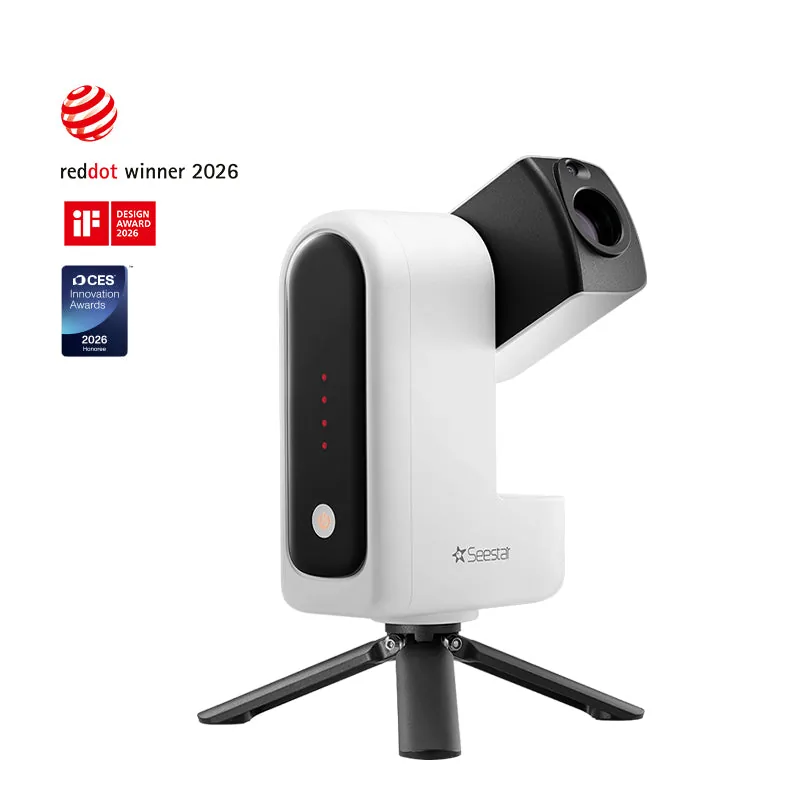
Seestar S30 Pro
ZWO
Best for: Most people who want photos of the night sky with the least fuss.
Who it is for: A first-time buyer, in a city or a suburb, who wants a nebula on their phone on the first clear night.
Our pick for most readers. It has a 30 mm lens, a 160 mm focal length, two 8.3 megapixel cameras (one telephoto, one wide-angle) and 128 GB of storage. ZWO lists a built-in light pollution filter, a battery rated for 6 hours and a weight of 1.65 kg (3.6 lb). The listing says a tripod, carry case and solar filter come in the box. The telephoto camera sees a 4.6 degree field, wide enough for many large targets in one frame.
Worth knowing: The lens is small, so it gathers less light than the S50 Pro. ZWO says it is for deep-sky targets, the Moon and the Sun, and not for planets. Buy the Overseas version from a seller that ships to your country: ZWO says the Mainland China version cannot be activated elsewhere.
More store options are on our gear page.
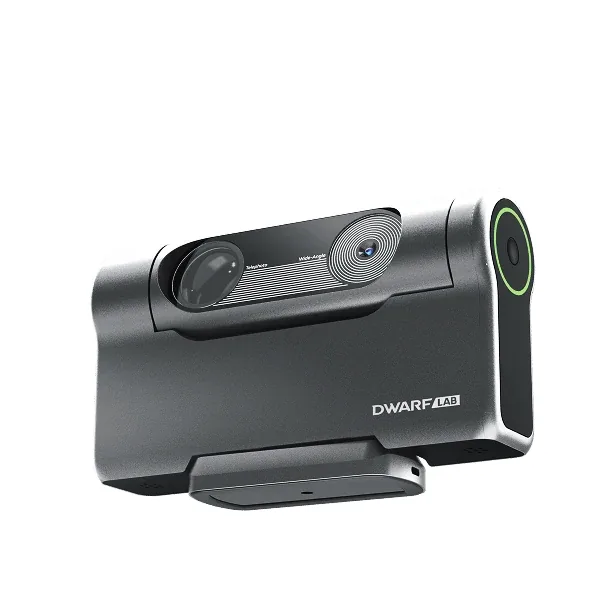
DWARF 3
DWARFLAB
Best for: Travel, camping and anyone who wants one device for the day and the night.
Who it is for: A hiker, traveller or wildlife fan who also wants to try the night sky.
At about 1.35 kg (3 lb) this is the lightest smart telescope here. It has a 35 mm telephoto lens plus a wide-angle lens, three built-in filters (visible, astro and dual-band for city light), exposures of up to 60 seconds, an equatorial mode and IP54 protection against dust and dew. DWARFLAB rates the battery at about 5.5 hours. The telephoto lens also works for birds and distant scenes by day.
Worth knowing: No tripod comes in the box, and DWARFLAB sells one separately, so plan for that cost. The battery rating is one of the shortest here. Check who the seller is on the Amazon page before you buy.
More store options are on our gear page.
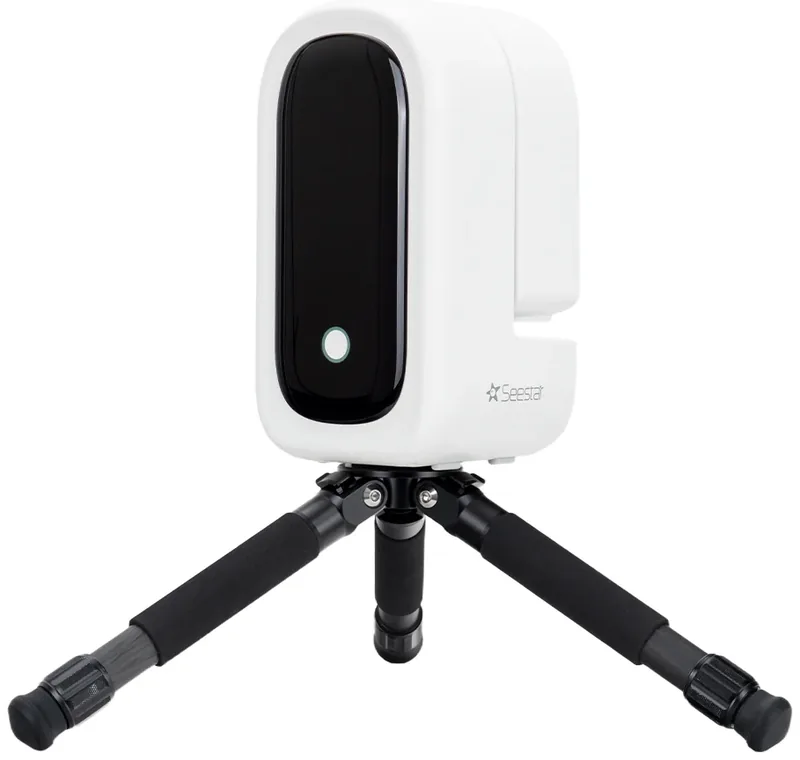
Seestar S50 Pro
ZWO
Best for: More detail and a longer battery, if you can spend more than the S30 Pro.
Who it is for: Someone who already knows they will use it often, or who wants to build large mosaics of galaxies and nebulae.
This one has a 50 mm lens, a 260 mm focal length and two 4K cameras. ZWO rates the battery at up to 9 hours and lists a weight of 2.8 kg (6.2 lb). It supports an equatorial mode, a tracking setup that follows the sky's rotation more closely, and mosaic capture of up to 8K. A tripod, carry case and solar filter are in the box.
Worth knowing: The field of view is narrower than the S30 Pro (2.8 degrees against 4.6), so large targets need a mosaic. One review we read says the S30 Pro gives almost the same images at normal viewing sizes for less money. Like the S30 Pro, it is not meant for planets.
More store options are on our gear page.
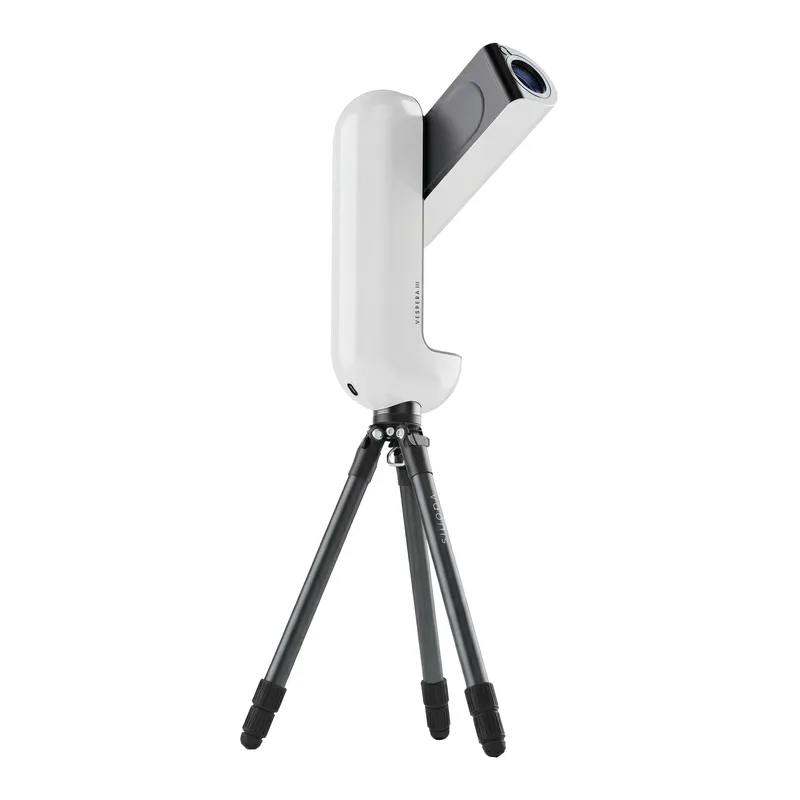
Vaonis Vespera 3
Vaonis
Best for: Hands-off, all-night imaging for someone with a bigger budget.
Who it is for: A buyer who wants to set it up, go to bed and come back to a finished stack, and who will pay for that.
Vaonis lists a 50 mm f/4.9 lens with a four-element apochromatic design (it keeps colours sharp), an 8.3 megapixel sensor, 11 hours of battery, 115 GB of storage and mosaics of up to 24 megapixels. It also has a feature for finishing the same target over several nights. The weight is 5 kg (11 lb), and the Amazon listing says an aluminium tripod is included.
Worth knowing: It is the heaviest, and one of the two most expensive, here. Vaonis sells the light pollution and dual-band filters as separate extras, so the extra cost for city use is real. Check stock and the seller before you buy: Vaonis's own store page, priced in euros, showed it out of stock when we looked on 23 November.
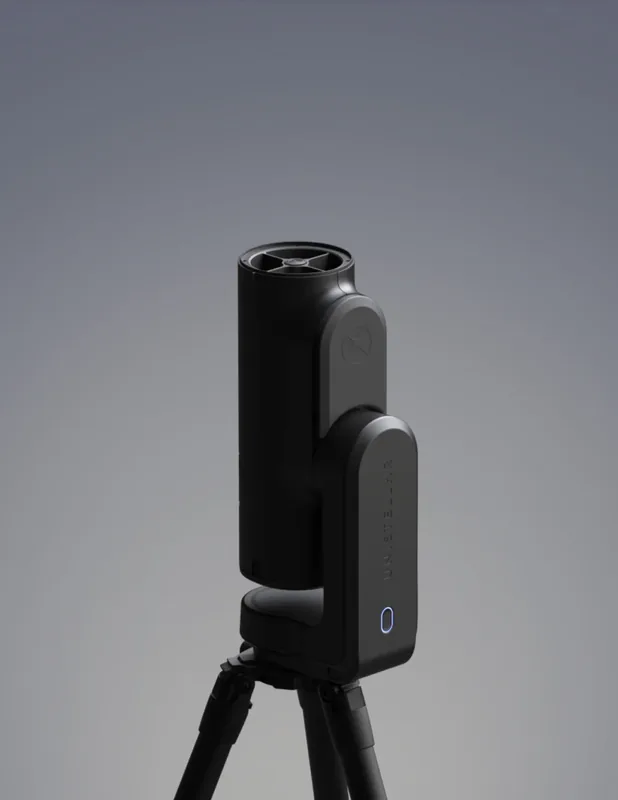
Unistellar Odyssey
Unistellar
Best for: A live view you can share with a group, from a maker built around science.
Who it is for: A family, school or club, or anyone who values a larger 85 mm mirror and does not mind paying for it.
Unistellar lists an 85 mm mirror, a 320 mm focal length (f/3.9), automatic focus, no mirror alignment needed, a 4 kg (8.8 lb) body with a 2.5 kg tripod included, and a 5-hour battery. Up to 10 phones or tablets can follow one observation. Owners can also join citizen science campaigns with the SETI Institute.
Worth knowing: The Odyssey has no eyepiece. You watch on a phone or tablet. Unistellar says the Odyssey Pro adds eyepiece technology developed with Nikon, and it costs a lot more. On the Amazon page, pick the plain Odyssey option if that is what you want. The field of view is narrow (33.6 by 45 arcminutes, a little wider than the full Moon), so large nebulae will not fit.
More store options are on our gear page.
Which regular telescope should you buy?
Three regular telescopes and one pair of binoculars. If you want to look through an eyepiece, start here.
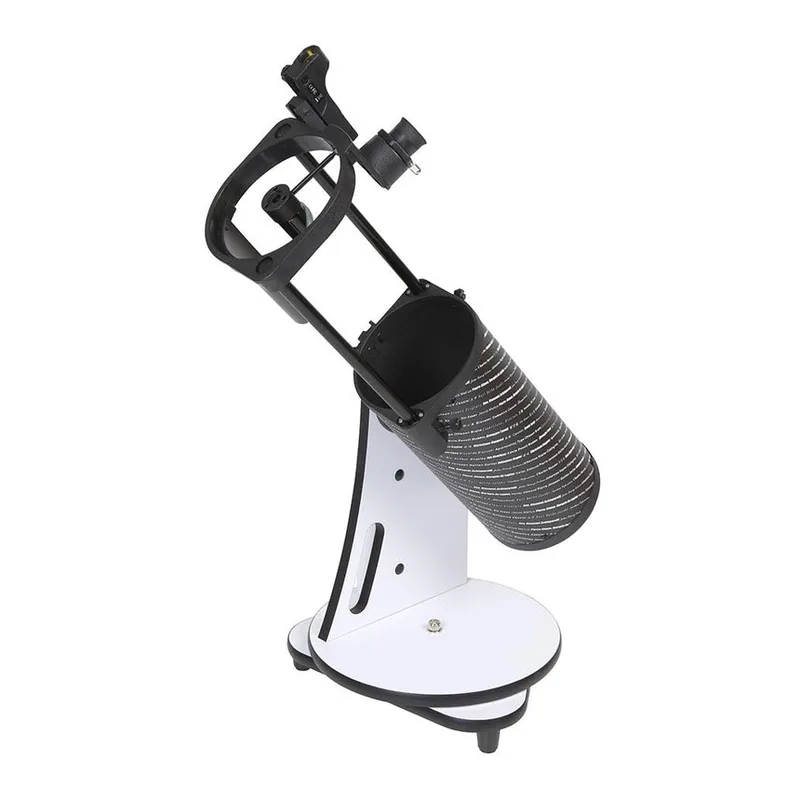
Sky-Watcher Heritage 130 Tabletop Dobsonian
Sky-Watcher
Best for: The cheapest real telescope we would recommend.
Who it is for: A beginner on a tight budget, or a traveller who wants a telescope that packs down.
A 130 mm (5 inch) parabolic mirror at f/5 with a 650 mm focal length, a 1.25 inch focuser and a collapsible tube that keeps its alignment when collapsed. Sky-Watcher says it collects 319 percent more light than the human eye. The Amazon listing gives a total weight of about 19.2 lb (8.7 kg).
Worth knowing: It is a tabletop model, so you need a sturdy table or low wall to put it on. It is fully manual: no app, no finder help, no tracking. Check which eyepieces are in the box on the listing before you order.
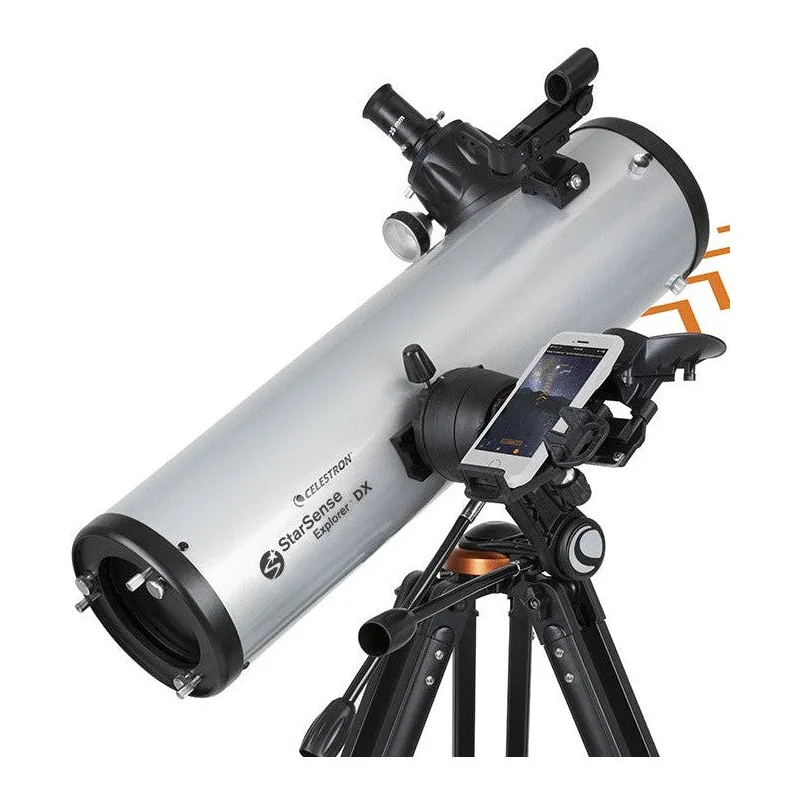
Celestron StarSense Explorer DX 130AZ
Celestron
Best for: A first telescope you look through, with your phone showing you where to point.
Who it is for: A beginner who wants to see the real sky but is afraid of getting lost.
It has a 130 mm (5 inch) mirror, a 650 mm focal length (f/5), a manual mount, a full-height tripod, a red dot finder and 25 mm and 10 mm eyepieces (26 times and 65 times magnification). You dock your phone, the app reads the star patterns overhead and arrows guide you to the target. When the bullseye turns green, you look in the eyepiece. Celestron lists a 2-year warranty and a kit weight of 18 lb (8.16 kg).
Worth knowing: You still push the telescope by hand and follow objects as the sky turns. Some buyer reviews report app or setup problems, so test it in the first days while you can still return it. Check that your phone is on the app's supported list.
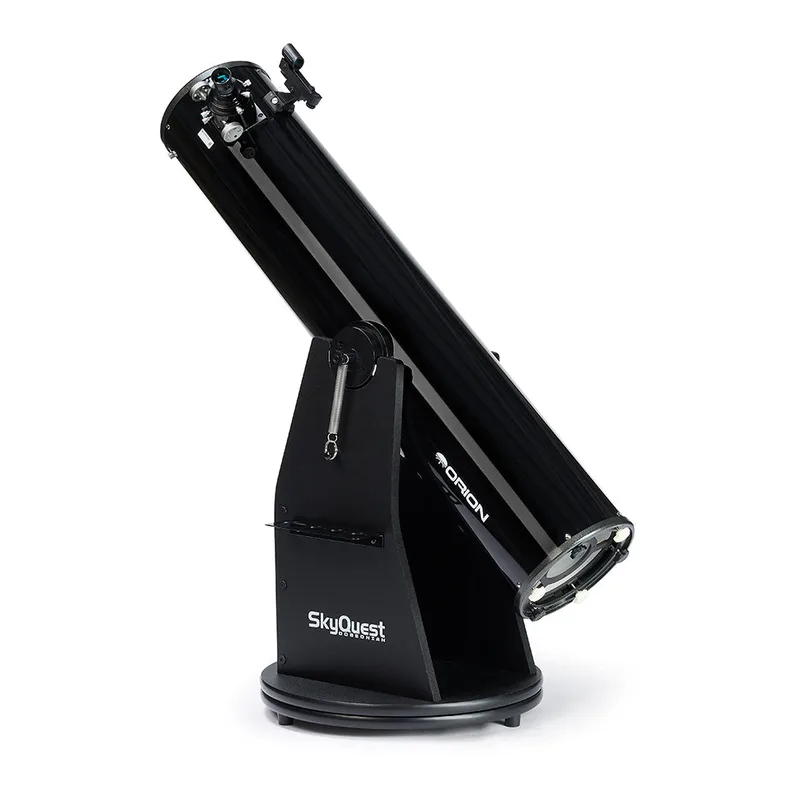
Orion SkyQuest XT8 Classic Dobsonian
Orion
Best for: The best views for the money, if you have the space.
Who it is for: A beginner or a family who want to look at the Moon, Jupiter, Saturn, star clusters and brighter deep-sky objects.
An 8 inch (200 mm) parabolic mirror at f/6, a 1,200 mm focal length, a 2 inch Crayford focuser, a 25 mm eyepiece (48 times), a red dot finder and a swivelling base. Orion says it needs no battery, app or alignment routine. It lists a 2-year warranty.
Worth knowing: It weighs 55.6 lb (about 25 kg) in two pieces, and the base needs assembly. It does not find or track objects, so targets drift out of view and you nudge it. A reflector also needs occasional mirror alignment, called collimation. Orion's own first upgrades are a Barlow lens (it doubles the magnification), a higher-power eyepiece, a Moon filter and a phone adapter.
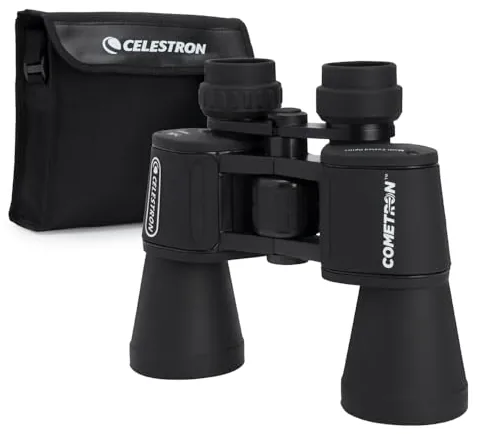
Celestron Cometron 7x50 Binoculars
Celestron
Best for: A low-cost first step before you commit to a telescope.
Who it is for: Anyone who is not sure yet, or who wants something for the Moon, bright clusters and rocket launches.
They are 7 times magnification with 50 mm lenses, Porro prisms (a classic bright design) and multi-coated optics. They can be mounted on a tripod, and a case comes with them. Binoculars are the easiest way to learn the sky before you buy a telescope.
Worth knowing: Seven times is too low to show the rings of Saturn or the cloud bands of Jupiter. Held in your hands they shake, so lean on something steady or use a tripod adapter.
What are the downsides?
Every telescope here has weak points. Read these before you spend.
- Weather. Every telescope needs a clear sky. Clouds, haze and a bright full Moon all hurt faint targets.
- Smart telescopes depend on software. You rely on an app, Wi-Fi and updates. If the app changes or the maker stops supporting a model, your telescope changes with it.
- Planets are weak. The Seestars are not meant for them, and a small smart telescope cannot match a regular one for Saturn and Jupiter.
- Narrow views. The S50 Pro sees a 2.8 degree field, and the Odyssey sees 33.6 by 45 arcminutes. Large nebulae need mosaics or will not fit.
- Premium prices buy size, battery and build. The Vespera 3 and the Odyssey cost about three times the S30 Pro or more. One review we read says the S30 Pro gives almost the same images as the S50 Pro at normal viewing sizes.
- Regular telescopes take work. You find objects by hand, and reflectors need occasional mirror alignment (collimation). Large ones are heavy. A tabletop model needs a sturdy table.
- Buying outside the US. Check import tax, the warranty in your country and, for Seestar, that you have the Overseas version.
What to skip: very cheap telescopes sold on huge magnification claims, such as "500x" on the box. Magnification is not the point. A small lens and a wobbly tripod give blurry, shaky views. In our judgement, you are better off with binoculars than with a bargain telescope like that.
How do the picks compare?
Sizes and battery ratings are from the makers' own pages. Prices are approximate, from US stores on 23 November 2026.
| Model | Type | Aperture | Weight | Battery | Tripod or base in box | About price |
|---|---|---|---|---|---|---|
| Seestar S30 Pro | Smart | 30 mm | 1.65 kg (3.6 lb) | 6 h | Tripod | $665 to $700 |
| DWARF 3 | Smart | 35 mm | 1.35 kg (3 lb) | 5.5 h | No tripod | $550 |
| Seestar S50 Pro | Smart | 50 mm | 2.8 kg (6.2 lb) | Up to 9 h | Tripod | $1,000 |
| Vaonis Vespera 3 | Smart | 50 mm | 5 kg (11 lb) | Up to 11 h | Tripod | $2,000 to $2,500 |
| Unistellar Odyssey | Smart | 85 mm | 4 kg + 2.5 kg tripod | 5 h | Tripod | $2,100 |
| StarSense Explorer DX 130AZ | Regular, phone-guided | 130 mm | 8.2 kg (18 lb) kit | None (uses your phone) | Tripod | $500 |
| Heritage 130 Tabletop | Regular | 130 mm | About 8.7 kg (19 lb) | None | Tabletop base | $270 |
| Orion SkyQuest XT8 | Regular | 200 mm | 25 kg (55.6 lb) | None | Dobsonian base | $600 |
Ready to decide? Your final answer
Answer these in order. Stop at the first one that fits you.
- Do you want to look through an eyepiece with your own eye? Yes: buy a regular telescope. If you have a car and a bit of floor space, buy the Orion SkyQuest XT8. If you need something small, buy the Heritage 130 tabletop and put it on a sturdy table. If finding objects scares you, buy the StarSense Explorer DX 130AZ.
- Do you want colour photos with almost no learning? Yes: buy a smart telescope. Start with the Seestar S30 Pro. Take the DWARF 3 instead if you travel and want daytime wildlife shots too. Step up to the Seestar S50 Pro for more detail and a longer battery.
- Is money not a limit, and do you want a hands-off night? Look at the Vespera 3. If you want to share a live view with a group, look at the Unistellar Odyssey.
- Still not sure? Buy the Cometron 7x50 binoculars and spend a month learning the sky. Then buy a telescope.
If you want one answer, here it is. For most readers of this site, buy the Seestar S30 Pro. It gives a first-time buyer a real picture of a nebula on the first clear night, from a town, without learning anything first. If your heart says eyepiece, buy the XT8 and do not look back.
Want more space gear and honest picks? See our gear page. Want launch times and space news in your inbox? Join the free newsletter.