
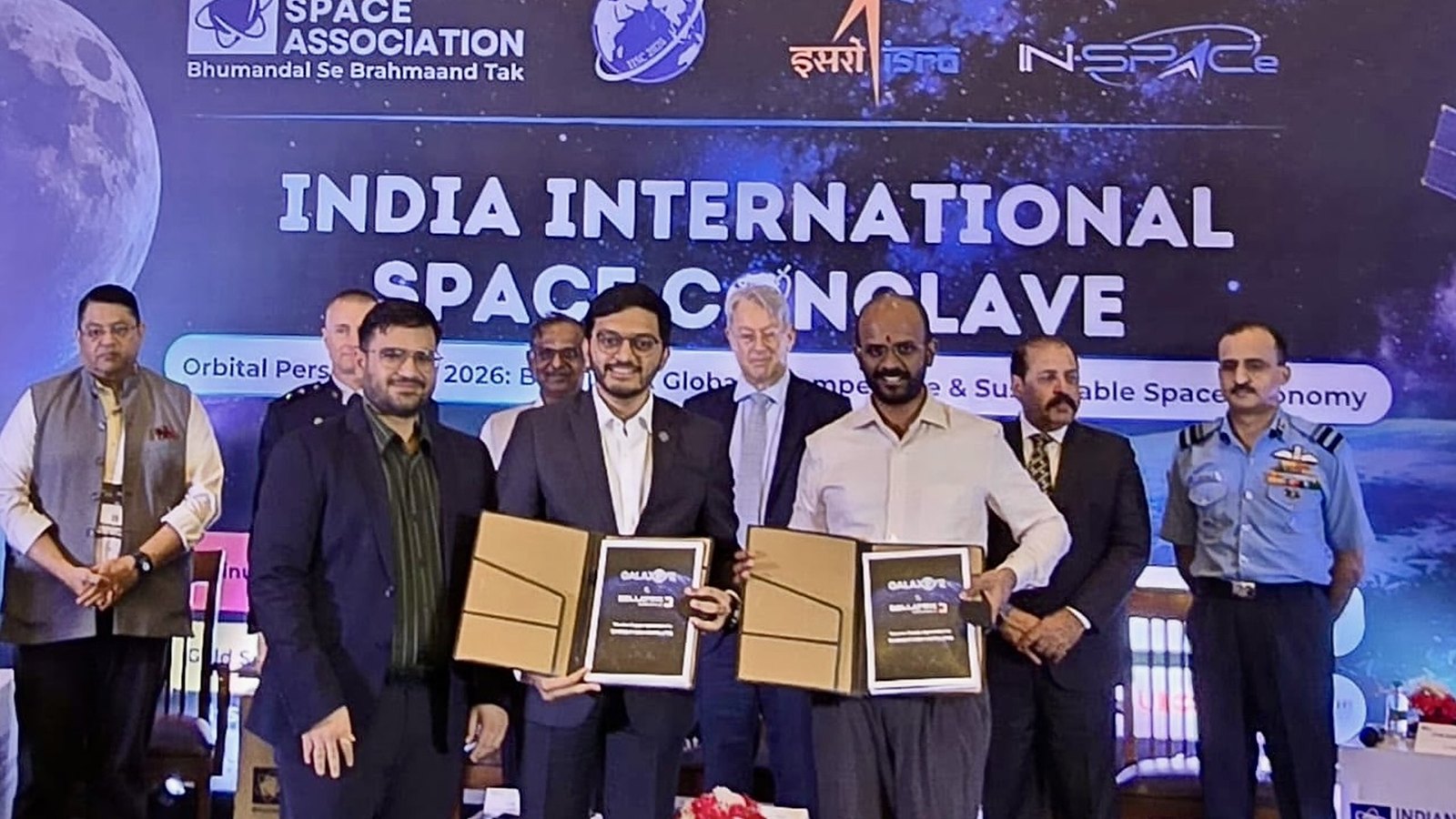
On Tuesday 24 November 2026, GalaxEye awarded Bellatrix Aerospace a multi-year contract to supply in-space propulsion for its next 30 Drishti Gen-II satellites. Bellatrix will design, build, test and deliver its Arka Hall-effect electric thrusters, which are small engines that use electricity rather than a conventional chemical burn. The companies announced the order at the India International Space Conclave in New Delhi. They have not published a price.
Both firms called it, by satellite count, the largest business-to-business (B2B) order one Indian private space company has placed with another since India opened the sector to private players in 2020. That claim is about the number of satellites, not the size of the cheque.
What did the two companies sign?
The official posts describe a multi-year supply contract, not a merger or a joint venture. GalaxEye said the thrusters will become part of its Archtop satellite bus, the company's standard spacecraft platform. Bellatrix said its team will design, manufacture and test the hardware in Bengaluru, the same city where GalaxEye is building the spacecraft.
GalaxEye's announcement post said the agreement was unveiled in the presence of Dr V. Narayanan, secretary of the Department of Space and chairman of the Indian Space Research Organisation (ISRO); Dr Pawan Goenka, chairman of the Indian National Space Promotion and Authorisation Centre (IN-SPACe), the government body that authorises private space activity; and Air Vice Marshal Manu Midha, director general of the Defence Space Agency. The backdrop at the event also carried logos of the Indian Space Association (ISpA), ISRO and IN-SPACe. News coverage of the event said ISpA organised the conclave.
Suyash Singh, cofounder and chief executive of GalaxEye, and Rohan M. Ganapathy, cofounder and chief executive of Bellatrix, both issued remarks that The Hindu Business Line carried in its report of the announcement. Singh said:
"A constellation is not just 30 satellites. It is one system spread across the sky, and propulsion is what holds its shape. We wanted a partner whose engineers we can work beside every day, not across time zones and export queues. Bellatrix has flown its thrusters, it is scaling production, and it is right here in Bengaluru. That is why we are trusting them with our upcoming constellation."
Ganapathy said:
"When Indian space companies buy from each other, more of the value stays in India, and every mission makes the next one stronger. Our team will work alongside GalaxEye through every phase, and we are proud that Bellatrix thrusters will power satellites India will rely on."
GalaxEye's own post on X used a shorter extract of Singh's remarks. Singh also posted that he was "glad to be pioneering India's first largest B2B space technology deal" and to be partnering with Ganapathy and the Bellatrix team.
What will the Arka thrusters do?
A rocket usually drops a satellite into a rough starting orbit. The satellite then has to get itself into the exact slot it was designed for, stay there as the thin upper atmosphere tugs at it, keep a safe distance from its neighbours, dodge debris, and come down in a controlled way at the end of its life. That is the job of in-space propulsion.
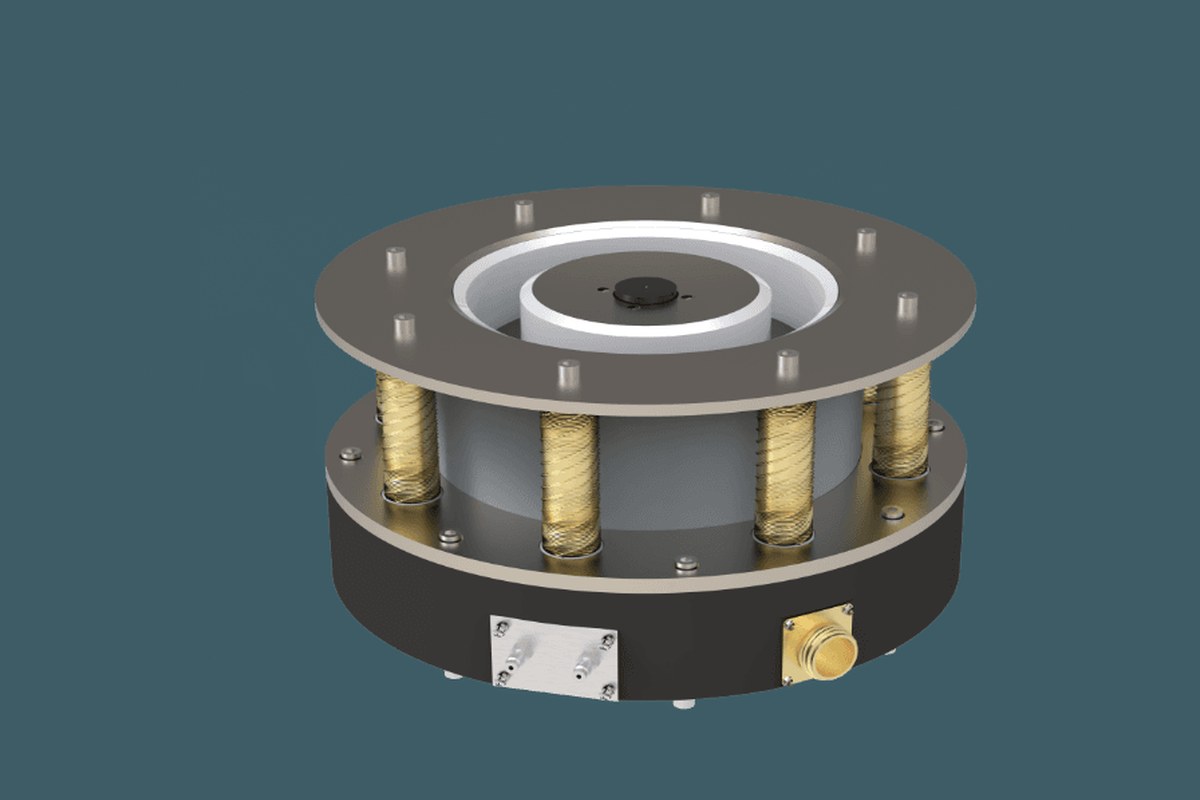
Bellatrix's official post said Arka will raise each satellite to its imaging orbit after launch. The same newspaper report said the systems will also hold spacing across the constellation, help the satellites avoid space debris, and allow a controlled deorbit at the end of their operational life.
Hall-effect thrusters produce a gentle push compared with chemical engines, but they use propellant much more sparingly. That matters for a 30-satellite Earth-observation network, which has to keep a predictable timetable for photographing the same places on the ground. The announced contract is for Arka electric thrusters. It does not cover Bellatrix's Rudra green-propellant thrusters, or its Pushpak orbital transfer vehicle, a separate "space taxi" product that is not part of today's order.
That report also said Bellatrix's Arka and Rudra thrusters completed in-orbit qualification on ISRO's PSLV-C58 POEM-3 platform in January 2024, and that Rudra was tested again on POEM-4 in January 2025. Bellatrix's own post about today's deal highlighted the 2024 PSLV-C58 flight for Arka. PSLV is ISRO's Polar Satellite Launch Vehicle, one of the rockets covered in our guide to India's launchers and in the PSLV, GSLV and LVM3 comparison.
Who are GalaxEye and Bellatrix Aerospace?
GalaxEye was founded in 2021 at the Indian Institute of Technology Madras, in Chennai, by Suyash Singh, Denil Chawda, Pranit Mehta, Kishan Thakkar and Rakshit Bhatt, according to Inc42. Its official contact page lists an operating address at the Hitech Defence Aerospace Park in Bengaluru, and a registered office in Vepery, Chennai. The company builds OptoSAR satellites, which carry an optical camera and a synthetic aperture radar (SAR) on the same spacecraft. Optical cameras give a natural-looking picture but are blocked by cloud, smoke and darkness. Radar can see through those conditions. Putting both on one satellite is meant to give a single, aligned picture in more kinds of weather.
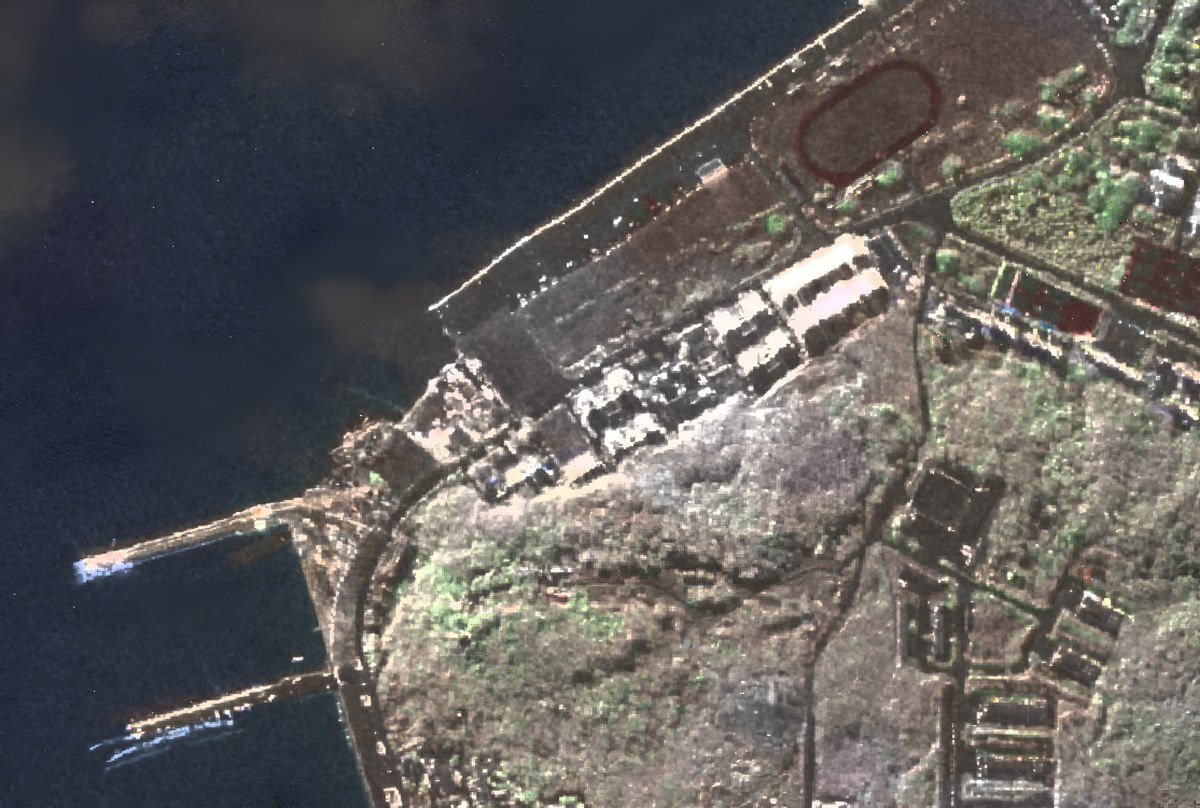
GalaxEye's first satellite, Mission Drishti, lifted off at 12:30 p.m. on 3 May 2026, on a SpaceX Falcon 9 from Space Launch Complex 4E (SLC-4E) in California, according to the company's mission page. GalaxEye describes it as the first OptoSAR satellite in orbit and as India's largest privately built Earth-observation satellite, with a mass of about 190 kilograms. On 7 July 2026, The Hindu reported that GalaxEye had lost contact with the spacecraft after a geomagnetic solar storm during the last stage of early-orbit operations. The company said radiation from the storm likely affected a critical onboard system, that recovery efforts were still going on, and that the chance of recovery appeared low. It also said the flight had already tested deployment, attitude control, onboard computing and its mission-control centre in Bengaluru, and that it planned to launch two more OptoSAR satellites within 24 months.
The same startup publication reported that GalaxEye later secured a US patent for its OptoSAR technology, in September 2026, and that it acquired spacecraft engineering firm StarOps in August. In the same month as the patent, the Technology Development Board committed ₹63.84 crore from the government's Research, Development and Innovation Fund toward GalaxEye's plans, according to the newspaper report of today's deal, as the company works toward a next multisensor satellite with imaging sharper than 0.5 metres. It also listed a seed round of $3.5 million and a Series A of $10 million, which matches the funding figures on GalaxEye's own about page. None of that funding is the Bellatrix contract, whose value remains unpublished.
Bellatrix Aerospace was founded in 2015, according to its company website, and lists an office on Sankey Road in Bengaluru. It builds in-space propulsion, including the Arka electric line and the Rudra green-propellant line. In March 2026 it closed a $20 million pre-Series B round led by Cactus Partners, a figure also given in the newspaper report of today's deal. That money, Bellatrix said at the time, was meant to expand manufacturing and shorten delivery times as constellation orders arrived.
Why does this matter for India's private space sector?
For years, Indian satellite builders often had to buy flight-critical parts from overseas, which can mean long export queues and work across time zones. Today's order is a case of two private Indian companies selling a flight-critical subsystem to each other, in the same city, after the thrusters have already been fired in orbit on ISRO missions.
GalaxEye cofounder Pranit Mehta told that publication that Bellatrix will be the programme's primary propulsion supplier, and that GalaxEye is also in talks with other Indian companies for power, control, communications and other subsystems. "The Indian private ecosystem is here and now, and it is time that we partner with each other and not just rely on the government. The government has already done its job, and it is time for us to step up and help each other out," he said.
The newspaper report of today's deal also placed it against a government target of a $44 billion space economy by 2033, including $11 billion in exports. That is a policy goal, not a forecast we can verify from this contract alone, and it is not a reason to treat either company as an investment.
Private Indian satellites are still a small part of how many satellites India has in orbit. Most of the official national count is still government-built. A 30-satellite commercial constellation, if it is actually flown, would be a noticeable addition. The first of those 30 has not yet been assigned a public launch date. For the government launch side of the story, see our ISRO 2026 launch record.
What happens next?
According to that interview, deliveries will begin with propulsion systems for the first two satellites, then scale across the 30-satellite constellation, which GalaxEye aims to have in orbit by 2030. No rocket, launch site or date has been announced for those flights. The companies have also not said which Arka model will be used, or when the first unit will be delivered.
What to watch for: the first two flight-model thrusters being delivered and integrated; any official word on a launch vehicle for the first Drishti Gen-II satellites; and whether GalaxEye names other Indian suppliers for the rest of the spacecraft. Until those details are published, the 30-satellite figure should be read as a contracted programme, not as a launch schedule.