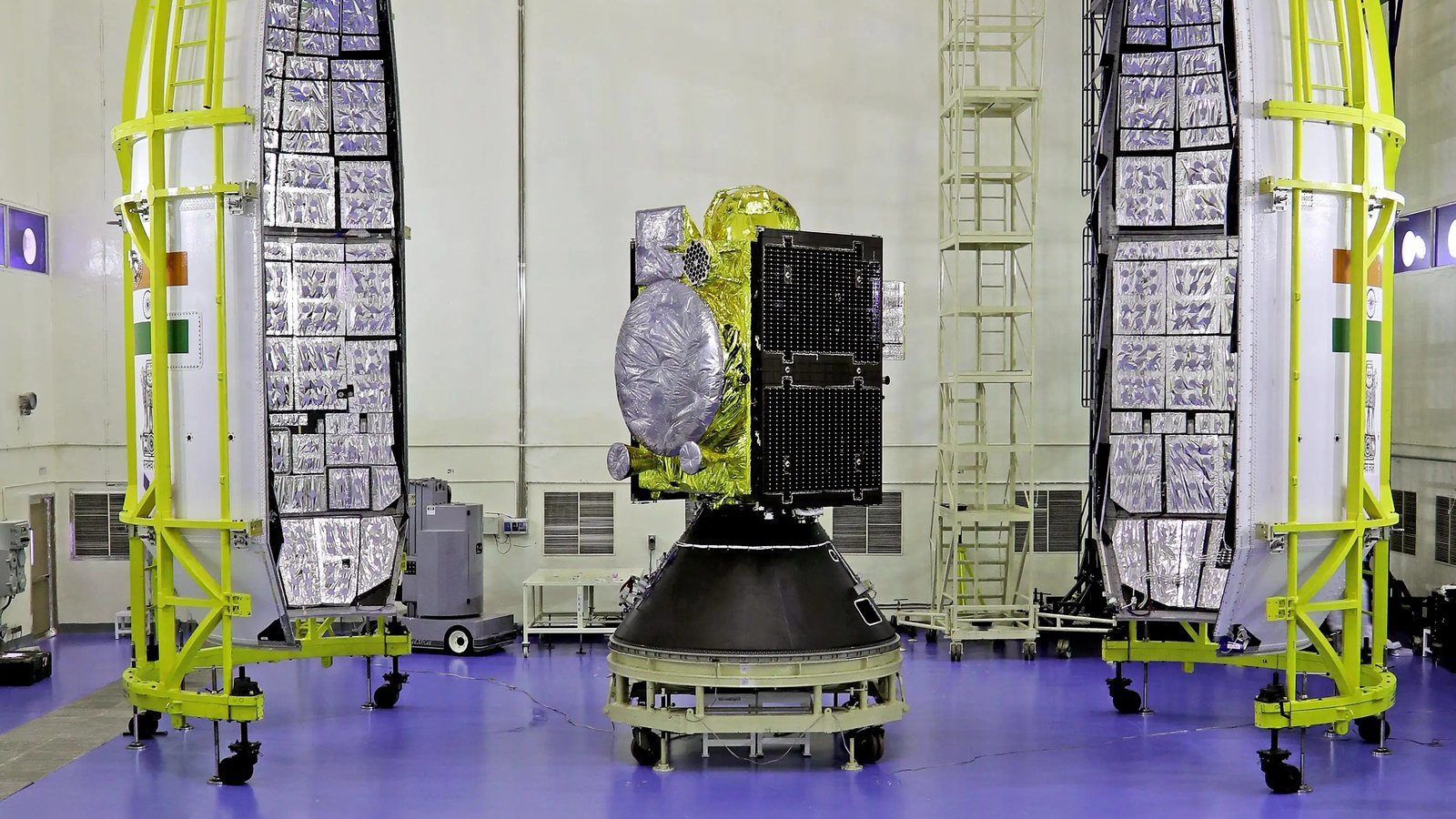

GSLV stands for Geosynchronous Satellite Launch Vehicle. It is a rocket built by the Indian Space Research Organisation (ISRO) to send satellites towards geosynchronous orbit, about 36,000 km above the Earth, where a satellite goes round once a day. When people say GSLV today, they usually mean GSLV Mk II, which ISRO's GSLV page calls the "Geosynchronous Satellite Launch Vehicle Mark II".
As of 26 October 2026. The next GSLV flight is GSLV-F18 with the NVS-03 navigation satellite. ISRO's Sriharikota launch centre lists it for 11:51 PM IST on Friday 30 October. See the GSLV-F18 launch time page.
What does each word in GSLV mean?
- Geosynchronous: the orbit it aims for. A satellite in geosynchronous orbit takes one day to go round the Earth. If that orbit sits over the equator, it is geostationary, and the satellite seems to stay still in the sky.
- Satellite Launch Vehicle: a rocket that puts satellites into orbit.
GSLV doesn't take satellites all the way there. It leaves them in a long, oval geosynchronous transfer orbit (GTO), and each satellite then fires its own engine to reach its final orbit. ISRO's figure for GSLV Mk II is 2,250 kg to GTO, and 6,000 kg to low Earth orbit.
What is the difference between GSLV Mk II and GSLV Mk III?
They share a name but are different rockets:
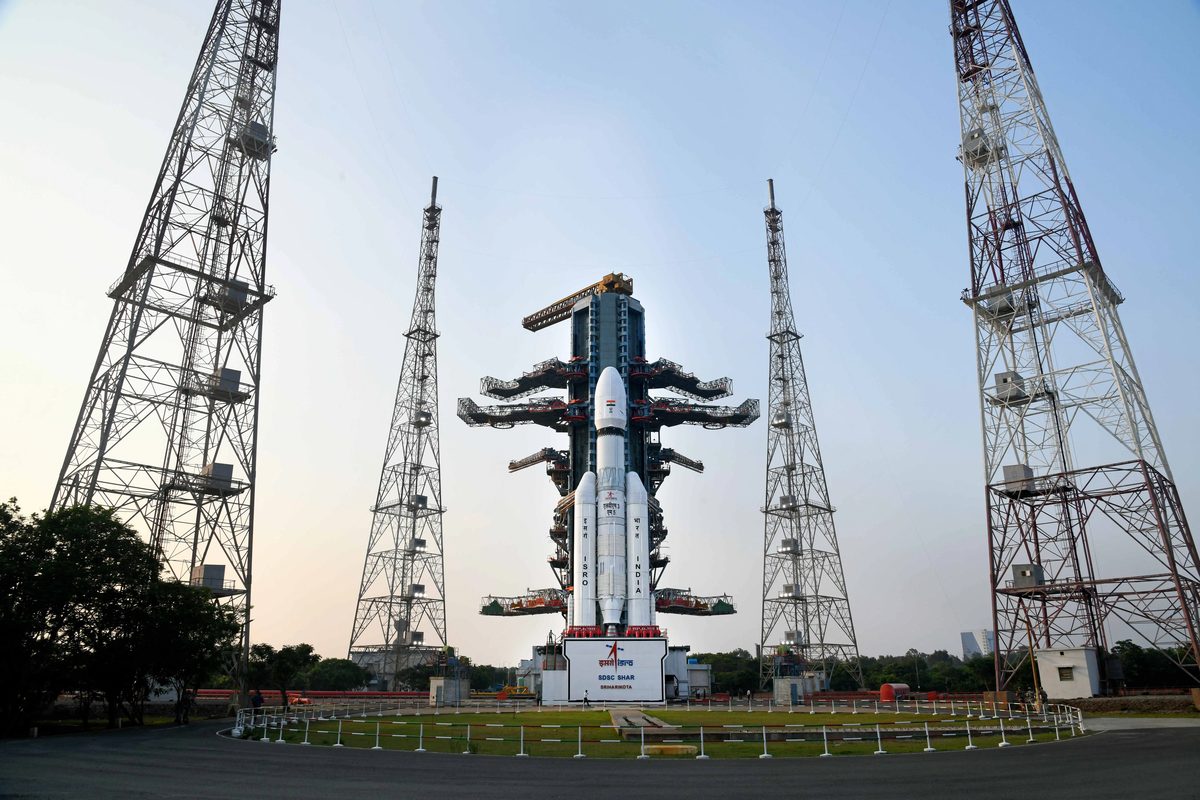
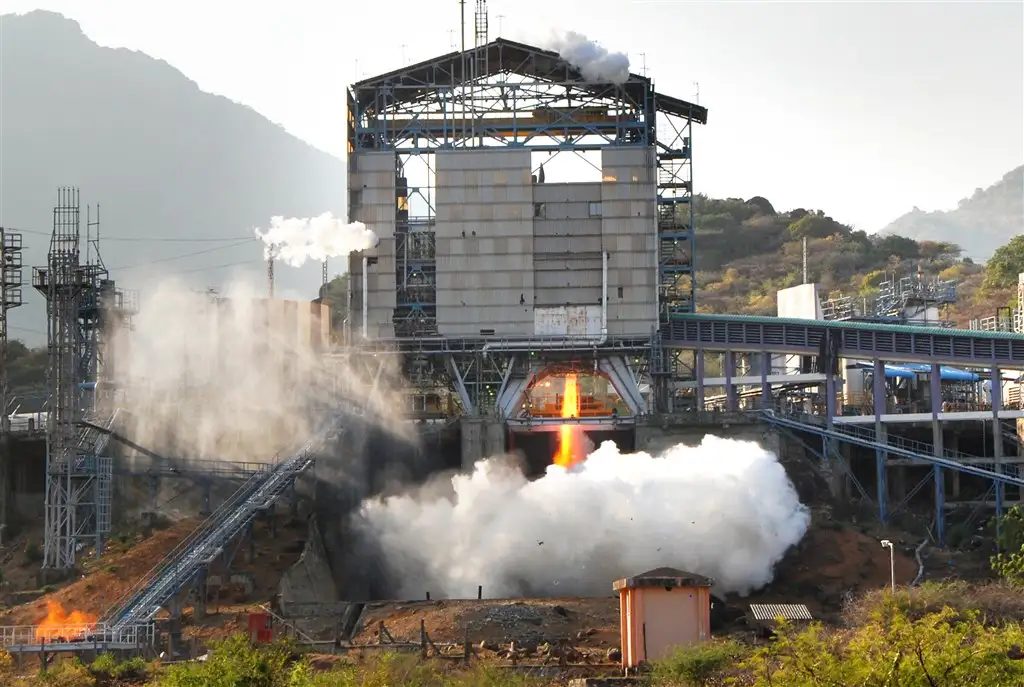
- GSLV Mk II is 51.73 m tall, weighs 420 tonnes at liftoff and has three stages. The first is a solid-fuel core with four liquid-fuel strap-on boosters. The second is a liquid stage. The third is a cryogenic stage, which burns liquid hydrogen and liquid oxygen. ISRO says it uses the CE-7.5, India's first cryogenic engine.
- GSLV Mk III is now called the Launch Vehicle Mark-3 (LVM3). It is 43.5 m tall and weighs 640 tonnes, with two large solid boosters, a liquid core stage and a cryogenic upper stage with the CE-20 engine. ISRO's LVM3 page gives 4,000 kg to GTO, nearly twice GSLV Mk II.
For how both compare with India's Polar Satellite Launch Vehicle (PSLV), see PSLV vs GSLV vs LVM3.
What is GSLV's launch record?
ISRO's GSLV launch list has 19 flights:
- First flight: GSLV-D1 with GSAT-1, 18 April 2001.
- Latest flight: GSLV-F17 with EOS-05, 4 September 2026. ISRO says it was the 19th GSLV flight.
- Flights that did not succeed: four, by ISRO's list. GSLV-F02 in July 2006, GSLV-D3 in April 2010, GSLV-F06 in December 2010 and GSLV-F10 with EOS-03 in August 2021.
ISRO says the early GSLVs flew with cryogenic stages supplied by Russia. The first flight with an Indian-built cryogenic stage was GSLV-D5, on 5 January 2014.
ISRO lists GSLV-F15, on 29 January 2025, as a successful launch. Its satellite, NVS-02, then failed to reach its planned orbit because of a problem on the satellite itself. Our article on NVS-03 and NavIC explains what went wrong.
ISRO's LVM3 list has nine launches, starting with a suborbital test on 18 December 2014, and none is marked as unsuccessful.
Where does GSLV launch from?
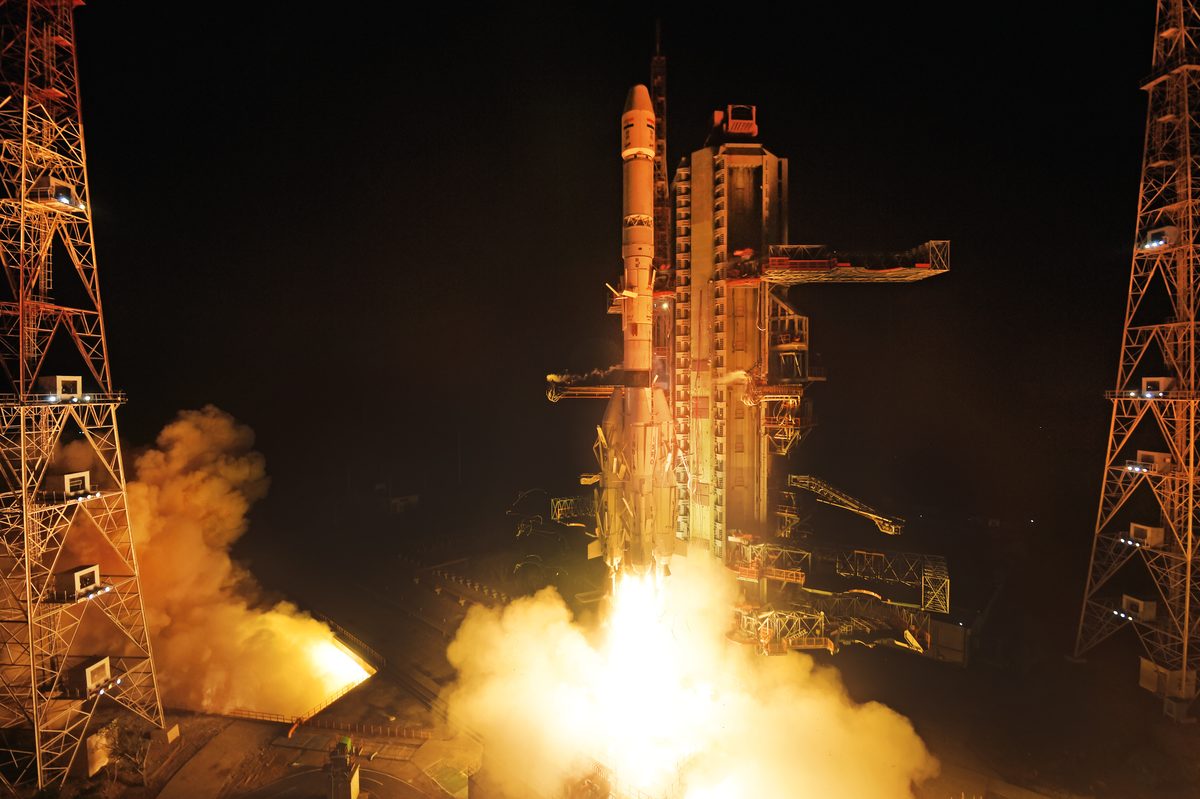
Mainly from the Second Launch Pad at the Satish Dhawan Space Centre, Sriharikota, on India's east coast. See our Sriharikota launch site guide.