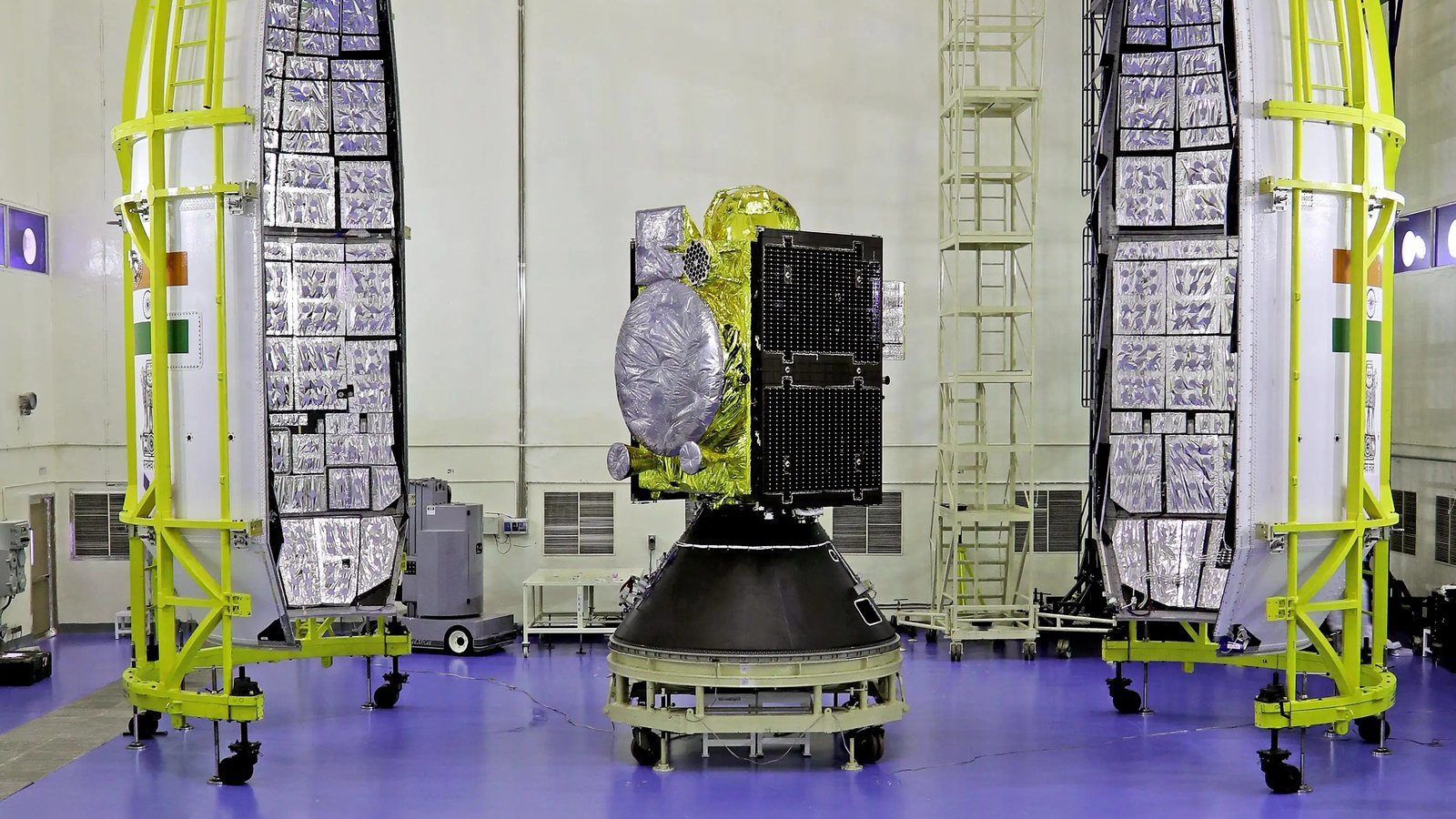

The Indian Space Research Organisation (ISRO) has three main rockets, and the difference is how much they can lift and how high. The Polar Satellite Launch Vehicle (PSLV) is the smallest and most flown; it mostly puts satellites into low orbits around the poles. The Geosynchronous Satellite Launch Vehicle (GSLV) carries satellites of about 2 tonnes towards geostationary orbit, 36,000 km up. The Launch Vehicle Mark-3 (LVM3) is the heavy lifter, for satellites of about 4 tonnes going that high.
ISRO's launchers page calls PSLV its "work horse". It says LVM3 has "a track record of all successful launches even from the first development flight".
Figures from ISRO's vehicle pages and launch lists, as of 26 October 2026. The next GSLV flight is GSLV-F18 with NVS-03; see the GSLV-F18 launch time page.
How do PSLV, GSLV and LVM3 compare?
| PSLV | GSLV (Mk II) | LVM3 | |
|---|---|---|---|
| Height | 44 m (44.4 m for PSLV-XL) | 51.73 m | 43.5 m |
| Mass at liftoff | 320 t (PSLV-XL) | 420 t | 640 t |
| Stages | 4: solid, liquid, solid, liquid | 3: solid core with 4 liquid strap-ons, liquid, cryogenic | 3: 2 solid strap-ons, liquid core, cryogenic |
| To low orbits | 1,750 kg to a 600 km sun-synchronous polar orbit | 6,000 kg to low Earth orbit | 8,000 kg to a 600 km low Earth orbit |
| Towards geostationary orbit | 1,425 kg to a sub-geosynchronous transfer orbit | 2,250 kg to geosynchronous transfer orbit | 4,000 kg to geosynchronous transfer orbit |
| First flight | 20 September 1993 | 18 April 2001 | 18 December 2014 (suborbital test); 5 June 2017 (first to orbit) |
| Flights on ISRO's list | 64 | 19 | 9 |
| Flights not successful, per ISRO | 4 | 4 | 0 |
A geosynchronous transfer orbit (GTO) is a long, oval orbit. A satellite fires its own engine from there to reach its final, circular orbit 36,000 km up, where it keeps pace with the Earth's spin.
ISRO's figures for LVM3 in low orbit differ between pages. The vehicle page gives 8,000 kg to a 600 km orbit, and the launchers page calls it "10 tonne class". The table uses the vehicle page.
What is PSLV used for?
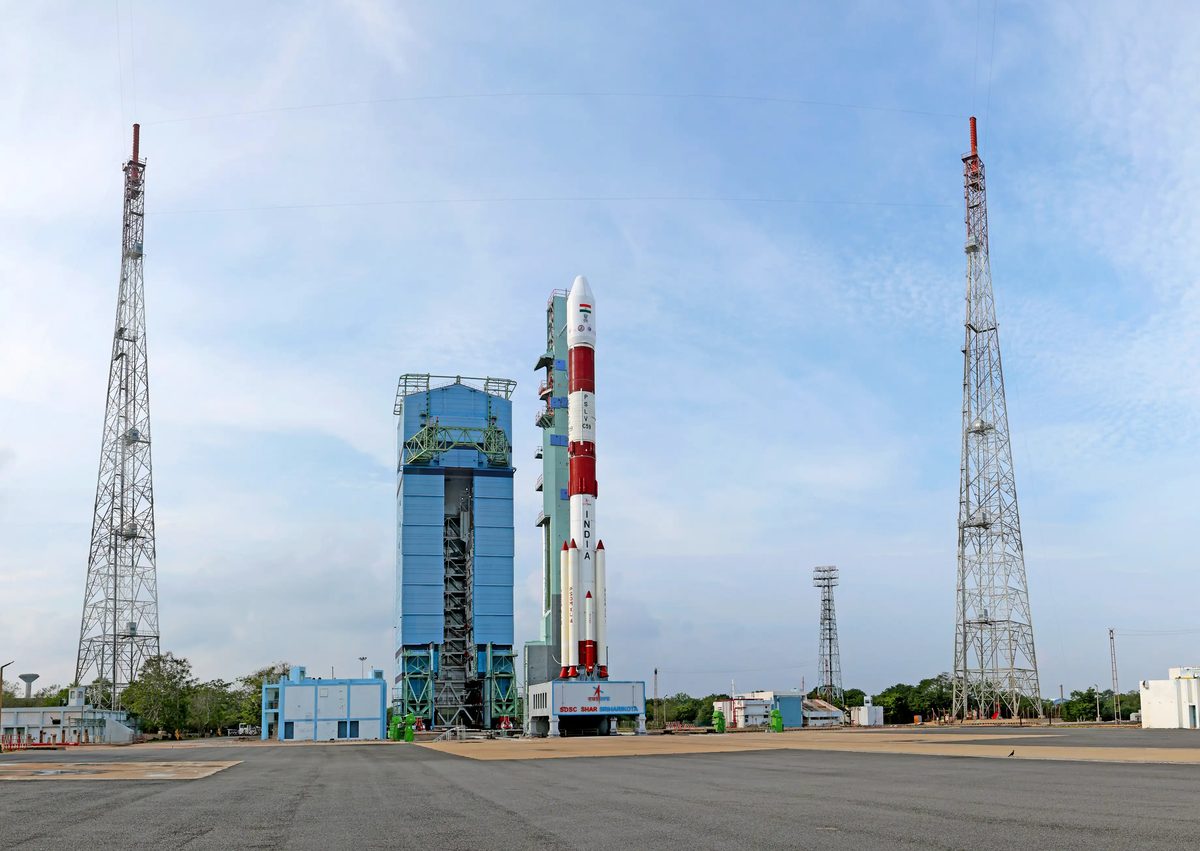
Earth observation satellites in low orbits, small satellites for paying customers, and some science missions. ISRO says PSLV launched Chandrayaan-1 in 2008 and the Mars Orbiter Mission in 2013, and that PSLV-C37 carried 104 satellites in one launch. It flies in four versions with zero, two, four or six solid strap-on boosters: PSLV-CA, -DL, -QL and -XL.
PSLV has had four flights that did not succeed, by ISRO's records: the first, PSLV-D1, in 1993; PSLV-C39 in 2017; PSLV-C61 in May 2025; and PSLV-C62 on 12 January 2026. ISRO's launch list doesn't yet mark C62, but its PSLV-C62 mission page says the rocket "encountered an anomaly during end of the PS3 stage" and that "a detailed analysis has been initiated". PS3 is the third stage.
What is GSLV used for?
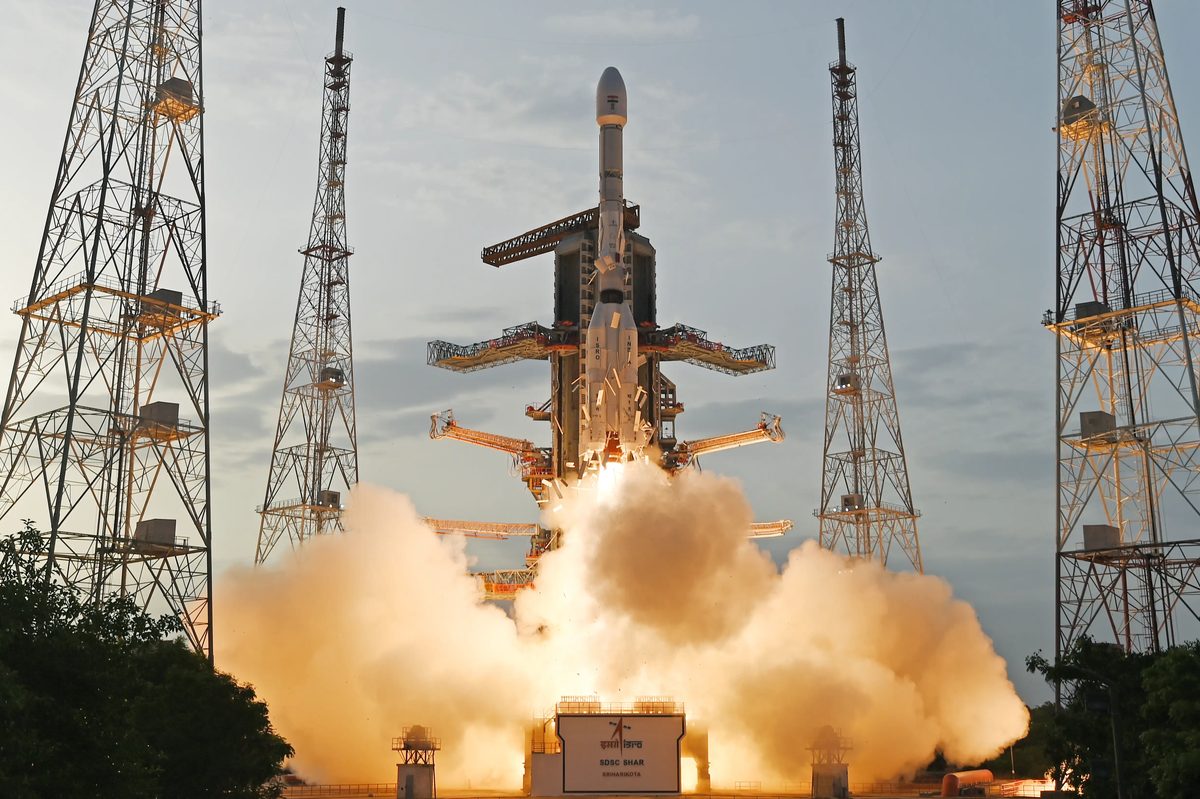
Communication and navigation satellites of about 2 tonnes, sent towards geostationary orbit, and some heavier satellites in lower orbits. Its third stage burns liquid hydrogen and liquid oxygen, which are cryogenic, kept at very low temperatures. ISRO says the early GSLVs used cryogenic stages supplied by Russia. The first flight with an Indian-built cryogenic stage was GSLV-D5, on 5 January 2014. For more on the name and its versions, see GSLV: full form, versions and launches.
ISRO's GSLV launch list has 19 flights, from GSLV-D1 in April 2001 to GSLV-F17 on 4 September 2026. Four did not succeed: GSLV-F02 in 2006, GSLV-D3 and GSLV-F06 in 2010, and GSLV-F10 in 2021.
GSLV-F18 is due to carry the NVS-03 navigation satellite. See What is NVS-03?
What is LVM3 used for?
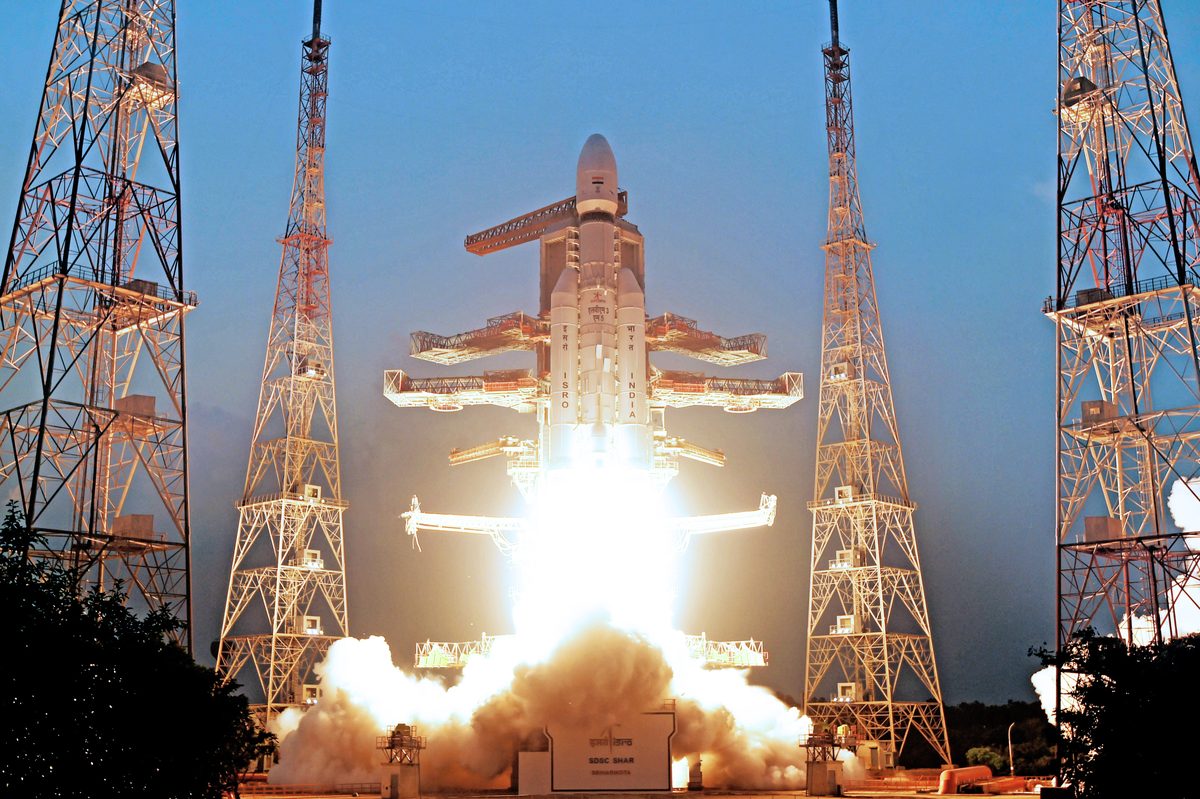
ISRO's heaviest satellites and missions, including Chandrayaan-2 in 2019 and Chandrayaan-3 in 2023, and two launches of OneWeb internet satellites for a paying customer. Its two big S200 solid boosters each carry 205 tonnes of propellant. LVM3 used to be called GSLV Mk III, and ISRO's page still gives that name. But it shares no stages with GSLV Mk II: its core is the L110 liquid stage and its upper stage is the C25, with the CE-20 cryogenic engine.
ISRO says a human-rated version of LVM3 will fly Gaganyaan, India's mission to send astronauts to space.
Where do they launch from?
All three launch from the Satish Dhawan Space Centre at Sriharikota, on India's east coast. PSLV usually uses the First Launch Pad. GSLV and LVM3 use the Second Launch Pad. See our Sriharikota launch site guide, and When is ISRO's next launch? for the next one.