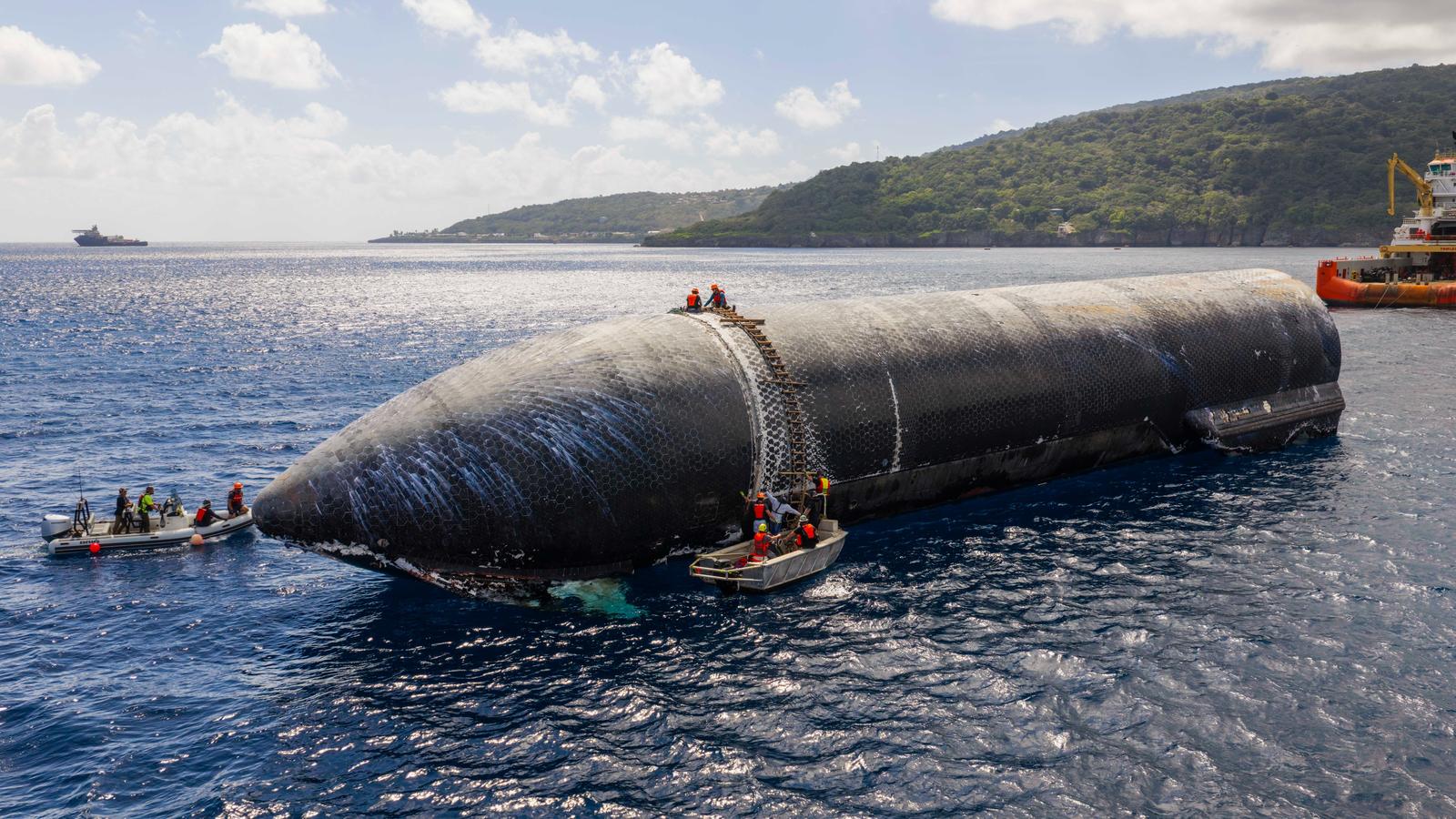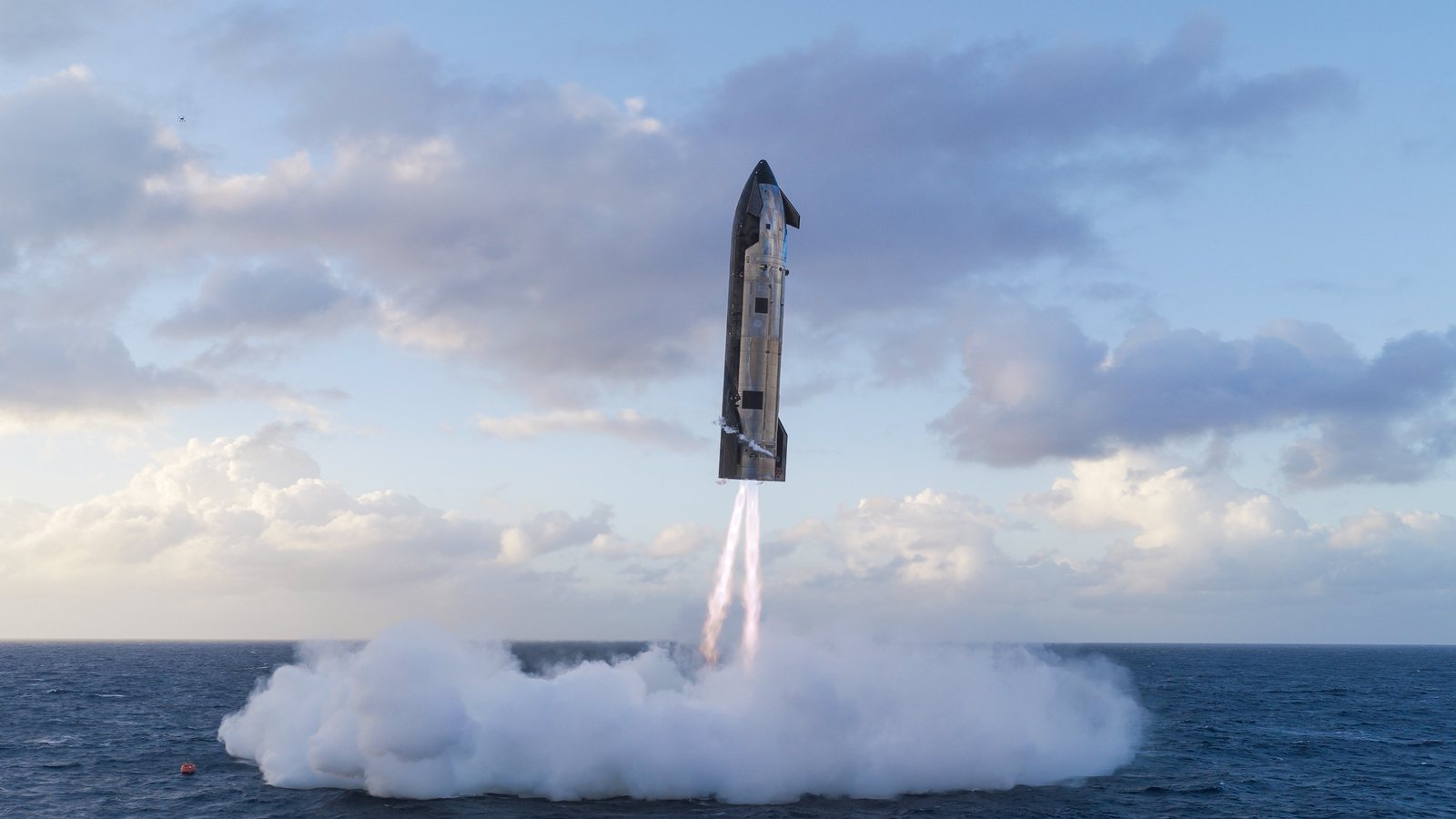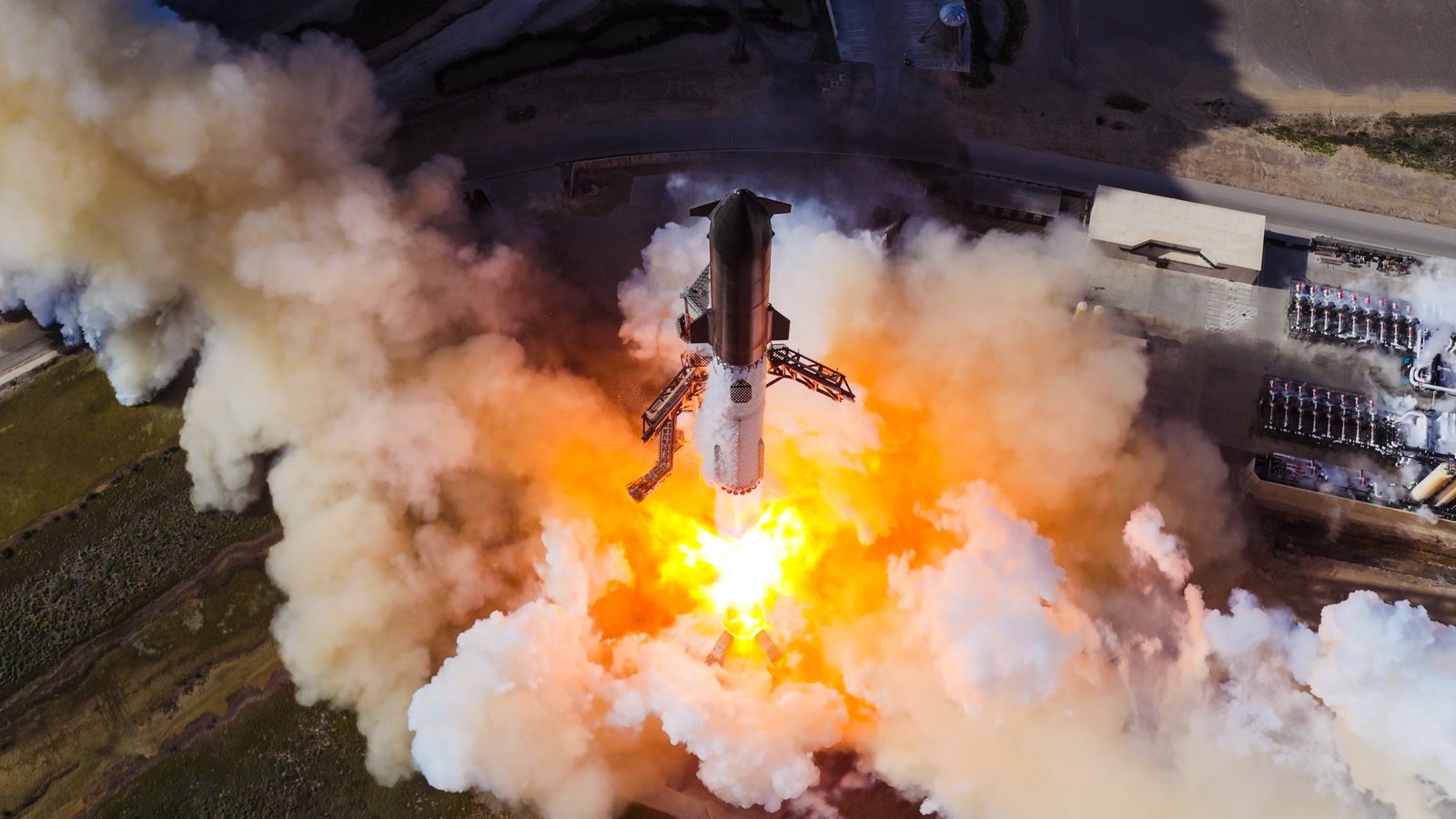

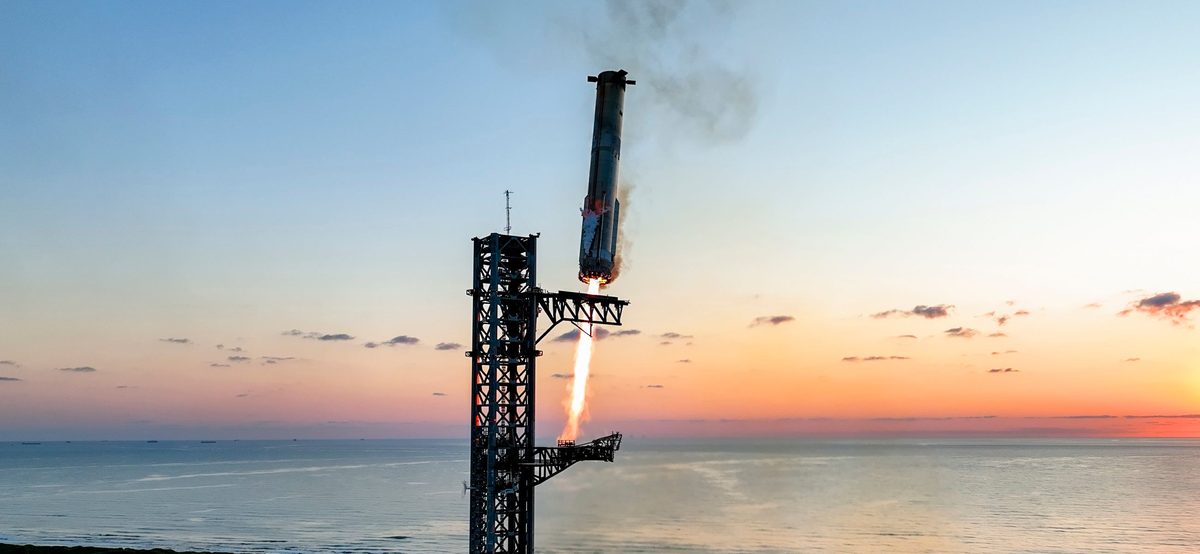
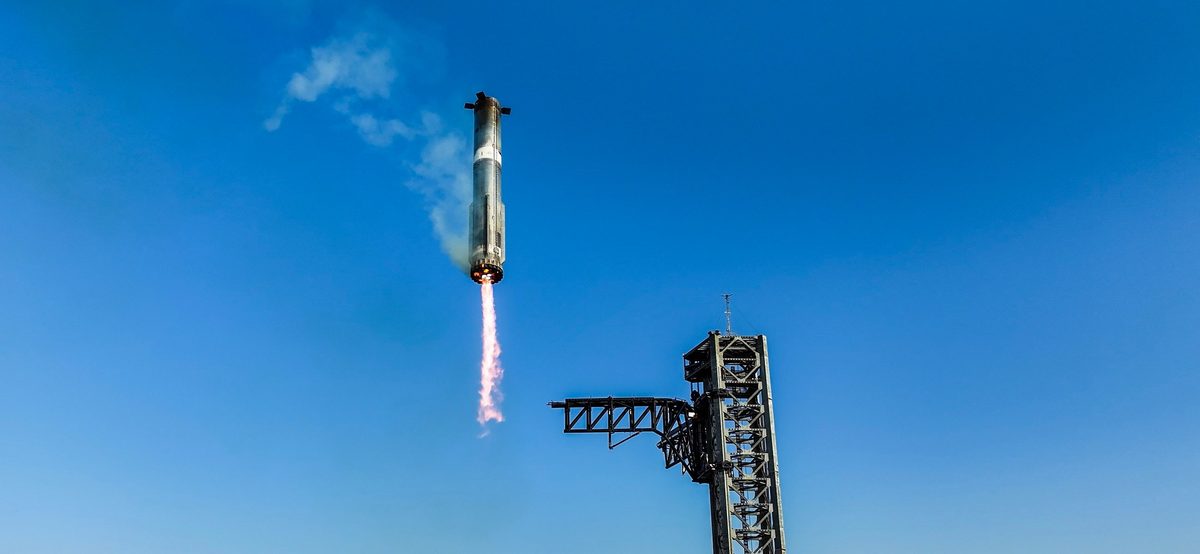
Starship's Super Heavy booster doesn't land on legs. It flies back to the tower it launched from and hovers beside it, and two huge mechanical arms on the tower close around it and hold it. SpaceX calls the tower Mechazilla and the arms "chopsticks". The tower has caught a booster three times, on Flights 5, 7 and 8. No one has caught Starship's upper stage, the ship, yet. SpaceX says Flight 15 will try to catch both.
Starship tracker
Flight 15
Starship V3 · SpaceX · USA
NET Q4 2026
Time Not announced yet
From Orbital Launch Pad 2, SpaceX Starbase, TX, USA
Why it matters Elon says Flight 15 will try to catch both the Super Heavy booster and the ship. No orbital rocket's upper stage has ever been caught. Read our story
Status as of 26 October 2026. SpaceX has not announced a date or published a flight plan for Flight 15. New to the terms? See our Starship glossary.
Why catch a rocket instead of landing it on legs?
Our view: legs add weight that the rocket has to carry all the way up and back. A rocket caught by its own launch tower is already back where it needs to be for the next flight. SpaceX's aim is a rocket that is fully and rapidly reusable, so the turnaround after landing matters as much as the landing.
How does a booster catch work, step by step?
Using the times from SpaceX's Flight 14 pre-flight timeline as a guide:
- Separation. About 2 minutes 22 seconds after liftoff, the booster drops away from the ship.
- Boostback. A few seconds later the booster fires its engines to turn around and head back towards the launch site, over the Gulf.
- Coast and fall. It falls back tail-first, steering with its grid fins, the lattice-like fins near its top.
- Landing burn. About 6 minutes 36 seconds after liftoff, the booster relights its engines. On Flight 7, SpaceX says it relit all 13 of its middle-ring and centre engines, then "maneuvered itself to the launch and catch tower arms". The burn ends with the three centre engines steering it into place.
- Catch. The booster slows almost to a stop beside the tower, and the arms close to hold it. The burn on Flight 14's timeline lasted about 25 seconds, ending about 7 minutes after liftoff.
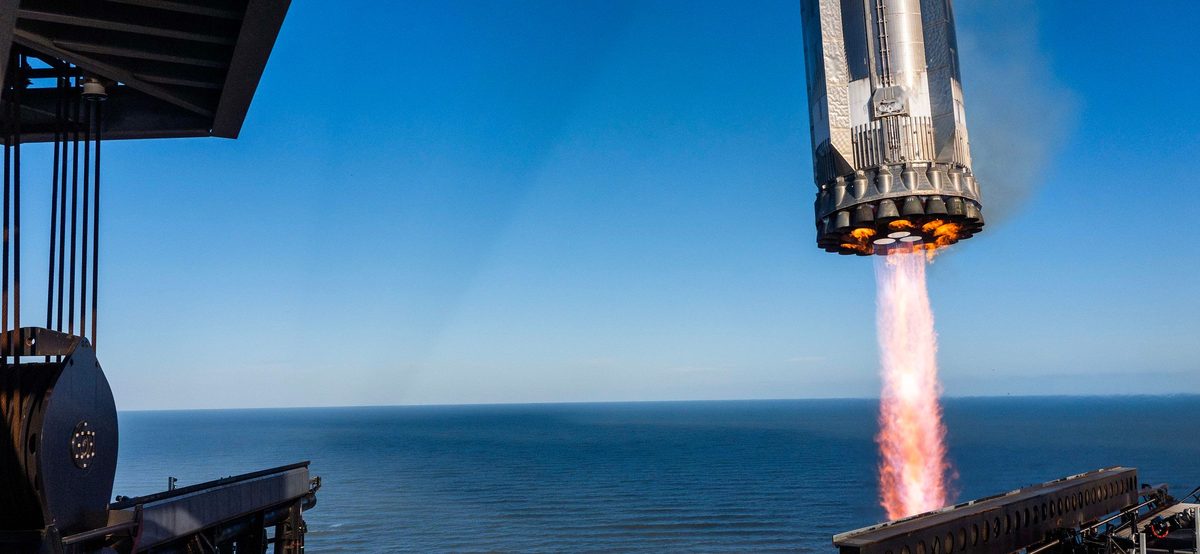
On Flight 14 itself the booster did not try a catch. SpaceX planned it to splash down in the Gulf after a deliberate test of its limits.
What has to go right before the tower tries?
A lot. Before the first catch, on Flight 5 on 13 October 2024, SpaceX said "thousands of distinct vehicle and pad criteria had to be met prior to the catch attempt". If they aren't met, the booster doesn't come to the tower. On Flight 6, SpaceX says, "automated health checks of critical hardware on the launch and catch tower triggered an abort of the catch attempt", and the booster splashed down in the Gulf instead. The rule is simple: if anything looks wrong, the booster stays away from the tower.
How many times has the tower caught a booster?
Three. All three were at Starbase's first launch pad:
- Flight 5 (13 October 2024). SpaceX: "on our first try, Mechazilla caught the booster".
- Flight 7 (16 January 2025). The second catch.
- Flight 8 (6 March 2025). The third catch.
Every flight is listed in every Starship flight so far. None of the three caught boosters was the current, larger Version 3 (V3) Super Heavy. Our 2026 launch scoreboard counts a Starship landing only when the tower catches it, and there has been no catch in 2026 so far.
How would a ship catch work?
In the same tower, but after a much harder trip. The ship goes to orbit, or very close to it, and has to survive reentry before it gets anywhere near the arms. It falls belly-first, steering with its four flaps, then relights its engines, swings upright and slows almost to a stop. For a catch, that would happen beside the tower instead of over the sea. SpaceX has been practising the approach over the ocean for several flights, and in March 2026 it said tests on Ship 39 included "squeeze tests to mimic the forces of future ship catches".
The ship has to come home over land, too. The FAA's environmental assessment of ship returns to Starbase, finished in February 2026, describes reentries crossing the Pacific, Mexico and southern Texas, and assumes they happen only in daylight. It also says finishing the review "does not guarantee" a licence. For why the ship is the harder catch, see Why is catching Starship's ship harder than catching the booster?
What will Flight 15 try?
On SpaceX's third-quarter earnings webcast on 20 October 2026, Elon Musk said: "For Flight 15, which we expect to happen next month, we're going to attempt to catch both the booster and the ship." SpaceX President Gwynne Shotwell said SpaceX expects the licence from the Federal Aviation Administration (FAA) "to include return to launch site and tower catch for both stages."
That is what SpaceX has said so far. As of 26 October, SpaceX has not published a flight plan or a date, and the FAA has not issued a licence for the flight. On 25 October, SpaceX posted that Booster 22 had completed a full-duration static fire. For the latest, see When is Starship Flight 15? and our Starship tracker.