
Who else is landing rockets? SpaceX's rivals in reusability
Besides SpaceX, Blue Origin, China's Long March 10B and LandSpace's Zhuque-3 have landed or caught orbital boosters. Only Blue Origin has reflown one.
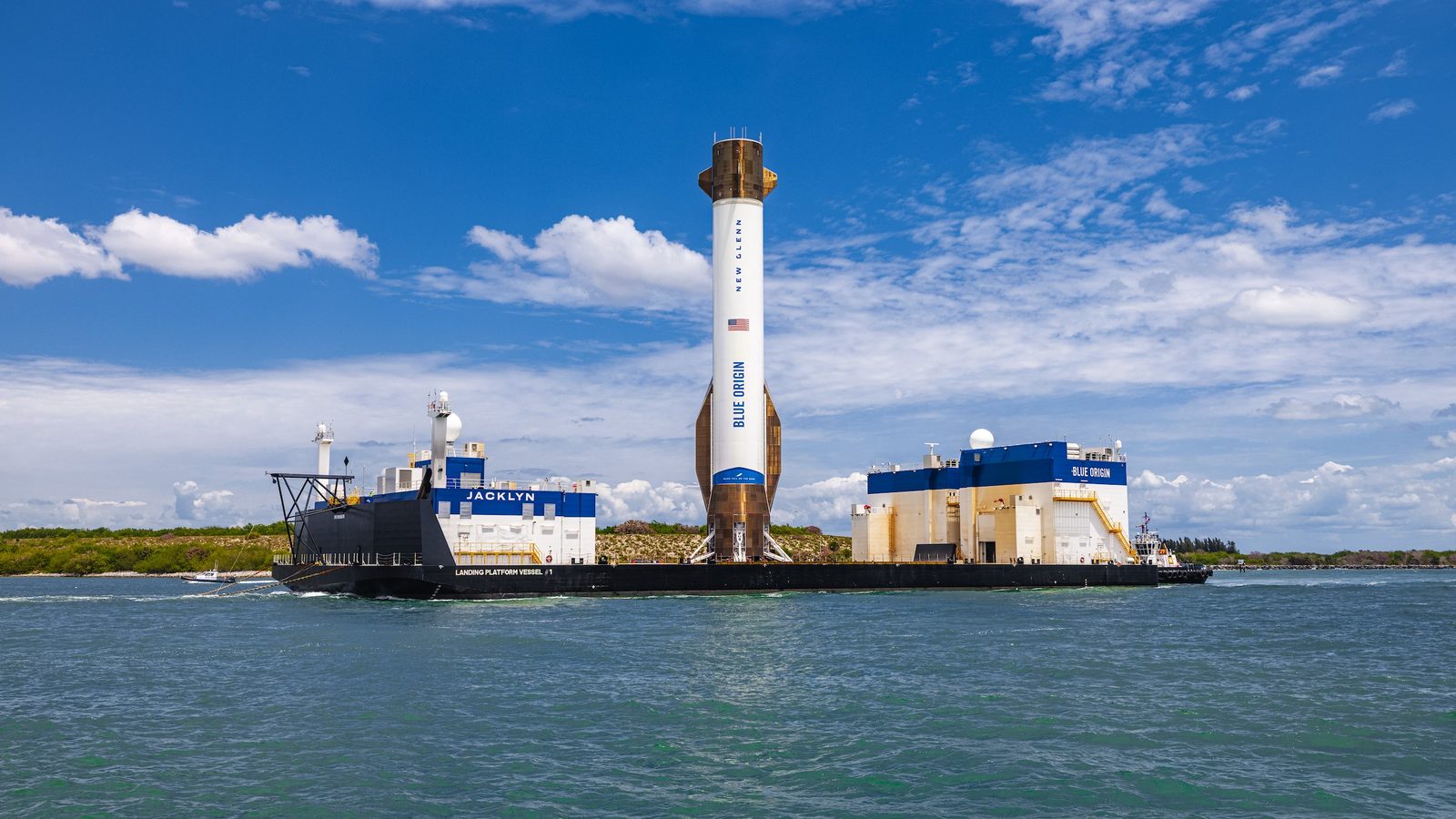
Besides SpaceX, only three rockets have brought an orbital-class booster back under control: Blue Origin's New Glenn, China's state-built Long March 10B and LandSpace's Zhuque-3. New Glenn lands on a ship, the Long March 10B was caught in a net at sea, and Zhuque-3 landed on legs in the desert. Only Blue Origin has flown a landed booster a second time, in April 2026.
Everyone else is still working towards a first landing. That includes Rocket Lab, Relativity Space, Stoke Space and Europe's Themis demonstrator. An orbital-class booster is the first stage of a rocket that can reach orbit, not a small test vehicle that only hops.
Status as of 21 October 2026. Times are local time at each launch site. We will update this page as new landings happen.
Who has landed an orbital booster besides SpaceX?
| Company | Rocket | Landed or caught? | Flown again? | Status, 21 Oct 2026 |
|---|---|---|---|---|
| SpaceX | Falcon 9, Falcon Heavy, Starship | Yes, since 2015 | Yes, since 2017 | Routine. A ship catch is planned on Starship Flight 15 |
| Blue Origin | New Glenn | Yes, twice (Nov 2025, Apr 2026) | Yes, once (Apr 2026) | Has not flown since a May 2026 test explosion. Aims to fly again by the end of 2026 |
| CASC (state-owned) | Long March 10B | Caught in a net at sea (Jul 2026) | Not yet | Plans to refly the stage by the end of 2026 |
| LandSpace | Zhuque-3 | Landed on legs (Aug 2026), then tipped over | Not yet | Working on reuse. No date for the next flight |
| SAST (state-owned) | Long March 12A | Tried, crashed (Dec 2025) | No | Second flight expected, no date announced |
| Rocket Lab | Electron, Neutron | Electron: parachute splashdowns and one brief helicopter catch | No full booster yet | Neutron's first launch moved to 2027 |
CASC is the China Aerospace Science and Technology Corporation, the state company that builds the Long March rockets. SAST, the Shanghai Academy of Spaceflight Technology, is part of it.
How does SpaceX set the bar?
SpaceX first landed a Falcon 9 booster in December 2015 and first flew a landed one again in March 2017. Landing is now routine. The Launch Library 2 database, an independent launch tracker, counts more than 640 successful Falcon 9 landings. The record for one booster belongs to B1067. On 25 August 2026, at 5:33 a.m. EDT, it launched 29 Starlink satellites from Cape Canaveral, Florida, then landed on the droneship A Shortfall of Gravitas. SpaceX says that was the first time a booster had launched and landed 37 times. No booster has flown more often.
Starship goes a step further. Instead of landing on legs, its Super Heavy booster flies back to the launch tower and is caught by two arms, the "chopsticks". That has worked three times, on Flights 5, 7 and 8. A caught booster flew again on Flight 9. The full story is in every Starship flight so far.
Next, SpaceX wants to catch the upper stage too. Elon Musk says Flight 15 will try to catch both the booster and the ship. No one has caught an orbital rocket's upper stage before. See When is Starship Flight 15? for the latest, and our Starship glossary for terms like "chopsticks" and "return to launch site".
Has Blue Origin landed and reused New Glenn?
Yes. Blue Origin is the only company besides SpaceX to land an orbital booster and then fly it again.
- NG-1 (16 January 2025, 2:03 a.m. EST, Eastern Standard Time): New Glenn reached orbit on its first flight. The booster was lost on the way down to Jacklyn, Blue Origin's landing ship in the Atlantic.
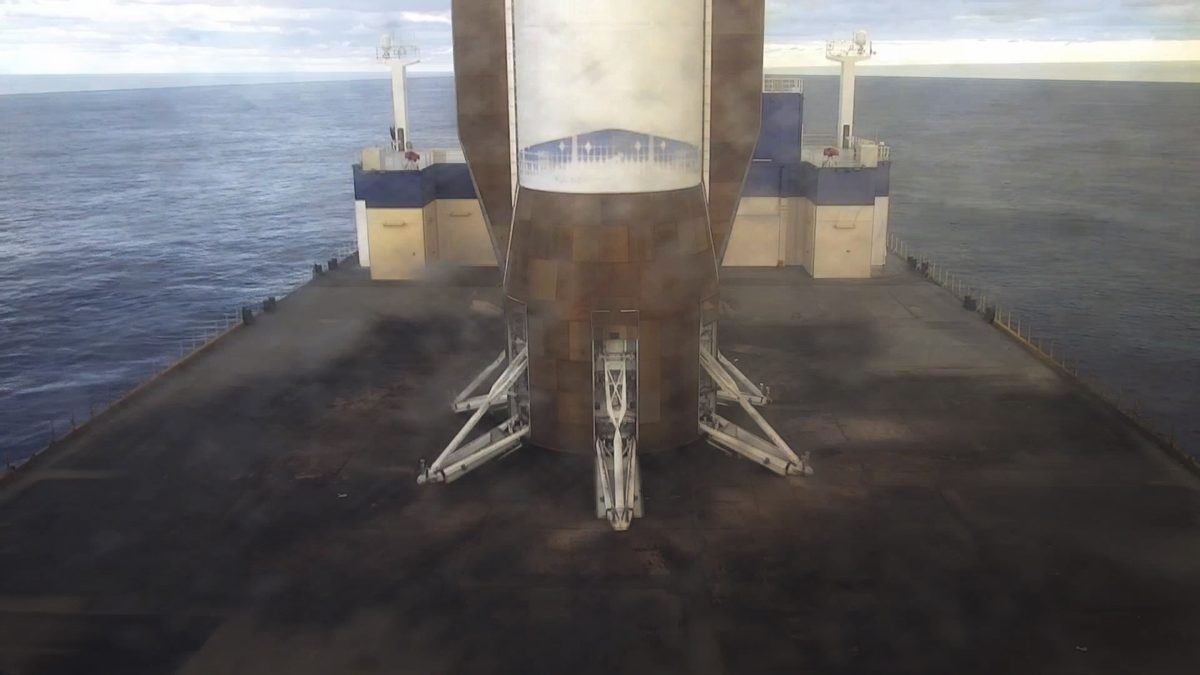
- NG-2 (13 November 2025, 3:55 p.m. EST): New Glenn launched NASA's ESCAPADE Mars probes. Its booster, named "Never Tell Me The Odds", landed on Jacklyn.
- NG-3 (19 April 2026, 7:25 a.m. EDT, Eastern Daylight Time): the same booster flew again and landed again. That made it the first reused New Glenn booster, Reuters reported. The upper stage then fell short. It left AST SpaceMobile's BlueBird 7 satellite in an orbit too low to use. The Federal Aviation Administration (FAA), which licenses US launches, said the cause was a cryogenic leak that froze a hydraulic line. A cryogenic leak is a leak of super-cold propellant.
Then came a big setback. On 28 May 2026, a New Glenn exploded during a hotfire test at Launch Complex 36 in Florida. A hotfire test is an engine firing with the rocket held down on the pad. Blue Origin CEO Dave Limp says the problem started at a main oxygen valve on one of the booster's BE-4 engines. The rocket exploded, and Limp says the pad lost its lightning tower and the transporter-erector, the vehicle that carries the rocket out and stands it up. "Never Tell Me the Odds" was in the nearby integration building, and Limp wrote that it looked good.
Blue Origin has not flown since. In its return-to-flight update, the company says it will fly again by the end of 2026.
Blue Origin's smaller New Shepard rocket has landed many times too. But New Shepard is suborbital. It goes up to space and comes straight back down, so it is not in the same class as an orbital booster.
What did China achieve in 2026?
China became the second country to bring back an orbital booster. It did it twice in five weeks, using two very different methods.
Long March 10B, caught in a net (10 July 2026). The rocket lifted off at 12:15 p.m. China Standard Time (CST) from the Hainan commercial launch site in southern China. About six minutes after stage separation, the first stage came down vertically onto a sea platform called Linghangzhe ("Pathfinder"). Instead of landing on legs, it was caught by a "net" of tensioned steel cables. CASC says this was China's first controlled recovery of a rocket stage and the world's first net catch of a rocket. CASC also says it expects to fly the recovered stage again before the end of 2026.
How does the net catch work? According to China Daily, the ship carries a 67-metre-tall capture tower. The newsletter China in Space reports that four metal hooks on the booster catch the cables as it drops onto them. So the booster doesn't need landing legs, which saves weight. SpaceX's tower catch has the same goal.
Zhuque-3, landed on legs (19 August 2026). LandSpace is a private Chinese launch company. Its Zhuque-3 lifted off at 7:35 a.m. CST from the Dongfeng commercial zone near the Jiuquan launch centre. It put the Honghu-03 satellite into orbit. At about 7:41 a.m., the first stage touched down on four legs at a landing pad in Minqin County, Gansu province, LandSpace says. This was China's first booster landing on land and its first using landing legs.
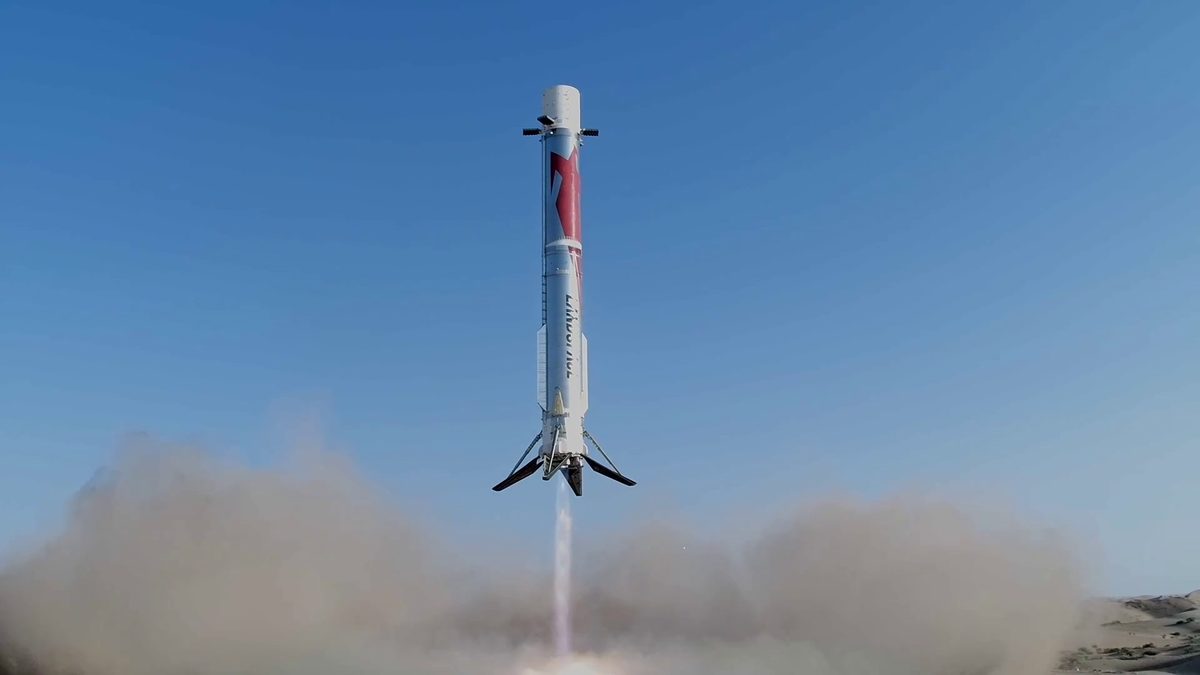
There was a catch, though. After touchdown, a fire broke out at the base of the booster, damaged one of its legs, and the booster tipped over. On 14 October, LandSpace said it is working on "engineering reuse verification" of Zhuque-3. It has not announced a reflight date. SpaceNews reported in August that LandSpace was aiming to refly a booster within six months.
LandSpace's first attempt, on 3 December 2025, reached orbit, but the booster crashed next to its landing pad.
Which other Chinese rockets are trying to land?
Several, but none has landed an orbital booster yet:
- Long March 12A (SAST): on its first flight, on 23 December 2025, the rocket reached orbit but the booster crashed a few kilometres from its landing pad, according to the Launch Library 2 database. A second flight with another landing attempt is expected. No date has been announced.
- Tianlong-3 (Space Pioneer): its first launch on 3 April 2026 failed, so no landing was tried.
- Pallas-1 (Galactic Energy): reached orbit on 1 September 2026 without trying to recover the booster. Landing attempts are planned on later flights, according to reports.
- Hyperbola-3 (iSpace): has not flown yet. iSpace plans to land the first stage on a drone ship at sea on its first flight, according to the newsletter China in Space. The company has only said it will launch before the end of 2026.
- Kinetica-2 (CAS Space): reached orbit for the first time in March 2026. Reusable parts such as grid fins, steerable fins that guide a falling booster, are planned for later flights.
- Nebula-1 (Deep Blue Aerospace): low-altitude landing tests failed close to touchdown in 2024 and 2025, SpaceNews reported.
Who else is building reusable rockets?
In the US:
- Rocket Lab has fished several Electron boosters out of the ocean after parachute splashdowns. In May 2022 a helicopter even caught one in mid-air before the pilot let it go. Rocket Lab has not flown a full recovered Electron again, though it has reflown a recovered engine. Its larger reusable rocket, Neutron, was meant to fly in 2026. On 14 October, Rocket Lab said the first launch is now expected in 2027.
- Relativity Space says its Terran R will launch from Cape Canaveral "starting in late 2026". Its September update shows the first stage still being assembled. The booster is designed to land downrange.
- Stoke Space targets early 2027 for the first flight of Nova, a rocket designed to be fully reusable.
- Firefly Aerospace and Northrop Grumman say their Eclipse rocket is designed to fly its first stage back to the launch site. Its first flight is no earlier than 2027.
In Europe: Themis is a reusable first-stage demonstrator built for the European Space Agency (ESA) by ArianeGroup, the company behind Ariane 6. It finished a second fuelling rehearsal at Esrange in Sweden on 29 September 2026, but it has not made its first hop yet. Callisto, a joint demonstrator from France's space agency CNES, Germany's DLR and Japan's JAXA, will start its hop tests in 2027, according to DLR. MaiaSpace, an ArianeGroup company, is targeting the second half of 2027 for its rocket's first launch.
In Japan: Honda landed a 6.3-metre experimental rocket in Taiki, Hokkaido, on 17 June 2025, after it climbed to 271.4 metres. Honda says it touched down within 37 cm of its target. It is a research vehicle, not an orbital booster. Honda's goal is a rocket that can reach space on a suborbital flight by 2029. Japan's main rocket, the H3, which recently launched JAXA's MMX mission, is not reusable.
In India: the Indian Space Research Organisation (ISRO) has landed its winged RLV-TD (Reusable Launch Vehicle Technology Demonstrator) on a runway three times. The government says ISRO is also developing the technology to land boosters vertically. India's planned Next Generation Launch Vehicle (NGLV) will have a recoverable, reusable first stage. It has not flown yet.
Why does landing a booster matter?
The first stage is the biggest and most expensive part of a rocket. If you land it and fly it again, each launch costs less. But landing is only half the job. You then have to inspect the booster, fix it and launch it again, quickly and safely. So far, only SpaceX and Blue Origin have closed that loop with an orbital booster.
Our view: the next big test is whether China's two recovered stages fly again. CASC has said it wants to refly the Long March 10B stage by the end of 2026. If either Chinese booster flies again, China joins the US as a country with true orbital booster reuse. SpaceX, meanwhile, is pushing further, towards full reuse of both stages. That is the bet behind Starship. Elon says that if Flight 15 works, it will be the first time an orbital rocket has been fully recovered. Read more in What is Starship? and SpaceX Q3 2026 earnings explained.
Sources
- CASC: Long March 10B maiden flight succeeds, China's first controlled rocket recovery (10 Jul 2026, in Chinese)
- LandSpace on X: Zhuque-3 Y2 mission success and first-stage recovery (19 Aug 2026)
- Blue Origin: New Glenn return to flight, a note from CEO Dave Limp (30 Jun 2026)
- Rocket Lab: update on Neutron development and adjusted launch timing (14 Oct 2026)
- Reuters: Blue Origin achieves first landing of reused New Glenn rocket booster (19 Apr 2026)
Free newsletter
Get the Starship briefing.
Every Saturday, plus alerts when something big happens. Unsubscribe any time. Privacy