Starship

What happened to the Flight 15 Super Heavy booster?

The Flight 15 Super Heavy booster, Booster 22, was not caught. After stage separation on 13 November 2026, SpaceX said it diverted to an offshore splashdown in the Gulf of Mexico. SpaceX says the boostback burn ended early due to low fuel mass, with the root cause under investigation. The booster made a landing burn over the Gulf, and its flight termination system was triggered after the engines shut down. SpaceX has not posted an official clock time for the splashdown.

· Published · 2 min read

Flight 16 alert Email me when Flight 16 gets a date One email as soon as SpaceX announces a target date, plus the free Sunday recap. Unsubscribe any time.
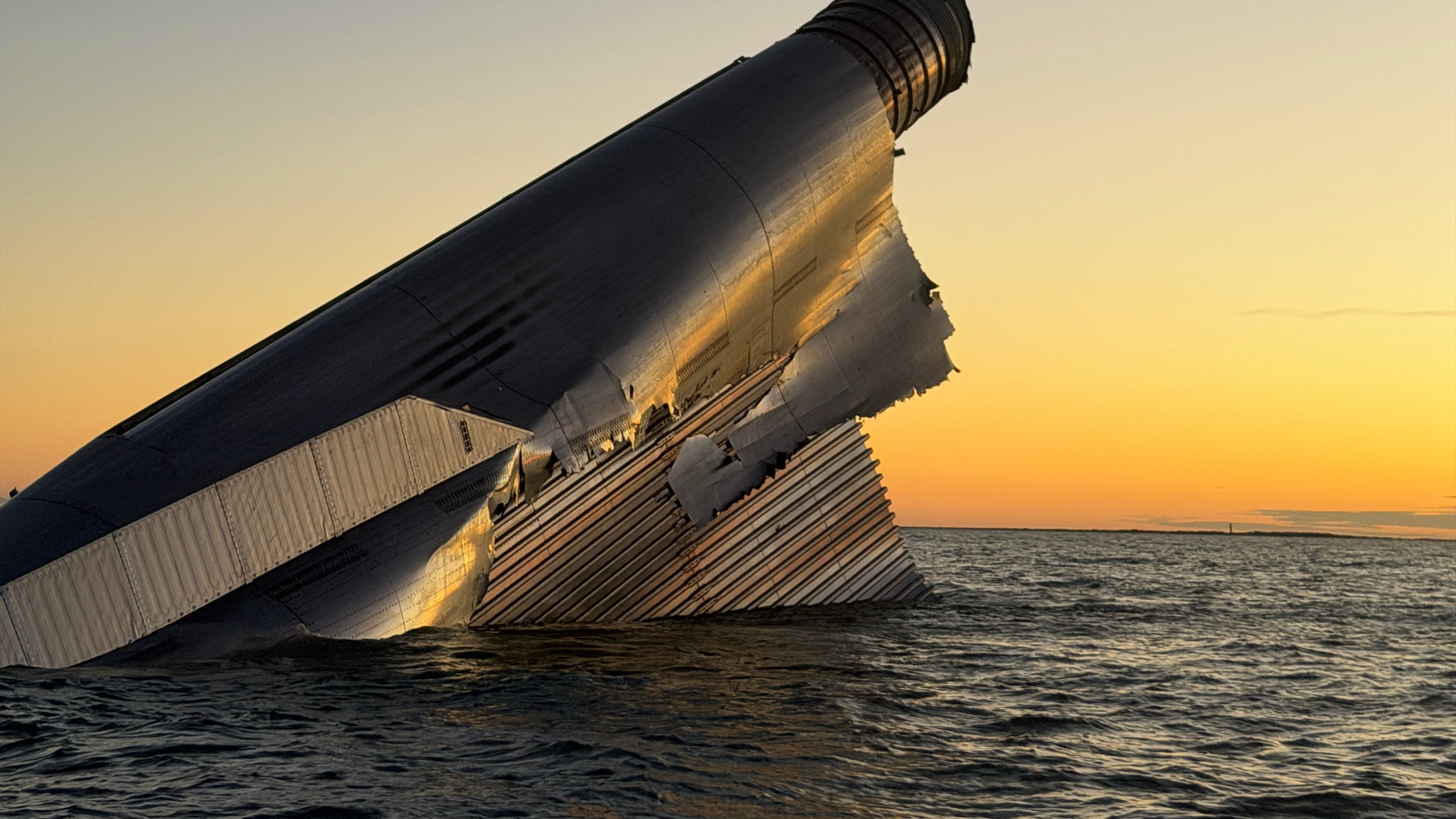
Super Heavy Booster 22 lying tilted in the Gulf of Mexico after splashdown, with torn grid fins and a sunset sky behind it
Booster 22 in the Gulf of Mexico after splashdown on Flight 15, 13 November 2026. From SpaceX's landing burn and splashdown photo set (photo 4). The booster was not caught. Image: SpaceX

The Flight 15 Super Heavy booster was not caught. After it separated from the ship on 13 November 2026, SpaceX diverted it to an offshore splashdown in the Gulf. The ship, Ship 42, still reached orbit and was caught by the tower the next day at about 3:21 p.m. CST (21:21 UTC).

Why did the booster divert?

SpaceX's Flight 15 summary is the official account. It says the booster relit 32 of its 33 planned Raptor engines for the boostback burn, and that the burn "ended early due to low fuel mass, with the root cause under investigation." The booster's guidance, navigation and control system then triggered an automated abort and sent it to an offshore landing spot instead of the tower.

On the webcast, SpaceX's Dan Huot first called it a guidance issue, then corrected that the guidance system did its job by triggering the abort, Space.com reported.

What happened over the Gulf?

SpaceX later posted a landing burn and splashdown set for Booster 22. It says the booster made a landing burn, hovering over the water, and that on landing-burn shutdown its flight termination system was triggered. That system is a safety device that destroys the vehicle. SpaceX has also posted recovery images of the booster in the Gulf. It has not posted an official clock time for the splashdown.

The planned booster catch was T+6 minutes 35 seconds after liftoff, about 4:54 p.m. CST. That was the plan, not a confirmed splashdown time. Liftoff itself was about 4:47 p.m. CST (22:47 UTC) on 13 November. The sourced times are collected on our Flight 15 landing time page.

What has Elon said, and what is still unofficial?

Elon posted that "slight underperformance of engines on this flight is the reason," and that the booster "was slightly low on fuel." He has talked about better and more consistent engine performance with Raptor V3.2, and about a flight-software change to shut the engines down about one second earlier on the way up, leaving more fuel for boostback and landing. These are his claims, not SpaceX's findings. He also wrote that "initial conclusions are often wrong to some degree" and that a full review of the flight telemetry is needed.

SpaceX itself has not published a closed root-cause report. It says the low fuel mass on the boostback burn is still under investigation.

What happens next?

SpaceX will assess the caught ship and the tower, and is investigating the booster's short boostback burn. It has not announced Starship Flight 16. The Flight 15 recap and the dual-catch explainer cover the rest of the mission, including the first ship catch. The catch count is in how many times Starship has been caught.
Frequently asked questions

Was the Flight 15 booster caught?

No. SpaceX diverted Super Heavy Booster 22 to an offshore splashdown in the Gulf of Mexico. The ship, Ship 42, was caught by the tower the next day.

Why did the Flight 15 booster divert?

SpaceX says the boostback burn, the engine burn that turns the booster back toward Starbase, ended early due to low fuel mass. The root cause is under investigation. The booster's guidance system then triggered an automated abort and steered it to an offshore landing spot.

Did the booster land intact?

SpaceX says it made a landing burn and hovered over the Gulf, and that its flight termination system was triggered after the landing-burn engines shut down. A flight termination system is a safety system that destroys the vehicle. SpaceX has also posted recovery images of the booster in the water.

What has Elon said about the booster?

In a post on X, Elon said 'slight underperformance of engines on this flight is the reason,' and that the booster 'was slightly low on fuel.' He has described possible fixes, and he also said 'initial conclusions are often wrong to some degree' and that a full telemetry review is needed. These are his claims, not SpaceX's findings.

What time did the booster splash down?

SpaceX has not posted an official clock time. Liftoff was about 4:47 p.m. CST (22:47 UTC) on 13 November 2026. The planned catch was T+6 minutes 35 seconds, but the booster did not fly that profile. See our Flight 15 landing time page for the sourced times.

Sources

  1. SpaceX: Starship Flight 15 mission page and flight summary
  2. SpaceX on X: Super Heavy diverted to an offshore splashdown in the Gulf (13 Nov 2026)
  3. SpaceX on X: landing burn and splashdown for Super Heavy Booster 22 (14 Nov 2026)
  4. Elon on X: slight engine underperformance was the reason, fixes underway with Raptor V3.2 (14 Nov 2026)
  • #flight-15
  • #booster
  • #super-heavy
  • #splashdown
  • #starship

Follow The Space Road on Google

Add us as a preferred source and our stories show up more often in Google's Top Stories when you search for space news.

Add The Space Road as a preferred source on Google