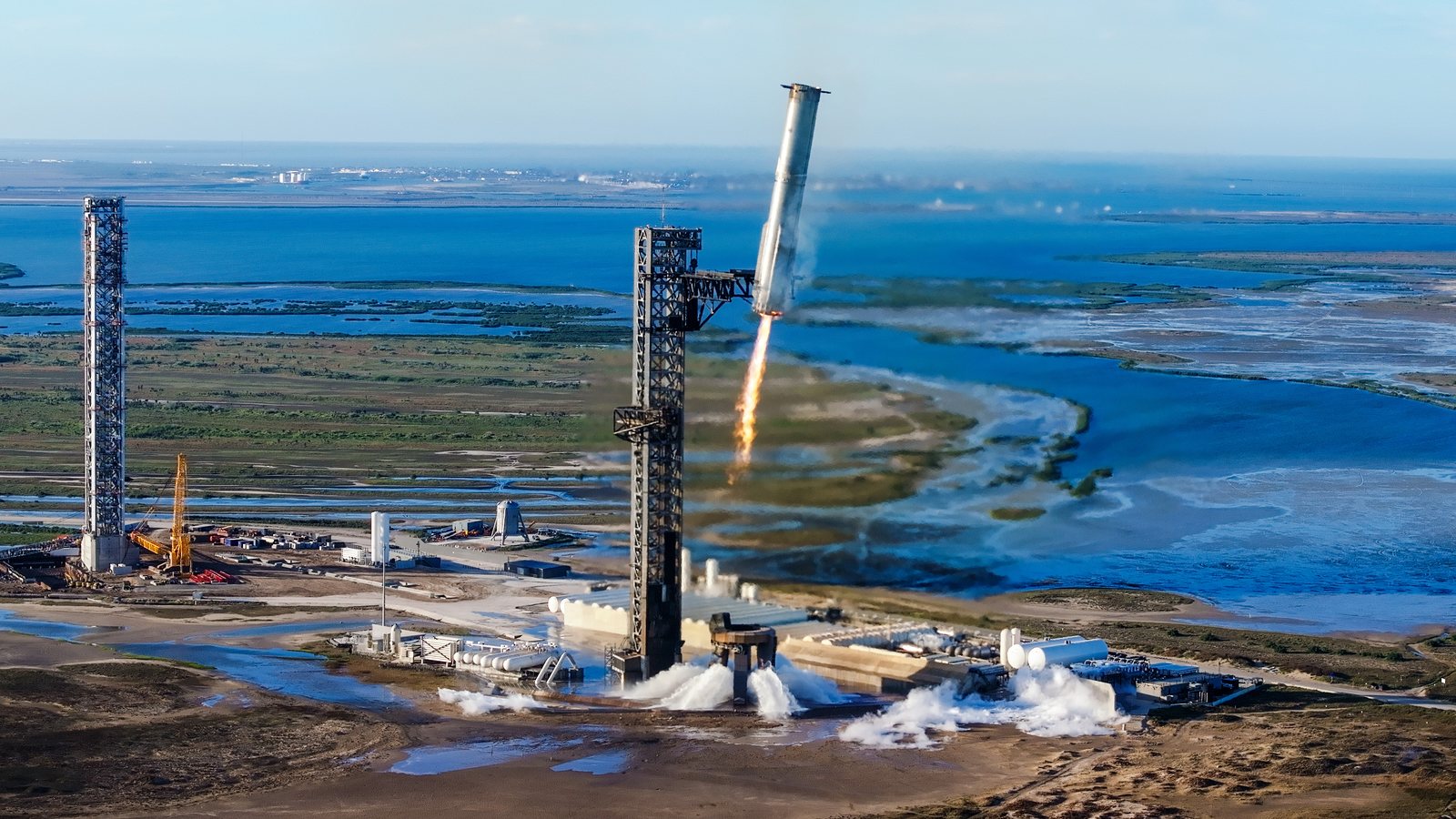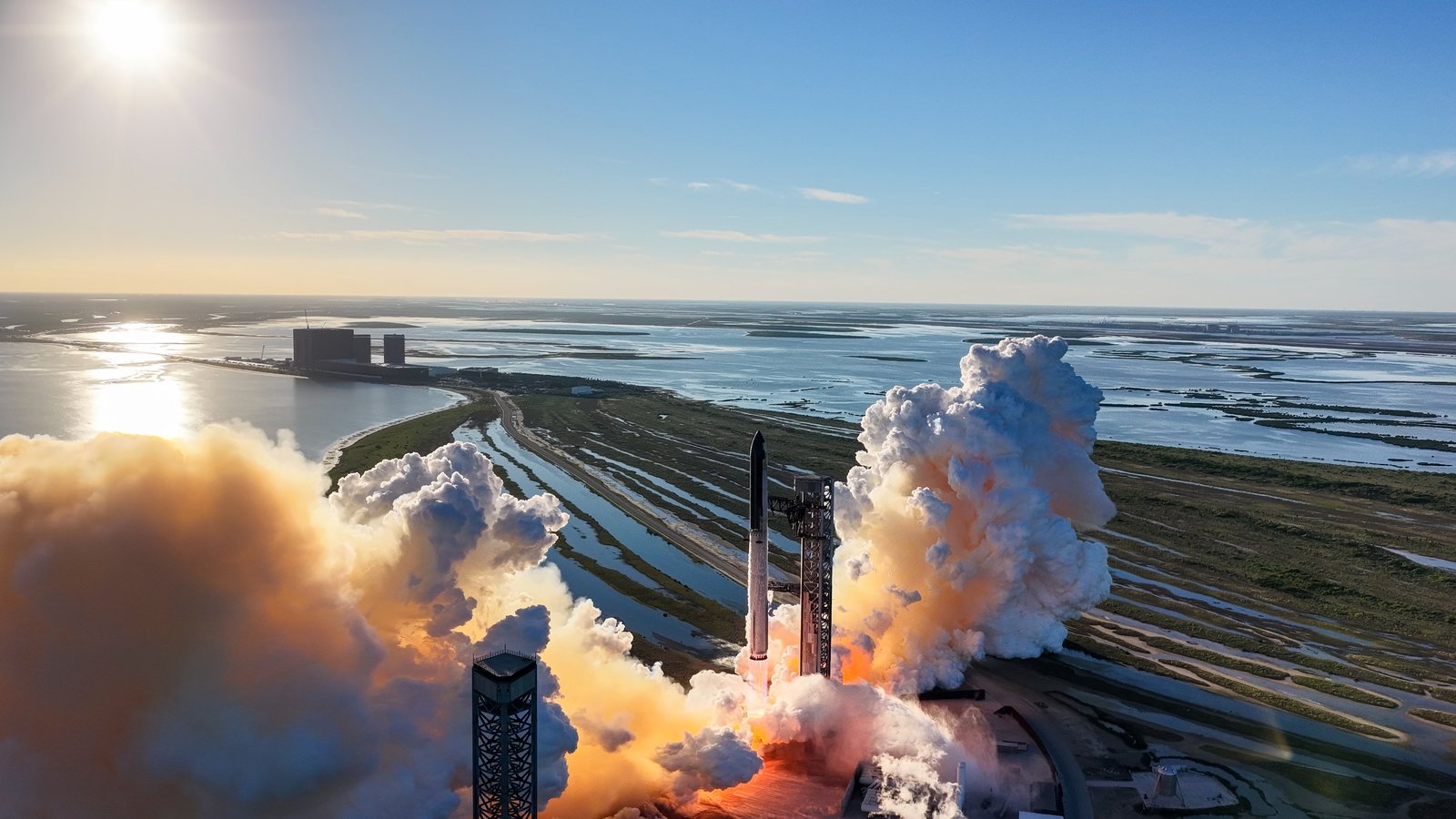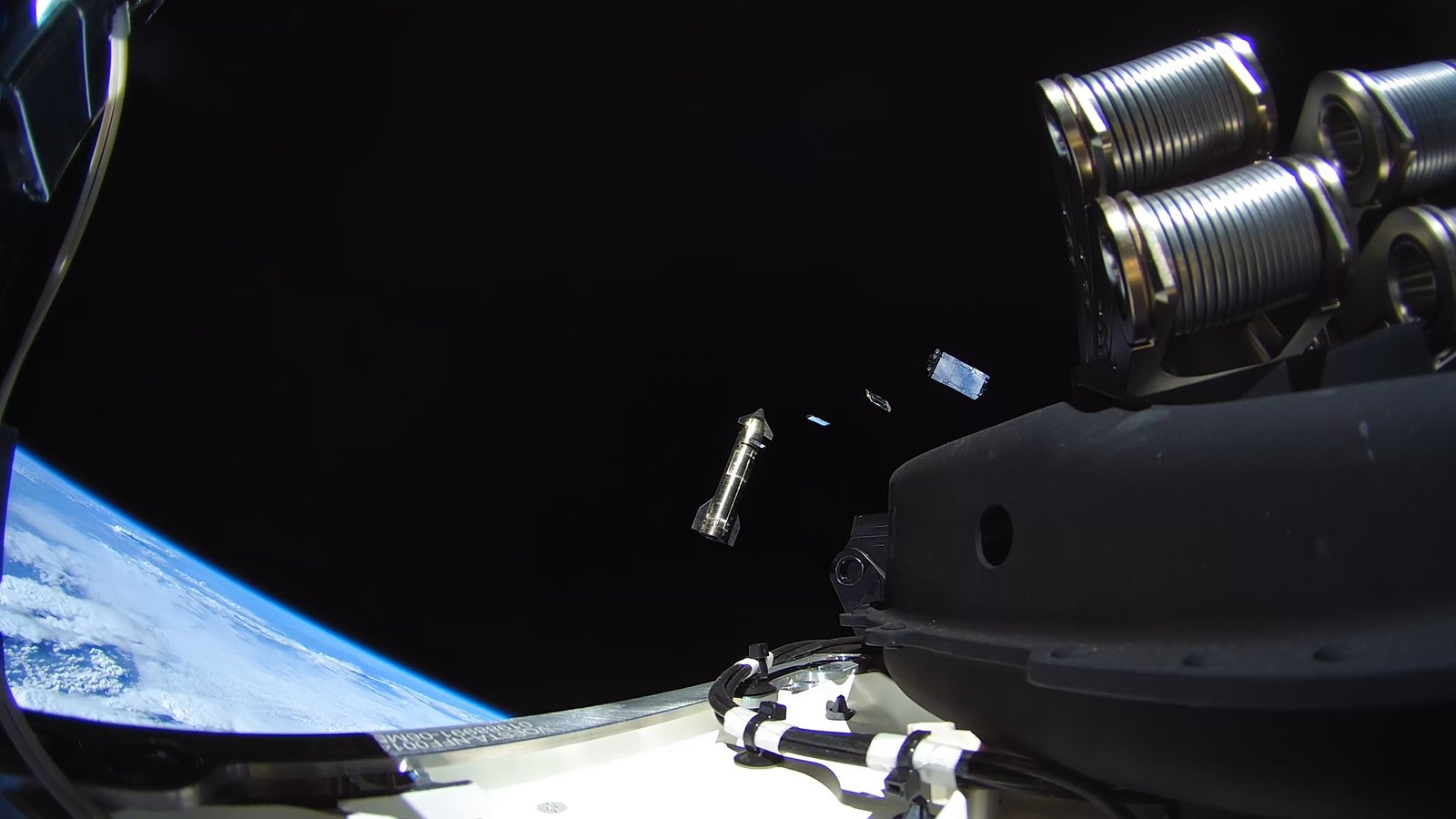

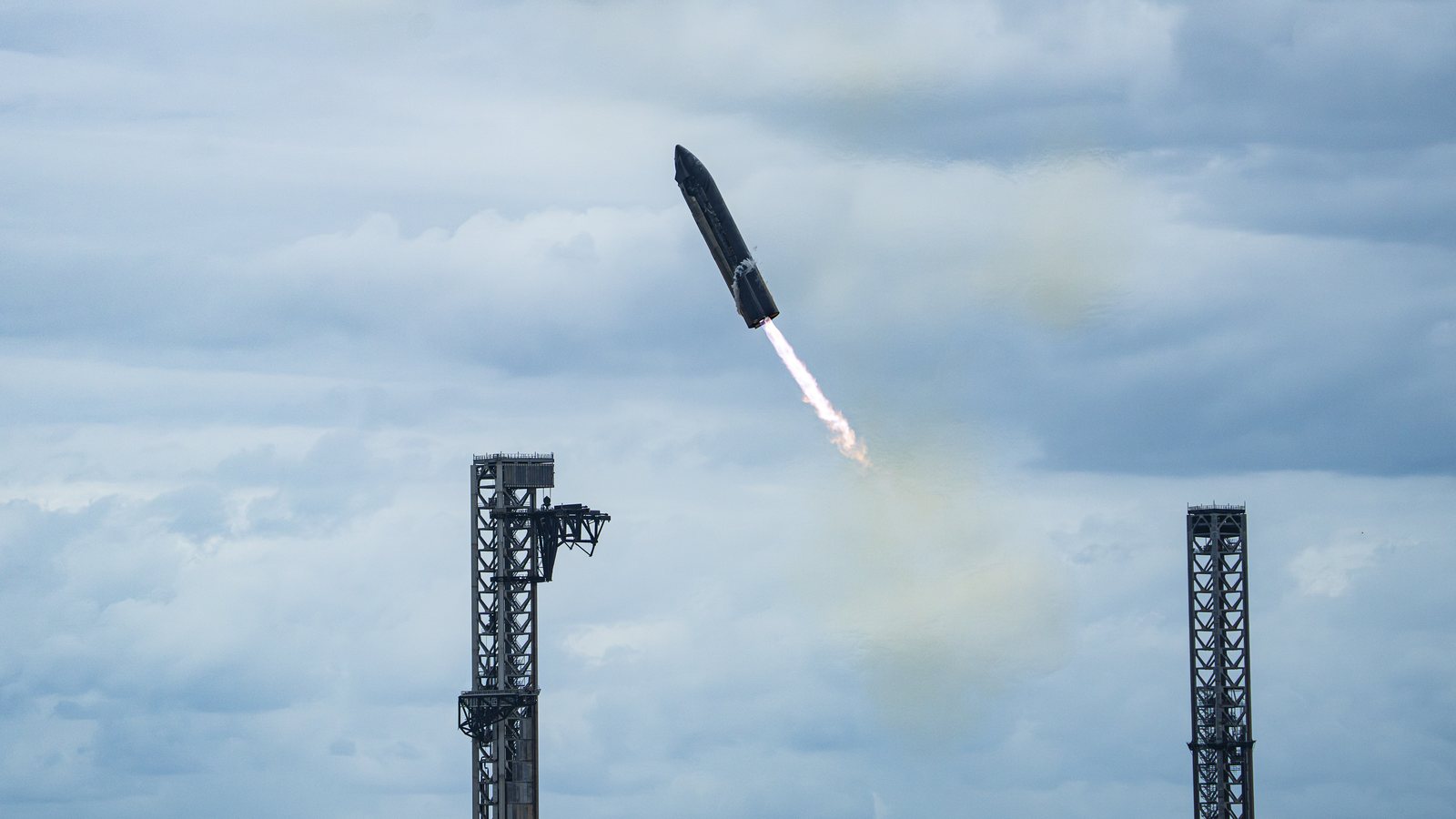
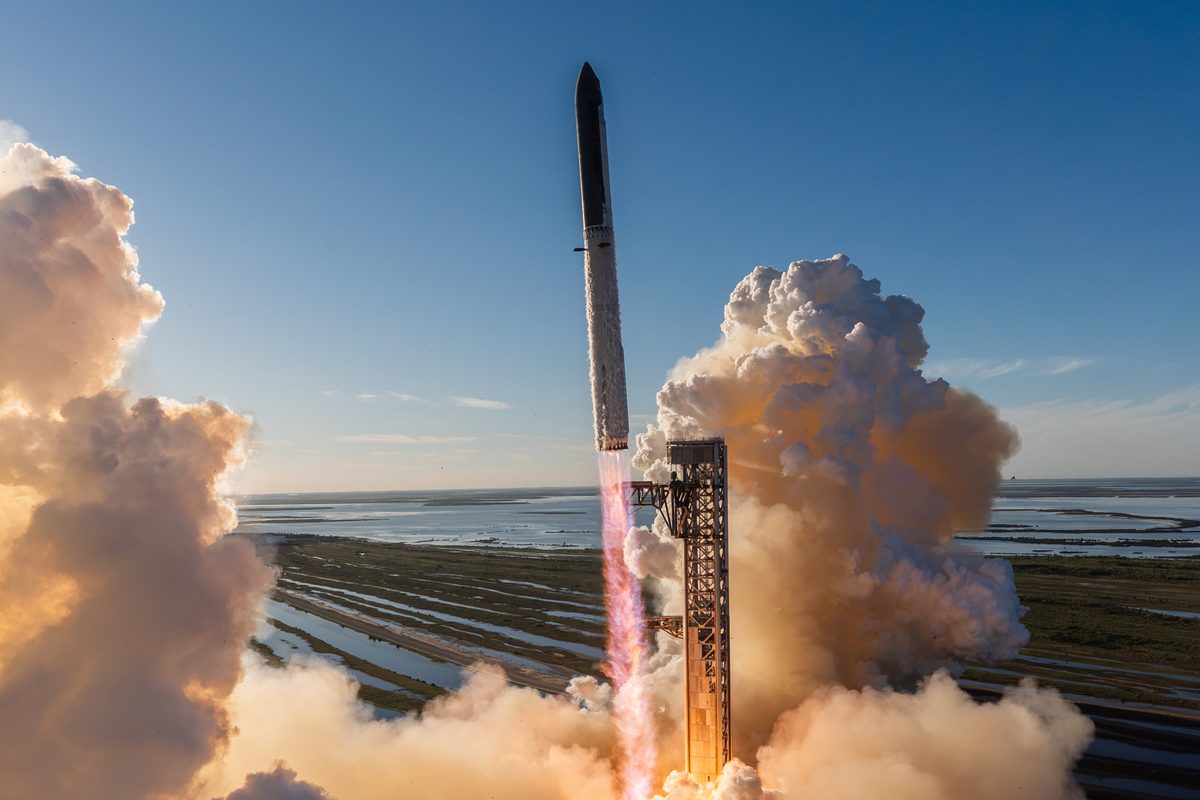
Starship Flight 15 lifted off from Pad 2 at Starbase, Texas, at about 4:47 p.m. Central Standard Time (CST) on Friday 13 November 2026. The Super Heavy booster, Booster 22, was not caught: SpaceX diverted it to an offshore splashdown in the Gulf. The ship, Ship 42, reached orbit, deployed all 26 Starlink V3 satellites and, the next afternoon, flew back to Starbase, where the tower caught it at about 3:21 p.m. CST on Saturday 14 November. It was the first time a Starship upper stage has been caught.
Starship tracker
Starship Flight 15 results at a glance
| What | Result | Source |
|---|---|---|
| Liftoff | About 4:47 p.m. CST, 13 Nov 2026, Pad 2, Starbase | News report from Starbase; SpaceX posted "Liftoff of Starship!" |
| Hot staging | Done; booster boosted back towards Starbase | SpaceX on X |
| Booster 22 catch | Not caught. Boostback ended early; diverted to an offshore landing burn in the Gulf | SpaceX on X and Flight 15 summary |
| Orbit | Reached, at about 275 km, the second time a Starship has reached orbit | SpaceX on X |
| 26 Starlink V3 satellites | All in orbit | SpaceX on X |
| Heatshield | "Healthy", SpaceX said on 14 Nov | SpaceX on X |
| Deorbit and reentry | Good deorbit burn at about 2:25 p.m. CST, 14 Nov; reentry about 2:58 p.m. CST | SpaceX on X |
| Ship 42 catch | Caught by the tower at Starbase, about 3:21 p.m. CST, 14 Nov. The first ship catch | SpaceX on X |
India readers can find converted times on our launch times for India page.
What happened at launch?
SpaceX posted "Liftoff of Starship!" on X a minute or so after launch. It has not posted an exact clock time. Space.com, reporting from Starbase, gives 4:47 p.m. local time, two minutes into a window that opened at 4:45 p.m. CST. The US Federal Aviation Administration (FAA) issued the updated launch licence, VOL 23-129 revision 10, on 13 November, the day of the launch.
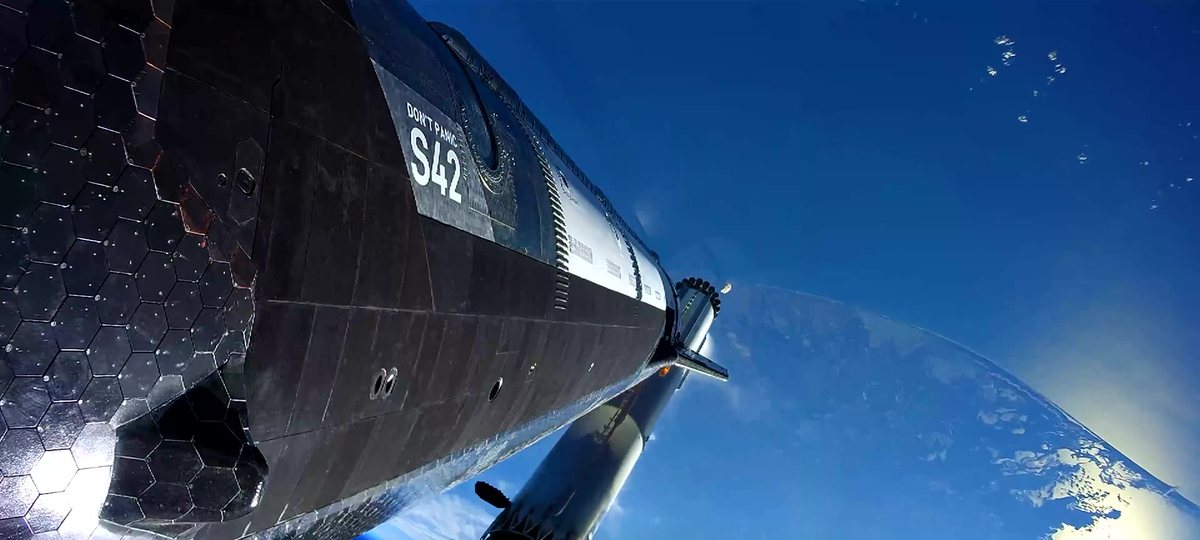
After the climb, SpaceX wrote: "Hot-staging separation! Starship's Raptor engines have ignited, and the Super Heavy is boosting back towards Starbase for a catch."
Was Booster 22 caught?
No. A few minutes after liftoff, SpaceX wrote: "Super Heavy has diverted to an offshore splashdown in the Gulf." Booster 22 was the first third-generation (V3) Super Heavy planned to come back for a catch.
After the flight, SpaceX's Flight 15 summary gave the reason. SpaceX says the booster relit 32 of its 33 planned Raptor engines for the boostback burn, and the burn "ended early due to low fuel mass, with the root cause under investigation." The booster's guidance system then triggered an automated abort and diverted it to an offshore landing spot. SpaceX says it made a landing burn, hovering over the Gulf, and that on landing burn shutdown its flight termination system was triggered.
Later, SpaceX posted photos captioned "Landing burn and splashdown for Super Heavy Booster 22". They show the booster firing its engines, then floating on its side in the Gulf.
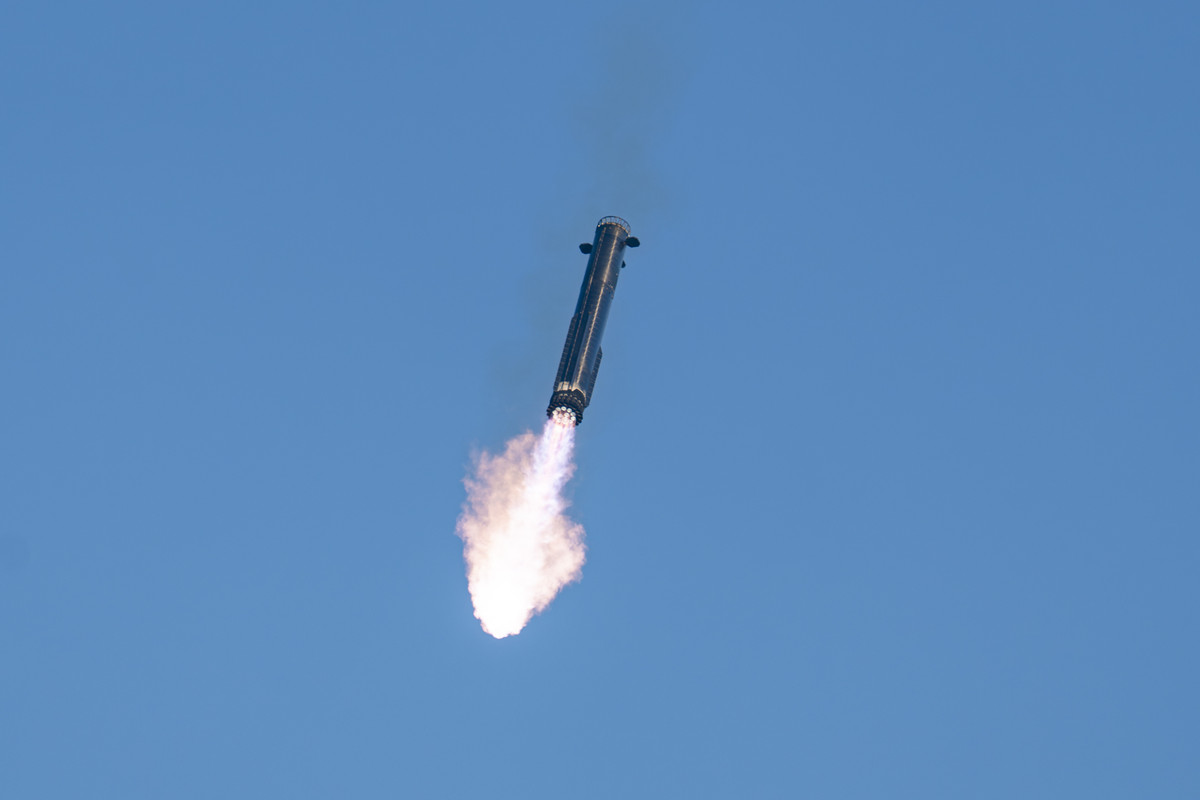
The next morning, SpaceX said its recovery teams were onsite to safe the splashdown area, and that its Environmental Health and Safety team is making sure any debris that washes onshore is recovered.
Only three boosters have been caught so far, on Flights 5, 7 and 8. See how many times has Starship been caught?
Did Starship reach orbit?
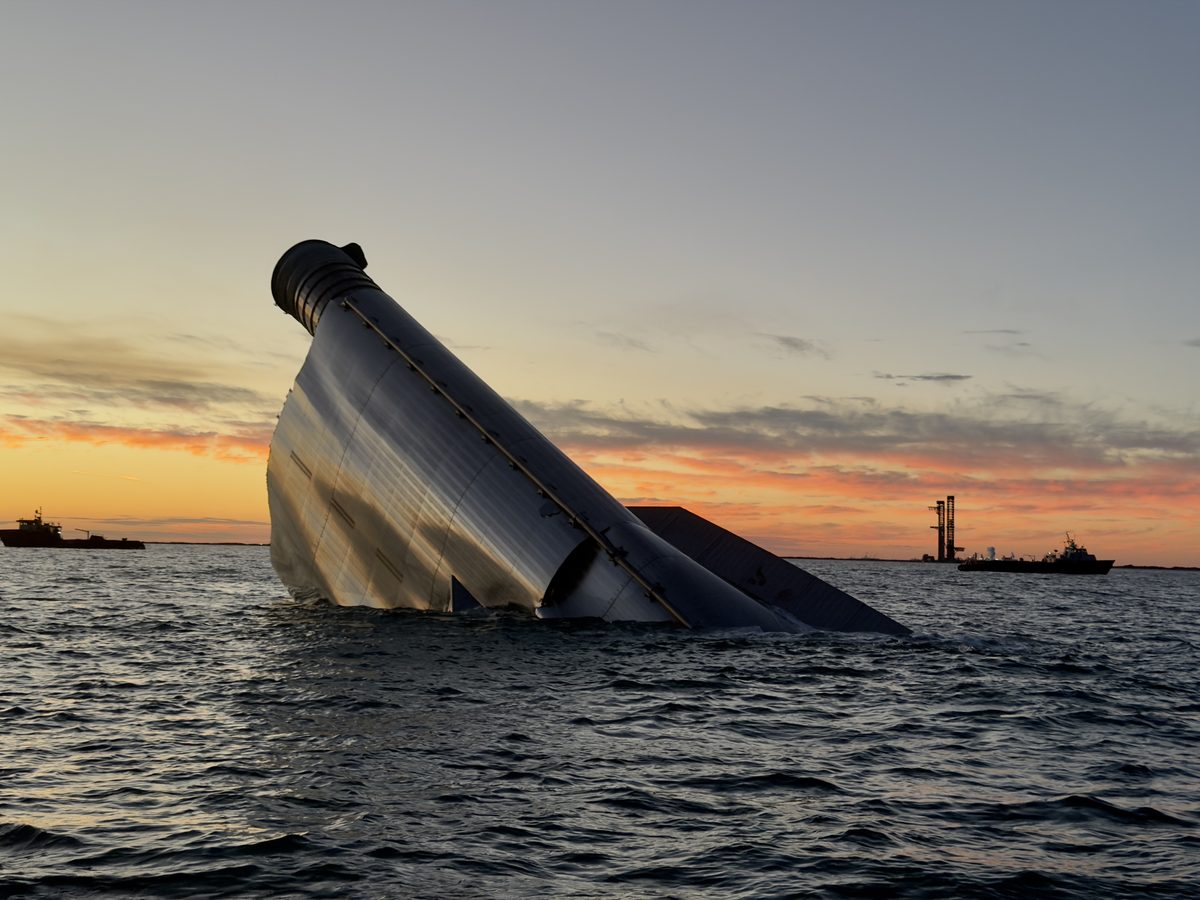
Yes. SpaceX said the ascent burn put Starship on a suborbital path while teams checked its systems. Then: "Go for orbit! Starship will soon perform a short burn with a single Raptor engine to enter an ~275 km orbit of Earth."
SpaceX then said Starship "performs its orbital insertion burn and enters orbit of Earth for the second time". The first was on Flight 14 in September.
Did the Starlink V3 satellites deploy?
Yes. SpaceX wrote: "Payload deploy complete. All 26 @Starlink V3 satellites are in orbit." The deployment took about 42 minutes, SpaceX said beforehand.
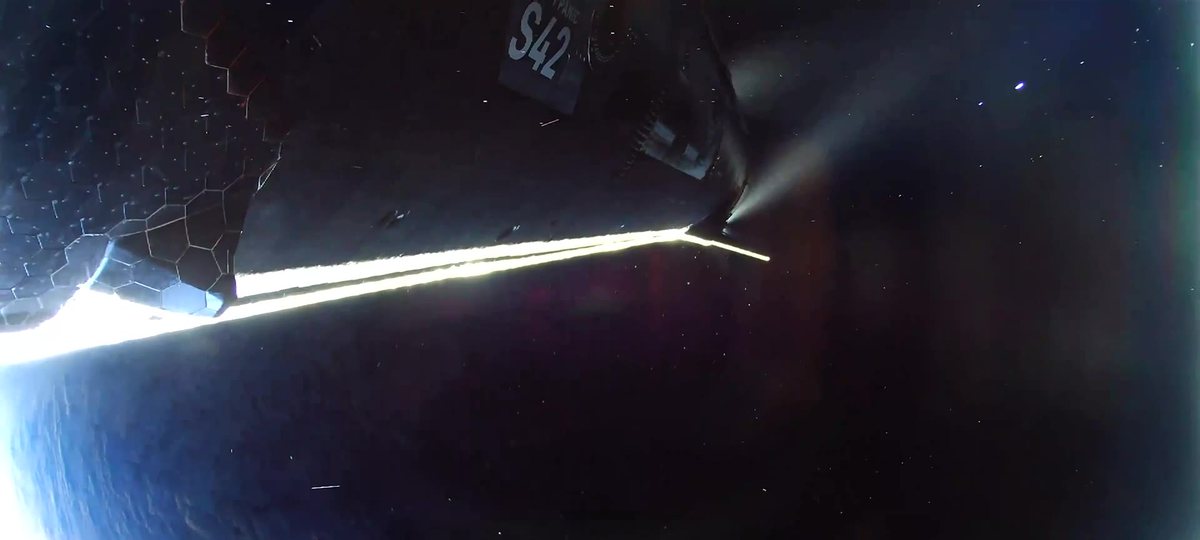
SpaceX said before the flight that three of the satellites carry cameras to scan Starship's heat shield. It had not posted pictures from them when this was written. After the flight, SpaceX said contact was made with every satellite, and they are beginning to raise their orbits to join the Starlink constellation. SpaceX says each Starlink V3 satellite adds 1 terabit per second (Tbps) of capacity. See Starlink V3 explained.
Was Ship 42 caught?
Yes. After more than 20 hours in space, SpaceX says Ship 42 relit a single Raptor sea-level engine for its deorbit burn. SpaceX posted "Good deorbit burn" at about 2:25 p.m. CST on Saturday 14 November, then "Starship is reentering Earth's atmosphere" at about 2:58 p.m. CST.
At about 3:18 p.m. CST, SpaceX said Starship was executing a banking maneuver and final approach to Starbase.
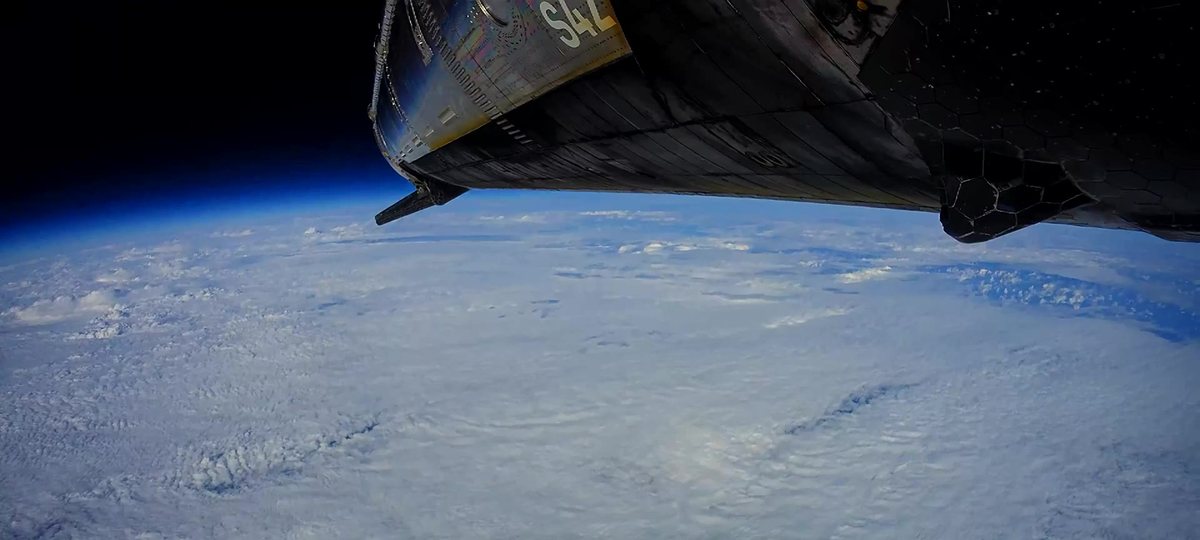
SpaceX's summary says it flew a final "swoosh" out over the Gulf and came back to the same launch site it had left about 22.5 hours earlier. After breaking through the clouds, three Raptor engines lit for a landing flip and slow descent, and the tower's arms closed around it. At about 3:21 p.m. CST, SpaceX posted: "Mechazilla catches Starship!" That was close to the T+22:32:34 catch time in SpaceX's plan.
It was the first catch of a Starship upper stage. The tower had caught Super Heavy boosters three times before, but never the ship. SpaceX says the flight "changed everything". That is SpaceX's claim; in my view, the real test of reuse comes when a caught ship flies again.
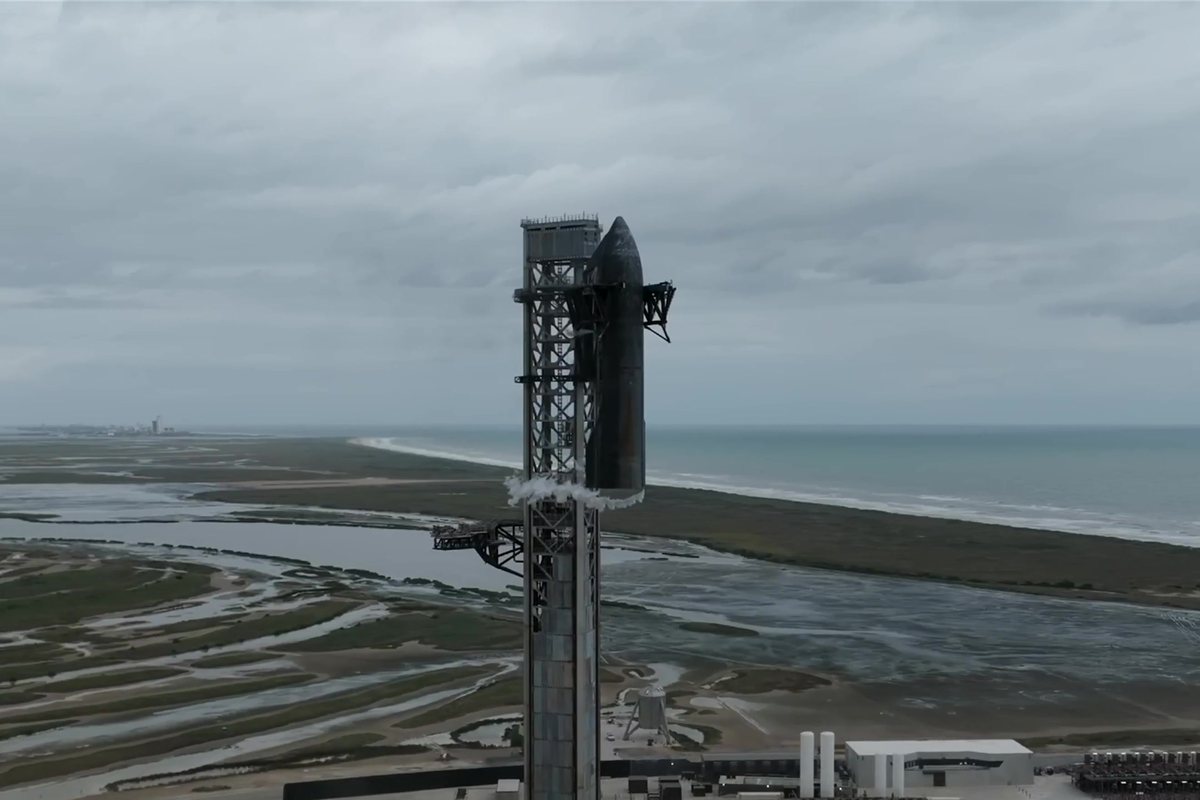
Before the return, the ship was in "a long coast phase around Earth" with "all systems looking good". At 11:44 p.m. CST on 13 November, SpaceX posted: "Starship and its heatshield are healthy... Teams are continuing to monitor systems ahead of a planned return to launch site catch at Starbase ~22.5 hours after launch." SpaceX said the ship would only come back to the tower if the flight control team confirmed the systems for reentry, the landing burn and the tower approach were healthy.
New to the catch? Read how a Starship catch works and why catching the ship is harder.
What was the plan for Starship Flight 15?
SpaceX's mission page set out the plan:
- Vehicles: Booster 22, the first Super Heavy V3 booster planned to return for a catch, and Ship 42.
- Launch window: 4:45 to 6:00 p.m. CST, Friday 13 November 2026, subject to regulatory approval.
- Payload: 26 Starlink V3 satellites. Three carry cameras to scan Starship's heat shield.
- Orbit: about 275 km up, around 14 orbits of Earth.
- Length: more than 22 hours from liftoff to ship catch.
- Booster: launch, stage separation, boostback burn, then return to the tower for a catch.
- Ship: deploy the satellites, then return to Starbase for the first ship catch.
SpaceX said the ship would only head for the tower if the flight control team confirmed that the systems needed for reentry, the landing burn and the tower approach were healthy. Otherwise, the flight was designed so the ship could come down safely over the ocean at several planned spots.
What was the planned timeline?
These are SpaceX's approximate times after liftoff. The clock times in brackets are our own sums from the actual liftoff at about 4:47 p.m. CST on Friday 13 November, so they are approximate.
- 0:06:35, booster catch: Super Heavy landing burn ends and the tower catches it (planned for about 4:54 p.m. CST, Friday; the booster was diverted instead).
- 0:08:09, ship engine cutoff: Starship finishes its climb.
- 0:26:10, orbit insertion burn: a 20-second burn to reach orbit.
- 0:35:01 to 1:17:40, payload deploy: the 26 Starlink V3 satellites go out.
- 1:27:46, 7:15:35 and 20:41:55, return checks: go or no-go points for the trip home, which SpaceX names after Hawaii, Chile and Hawaii again.
- 21:35:57, deorbit burn: Starship fires to drop out of orbit.
- 22:10:46, entry: Starship hits the upper atmosphere.
- 22:32:34, ship catch: landing burn ends and the tower catches the ship (about 3:20 p.m. CST, Saturday 14 November; SpaceX posted the catch at about 3:21 p.m. CST).
How was Flight 15 different from Flight 14?
Flight 14 on 28 September 2026 was Starship's first orbital flight. It deployed 26 Starlink V3 satellites, and the ship splashed down in the Pacific Ocean after about 3 hours 10 minutes. No catch was planned.
For Flight 15, SpaceX said the heat shield keeps the Flight 14 fixes, with extra retention mechanisms, the parts that hold tiles in place, where tiles are most at risk of falling off on the way up. SpaceX also addressed spots where hot plasma could get in behind the tiles. A large part of it also uses a new curved tile design, which SpaceX says reduces heating in the gaps between tiles. Ship 42 completed a full-length, six-engine static fire, a ground test with the engines running, plus a single-engine burn to practise the deorbit burn, SpaceX said on 28 October.
What happens next?
SpaceX will assess the caught ship and the tower, and says the root cause of the booster's short boostback burn is under investigation. Elon posted that he was inspecting Ship 42 soon after the catch. SpaceX has not announced Starship Flight 16. We track what SpaceX and the FAA say on when is Starship Flight 16? and the next Starship launch page.
More on this flight: the pre-flight plan in when is Starship Flight 15, the double catch explained, how to watch Flight 15 and the Flight 15 live page. For the full history, see every Starship flight so far and the Starship launch tracker. Terms are explained in our Starship glossary.