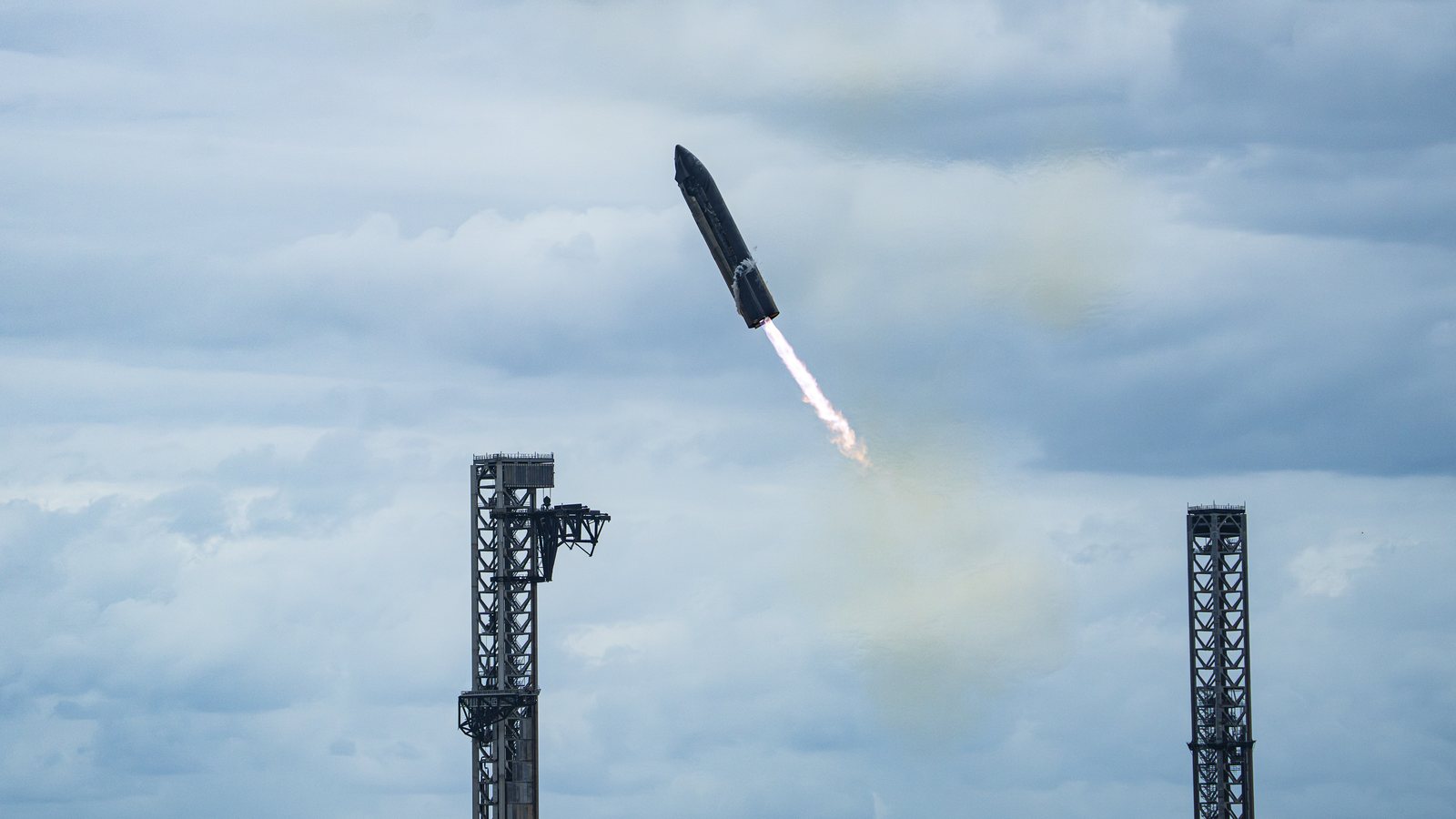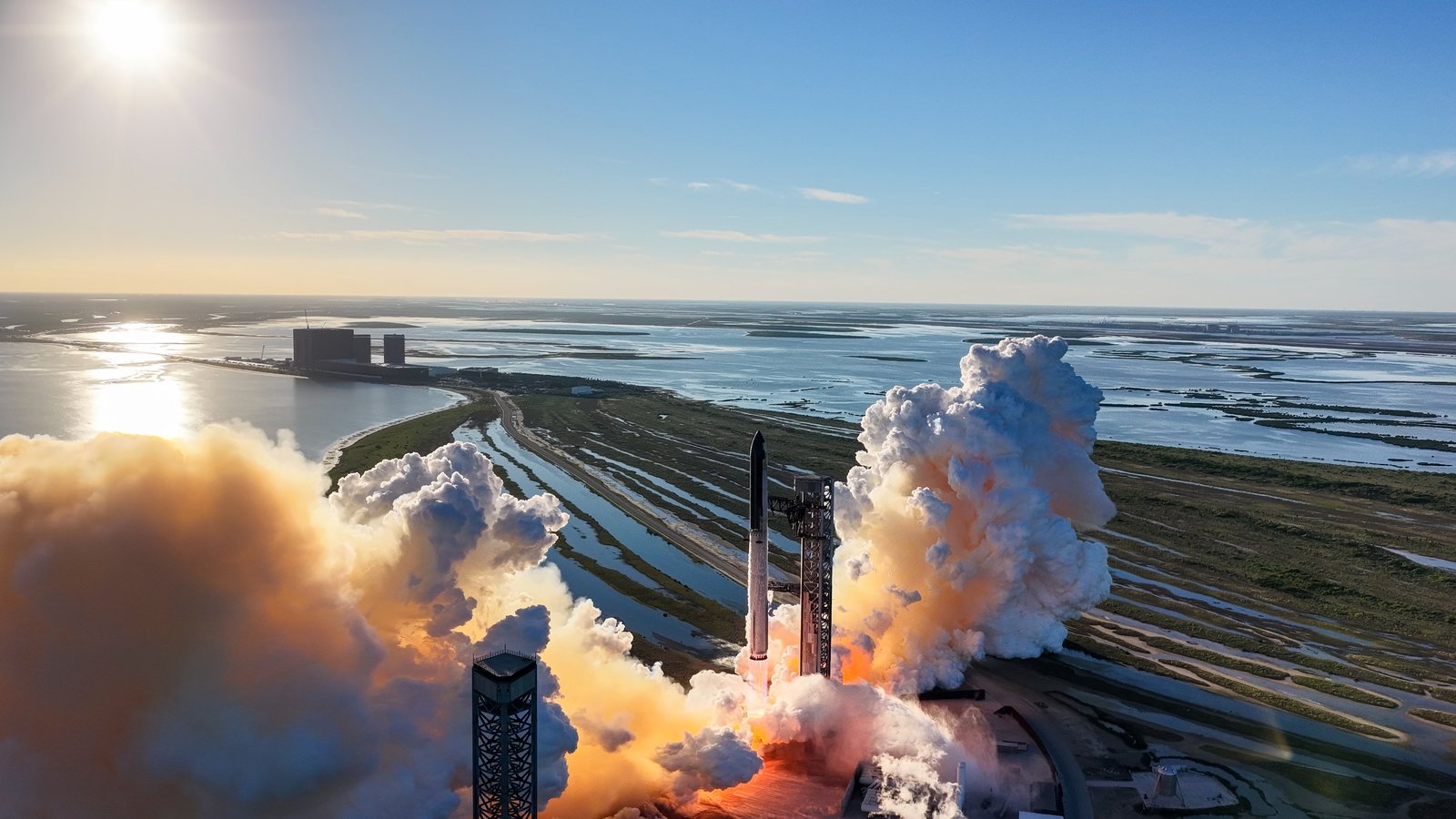

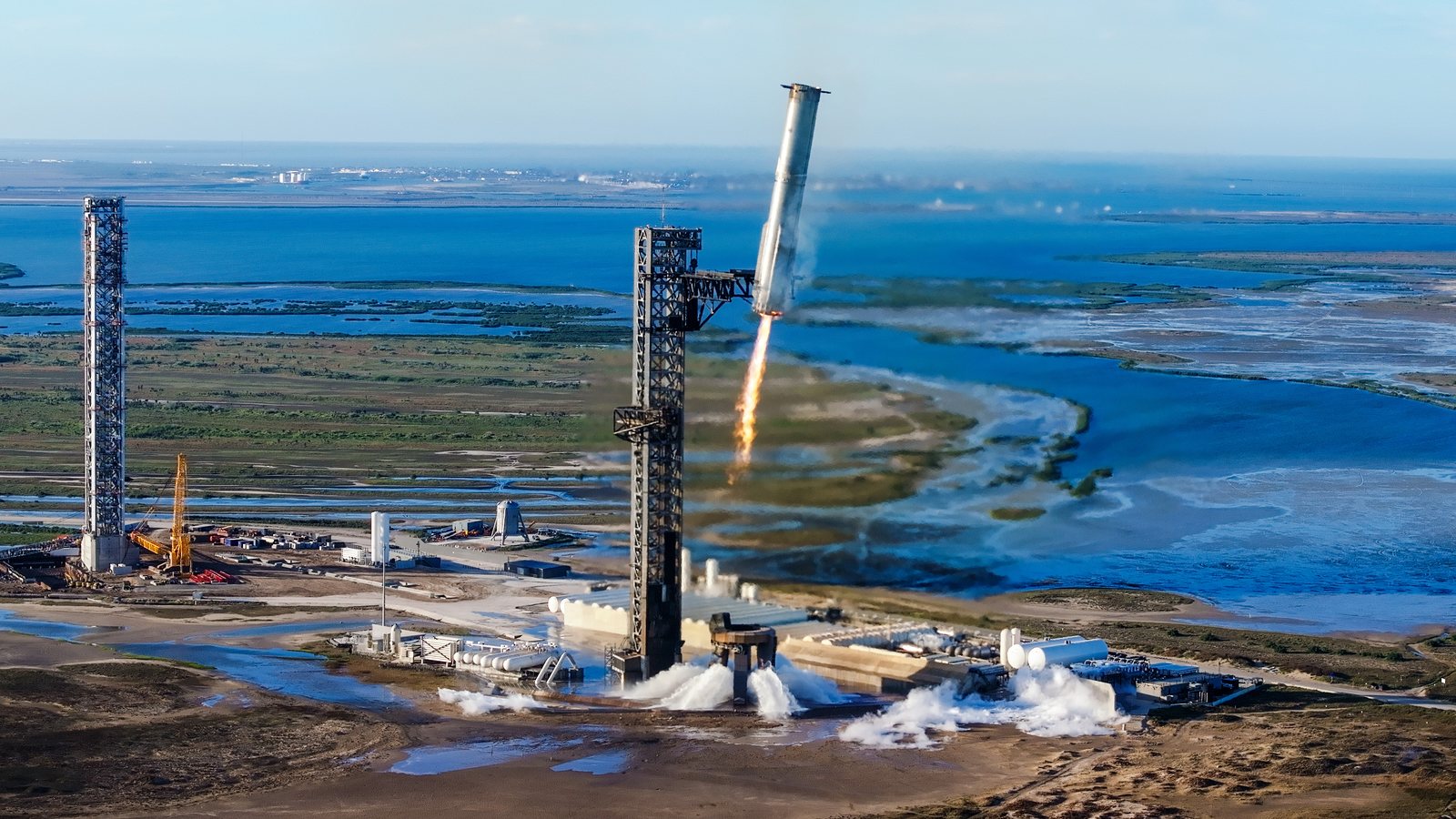
SpaceX's launch tower has caught the Super Heavy booster three times: on Flight 5 in October 2024, Flight 7 in January 2025 and Flight 8 in March 2025. The ship, the Starship upper stage, has been caught once: on Flight 15, the tower at Starbase caught Ship 42 at about 3:21 p.m. Central Standard Time (CST) on Saturday 14 November 2026.
Starship tracker
How many Starship launches have there been? Fifteen full-stack test flights as of 14 November 2026, so the booster has been caught on 3 of them, a booster catch rate of 1 in 5 flights. Since Flight 8, no booster has been caught. Every flight is listed in our guide to every Starship flight so far.
Starship catch count at a glance
| What | Count | Flights |
|---|---|---|
| Super Heavy booster catches | 3 | 5, 7, 8 |
| Booster catch attempts called off | 1 | 6 (automated checks), plus 15 (diverted to the Gulf) |
| Ship catches | 1 | Flight 15 (Ship 42) |
| Caught boosters flown again | 2 | Flight 7 booster on Flight 9, Flight 8 booster on Flight 11 |
| Starship flights in total | 15 | Flights 1 to 15 |
Flight 15 result: the tower caught Ship 42 at about 3:21 p.m. CST on 14 November 2026, about 22.5 hours after launch. "Mechazilla catches Starship!" SpaceX posted.
How does a Starship catch work?
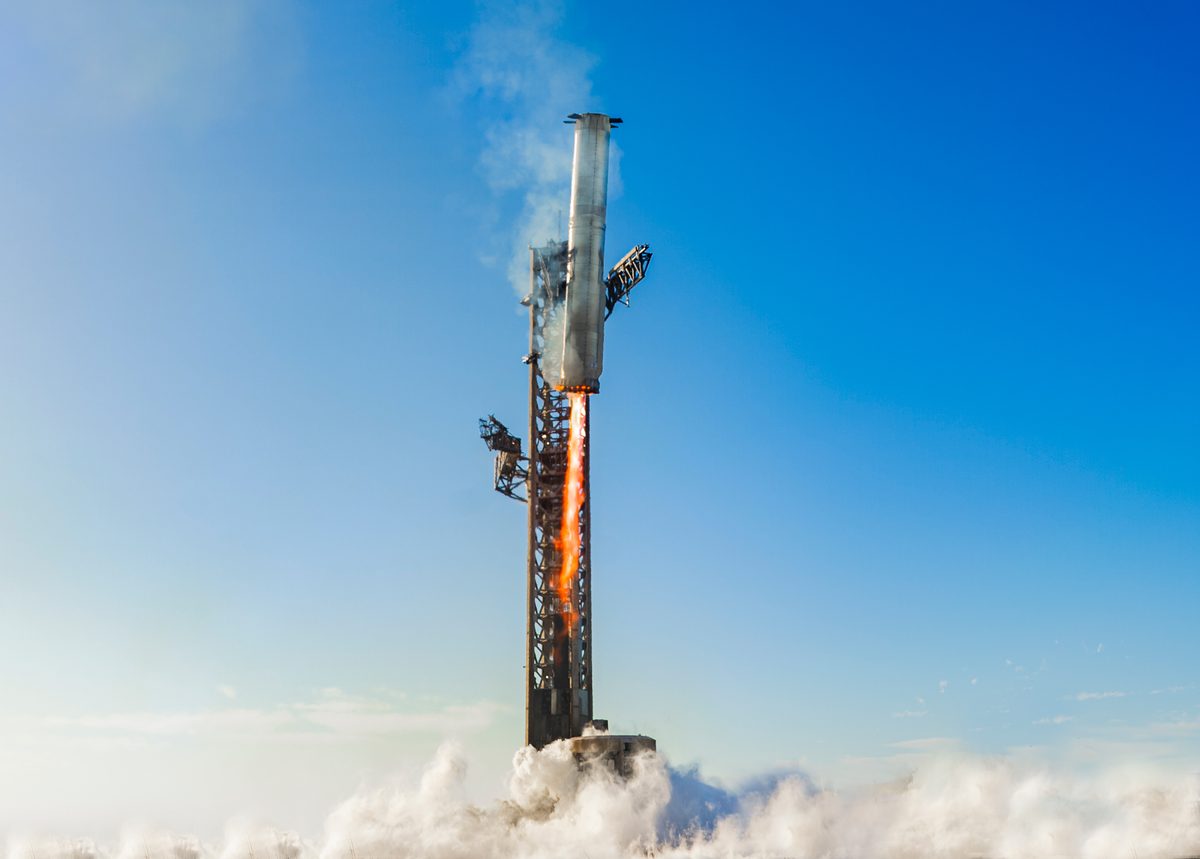
There are no landing legs on Super Heavy. It flies back to the launch tower, slows with its engines and hovers next to the tower. Two huge arms on the tower, which SpaceX calls "chopsticks" and fans call Mechazilla, close around it and hold it by small pins near the top. For a step-by-step explanation, read how does the Starship catch work?
Every Starship flight: was the booster caught?
All flights launched from Starbase, Texas. The booster serial numbers are the ones SpaceX named, or else NASASpaceflight's identification.
| Flight | Date | Booster | Booster result | Caught? |
|---|---|---|---|---|
| 1 | 20 Apr 2023 | B7 | Lost before stage separation | No |
| 2 | 18 Nov 2023 | B9 | Broke up during boostback | No |
| 3 | 14 Mar 2024 | B10 | Broke up during landing burn | No |
| 4 | 6 Jun 2024 | B11 | Soft splashdown in the Gulf | No |
| 5 | 13 Oct 2024 | B12 | First tower catch | Yes |
| 6 | 19 Nov 2024 | B13 | Catch called off, splashdown | No |
| 7 | 16 Jan 2025 | B14 | Caught | Yes |
| 8 | 6 Mar 2025 | B15 | Caught | Yes |
| 9 | 27 May 2025 | B14, reflown | Planned splashdown, broke up | No |
| 10 | 26 Aug 2025 | B16 | Hover and splashdown | No |
| 11 | 13 Oct 2025 | B15, reflown | Hover and splashdown | No |
| 12 | 22 May 2026 | B19 | Hard splashdown | No |
| 13 | 24 Jul 2026 | B20 | Hard splashdown | No |
| 14 | 28 Sep 2026 | B21 | Splashdown | No |
| 15 | 13 Nov 2026 | B22 | Catch planned, aborted and diverted to a Gulf splashdown | No |
From Flight 9 to Flight 14, SpaceX aimed its boosters at the sea and used them for landing tests. The third-generation (V3) design first flew on Flight 12. Flight 15 was the first catch attempt for a V3 booster.
The three booster catches
Flight 5, 13 October 2024. "On our first try, Mechazilla caught the booster," SpaceX wrote on its Flight 5 page. SpaceX says thousands of checks on the rocket and the pad had to pass first.
Flight 7, 16 January 2025. The booster was caught for the second time. SpaceX called it the "second successful catch" of Super Heavy. The ship, the first of an upgraded design, was lost during its climb.
Flight 8, 6 March 2025. The third catch. Again, the ship was lost near the end of its climb.
The attempts that did not end in a catch
Flight 6, 19 November 2024. The booster headed back to the tower, but automated health checks called off the catch. It diverted to a splashdown in the Gulf instead.
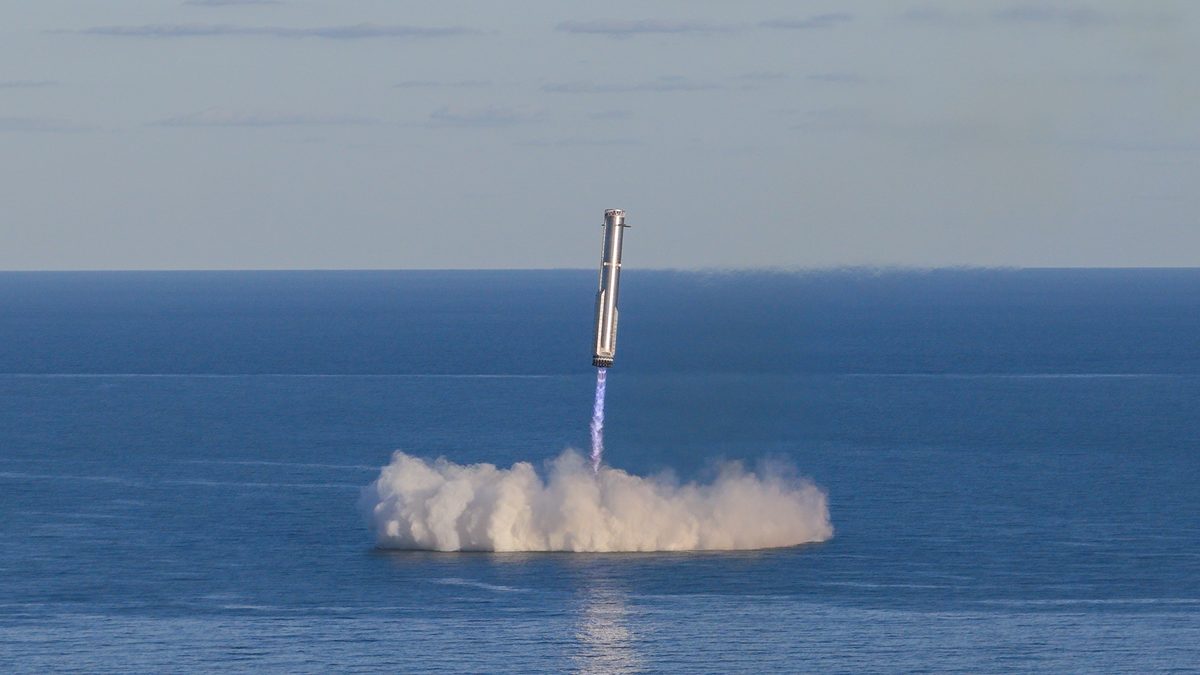
Flight 15, 13 November 2026. SpaceX planned a "double catch", the booster and then the ship. After stage separation, SpaceX said Super Heavy was diverted to an offshore splashdown in the Gulf. In its flight summary, SpaceX says the boostback burn ended early due to low fuel mass, with the root cause under investigation, so the booster's guidance triggered an automated abort. It made a landing burn and hovered over the Gulf, and SpaceX says its flight termination system was triggered after the engines cut off. The ship catch went ahead the next day.
Has a Starship ship been caught?
Yes, once, on Flight 15. Before Flight 15, every ship that survived reentry splashed down in the Indian Ocean or, on Flight 14, the Pacific. The ship from Flight 13, Ship 40, came to rest intact at sea and SpaceX later brought it back to Starbase. That was a recovery, not a catch.
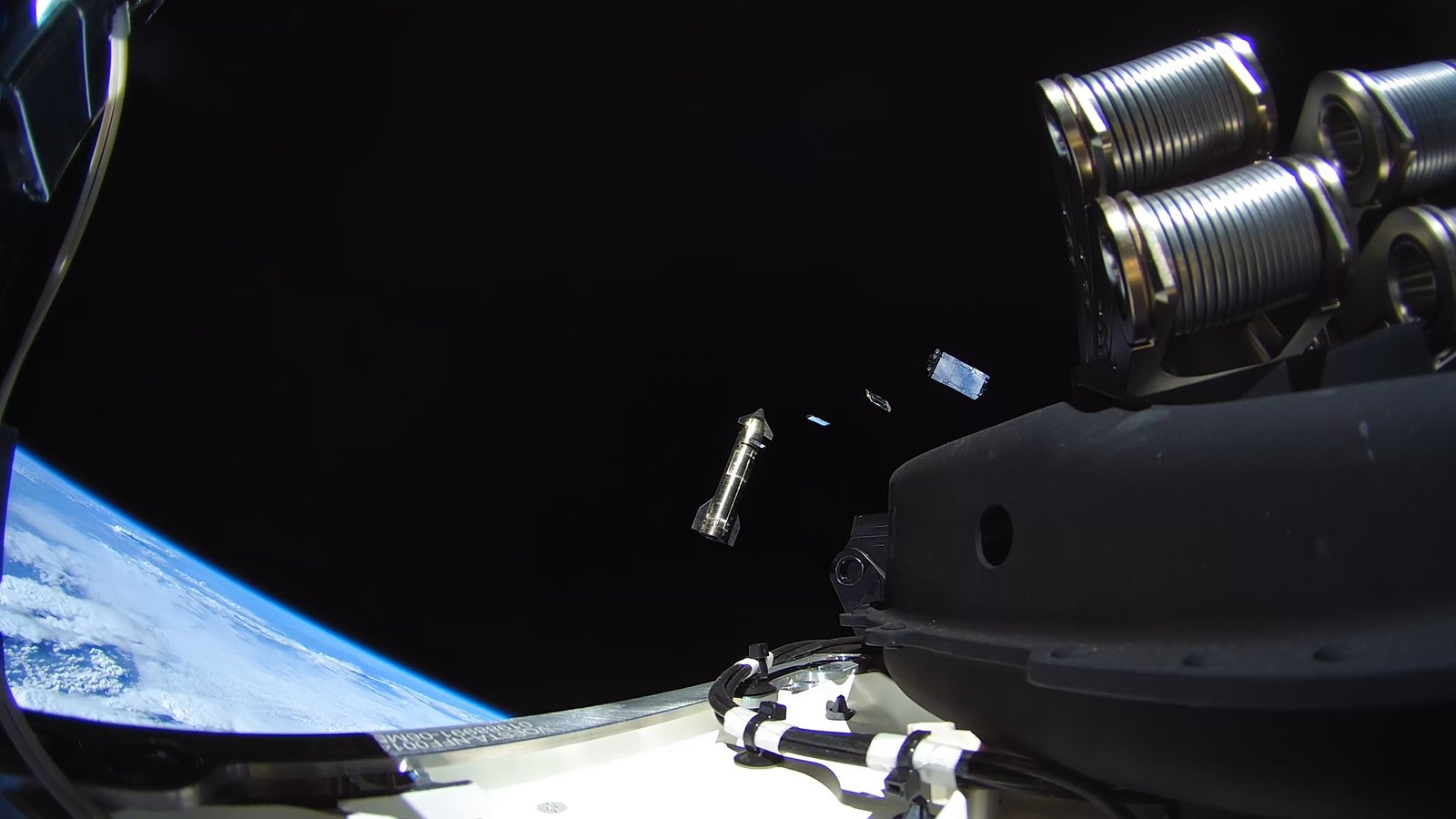
Flight 15's ship, Ship 42, reached orbit and deployed 26 Starlink V3 satellites. On 14 November, after more than 20 hours in space, it made a good deorbit burn at about 2:25 p.m. CST, reentered, and made a banking final approach to Starbase. SpaceX's flight summary says three Raptor engines lit for the landing flip and a slow descent, and the tower's arms closed around the ship. "Mechazilla catches Starship!" SpaceX posted at about 3:21 p.m. CST on Saturday 14 November 2026.
That makes Ship 42 the first Starship upper stage caught by the tower. SpaceX has not yet said whether it will fly again. The full Flight 15 results are in our Starship Flight 15 recap.
In my view, catching the ship is harder than catching the booster. It comes back from orbital speed, through reentry heating, and must hit a small spot next to the tower. Our explainer why catching the Starship ship is harder goes into the details.
Why does catching matter?
SpaceX describes Starship as designed to be fully and rapidly reusable. A caught booster can, in principle, be checked and flown again without a trip back from sea. SpaceX has already reflown two caught boosters: the Flight 7 booster on Flight 9, and the Flight 8 booster on Flight 11. Those are company goals and early results, not yet routine.
For what comes next, see the Starship Flight 15 recap, when is Starship Flight 16? and the Starship launch schedule. Other companies landing rockets are compared in who else is landing rockets.