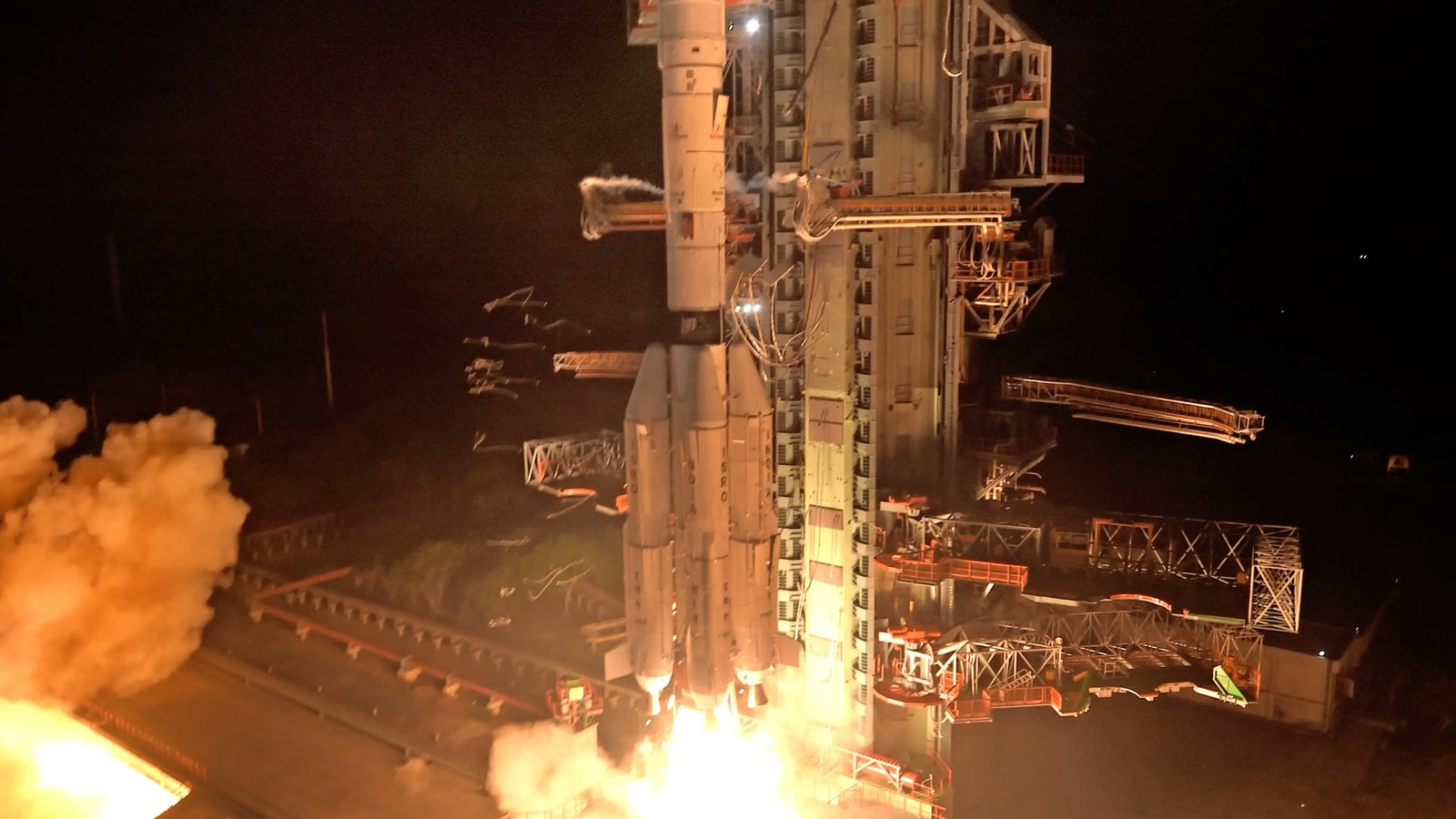

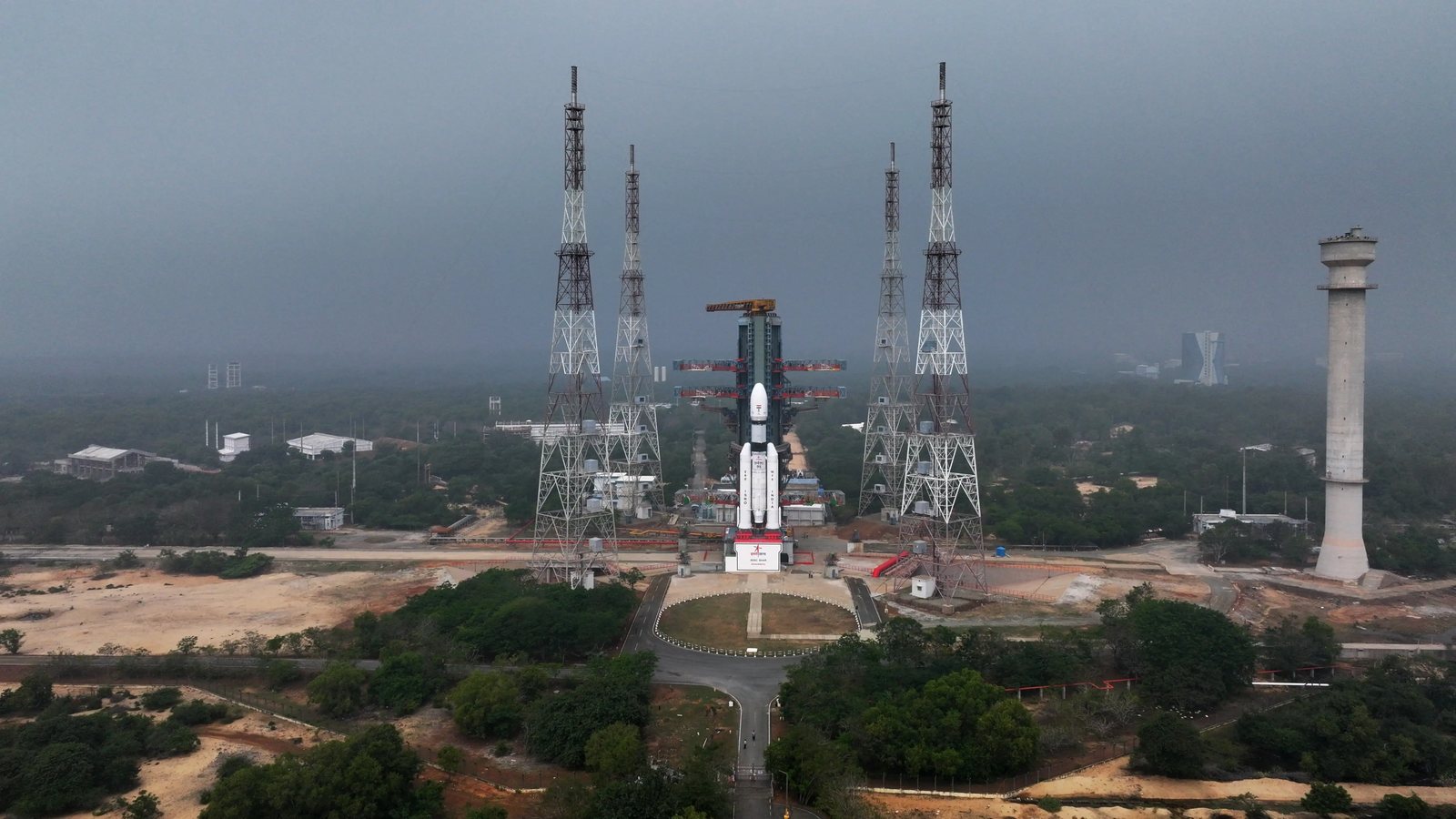
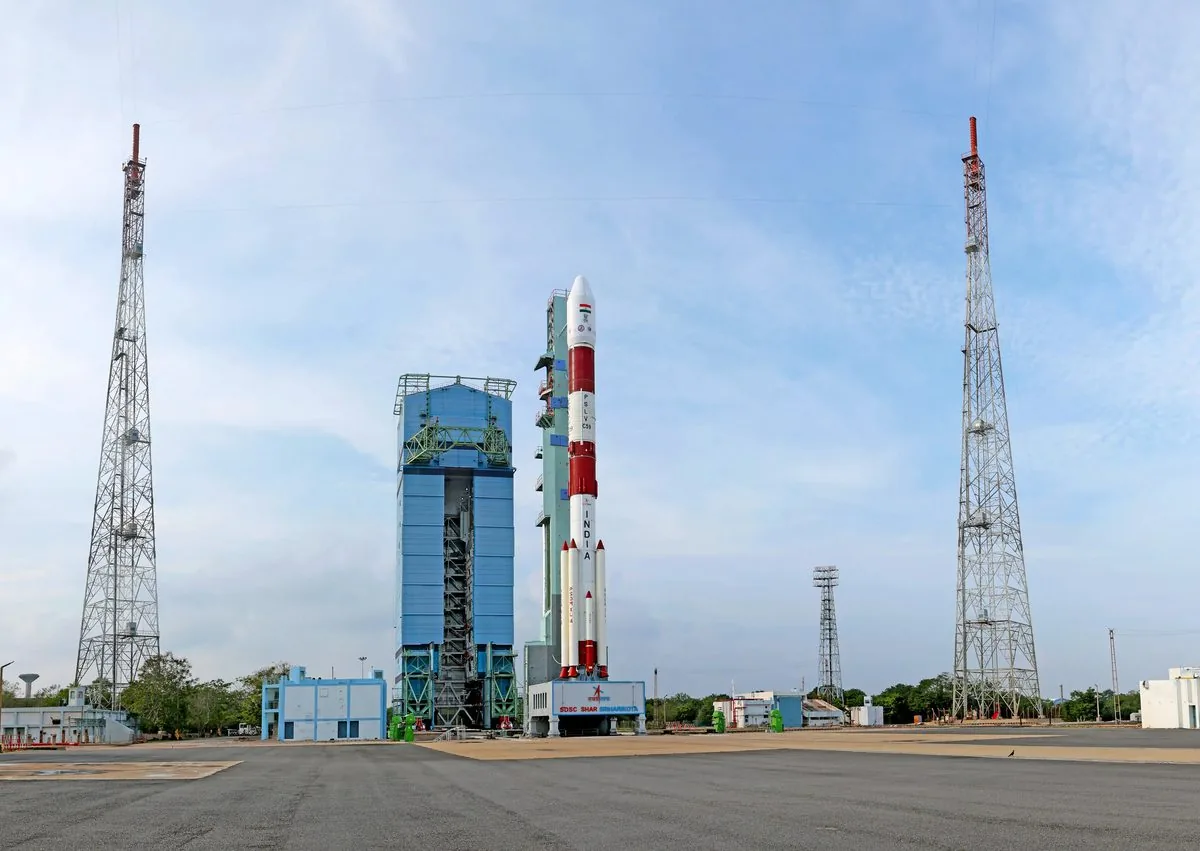
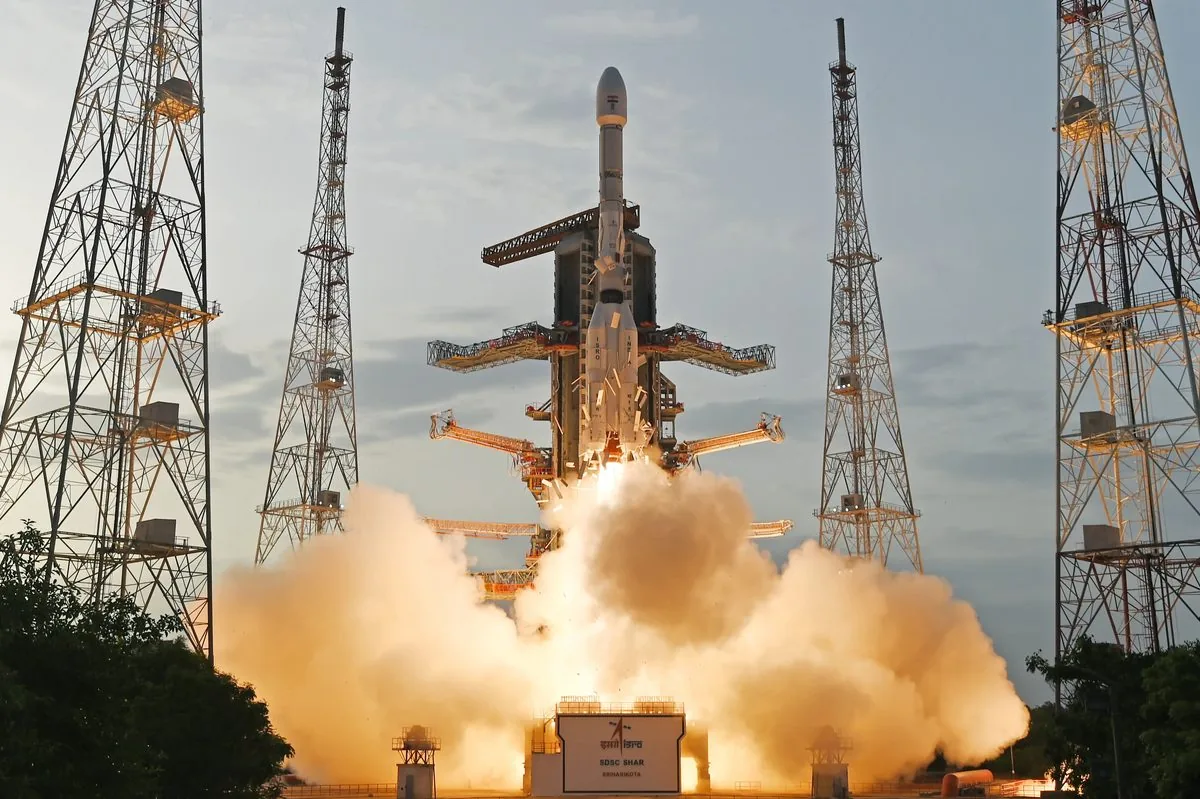
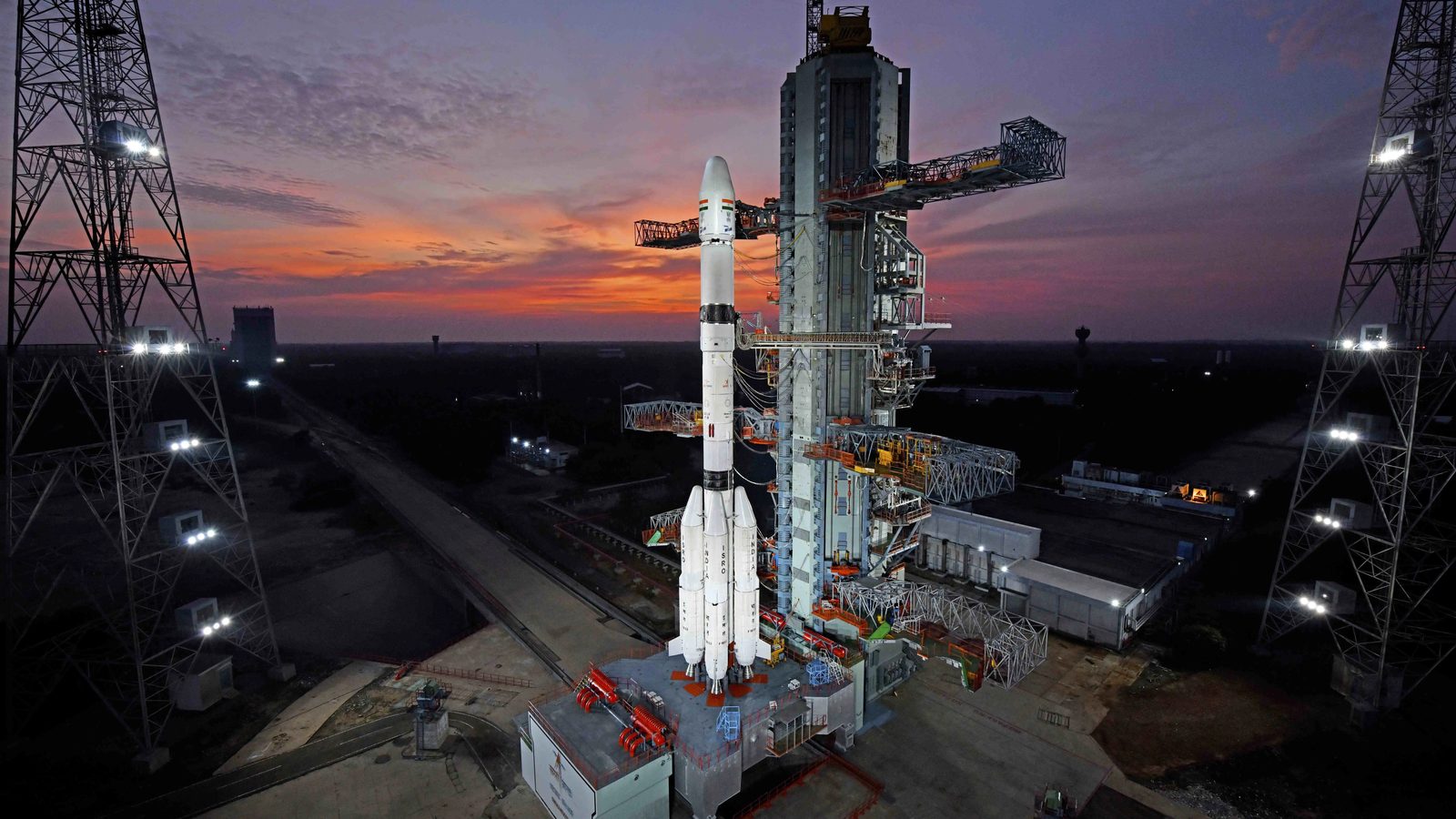
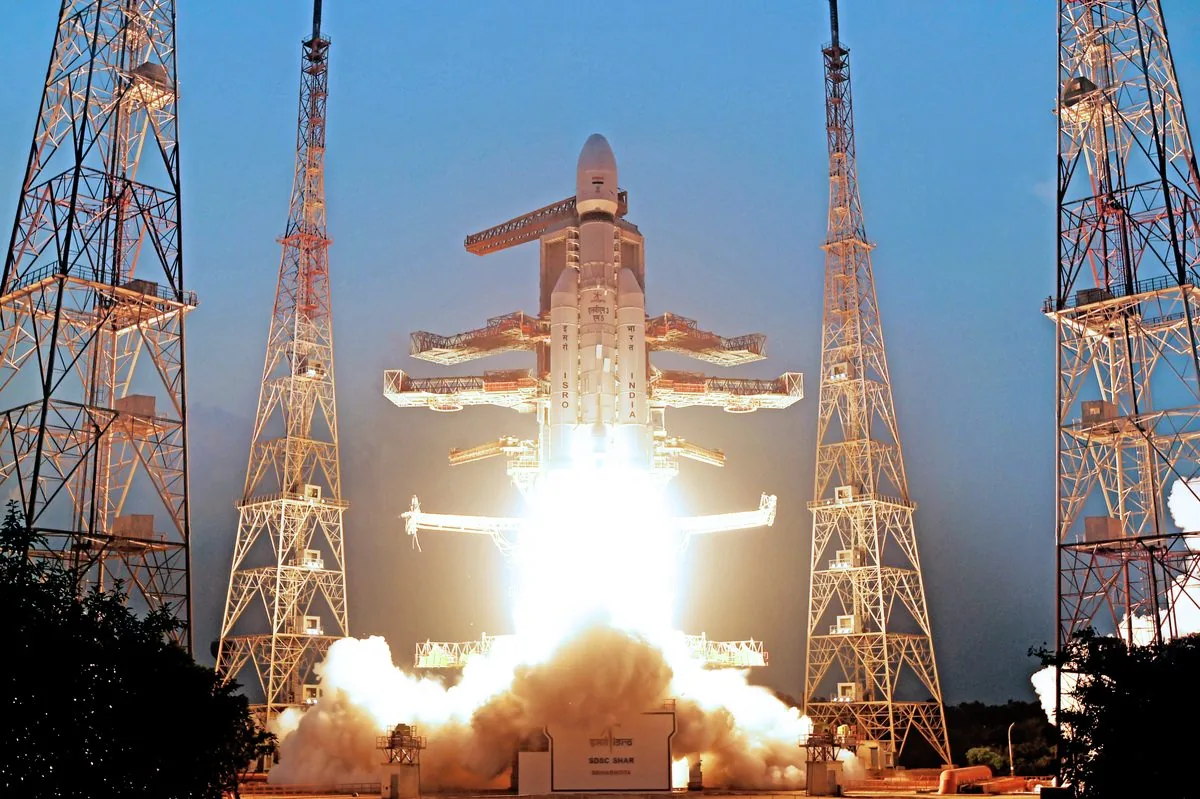
India’s government launcher family is run by the Indian Space Research Organisation (ISRO). The Polar Satellite Launch Vehicle (PSLV) is the workhorse for lower orbits. The Geosynchronous Satellite Launch Vehicle (GSLV) Mk II lifts about 2-tonne class satellites toward geostationary transfer orbit (GTO). The Launch Vehicle Mark-3 (LVM3) is the heavy lifter. The Small Satellite Launch Vehicle (SSLV) targets smaller satellites. Low Earth orbit (LEO) is a few hundred kilometres up. Gaganyaan (Sanskrit for “celestial vehicle” / “sky craft”) is the crewed spacecraft programme. Private companies such as Skyroot Aerospace and Agnikul Cosmos now fly or test their own vehicles from Indian ranges. For a side-by-side of the three main ISRO rockets, see PSLV vs GSLV vs LVM3.
Updated: 9 November 2026 (Asia/Calcutta).
Active ISRO rockets
Figures from ISRO’s vehicle pages (checked for this guide).
| Rocket | Height | Lift-off mass | Payload (ISRO) | Stages / notes |
|---|---|---|---|---|
| PSLV (XL shown) | 44 m (44.4 m on XL config text) | 320 t (XL) | 1,750 kg to 600 km SSPO; 1,425 kg to sub-GTO | 4 stages; CA / DL / QL / XL strap-on variants |
| GSLV Mk II | 51.73 m (ogive fairing) | 420 t | 2,250 kg to GTO; 6,000 kg to LEO | 3 stages; indigenous cryogenic upper stage |
| LVM3 | 43.5 m | 640 t | 4,000 kg to GTO; 8,000 kg to 600 km LEO | 2× S200 solids + L110 + C25 cryogenic |
| SSLV | 34 m (VSSC) | about 120 t | about 500 kg to 500 km planar orbit | 3 solids + liquid VTM; small-sat launcher |
ISRO’s launchers page calls PSLV the work horse, notes GSLV’s roughly 2 tonne GTO class, and describes LVM3 as 4 tonne class to GTO with a clean success record from its first development flight. Launch lists and mission pages on isro.gov.in are the source for individual flight outcomes (including anomalies such as PSLV-C61 and PSLV-C62 noted on ISRO mission pages).
Gaganyaan (crewed programme)
ISRO’s Gaganyaan page describes a crew of three to a 400 km orbit for about three days, with splashdown in Indian waters. The launcher is a human-rated LVM3, called Human-rated LVM3 (HLVM3) or HRLV in ISRO materials. Precursor tests include pad abort, air-drop and Test Vehicle flights. Uncrewed flights are planned before the first crewed mission. See also our Gaganyaan G1 coverage for schedule notes as ISRO updates them.
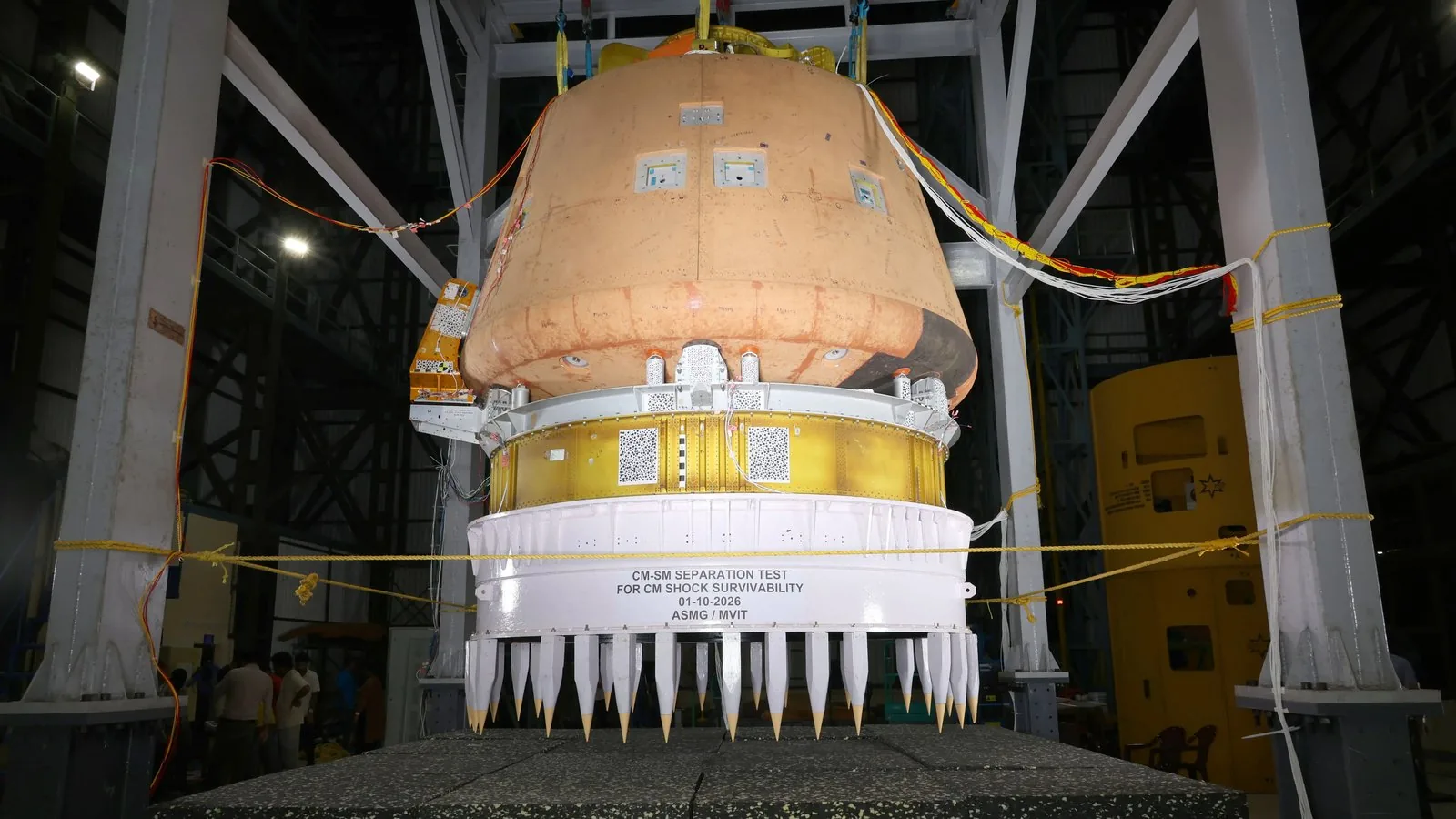
Brief history: past ISRO rockets
| Rocket | Notes |
|---|---|
| SLV | Satellite Launch Vehicle; early orbital attempts from the 1980s |
| ASLV | Augmented SLV; developmental solid rocket, limited success record |
| PSLV | First flight 20 September 1993 (ISRO); became the reliable workhorse |
| GSLV | First flight 18 April 2001; indigenous cryogenic stage from GSLV-D5 (5 January 2014) |
Private: Skyroot and Agnikul
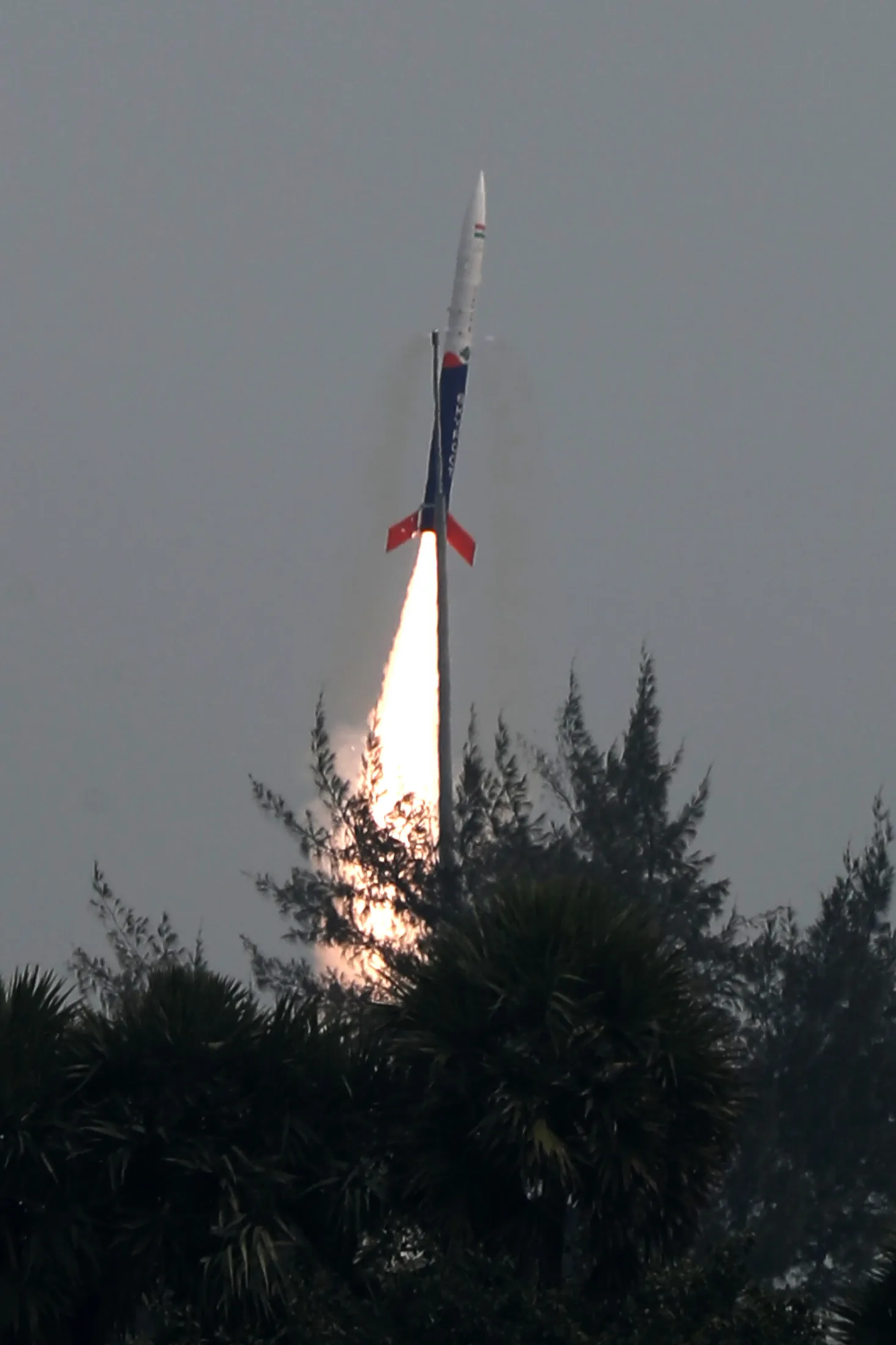
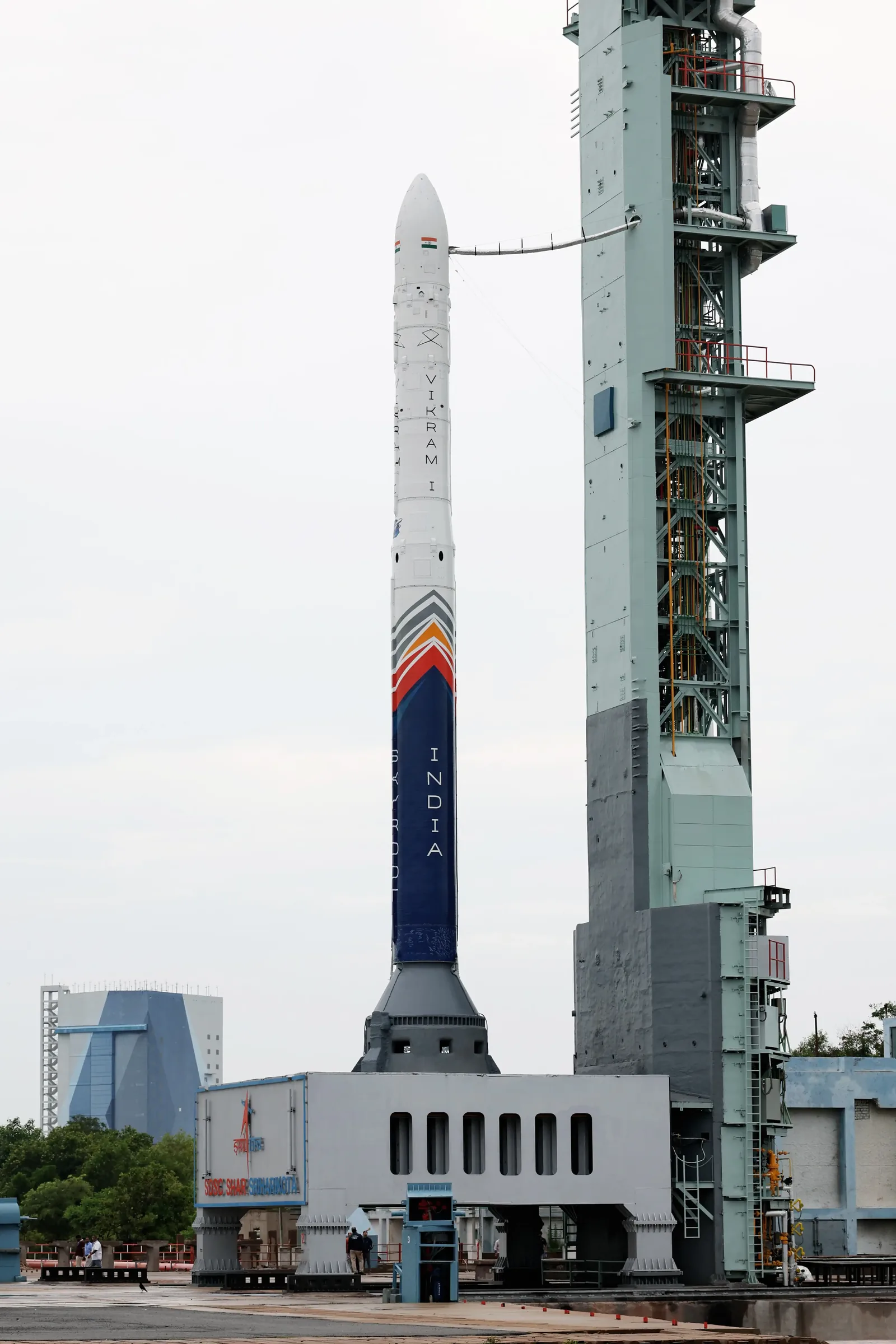
Skyroot Aerospace (Vikram). Vikram is Skyroot’s small-satellite launcher family, named in honour of Vikram Sarabhai, a founder of India’s space programme. Skyroot’s site lists Vikram-I for up to 350 kg to LEO and 260 kg to SSO, and Vikram-II (cryogenic, launching 2027 on the company page) for up to 900 kg to LEO and 600 kg to SSO. ISRO’s 18 July 2026 release says Vikram-I lifted off from Satish Dhawan Space Centre at 12:05:30 PM Sriharikota local time, injected SCOPE and Grahaa to low Earth orbit, and was the first private Indian orbital launch from Indian soil. Vikram-S flew a suborbital test (Mission Prarambh) on 18 November 2022.
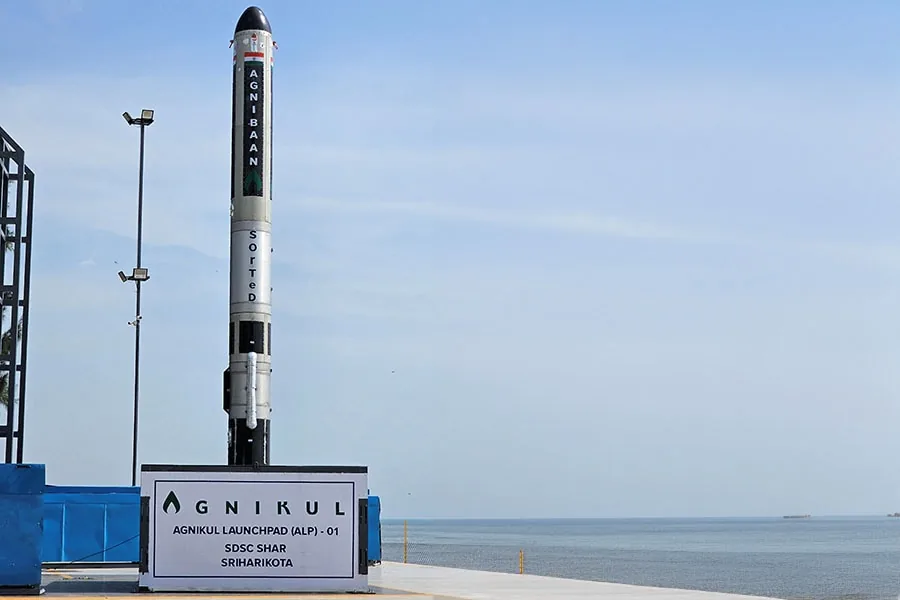
Agnikul Cosmos (Agnibaan). Agnibaan is Agnikul’s customisable orbital rocket (the company presents the name with its “arrow of fire” branding); confirm any English gloss on Agnikul’s own pages when quoting it. Agnikul’s site describes a customisable orbital vehicle with a single-piece 3D-printed semi-cryogenic engine, a mobile launch pad and clusterable engines. The company has flown a suborbital technology demonstrator (SOrTeD). Orbital flight status should be taken from Agnikul’s own mission updates and ISRO/IN-SPACe facilitation notices when citing a date.
Coming next
- Gaganyaan uncrewed then crewed flights on HLVM3
- More SSLV commercial flights
- Skyroot Vikram-II (company: 2027)
- Agnibaan orbital attempts as Agnikul announces them
- Next-generation ISRO launchers under development (see ISRO launchers “under development” notes)
Related guides
- PSLV vs GSLV vs LVM3
- SpaceX rockets and spacecraft
- Rockets and spacecraft from China
- /launches/ for Indian launch times