Why is catching Starship's ship harder than catching the booster?
The booster is back about seven minutes after launch, over water. The ship returns from orbit, far faster and hotter, and must cross Mexico to reach the tower.
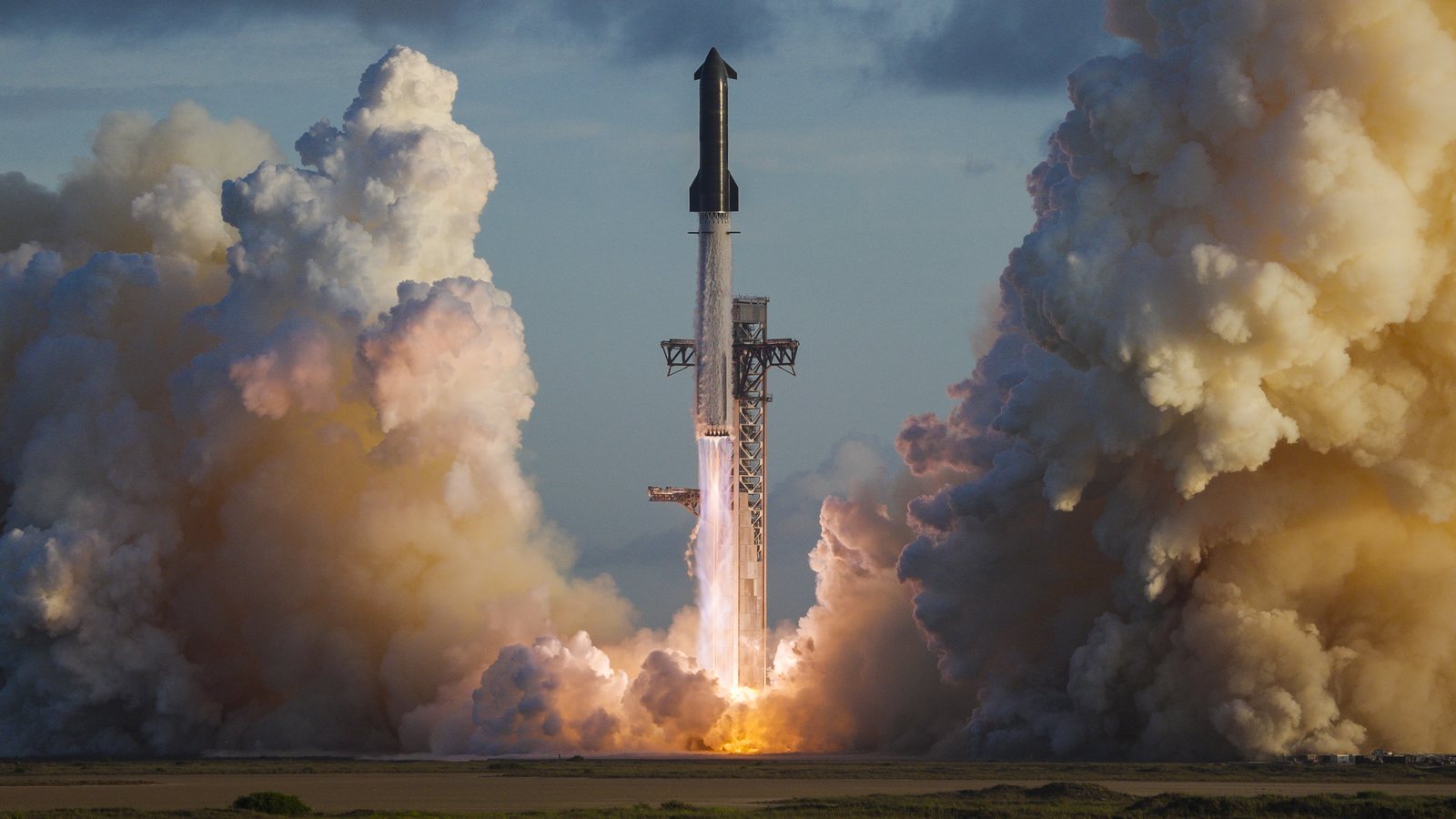
Catching Starship's ship is harder because it comes back from orbit, not from the edge of space. The Super Heavy booster turns around about two and a half minutes after launch and is back within about seven minutes of liftoff, flying in over the sea. The ship has to slow down from orbital speed, survive the heat of reentry with its heat shield intact, fly over Mexico and southern Texas to reach the tower, then flip upright and land precisely in seconds.
Starship tracker
Flight 15
Starship V3 · SpaceX · USA
NET Q4 2026
Time Not announced yet
From Orbital Launch Pad 2, SpaceX Starbase, TX, USA
Why it matters Elon says Flight 15 will try to catch both the Super Heavy booster and the ship. No orbital rocket's upper stage has ever been caught. Read our story
The launch tower has caught the booster three times, on Flights 5, 7 and 8. No one has ever caught a ship. SpaceX founder Elon Musk said on SpaceX's third-quarter earnings webcast on 20 October 2026 that Flight 15 will try to catch both.
Status as of 22 October 2026. SpaceX has not published a flight plan or a launch date for Flight 15. New to the terms? See our Starship glossary. For the flight itself, see When is Starship Flight 15?
What is SpaceX trying to do on Flight 15?
On that webcast, Elon said: "For Flight 15, which we expect to happen next month, we're going to attempt to catch both the booster and the ship." If it works, he said, "it will be the first time that an orbital launch vehicle has been fully recovered." He also said: "Success is not guaranteed on these first flights, but I'd say it's more likely than not that this succeeds next flight."
SpaceX President Gwynne Shotwell said SpaceX expects the Flight 15 licence from the Federal Aviation Administration (FAA), which licenses US launches, "to include return to launch site and tower catch for both stages." That is an expectation. As of 22 October, the licence has not been issued.
How does a booster catch work?
The booster's whole trip is short. For Flight 14, SpaceX's pre-flight timeline planned stage separation at 2 minutes 22 seconds after liftoff. The booster would start its boostback burn, the engine firing that turns it back towards home, five seconds later. Its landing burn was planned to start at 6 minutes 36 seconds and end at 7 minutes 1 second.
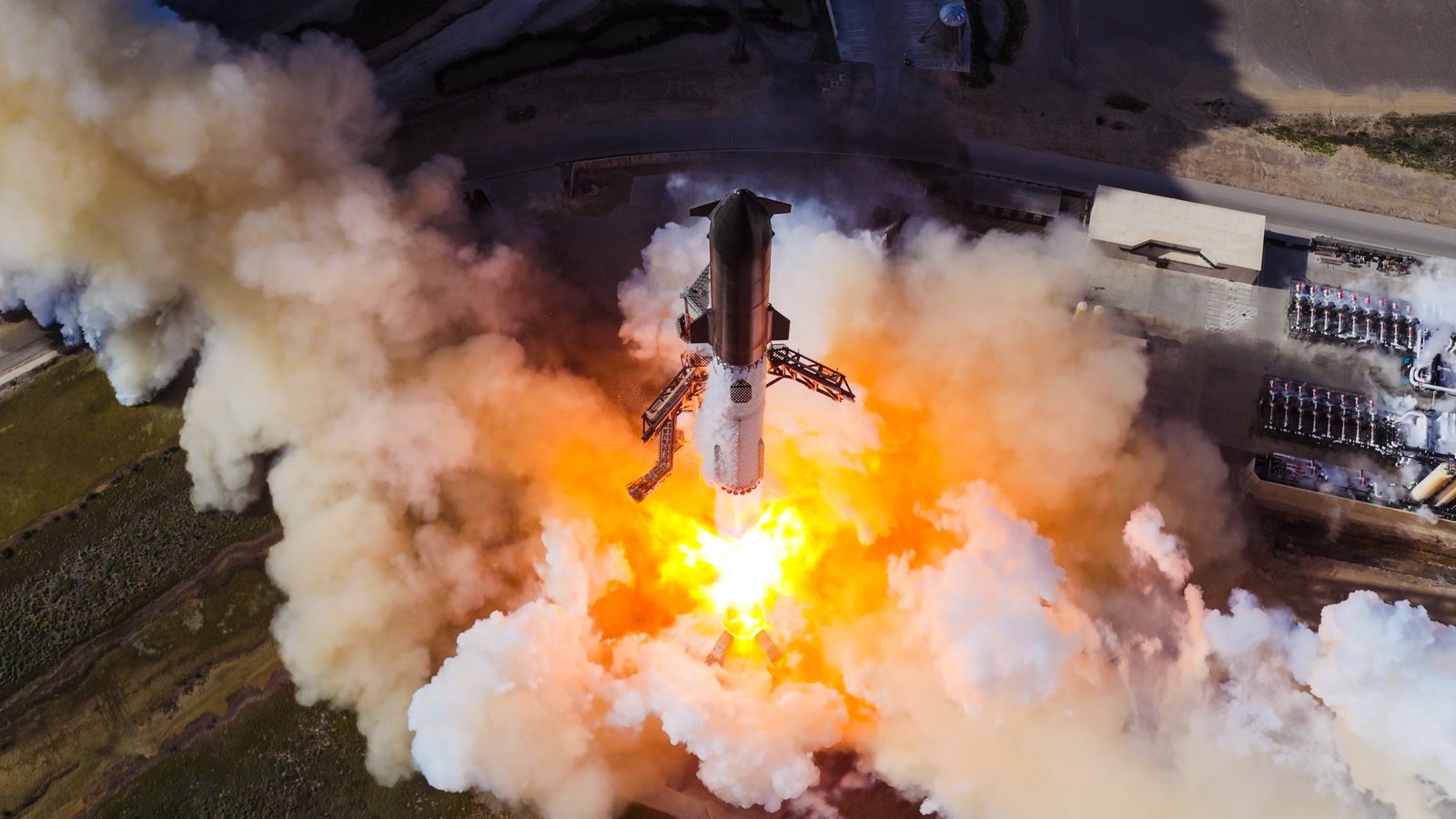
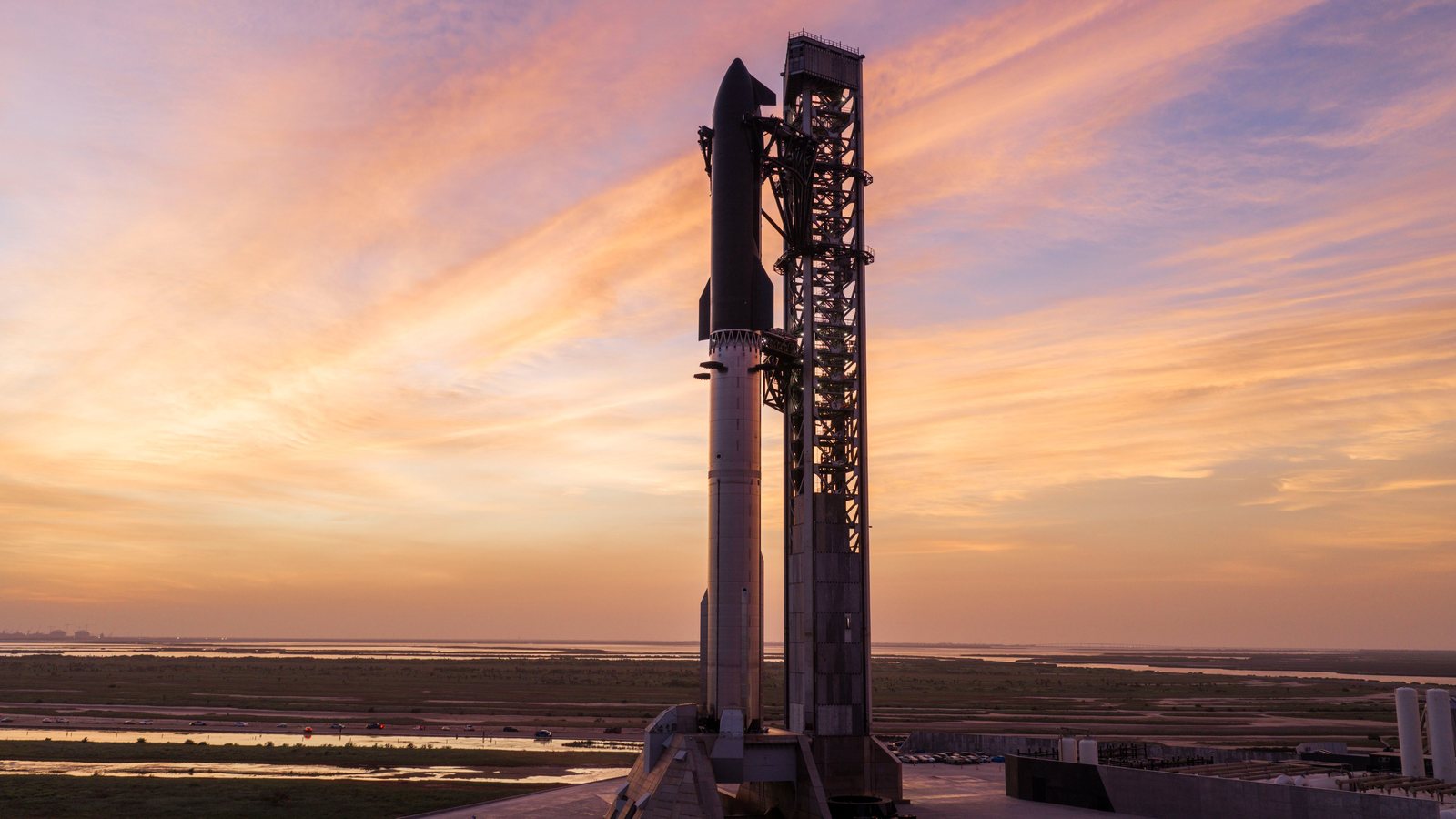
On a catch flight, the booster starts its landing burn with up to 13 engines, then uses the three centre engines to steer itself into the tower's arms, SpaceX says. Those arms are the "chopsticks" of the tower SpaceX nicknames Mechazilla. Before the first catch on Flight 5, on 13 October 2024, SpaceX says "thousands of distinct vehicle and pad criteria had to be met". On Flight 6, automated health checks on the tower called off the catch, and the booster splashed down in the Gulf instead.
The booster catch isn't fully solved for the newest rocket, either. All three catches were of earlier boosters, made before Version 3 (V3), the current, larger generation, first flew on Flight 12. Flights 12 and 13 ended with hard splashdowns of the booster. On Flight 14, the booster splashed down in the Gulf. Its boostback was "intentionally designed to burn through the remaining liquid oxygen" in its main tank, SpaceX says, "to test the limits of booster performance ahead of future return to launch site missions."
How much faster is the ship coming back?
Much faster. The booster drops away after about two and a half minutes. The ship keeps firing its engines to reach orbit, or very close to it. The National Aeronautics and Space Administration (NASA) puts orbital speed at about 27,000 km/h (17,000 mph) at a height of 242 km. Ars Technica notes that the booster is larger and heavier than the ship, "but comes back at a fraction of the speed".
That gap matters more than it sounds. The energy of a moving object grows with the square of its speed, so twice the speed means four times the energy. The ship has to get rid of almost all of that energy on the way down. Most of it is turned into heat as the ship pushes through the air.
The ship's trip home takes longer, too. On Flight 14, its first orbital flight, the ship fired its deorbit burn about 2 hours 12 minutes after liftoff, according to the SpaceX webcast as reported by BBC News. The webcast put the formal entry into the atmosphere at about 2 hours 47 minutes. SpaceX confirmed splashdown on target in the northern Pacific, about 3 hours 8 minutes after liftoff and just before 11 a.m. CDT, Starbase time. That is roughly 21 minutes from entry to splashdown.
That was much shorter than planned. SpaceX's pre-flight timeline had the ship landing about 9 hours 50 minutes after launch. A vacuum engine shut down early during the climb to orbit. "Out of an abundance of caution", SpaceX says, the flight team "decided to limit the duration spent on orbit" and brought the ship down after about two orbits.
Why does the heat shield matter so much?
Because the ship is the stage that has to survive reentry. The side that faces the air on the way down is covered in black hexagonal ceramic tiles. Ars Technica puts the count at more than 18,000 tiles. It reports that they withstood temperatures of up to 1,430°C (2,600°F) on Flight 13.
SpaceX has spent several flights testing that shield on purpose:
- Flight 10 (August 2025). SpaceX says the heat shield was "intentionally stressed to push the envelope". Elon wrote afterwards that the tiles "almost entirely stayed attached", and that some areas had tiles deliberately removed.
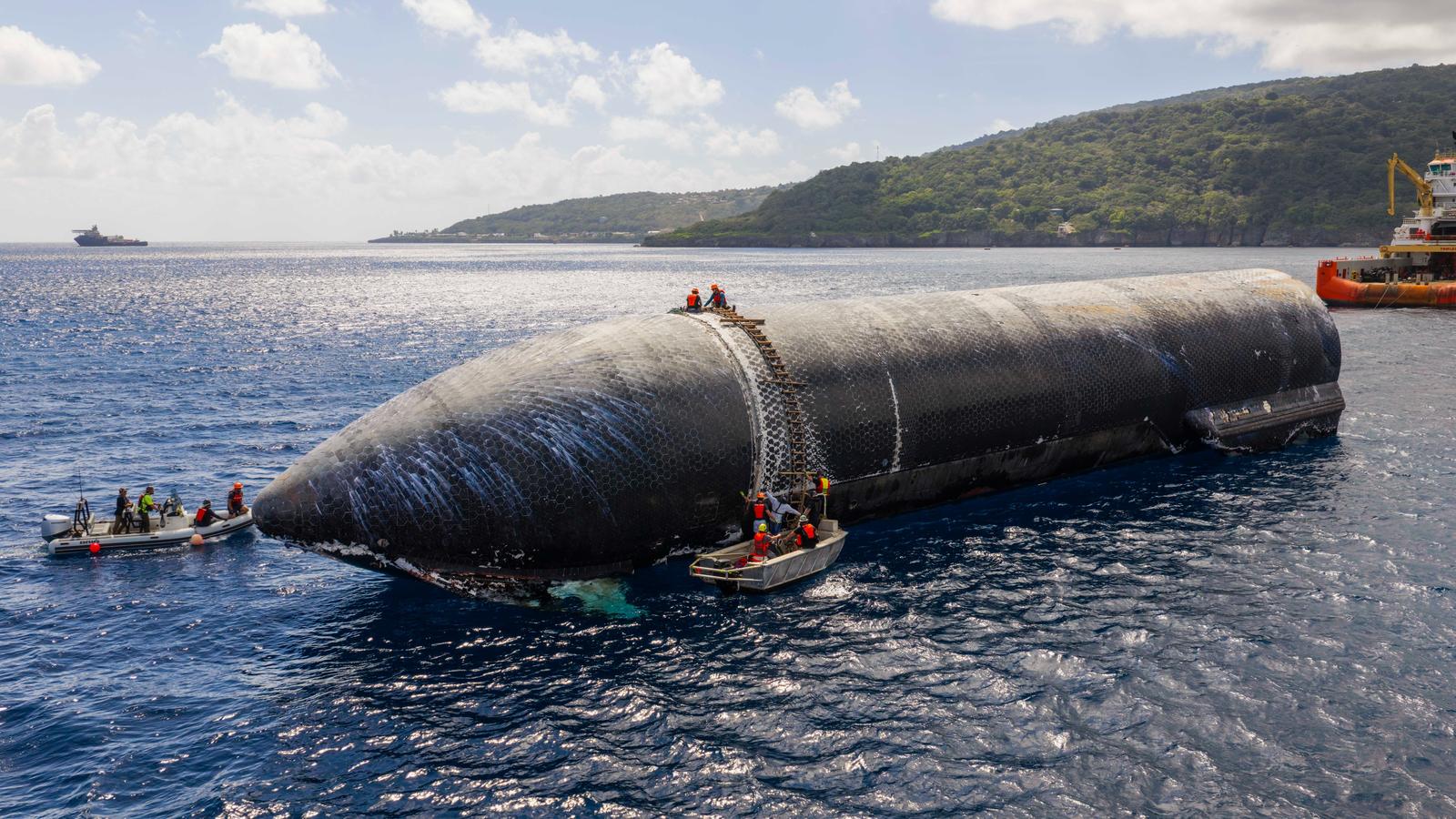
- Flight 13 (July 2026). Ship 40 came "to rest intact" in the Indian Ocean, giving SpaceX "critical views of an intact heatshield for the first time."
- After Flight 13. SpaceX engineers spent several days inspecting Ship 40 in the waters off Christmas Island. SpaceX says they collected heat shield samples, with "improvements now planned on future vehicles." On the morning of Flight 14, SpaceX said what it had learned "led to improvements in Starship's heatshield we'll see fly today."
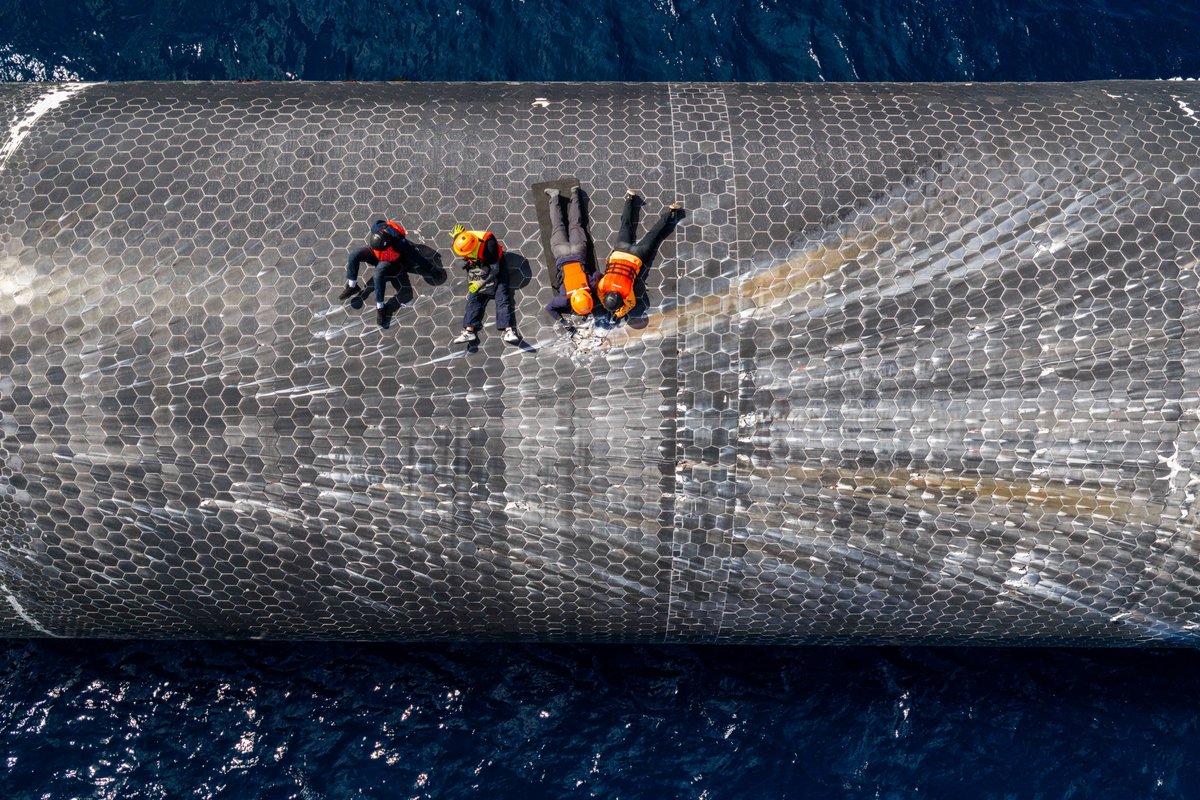
For a catch, the heat shield has two jobs. It has to get the ship home in one piece over land. And for quick reuse, it has to come back in good enough shape to fly again without being rebuilt. Elon has put the second job on a par with the hardest problems in the program. In May 2026 he wrote that engine reflight "without replacement, refurbishment or laborious inspection is about the same degree of difficulty as a rapidly reusable heat shield."
This video, from a SpaceX documentary, shows how the heat shield tiles are made.
Why does the ship have to fly over land?
Because of where Starbase is. Starship launches east over the Gulf. The booster flies back the way it came, over water, to the coast.
The ship circles the Earth before it comes home, and it arrives from the west. The FAA's environmental assessment of ship returns to Starbase, finished in February 2026, describes the path. It says reentries would affect air routes "from the Pacific Ocean, across Southern California, Mexico, and Southern Texas". The temporary airspace closures for a ship return would stretch westward from Starbase through Mexico and parts of Texas, New Mexico, Arizona and California, about 3,700 nautical miles of air routes in all.
That brings a different level of risk. A booster that fails on its way home falls into the Gulf. A ship that fails on its way home could break up over land. The FAA's review also brings:
- Airspace closures. The FAA estimates that a ship return could affect up to 200 commercial flights an hour at busy times. It also estimates average delays of about 40 to 60 minutes.
- Daytime only. The FAA's analysis assumes ship returns to Starbase happen only in the daytime. Night reentries would end at sea instead.
- New launch paths. The FAA says new launch trajectories are needed to reach the orbits that let a ship come back to Starbase.
- No guarantee. The FAA notes that finishing the environmental review "does not guarantee" a licence. SpaceX's application must still meet the FAA's safety and other rules.
Elon set his own bar in February 2026. "SpaceX will only try to catch the ship with the tower after two perfect soft landings in the ocean," he wrote. "The risk of the ship breaking up over land needs to be very low." Since then, Flights 13 and 14 have both ended with controlled splashdowns at their planned spots.
What makes the final seconds harder for the ship?
The ship lands in a way no booster does. It falls back through the air belly-first, steering with its four flaps. Just before landing, it relights its engines and swings upright. On Flight 14, SpaceX says the ship relit all three of its sea-level engines for a landing burn and flip just before splashdown. Its pre-flight timeline planned about 19 seconds from the start of the landing burn to splashdown, with the flip two seconds in and the ship stepping down from three engines to two, then one. SpaceX has not published the actual times for those last seconds of the shortened flight. Either way, a tower catch has to happen inside a burn that short.
The ship also has fewer engines to work with. Super Heavy starts its landing burn on up to 13 engines, and on Flight 10 it switched off a centre engine on purpose and used a backup from its middle ring. The ship lands on its three standard Raptor engines. On Flight 12 it splashed down on two. Our view: the ship has less room for an engine problem in the final seconds than the booster does.
Those engines also have to work after hours in space. On Flight 14, the ship fired one engine for its deorbit burn, the burn that drops it out of orbit, a little over two hours after launch. When the burn was done, SpaceX said splashdown was about an hour away. The ship then relit all three engines for landing.
SpaceX has been practising the approach:
- On Flight 6, SpaceX said the ship flew "through subsonic speeds at a more aggressive angle of attack", data it wanted "as we aim for eventual ship return and catch".
- On Flights 11, 12 and 13, the ship flew "a dynamic banking move to mimic the trajectory that future missions returning to Starbase will fly."
- Every ship since Flight 10 has ended its flight at its planned splashdown point. After Flight 13, Elon wrote: "If there had been a tower out to sea where we practiced landing the ship, it would have been caught."
Is the ship built differently for a catch?
Yes, in size and in shape. SpaceX's Starship page lists the ship at 52 m tall, holding about 1,600 tonnes of propellant. The booster is 72 m and holds about 3,650 tonnes. Both are 9 m wide. The ship also has things the booster doesn't: its flaps, its tiled heat shield and a payload bay door for satellites.
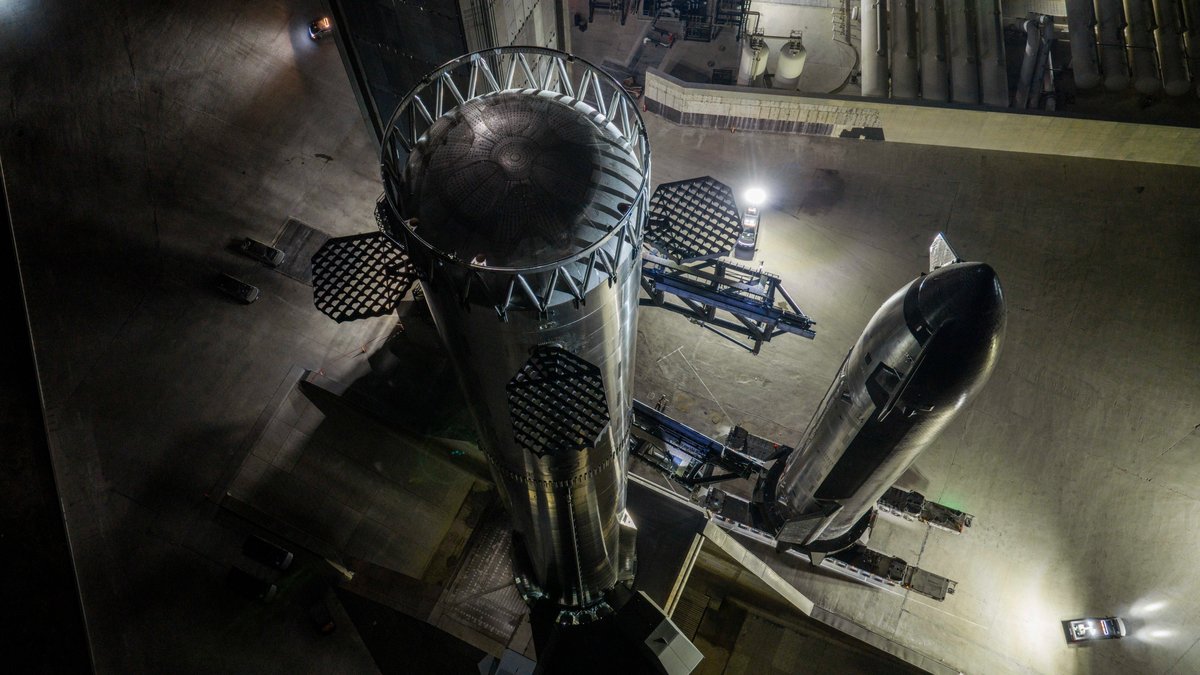
The ship's structure has to take the load of being caught. In March 2026, SpaceX said its tests on Ship 39, the first V3 ship, included "squeeze tests to mimic the forces of future ship catches." On the booster, SpaceX's onboard video shows a "catch fitting" meeting the chopsticks. For the ship, the simulation SpaceX played on its earnings webcast ends with hardware on the ship's side meeting the arms, Teslarati reports.
The tower is changing too. The three booster catches were made at Pad 1, Starbase's first launch pad. SpaceX says Flight 11 was the last launch from Pad 1 in its original form, and Flight 12 was the first from Pad 2. In September, SpaceX lifted Ship 42, the ship expected to fly Flight 15, into the Pad 2 tower's arms for catch-position tests, Teslarati reports. SpaceX itself has not said which tower will try the catches.
What happens if the first ship catch fails?
SpaceX tries again. Elon said that if Flight 15 does not succeed, "we have a steady stream of Starship flight attempts through the end of this year and then accelerating next year." On the same call, Shotwell said SpaceX aims to "refly the second stage by early next year."
A catch is only the first step. The point of catching the ship is to fly it again soon after. That's the step that would make Starship fully reusable, which no rocket has managed yet. Falcon 9 lands its booster but not its upper stage, and the rivals in our guide to who else is landing rockets are still working on boosters. Every attempt so far is logged in every Starship flight so far, and we will add Flight 15 when it flies.
Sources
- SpaceX: Starship Flight 14 mission page and pre-flight timeline (28 Sep 2026)
- BBC News: SpaceX's Starship splashes down in Pacific Ocean after returning to Earth earlier than planned (live, 28 Sep 2026)
- FAA: Final Tiered Environmental Assessment for additional launch trajectories and Starship return to launch site (Feb 2026)
- SpaceX: Q3 2026 earnings webcast (20 Oct 2026)
- Ars Technica: SpaceX eyes tower catch for next Starship after auspicious end to 13th flight (25 Jul 2026)
Free newsletter
Get the Starship briefing.
Every Saturday, plus alerts when something big happens. Unsubscribe any time. Privacy