
China plans to land two of its astronauts on the Moon before 2030. Two Long March 10 rockets will launch separately: one carries the Lanyue lunar lander, the other carries the Mengzhou crew spacecraft with three astronauts. The two meet and dock in orbit around the Moon, and two of the crew fly Lanyue down to the surface while the third waits in orbit.
Wang Xiang set out the plan in Beijing on 31 October 2026, at the 7th Manned Space Symposium. He is deputy chief designer of China's human spaceflight program and chief designer of its lunar program. The China Manned Space Agency (CMSA) organised the two-day symposium, which drew more than 800 experts. China has not given a launch date. "Before 2030" is the target.
What did China announce?
Xinhua reported that Wang called the design "two launches, lunar orbit rendezvous". In plain words: two rockets, two spacecraft, and a meeting in lunar orbit (the path around the Moon).
The key points:
- Three astronauts fly, two land. The third stays in Mengzhou in lunar orbit to support the landing crew.
- Two launches of the same rocket. Both use the new Long March 10, from the Wenchang Space Launch Site on Hainan island.
- A rover goes too. The landing crew will drive a small rover called Tansuo, collect samples and run experiments.
- Robots go first. An uncrewed Lanyue flight and an uncrewed rehearsal of the whole landing are planned before any crew lands.
Wang said building the crew ship and the lander separately fits China's existing technology and launch sites. It also lets China build them in series and grow them into a long-term family of vehicles.
How will the mission work, step by step?
This is the sequence Wang described, as reported by China Daily:
- Launch the lander. A Long March 10 sends Lanyue on its way to the Moon.
- Launch the crew. A second Long March 10 sends Mengzhou, with three astronauts, on its way to the Moon.
- Meet in lunar orbit. Once both are in their planned orbits, Mengzhou and Lanyue rendezvous and dock.
- Two astronauts move into Lanyue. The lander undocks and uses its engines to make a soft landing. The third astronaut stays aboard Mengzhou.
- Work on the Moon. The two astronauts drive the Tansuo rover, run experiments and collect samples.
- Climb back to orbit. Lanyue lifts off from the surface and docks with Mengzhou again.
- Head home. The two moonwalkers move the samples into Mengzhou and rejoin their crewmate. Mengzhou leaves the lander behind and brings all three back to Earth.
China has not said which of the two launches flies first, or how long the crew will spend on the surface.
What are Long March 10, Mengzhou and Lanyue?
- Long March 10 is China's new heavy rocket for the Moon program.
- Mengzhou ("dream vessel") is the new crew spacecraft.
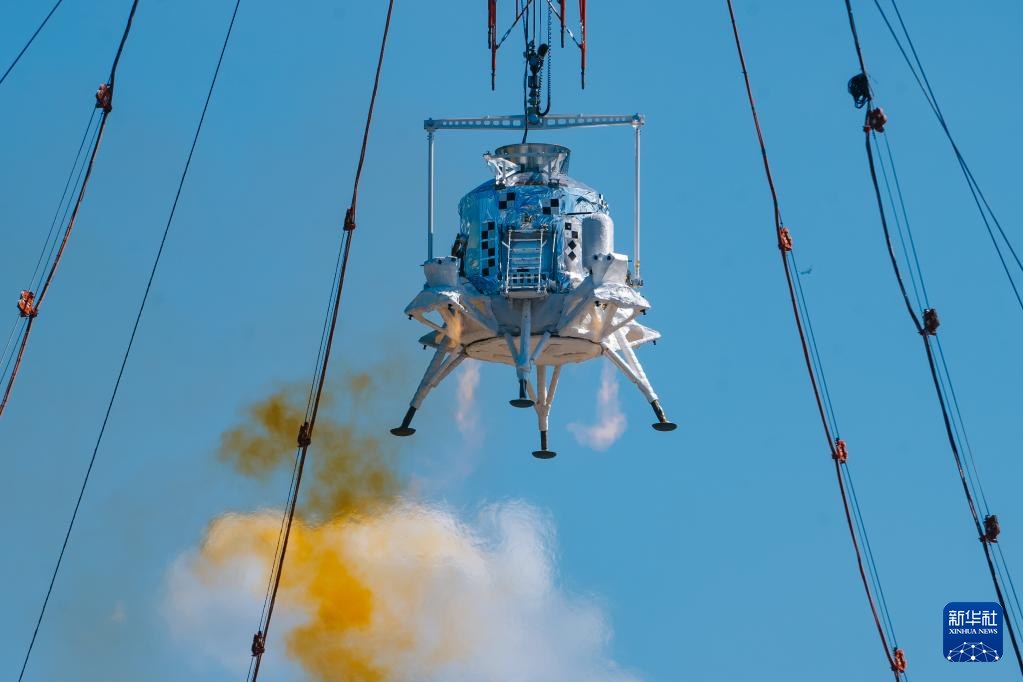
- Lanyue ("embracing the Moon") is the two-person lunar lander.
Wang said all three will also serve later, longer-term Moon missions, not just the first landing.
What has China already tested?
According to Wang, development of all three vehicles is "progressing smoothly". The main tests done so far:
- Mengzhou zero-height abort. The crew capsule's escape system fired from the ground, as it would in a pad emergency.
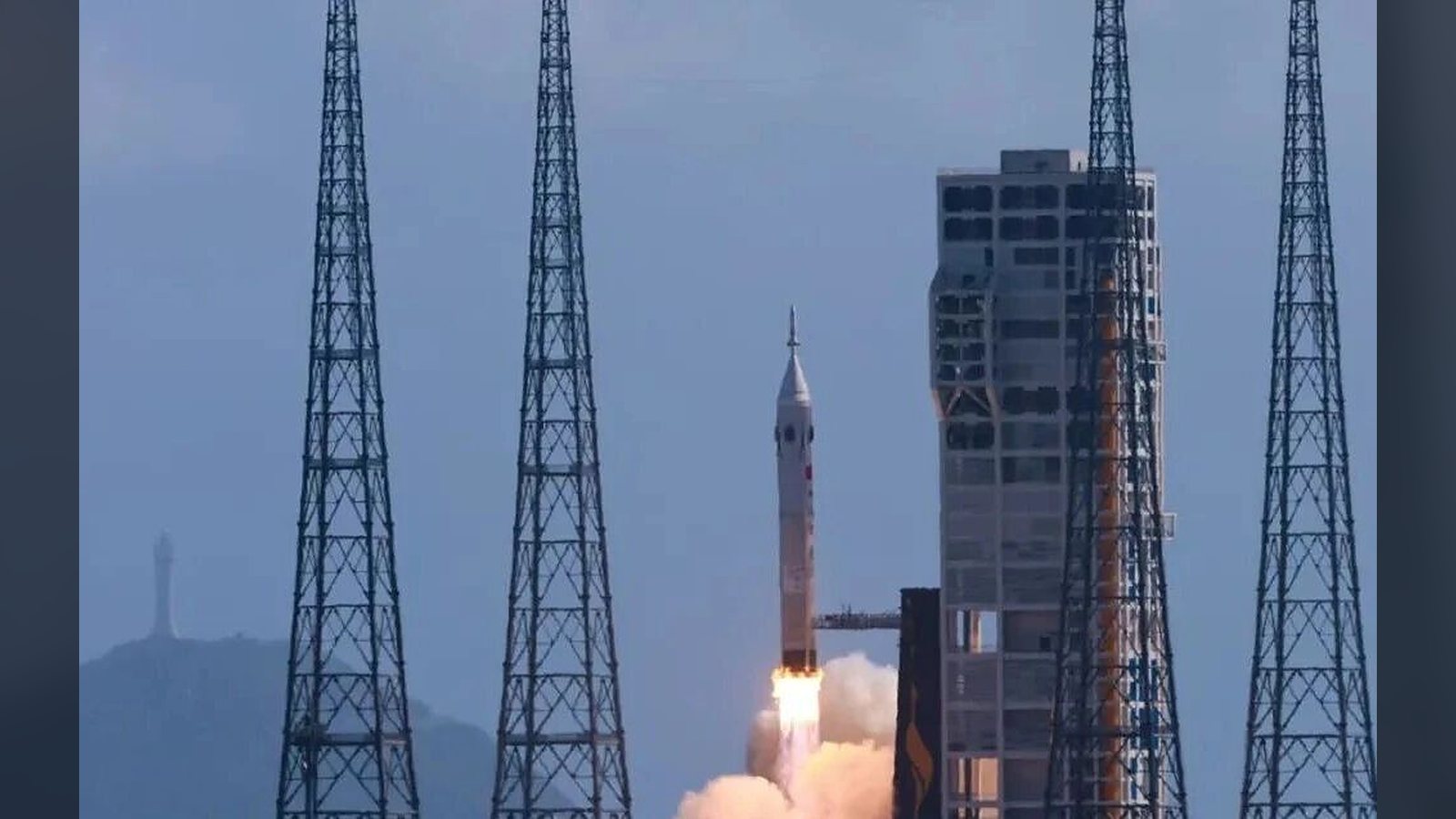
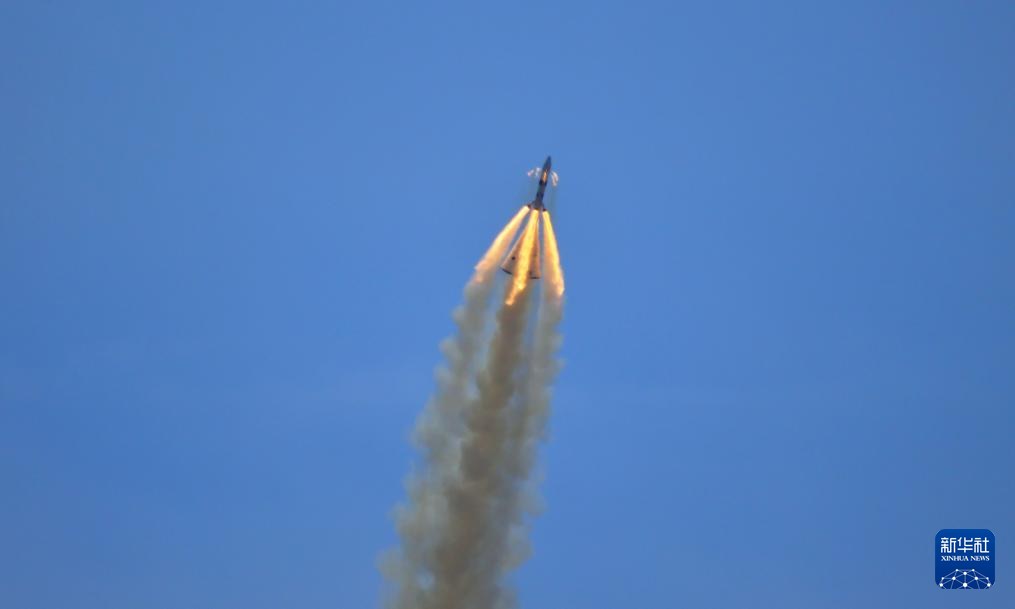
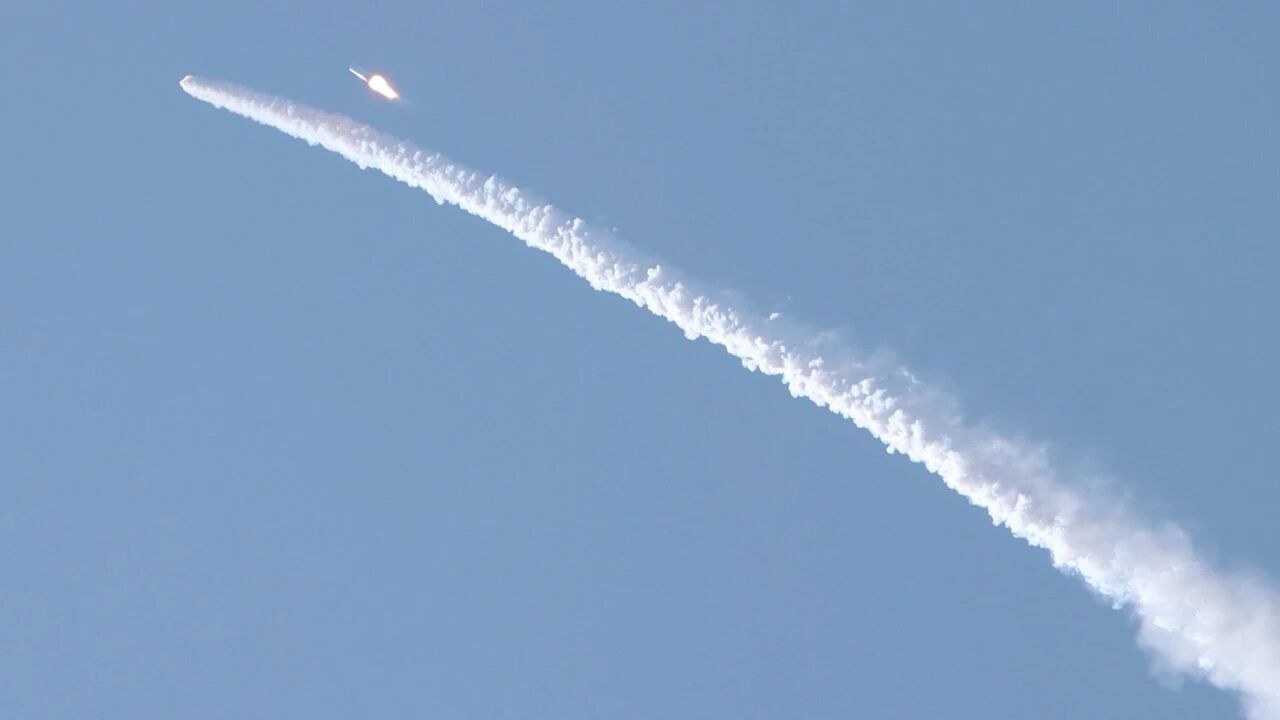
- Mengzhou max-q escape. On 11 February 2026, at 11:00 a.m. China Standard Time (CST), a single-stage Long March 10 test rocket lifted off from Wenchang. At max-q, the point of highest air pressure on the rocket, Mengzhou fired its escape system and pulled away. Both the capsule and the rocket stage splashed down in the sea as planned, CMSA said.
- Long March 10 low-altitude test. That same February flight was the rocket's first flight, CMSA said.
- Lanyue landing and take-off test. The lander's touchdown and lift-off systems were tested on Earth.
What comes before the crewed landing?
China says it will fly the hardware without people first. Wang put it this way: "Everything we plan to carry out on the moon will first be tested in near-Earth orbit, and all crewed missions will undergo validation through unmanned tests beforehand."
The next big steps CMSA lists are:
- a Long March 10 test flight
- the first flights of Mengzhou and Lanyue
- the Chang'e-7 robotic Moon mission
CMSA has confirmed a standalone uncrewed Lanyue flight before the crewed landing. On 22 October 2026 it invited Chinese institutions to propose experiments to ride on it: up to 50 kg in total, using about 100 W of power. Proposals are due by 1 March 2027.
SpaceNews reported that China will also fly a full-scale uncrewed landing rehearsal before a crew attempts it. China has not given dates for either flight.
What about Tiangong?
The same event brought news for China's space station, Tiangong. In a video shown at the symposium, CMSA said the station will open to scientists worldwide for experiments, astronaut training, joint flights and outreach, as CGTN reported.
CMSA also said Tiangong expects to welcome its first international astronaut and a low-cost cargo system "in the near future". It did not name the astronaut, their country or a date.
How does China's plan compare with NASA's Artemis?
NASA now targets a crewed landing in 2028 on Artemis IV, using SpaceX's Starship or Blue Origin's Blue Moon as the lander. Before that, Artemis III in 2027 tests the landers in Earth orbit. Our Artemis plan explainer and our Artemis III guide cover the details.
In my view, the biggest difference is simplicity. China's plan needs two launches of one rocket and one docking at the Moon. NASA's landers depend on refuelling in Earth orbit (moving propellant between spacecraft), which has never been done at that scale. That makes China's plan easier to follow, but not easier to fly: Long March 10, Mengzhou and Lanyue have not yet flown to orbit.
In my view, the race will come down to schedules. If Artemis IV lands in 2028, the US stays first. If it slips toward 2030, China's "before 2030" target makes it close.
What happens next?
Watch for the first orbital flight of Long March 10, and the first flights of Mengzhou and Lanyue. Each will be a big test of the plan. We will track them on our launch schedule, with times in the launch site's local time and your own.