
NASA is sending Artemis astronauts to the Moon's south pole mainly because of water ice. Some craters there have floors that never see sunlight and are among the coldest places NASA knows of, cold enough to hold ice. Nearby ridges stay in sunlight for long stretches, which helps with solar power. And the ground there is some of the oldest on the Moon. India's Chandrayaan-1 carried the NASA instrument that gave the first direct proof of surface ice there.
Status as of 3 November 2026: NASA targets 2028 for the first crewed landing, on Artemis IV. No landing site has been picked. We will update this page as NASA narrows it down.
For the full mission plan, see our Artemis program explainer. More Moon coverage is on our Moon and Mars page.
What makes the south pole so different from where Apollo landed?
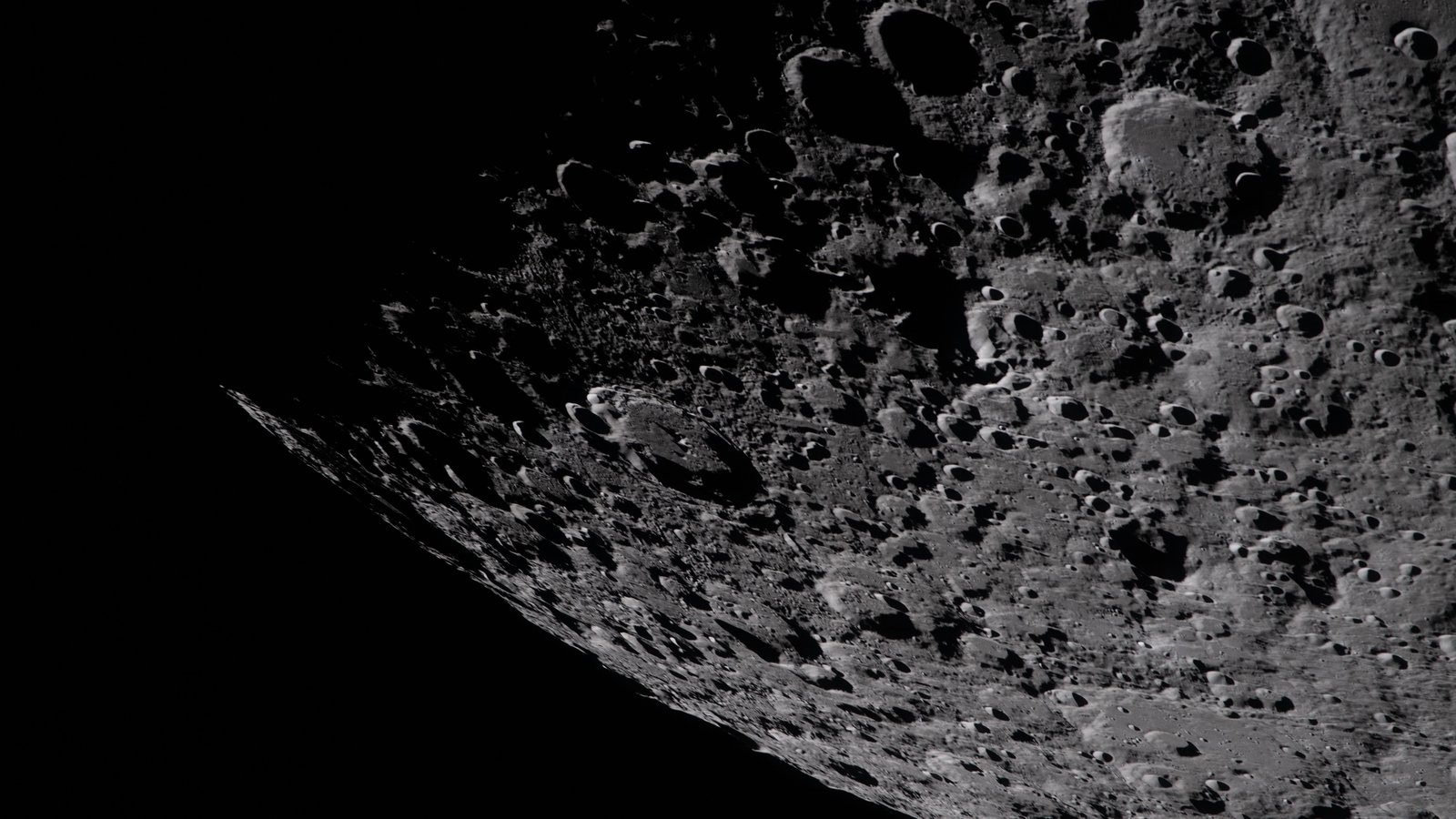
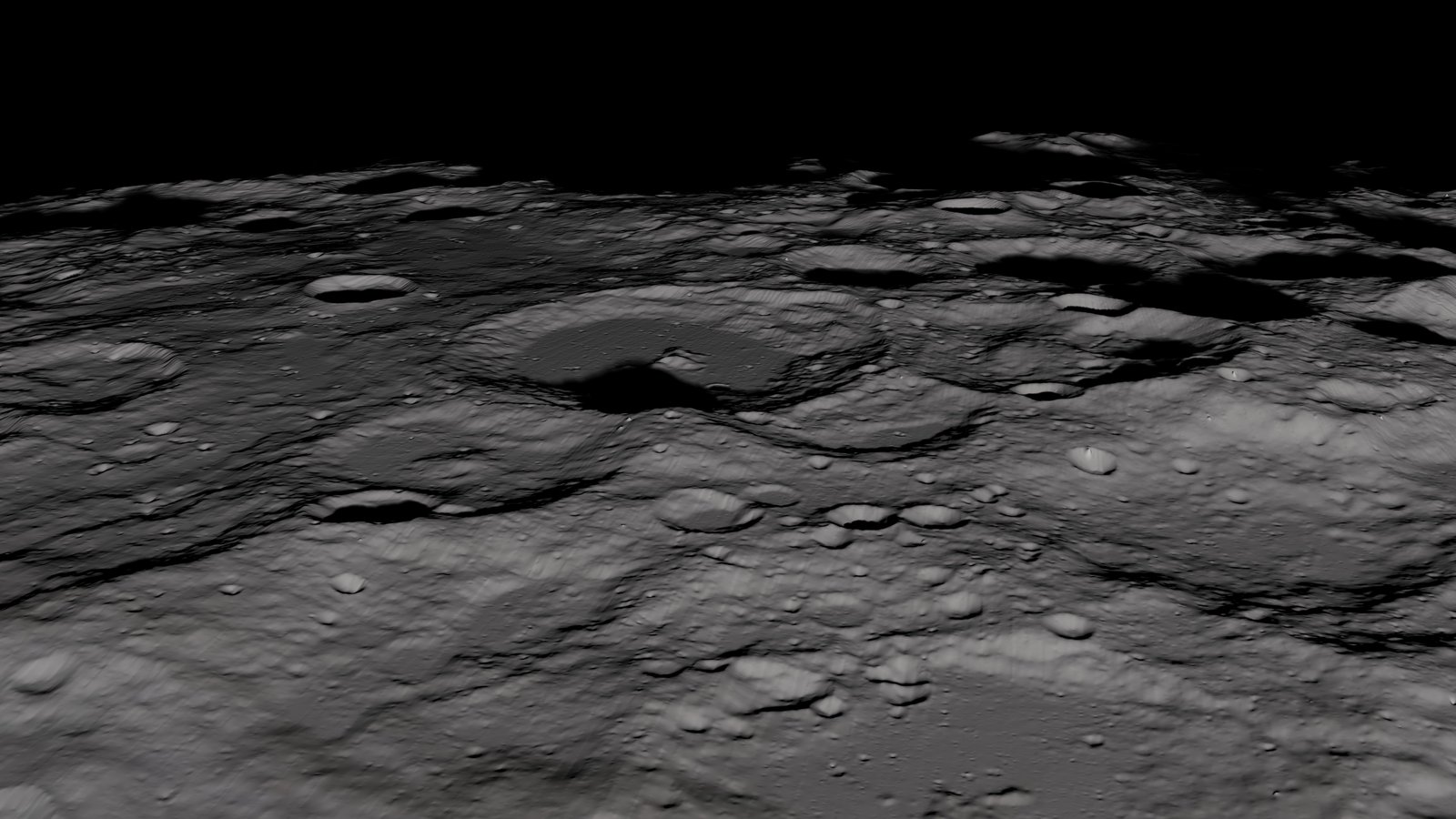
The light. The Moon's axis barely tilts, so near the poles the Sun never climbs high. It skims along the horizon and throws very long shadows. On its Moon Base page about the region, NASA says some spots get long periods of sunlight, while others stay dark for long periods. In "permanently shadowed regions", sunlight may never reach the ground at all.
With almost no air to spread heat around, that light decides the temperature. NASA says some permanently shadowed regions can get as cold as about minus 203°C (minus 334°F), while sunlit ground nearby can be far warmer.
NASA describes the Apollo landing areas as equatorial, on the Moon's near side. None of them saw this kind of place. "The Moon's South Pole is a completely different environment than where we landed during the Apollo missions," said Sarah Noble, NASA's Artemis lunar science lead, in October 2024.
Why does water ice matter so much?
Because shipping water from Earth is expensive, and water is useful for much more than drinking. Split into hydrogen and oxygen, it gives you air to breathe and rocket propellant. NASA's Moon Base page says researchers are studying how lunar soil and resources might be used to produce oxygen for astronauts and liquid oxygen for rockets.
NASA is careful about this. It says scientists are studying whether the ice "could one day help support future exploration", and that they need to know much more about how much there is and where before that is understood. So the honest version is: the ice is there, but no one knows yet if it can be mined in useful amounts.
The ice is also a science prize. NASA says studying its make-up, age and spread could show where the Moon's water came from and how water has moved around the inner solar system over billions of years.
How do we know there is ice there?
The idea is old. NASA says a 1961 paper first popularised the thought that ice could survive in craters that never see the Sun. Proof took decades and several missions.
| Year | Mission | What it found |
|---|---|---|
| 1994 to 1998 | Clementine (US), then Lunar Prospector (NASA) | Hints of ice, and the most hydrogen in never-lit areas. Images too coarse to be sure |
| 2009 | Moon Mineralogy Mapper (NASA) on Chandrayaan-1 (ISRO) | Water and hydroxyl on the surface, strongest towards the poles |
| 2009 | LCROSS (NASA) | Water in the debris thrown up by an impact into Cabeus crater, near the south pole |
| 2018 | Moon Mineralogy Mapper data, new study | First direct evidence of ice on the surface in polar craters |
LCROSS is the most dramatic one. On 9 October 2009, NASA crashed a spent Centaur rocket stage into Cabeus crater at 11:31 UT, NASA says. The probe flew through the plume four minutes later, measured it, then crashed too. On 13 November 2009, NASA said the data showed the mission "successfully uncovered water" near the south pole. A year later, the team said some of it was mostly pure ice crystals.
What was India's part in finding the ice?
A big one. The key instrument, NASA's Moon Mineralogy Mapper, or M3, flew on ISRO's Chandrayaan-1. India's first Moon mission launched from Sriharikota on 22 October 2008, ISRO says, and carried 11 science instruments, including M3.
M3 was built at NASA's Jet Propulsion Laboratory (JPL). In September 2009, NASA said M3 had found water and hydroxyl molecules on the lunar surface. Then in August 2018, a team led by Shuai Li of the University of Hawaii and Brown University went through the full M3 data set. They found three separate signals that together, JPL said, "definitively prove there is water ice at the surface of the Moon." M3 could tell solid ice apart from liquid water or vapour by the way its molecules absorb infrared light.
JPL said the ice is patchy and could be ancient. At the south pole, most of it sits in craters, in shadows where the temperature never rises above minus 157°C (minus 250°F). The study was published in the journal PNAS on 20 August 2018.
ISRO also had its own claim. Its Moon Impact Probe, dropped from Chandrayaan-1 on 14 November 2008, picked up signs of water on the way down, ISRO's then chairman said in 2009, The Hindu reported.
India went back in 2023. Chandrayaan-3's Vikram lander touched down on 23 August 2023 at 12:34 UTC, at 69.37 degrees south, ISRO says. Its Pragyan rover made the first measurements of what the soil is made of in the south polar region. ISRO later said the landing site, Shiv Shakti Statio, is about 350 km from the South Pole-Aitken basin, and may hold material thrown out when that basin formed. Read more on our ISRO page.
In my view, this is the part of the Artemis story most Indian readers don't know: the ice that NASA is now planning a base around was first proven with data from an Indian spacecraft.
Why do the sunlit ridges matter too?
Power. Near the pole, some high ground stays lit for long stretches. NASA says these spots offer "milder temperatures, reduced duration of lunar nights, and persistent availability of solar power."
So the ideal spot is a lit ridge next to a dark, icy crater. That is why names like Shackleton keep coming up. NASA says Shackleton crater is more than twice as deep as the Grand Canyon, and its shadowed floor is thought to hold ice.
The first robotic Moon Base mission is headed right there. Blue Origin's Blue Moon Mark 1 lander "Endurance" is set to land on the Shackleton Connecting Ridge, NASA said in May, carrying cameras to study how engine exhaust disturbs the surface. NASA's VIPER rover is due to follow in 2027 on another Blue Moon Mark 1. NASA says it is fully built and will drive more than 30 km, into shadowed craters, looking for water. For more on that lander's rocket, read what happened to New Glenn.
What else is there for scientists?
Very old rock. NASA says some surfaces near the south pole may be more than 3.85 billion years old, older than anything Apollo crews walked on. The region sits on the edge of the South Pole-Aitken basin, which NASA calls the largest known impact crater in the solar system, more than 2,500 km wide. Rock from deep inside the Moon may have been thrown out when it formed.
Where exactly will Artemis land?
That is not decided. In October 2024, NASA named nine candidate regions near the south pole, in no priority order: Peak near Cabeus B, Haworth, Malapert Massif, Mons Mouton Plateau, Mons Mouton, Nobile Rim 1, Nobile Rim 2, de Gerlache Rim 2 and Slater Plain. Each holds several possible sites. NASA said it weighed science value, launch windows, terrain, communication with Earth and lighting.
Those regions were chosen when Artemis III was the planned landing. The plan has since changed. Artemis III, targeted for summer 2027, now stays in Earth orbit to test the landers, and the first landing is Artemis IV in 2028. On the Artemis IV page, NASA says two astronauts will spend about a week near the south pole, and it still points to the nine regions. See our guide to Artemis III's date and crew.
What makes the south pole hard?
Almost everything that makes it useful. Low sunlight and long shadows make landing and driving harder. NASA says the terrain is rugged, with steep slopes, deep craters and big changes in height, and some of the most interesting places, the dark craters, are also among the hardest to reach. Equipment has to work in both deep cold and warm sunlight. And lunar dust, which clogged Apollo seals and suits, is a problem anywhere on the Moon.
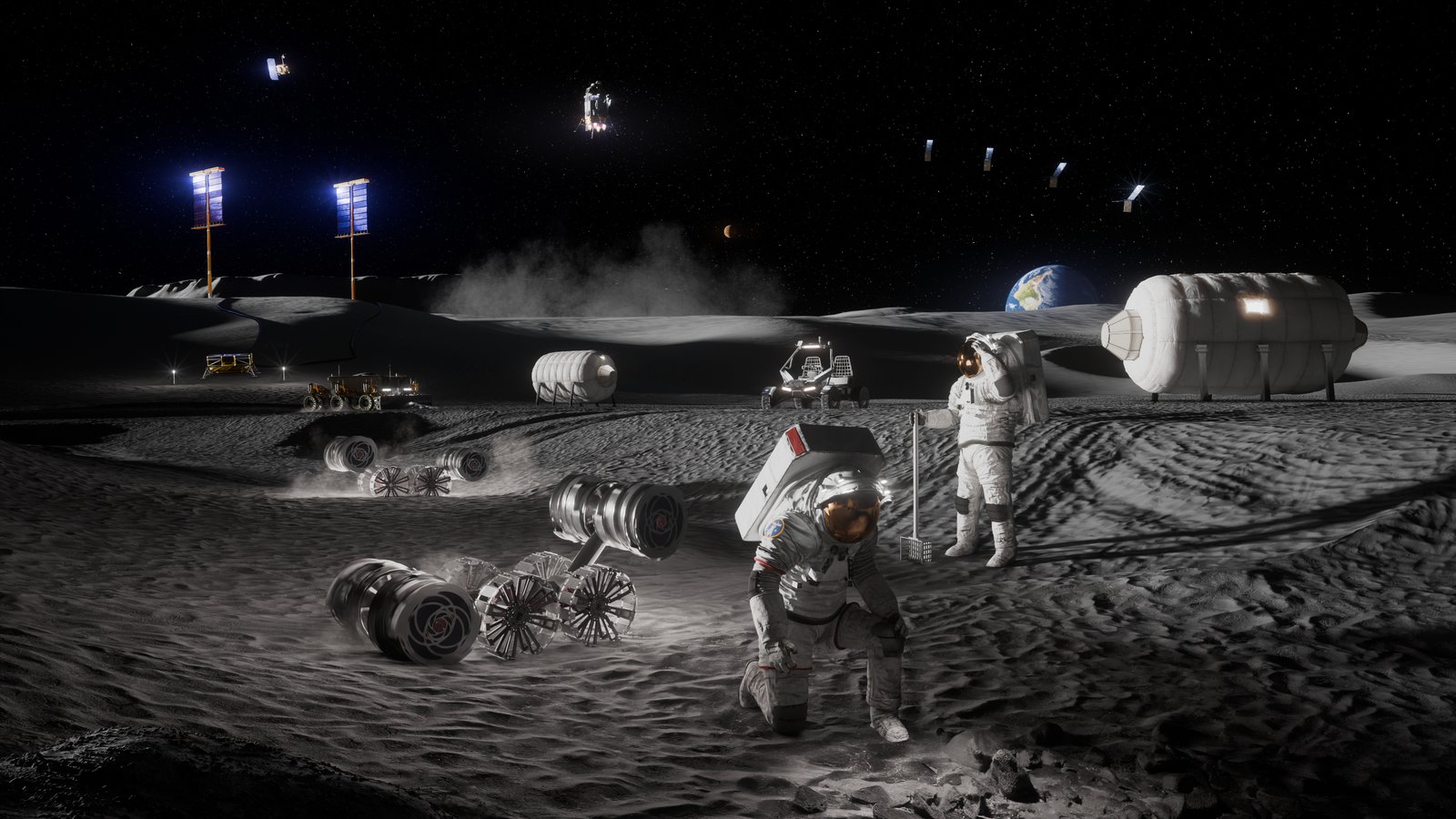
NASA calls the region "a proving ground" for Mars. In my view, the bet is reasonable but not risk-free: the ice is real, but its amount and how easy it is to dig out are still unknown, and the first robotic missions there have slipped. Those missions, starting with Endurance, are what will tell us whether the south pole lives up to the plan.