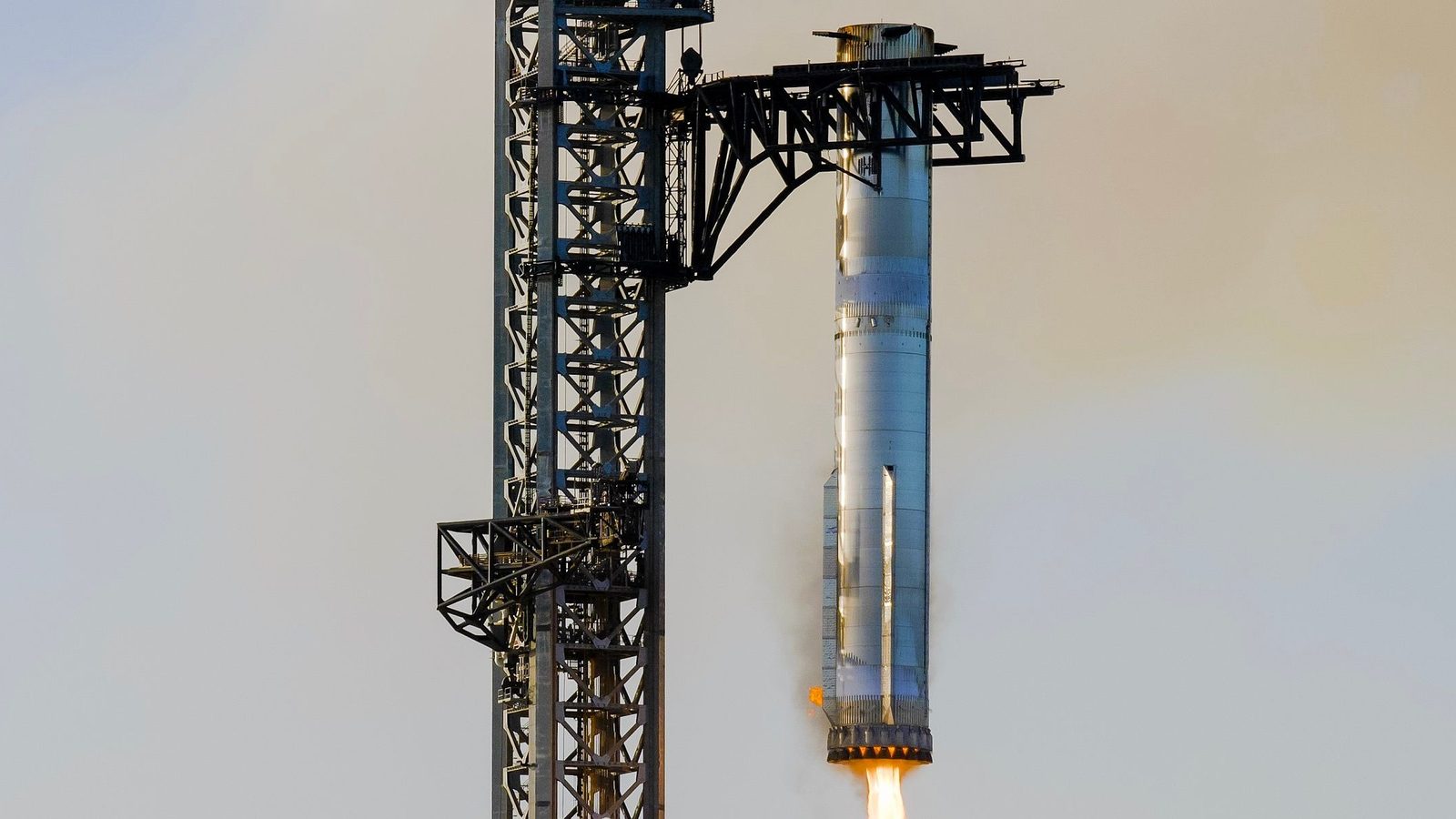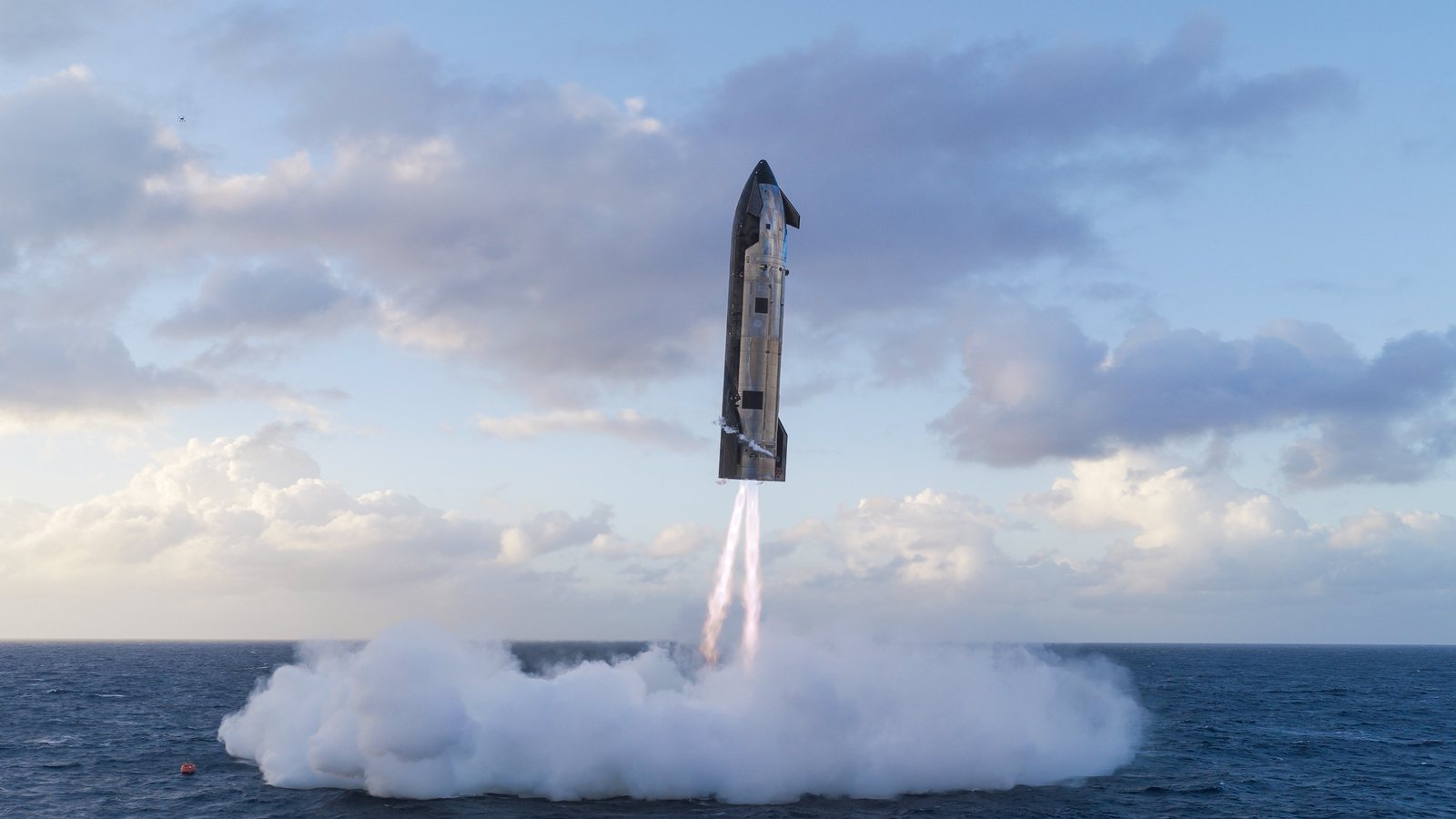


No. Starship is not going to Mars in 2026. The Earth-Mars launch window is open right now, in November and December 2026, but SpaceX has moved its focus to the Moon. Its own Starship page now says cargo flights to the Martian surface start "no earlier than 2028". Elon's latest estimate, from July 2026, is people on Mars "in roughly 5 to 7 years", with a Mars lander "a few years sooner".
Starship tracker
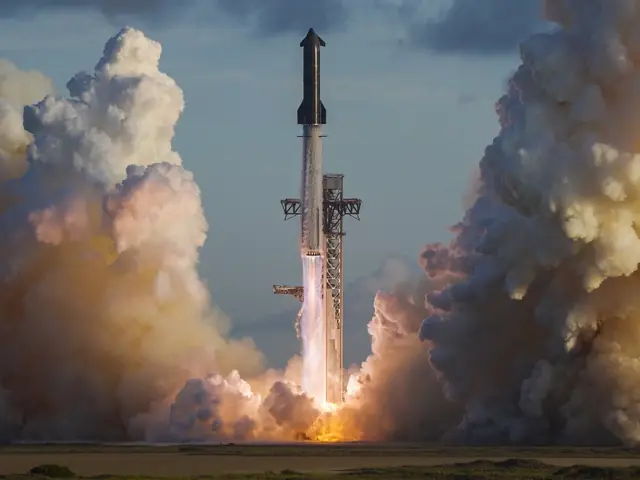
Flight 15
Starship V3 · SpaceX · USA
NET November 2026
Time Not announced yet
From Orbital Launch Pad 2, SpaceX Starbase, TX, USA
Why it matters Elon says Flight 15 will try to catch both the Super Heavy booster and the ship. No orbital rocket's upper stage has ever been caught. Read our story
Status as of 3 November 2026: no Starship has been prepared for a Mars launch, and no ship-to-ship refuelling test has been attempted. The next flight, Flight 15, is expected this month and will try to catch both stages.
A lot of people are asking this question right now, and it makes sense. For two years, the 2026 window was the date SpaceX pointed to. Here is what was promised, what changed, and what Starship still has to prove before any ship heads to Mars.
What did SpaceX say about Mars in 2026?
The 2026 target was public and repeated. In September 2024, Elon wrote on X: "The first Starships to Mars will launch in 2 years when the next Earth-Mars transfer window opens." He said they would be uncrewed, to test landing intact. If those went well, crewed flights would follow "in 4 years".
Two months later, SpaceX posted photos of heatshield materials being tested "in a simulated Martian atmosphere as we aim to launch the first Starships to Mars in 2026".
In March 2025, Elon went further: "Starship departs for Mars at the end of next year, carrying Optimus," Tesla's humanoid robot. He said human landings "may start as soon as 2029, although 2031 is more likely."

Then came the hedge. In a Starship update from Starbase in May 2025, Elon put the odds of making the 2026 window at "50/50", according to Space.com. He said the plan was to send five Starship V3 ships, uncrewed and carrying Optimus robots. He named refuelling in orbit as the biggest hurdle. "We'll try to make that opportunity, if we get lucky," he said. He also named Arcadia Planitia, a flat plain in Mars's northern half, as the leading candidate landing area.
Why is SpaceX skipping the 2026 Mars window?
The plan changed in February 2026. On 8 February, Elon posted: "For those unaware, SpaceX has already shifted focus to building a self-growing city on the Moon, as we can potentially achieve that in less than 10 years, whereas Mars would take 20+ years."
His reason was timing. "It is only possible to travel to Mars when the planets align every 26 months (six month trip time), whereas we can launch to the Moon every 10 days (2 day trip time)," he wrote. "This means we can iterate much faster to complete a Moon city than a Mars city."
The next day he added that he was worried "a natural or manmade catastrophe stops the resupply ships coming from Earth, causing the colony to die out". A city that can grow on its own is the point, he said, and the Moon gets there faster.
He also said Mars is not cancelled. "Mars will start in 5 or 6 years, so will be done in parallel with the Moon, but the Moon will be the initial focus," he wrote. A week later he said the change would not delay a self-growing Mars city "by more than 5 years and it might turn out to accelerate Mars."
There is a second reason that sits under the first. Starship is not ready for a trip to Mars yet. More on that below.
When could Starship actually go to Mars?
Three dates are on the record, and none is a launch schedule.
- SpaceX's website. The Starship Mars page says: "Starship cargo flights to the Martian surface ... start no earlier than 2028, at a rate of $100 million per metric ton." The same page lists Moon cargo from 2028. This is a company sales offer.
- Elon, July 2026. Asked about Mars, he replied: "People on Mars in roughly 5 to 7 years. Mars lander a few years sooner." Counted from mid-2026, that points to the early 2030s for crew.
- The planets. Windows come about every 26 months. So after this one, the next chance is roughly two years later, around the turn of 2028 into 2029. That fits SpaceX's "no earlier than 2028".
NASA's administrator has noticed the shift too. According to Peter Diamandis, who posted his answer in July, the administrator said: "SpaceX's stated priority right now is the Moon, not Mars and that changes the Mars timeline." He described NASA's own route, using nuclear propulsion, as aiming for four people on Mars in about 10 to 15 years.
In my view, the honest reading is this. A Mars cargo attempt in the 2028–29 window is possible if refuelling and ship reuse work in the next two years. Crew is a 2030s question. Elon's dates have slipped before. The 2026 target slipped by at least one window, so treat every Mars year as a goal.
What does Starship still need to do before Mars?
Reaching Mars is a different job from reaching orbit. These are the big steps SpaceX itself has pointed to.
Refuelling in orbit. A Starship cannot reach Mars with only the propellant it launches with. SpaceX's Mars page says tanker ships will "refill the Starship spacecraft in low-Earth orbit prior to departing for Mars". SpaceX says the ship holds about 1,600 tonnes of propellant, and all of it has to be topped up in orbit before the trip. As of early November 2026, no ship-to-ship transfer has been tried. Our Starship glossary explains how it is meant to work.
Getting to orbit, reliably. Flight 14 was the first to reach orbit. It lifted off at 7:48 a.m. CDT on 28 September 2026 and put 26 Starlink V3 satellites in orbit. A vacuum engine shut down early, so SpaceX kept the flight short. One orbital flight is a start, not a routine. You can see the full record in every Starship flight so far.
Reuse. A Mars plan needs many launches, so ships have to come back and fly again. The tower has caught boosters, but never a ship. Flight 15 will try to catch both stages for the first time.
Surviving entry and landing. Mars has a thin atmosphere, so a ship arrives fast and has to slow down using its heatshield and engines. SpaceX's 2024 tests were aimed at that. It is also now studying a flown heatshield. Ship 40, which flew on Flight 13, is back at Starbase. SpaceX says it "will provide first-of-its-kind data on a flown Starship heatshield".
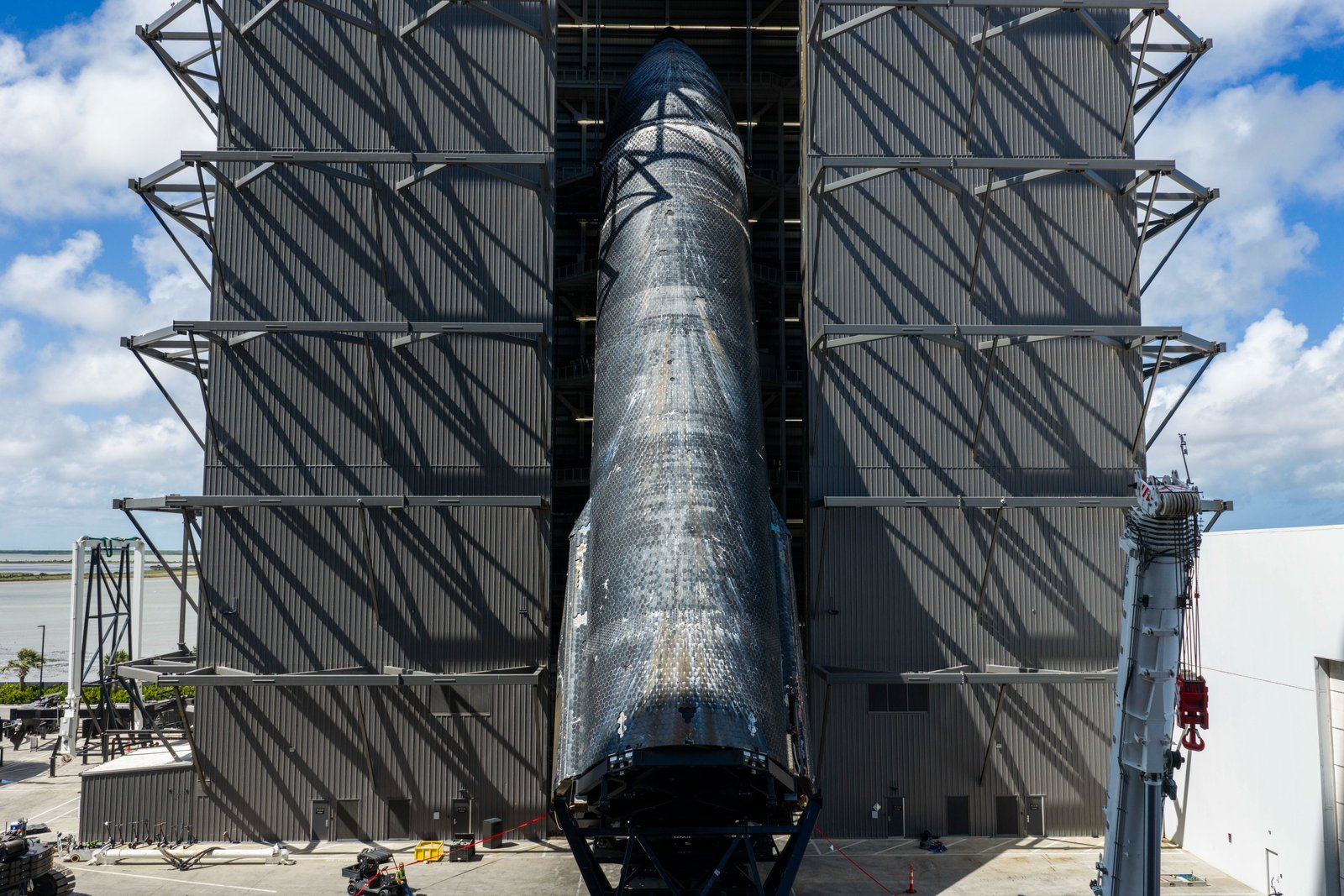
Time in deep space. A Mars trip lasts about six months, by Elon's own figure. The longest Starship flight so far, Flight 14, splashed down about 9 hours 50 minutes after launch.
How is the Moon plan connected to Mars?
Starship's Moon work and Mars work use the same pieces. NASA has picked a version of Starship as a Moon lander for Artemis. Under NASA's current plan, Artemis III in 2027 is a rehearsal in Earth orbit. A Starship lander will dock with the Orion capsule there, and NASA is aiming for a crewed landing in 2028. Our Artemis explainer and Artemis III guide have the details, and we explain why Artemis is going to the Moon's south pole separately.
A Moon landing also needs refuelling in orbit. So every step SpaceX takes for the Moon is also a step towards Mars. That is the case Elon makes when he says the Moon "might turn out to accelerate Mars". In my view, that claim holds up on the hardware. The open question is money and attention. A company building a Moon city and an orbital AI network may struggle to send many ships to Mars at the same time.
Is anything else going to Mars?
Yes, and that shows the window is real. Japan's MMX mission lifted off on an H3 rocket at 4:41 a.m. JST on 20 October 2026, JAXA says. It is heading for Mars's moon Phobos to bring back a sample. Our MMX guide covers it.
SpaceX is still in the Mars business on paper. In August 2025 it said it had signed its first Mars agreement with the Italian Space Agency. It also says a Falcon Heavy will launch Europe's Rosalind Franklin rover to Mars in late 2028. That rover rides on a Falcon rocket, not Starship.
What should you watch for next?
If you want to know when Mars is getting closer, watch for these milestones, not dates on a slide:
- A ship catch. Flight 15, expected in November, will try it.
- A ship-to-ship propellant transfer in orbit. This is the step that unlocks both the Moon and Mars.
- A long flight, with a ship in orbit for days or weeks.
- A crewed-lander test for Artemis III in 2027.
- A Mars ship being built, with SpaceX naming it for the 2028–29 window.
When those happen, Mars dates will start to mean something. Until then, the 2026 window will close without a Starship on its way. Follow every launch on our Starship page and the Starship launch list, and catch up on the bigger picture in Moon & Mars. New to the rocket? Start with what Starship is.