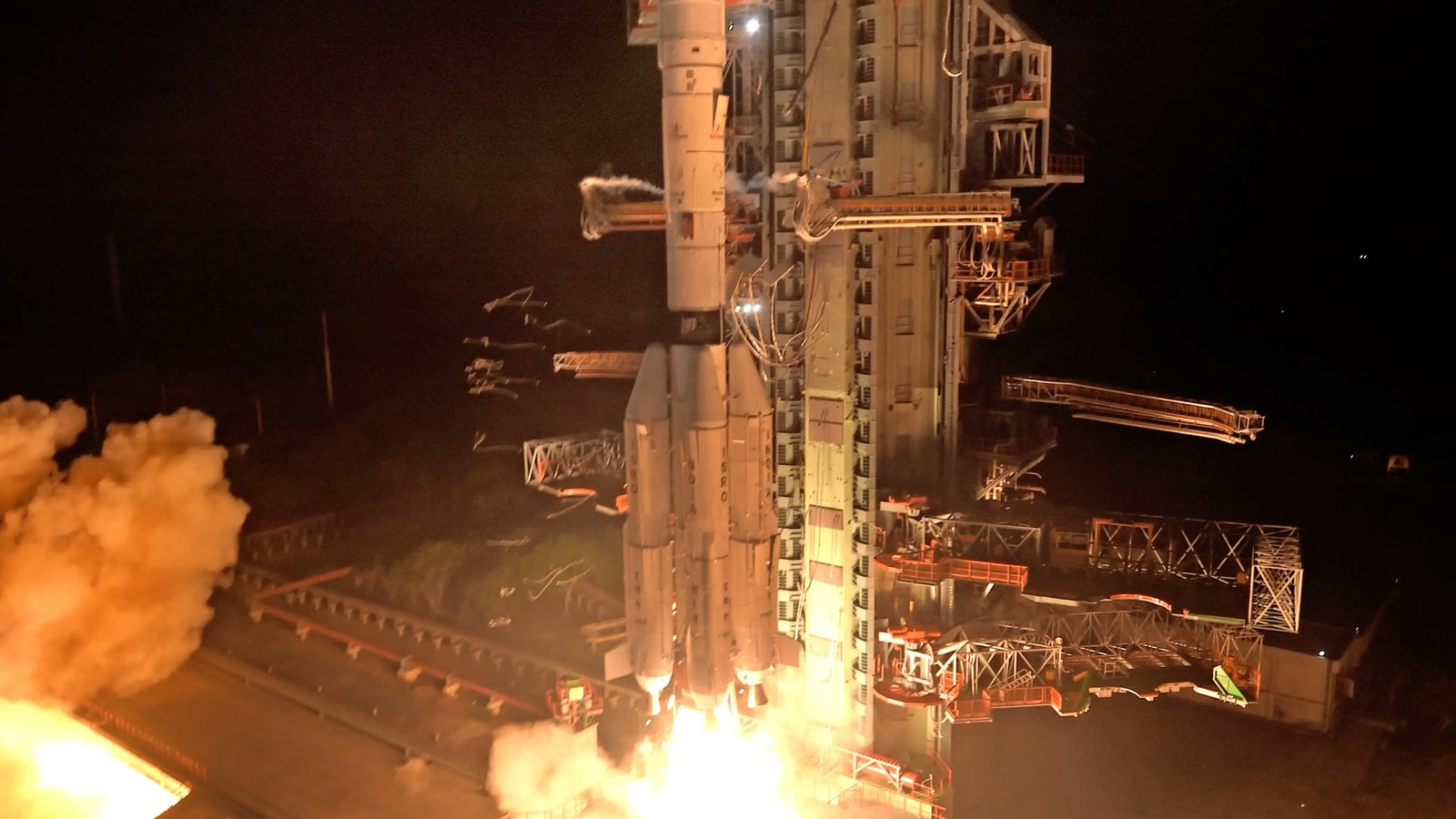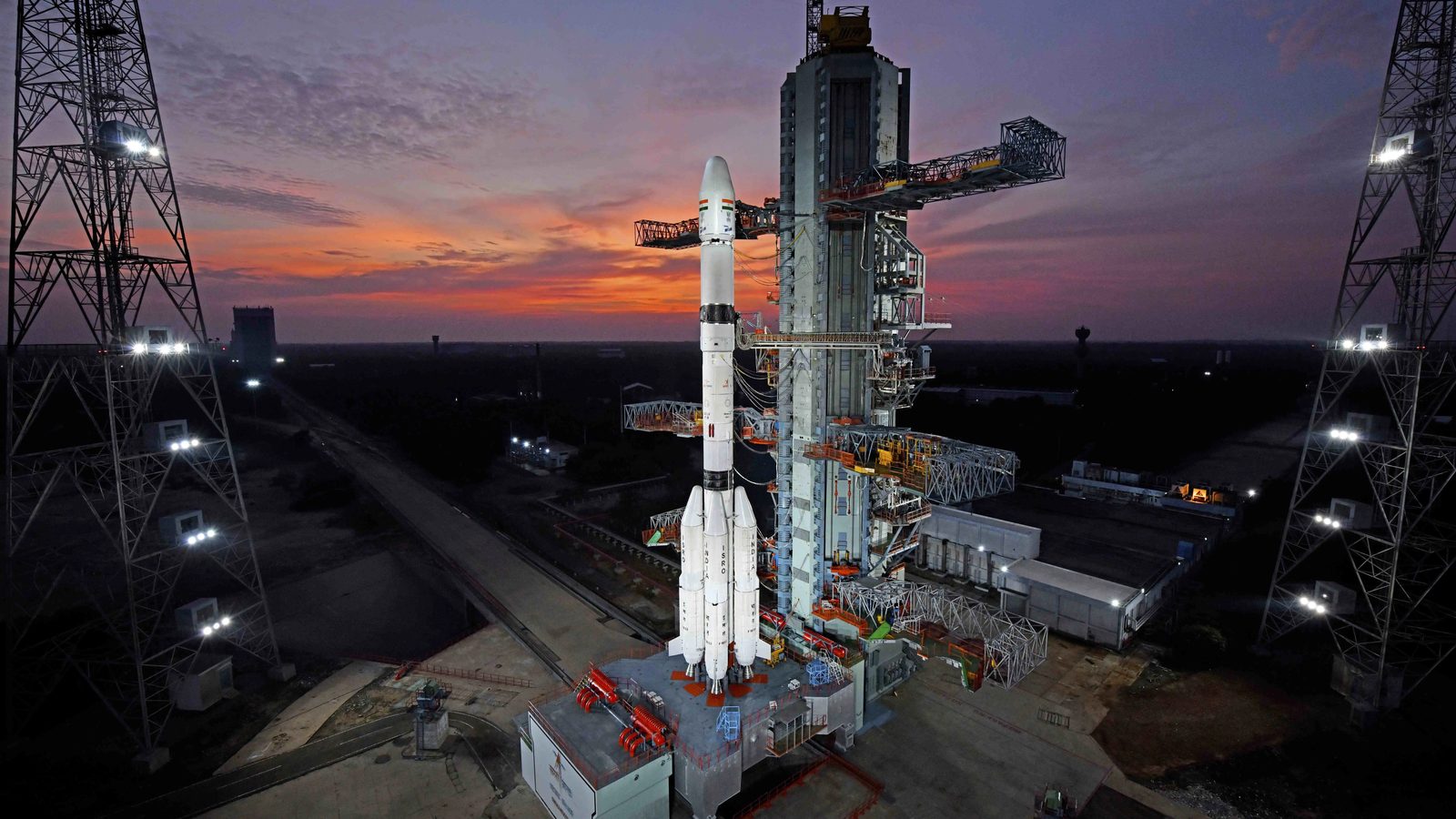

ISRO has not announced a launch date for Gaganyaan G1. On 24 October 2026, ISRO chairman V. Narayanan said the uncrewed test flight would go up "in two months" from Sriharikota, which points to around late December. G1 will carry a half-humanoid robot called Vyommitra, not people, on a human-rated LVM3 rocket. Its job is to prove that the crew module can reach orbit, come back through the atmosphere and splash down safely before Indian astronauts ride it in 2027.
Status as of 3 November 2026: no launch date announced. We will update this page when ISRO confirms one.
When is the Gaganyaan G1 launch?
There is no date yet. Here is every official timing signal we could find, newest first:
- 24 October 2026. Narayanan told reporters in Chennai that G1 would fly in two months, from Sriharikota, on the human-rated rocket, carrying Vyommitra to low Earth orbit, UNI reported.
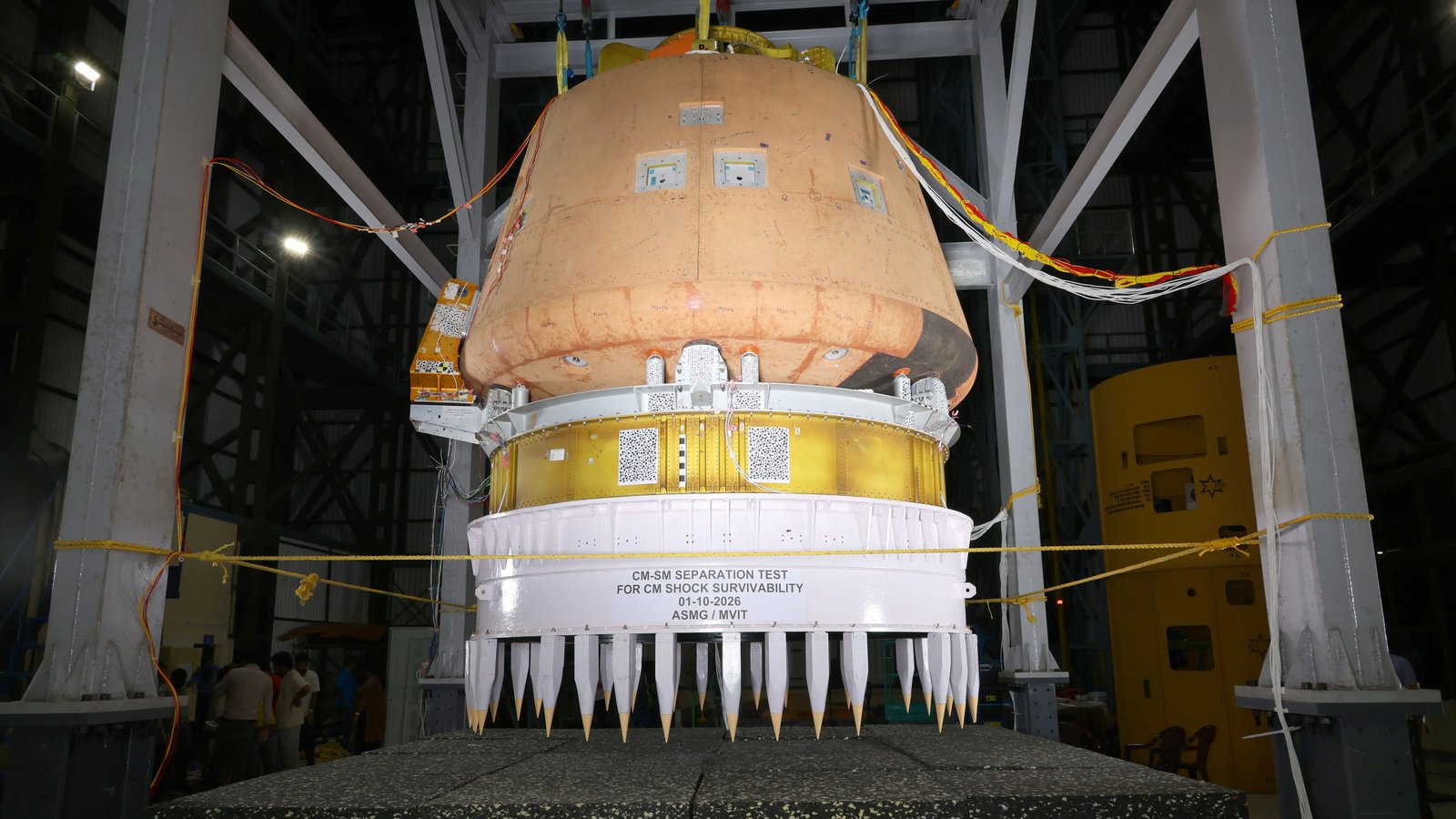
- 16 October 2026. ISRO said G1 is "targeted for launch in 2026" when it reported separation tests on the crew and service modules (ISRO).
- 6 August 2026. Minister of State Jitendra Singh told the Rajya Sabha the mission is targeted for the fourth quarter of 2026.
- 29 July 2026. A Lok Sabha reply said every stage of the rocket is ready and that assembly and testing of the crew and service modules is "nearing completion".
So the official window is "by the end of 2026". In my view, a slip into early 2027 would not be a surprise. G1 is the first orbital flight of brand-new hardware, and first flights often move. Treat December as a target, not a date.
You can follow every ISRO launch on our ISRO page and the next ISRO launch tracker.
What is Gaganyaan G1?
Gaganyaan is India's programme to fly its own astronauts on its own rocket. The goal for the crewed mission is three people, an orbit of about 400 km, up to three days in space, and a landing in Indian waters, according to ISRO's programme page.
G1 is the first of three uncrewed orbital flights before that. The government's plan is G1, then two more uncrewed missions, then the first crewed flight targeted for 2027. The programme budget was raised to ₹20,193 crore in September 2024 to cover eight missions and the first module of a future Indian space station.
The spacecraft has two parts:
- Crew module. The capsule the astronauts sit in. It has a double wall: a pressurised cabin inside, and a heat-protected outer shell.
- Service module. An unpressurised section under the capsule with the engines, power and fuel. It is thrown away before re-entry.
What will Gaganyaan G1 test?
G1 is an end-to-end rehearsal of a crewed flight, with a robot in the seat. VSSC director S. Unnikrishnan Nair has said the plan is a launch into a 170 x 430 km orbit, a burn to make the orbit circular, and then re-entry and splashdown in the Bay of Bengal, as The Hindu reported.
The main things G1 has to prove:
- The human-rated rocket. HLVM3 is a version of India's heaviest rocket, LVM3, with extra safety margins. Its three stages are the S200 solid boosters, the L110 liquid core and the C32 cryogenic upper stage. The campaign began with S200 stacking on 18 December 2024. For how LVM3 compares with India's other rockets, read PSLV vs GSLV vs LVM3.
- Crew module and service module in orbit. Power, guidance, communication and the engines that steer the capsule.
- Clean separation. The service module has to let go of the capsule before re-entry. That is what ISRO tested at VSSC in October.
- Re-entry and parachutes. The capsule has to survive the heat of coming home and then slow down enough to land in the sea.
- Recovery. The Navy has to find and lift the capsule out of the water.
ISRO has not published how long G1 will stay in orbit. We will add it when it does.
Who is Vyommitra?
Vyommitra is a half-humanoid robot, a head, arms and upper body with no legs, built by ISRO's Inertial Systems Unit (IISU). It rides in the crew module in place of an astronaut, so G1 can fly the full mission profile with something in the seat a person will later use. ISRO has not published a full list of what Vyommitra will measure on G1.
How do the Gaganyaan parachutes work?
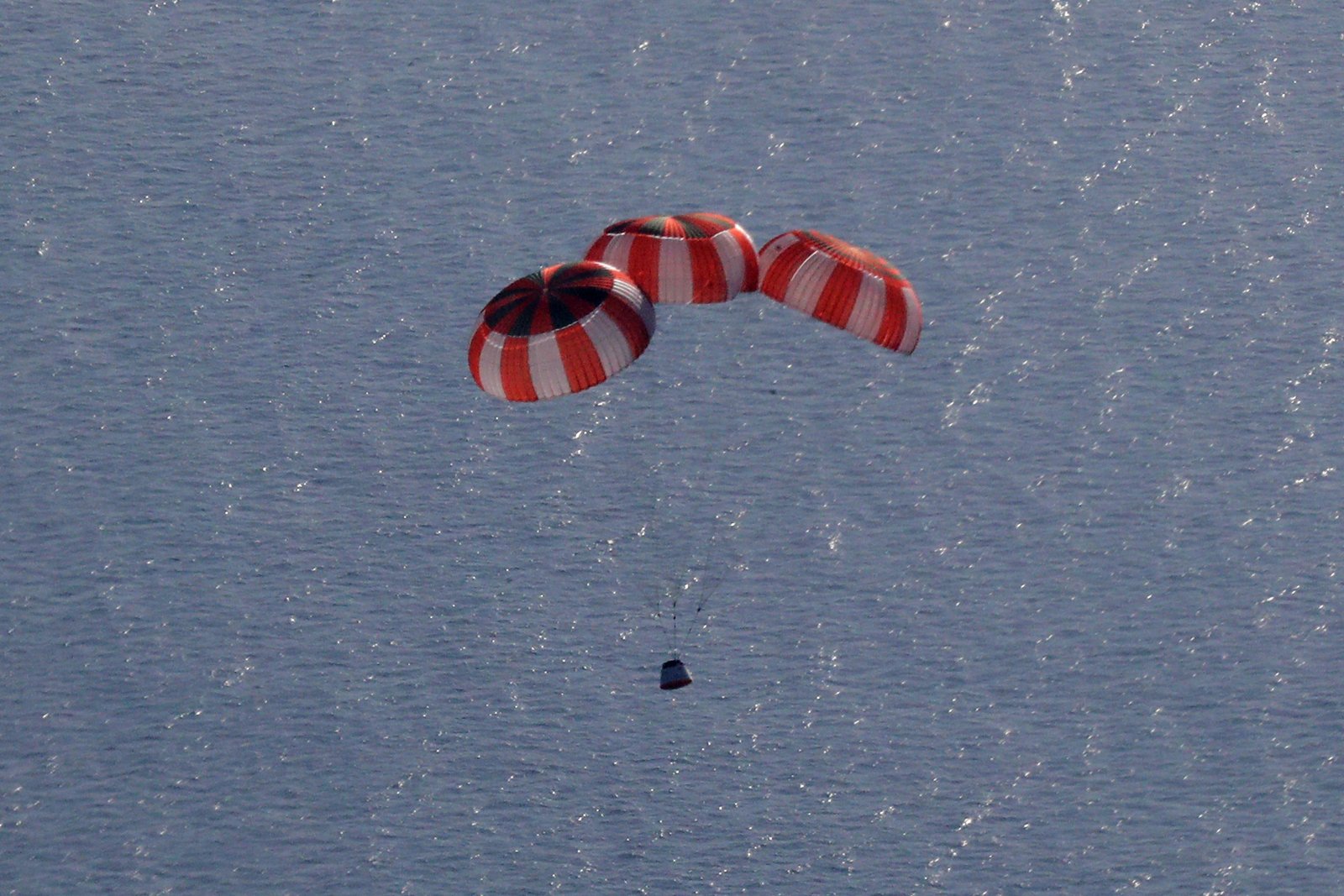
The capsule uses ten parachutes in a set order, ISRO says:
| Parachute | How many | Size | Job |
|---|---|---|---|
| Apex cover separation | 2 | 2.5 m | Pull off the cover that protects the parachutes |
| Drogue | 2 | 5.8 m | Steady the capsule and slow it first |
| Pilot | 3 | 3.4 m | Pull out the main parachutes |
| Main | 3 | 25 m | Slow the capsule to about 8 m/s for splashdown |
Two of the three main parachutes are enough for a safe landing, so the design can lose one.
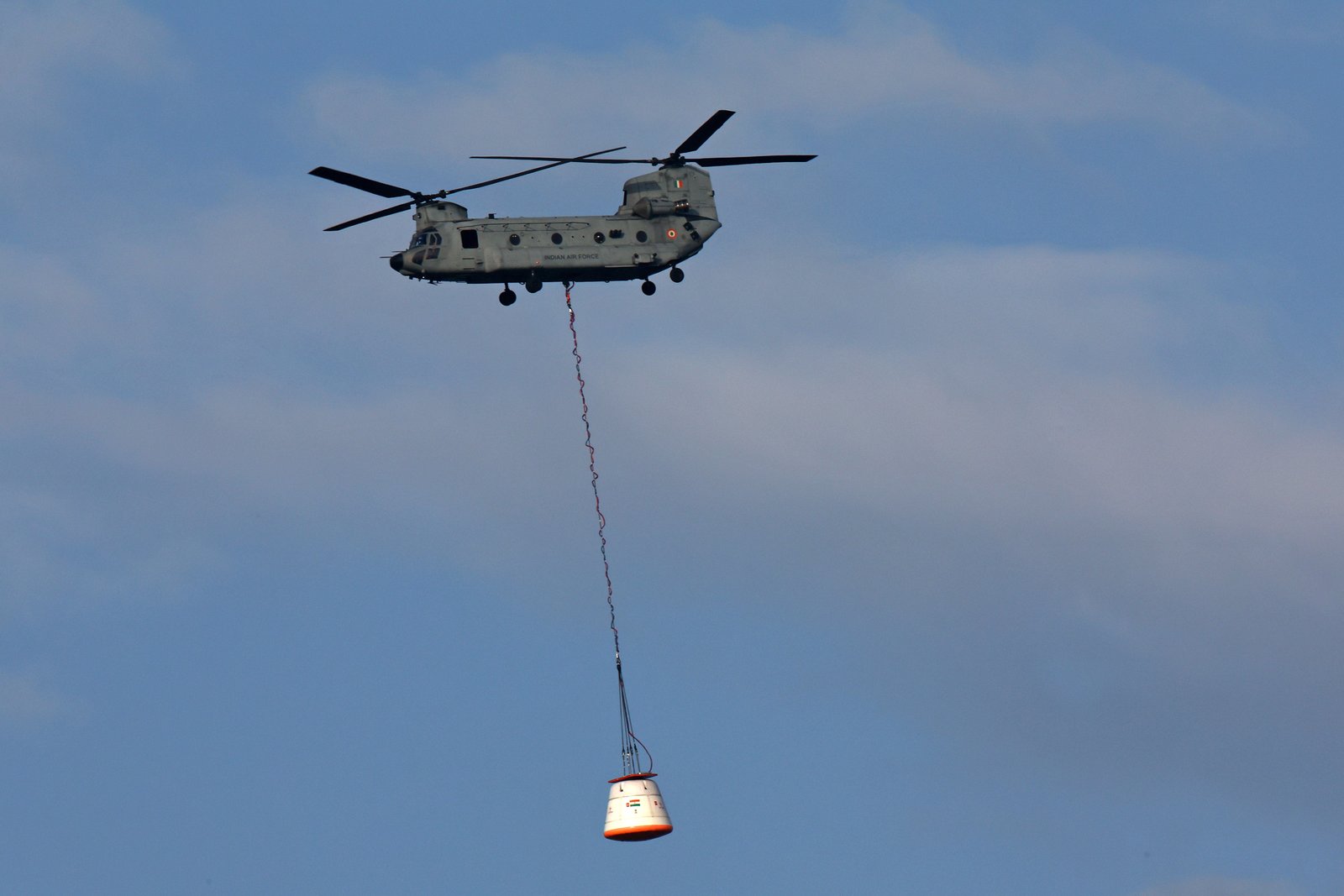
ISRO ran the first Integrated Air Drop Test (IADT-01) on 24 August 2025. An Indian Air Force Chinook helicopter carried a simulated crew module weighing about 4.8 tonnes up to 3 km and dropped it. The parachutes opened in order and the module splashed down, and INS Anvesha recovered it. A second drop test, IADT-02, has also been completed, according to a government reply in Parliament.
What tests has Gaganyaan already passed?
The Lok Sabha replies of 29 July and 5 August 2026 list what is done:
- HLVM3 stages ground-tested and ready.
- Crew escape system. Five types of solid motors built for it. This system pulls the capsule away from the rocket if something goes wrong on the way up.
- TV-D1. The first test vehicle flight, in October 2023, which tested the crew escape system and recovered a test capsule from the sea.
- IADT-01 and IADT-02. Both air drop tests, done.
- TV-D2. The second test vehicle flight. The government said activities are "in progress". We found no record that it has flown yet.
- Launch pad. The Second Launch Pad at Sriharikota now has a crew access arm, a bubble lift and a zip line for emergency escape, the 29 July reply said.
See our guide to the Sriharikota launch site for where the pads are.
Who are the Gaganyaan astronauts?
India's four astronaut-designates were announced by Prime Minister Narendra Modi on 27 February 2024 (PIB). All four are Indian Air Force test pilots:
- Group Captain Prashanth Balakrishnan Nair
- Group Captain Ajit Krishnan
- Group Captain Angad Pratap
- Wing Commander Shubhanshu Shukla (his rank when named)
They finished generic training at Glavkosmos in Russia. Mission-specific training is now going on at ISRO's Astronaut Training Facility in Bengaluru, the 5 August reply said.
Shukla has already been to space. He flew on the private Axiom-4 mission, launched on 25 June 2025, spent 18 days on the International Space Station and ran seven Indian experiments there. He splashed down on 15 July 2025 at about 09:33 UTC, ISRO said.
ISRO has not said which of the four will fly on the first crewed Gaganyaan mission.
Who is helping India with Gaganyaan?
The 6 August Rajya Sabha reply listed four foreign partners:
- ESA for ground station network support.
- Australian Space Agency for recovery support.
- CNES, France's space agency, for flight surgeon training.
- Roscosmos for astronaut training.
What comes after Gaganyaan?
India plans its own space station, the Bharatiya Antariksh Station. The government says it will have five modules and be operational by 2035. The first module, BAS-01, has been approved. Gaganyaan is the step that makes that possible: India first has to show it can launch people and bring them home.
In my view, G1 matters more than any single date. If the capsule comes home clean, ISRO has two more uncrewed flights to fine-tune, and a 2027 crewed flight starts to look real.
Keep an eye on our launch schedule for G1, and see what NVS-03 is for ISRO's most recent satellite launch story.