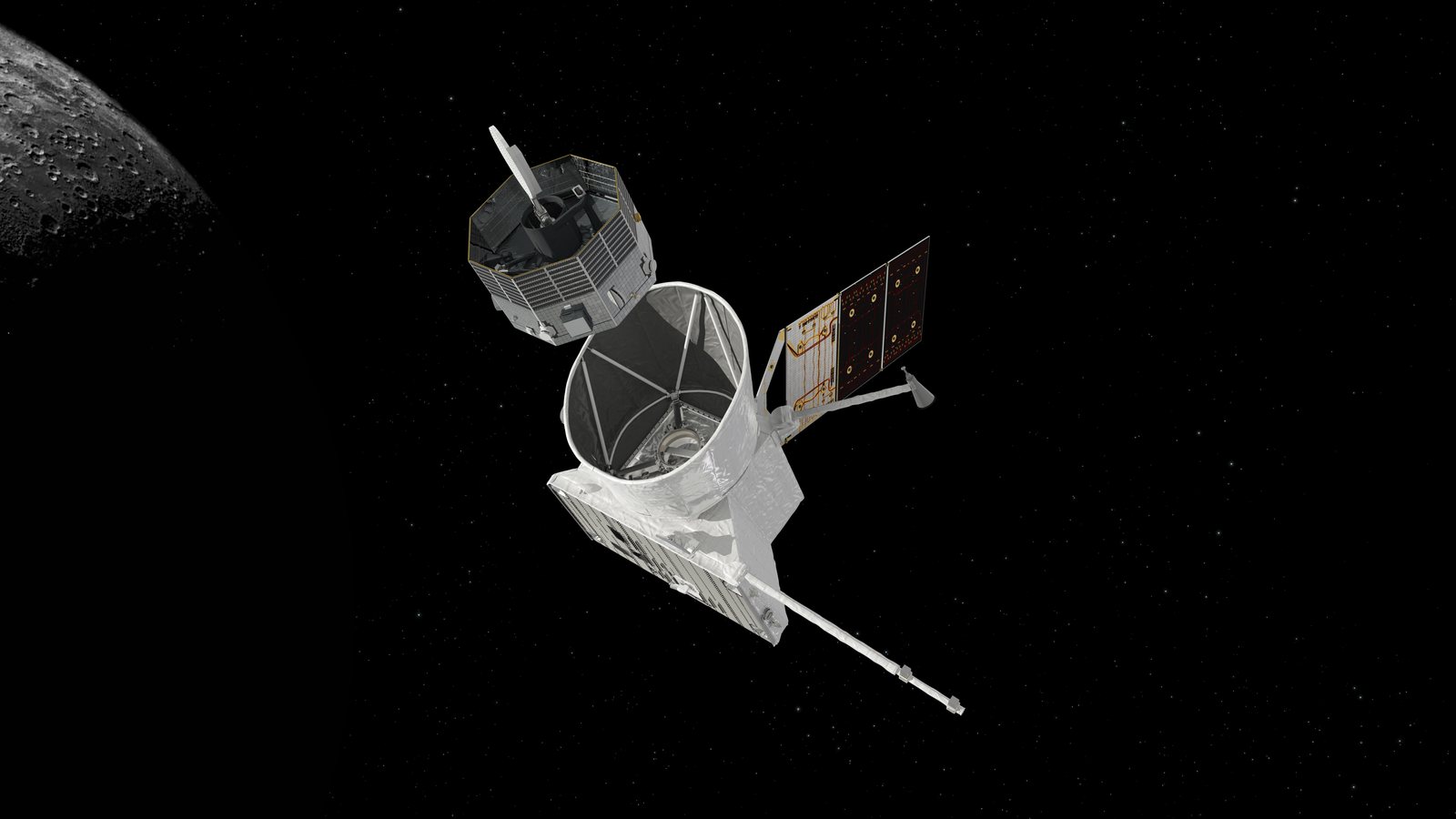

On Saturday 7 November 2026, at the MAX POWER event at NASA’s Kennedy Space Center in Florida, NASA announced a package of Moon Base awards. The biggest piece is a new Commercial Lunar Payload Services (CLPS) 2 framework with a combined maximum value of $10 billion over 10 years. Eight US companies can compete for future cargo deliveries. NASA also raised the ceiling on the current CLPS contract, green-lit the nuclear-powered PROMISE rover, and handed out launch and orbital-transfer work under its Venture-Class Acquisition of Dedicated and Rideshare (VADR) programme.
These are framework and task-order awards, not a single cheque for $10 billion. Companies still bid for each delivery. The announcement sits next to NASA’s push for a crewed Moon landing in 2028 on Artemis IV, after an Artemis III Earth-orbit docking test in 2027.
Who got what?
| Award | Who | What NASA said |
|---|---|---|
| CLPS 2 framework | Blue Origin; Firefly Aerospace; Intuitive Machines; ispace-U.S.; Lockheed Martin Space; Northrop Grumman Space Systems; SpaceX; Voyager Technologies | Eligible to compete for lunar surface deliveries under a 10-year IDIQ with a combined maximum of $10 billion |
| CLPS 1.0 ceiling raise | Companies already on the original CLPS contract | Ceiling raised from $2.6 billion to $4.2 billion for Phase One Moon Base work; original contract runs through November 2028, with awarded deliveries allowed through November 2033 |
| PROMISE rover delivery | Blue Origin | $94 million base award, plus a $140 million performance option, to land PROMISE on a Blue Moon Mark 1 |
| VADR task orders (~$1.3 billion combined) | Arrow Science and Technology; Blue Origin; Impulse Space | Integrate and transport Moon Base cargo; mission types include risk reduction, South Pole scouting (including MoonFall drones) and cislunar navigation demos |
| Cislunar communications demo | SpaceX | Specialised Delivery Mission under an existing lunar logistics contract: communications satellites on a Starship to cislunar space in 2028 |
| miniCAST components | Honeybee Robotics (a Blue Origin company); Redwire; Yank Technologies | Energy storage, power generation and wireless power transfer for a Mini-Communications and Solar Tower |
NASA also said some of the VADR missions will launch on Blue Origin’s New Glenn, Relativity Space’s Terran R and SpaceX’s Falcon 9. In-space tugs for those missions will come from Blue Origin, Firefly Aerospace, Impulse Space and Quantum Space.
What is PROMISE?
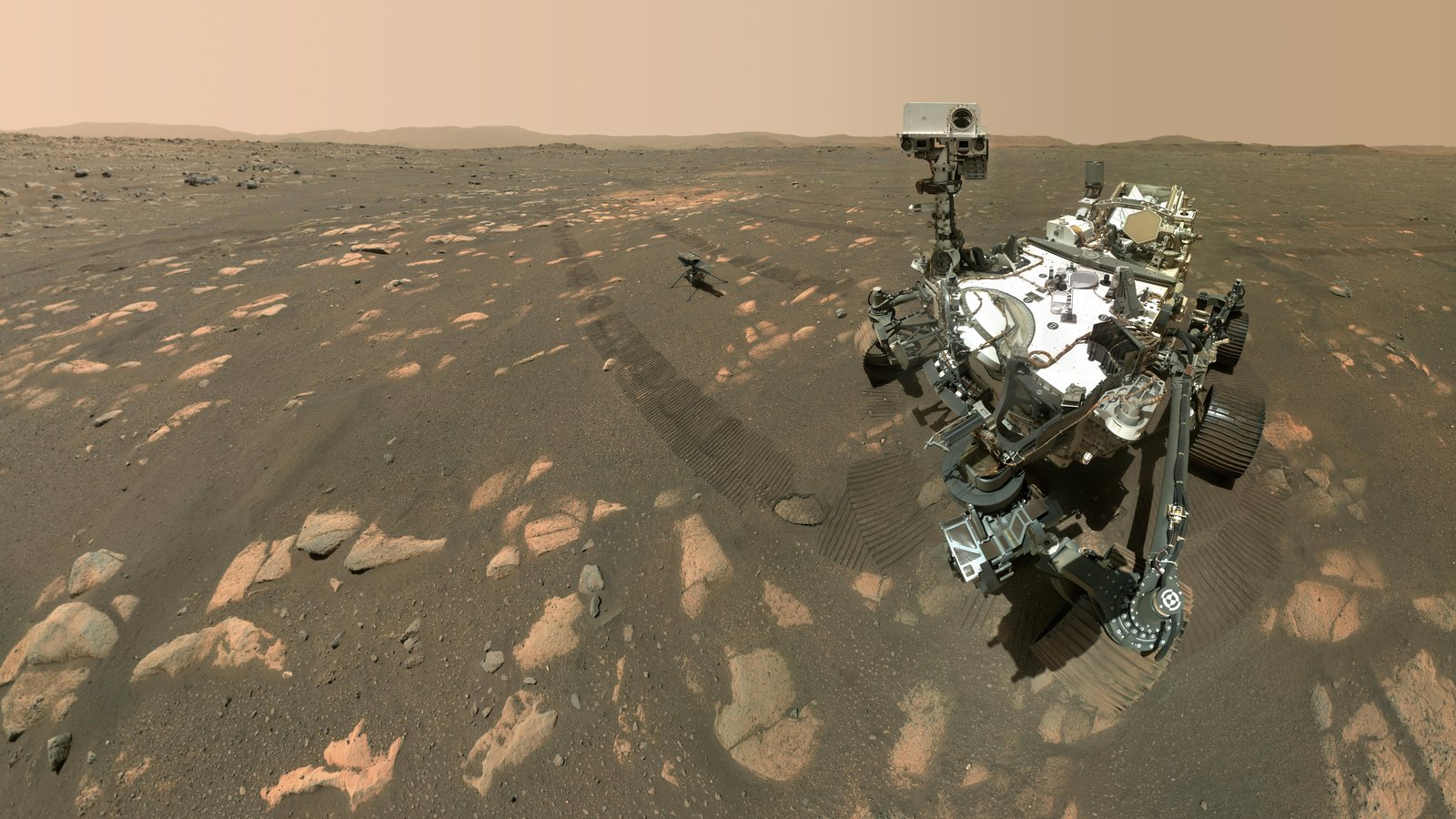
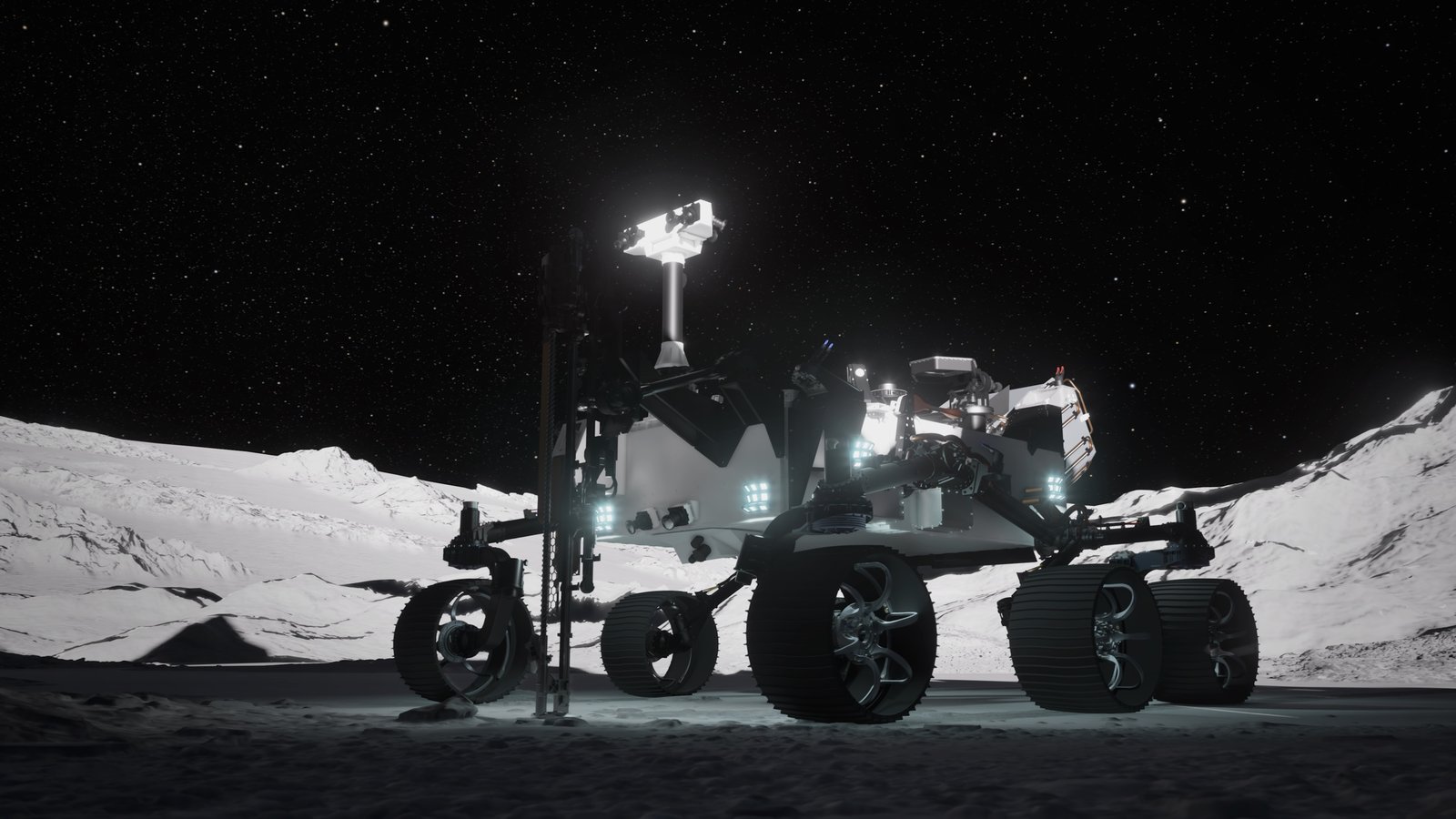
PROMISE stands for Polar Rover for Observation, Mapping, and In-Situ Exploration. NASA’s Jet Propulsion Laboratory (JPL) will manage it and build the six-wheeled rover largely from spare flight hardware and engineering models for the Curiosity and Perseverance Mars rovers. A multi-mission radioisotope thermoelectric generator, a nuclear power unit, will keep it working through the long lunar night and in permanently shadowed regions.
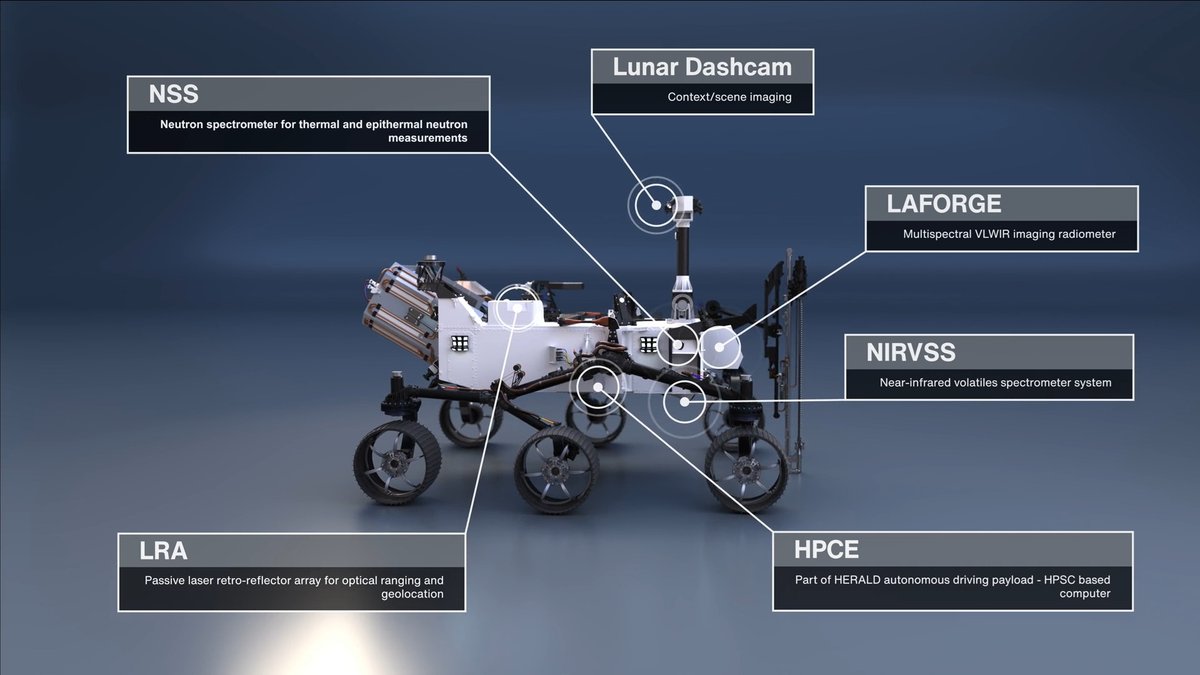
The rover will carry a drill that can dig about 1 metre (about 3 feet) into the regolith, spectrometers, temperature and radiation sensors, and cameras. NASA is targeting a late-2028 launch and about an 18-month surface mission. Blue Origin’s Mark 1 lander is the planned delivery vehicle under the $94 million base award above.
That fits the wider reason Artemis and the Moon Base care about the lunar South Pole: ice in dark craters, and ridges that stay sunlit for long stretches.
What does CLPS 2 change?
CLPS is NASA’s way of buying robotic deliveries to the Moon from commercial landers, instead of building every lander itself. CLPS 2 is the next master contract. The eight selected companies do not each receive $10 billion. They become eligible to compete for task orders under that ceiling.
Raising the current CLPS ceiling to $4.2 billion lets NASA keep buying Phase One Moon Base cargo on the existing contract while CLPS 2 spins up.
What else did NASA fund?
VADR transport. About $1.3 billion in task orders under a wider VADR contract (maximum $5 billion across all awards). The three mission types NASA described are: risk-reduction flights toward the Moon (including a CAPSTONE 02 navigation and communications demo), South Pole scouting with highly mobile drones such as MoonFall, and cislunar navigation and commercial orbital-transfer tests that should help future landers carry more cargo.
SpaceX cislunar communications. A 2028 Starship flight to place communications satellites beyond Earth orbit, under an existing lunar logistics contract. NASA says the demo will inform future networks that keep crews, controllers and the Moon Base connected.
miniCAST. Early power and communications hardware for a Mini-Communications and Solar Tower. Marshall Space Flight Center will assemble and test components. A separate solicitation for fully integrated power systems is expected in early 2027.
What happens next?
Watch for individual CLPS 2 task orders naming which company flies which payload, Blue Origin’s progress on Mark 1 and the PROMISE build at JPL, and the first VADR flights. On the crewed side, NASA’s current plan keeps Artemis III as a 2027 Earth-orbit test and Artemis IV as the 2028 landing attempt. Dates remain targets, not guarantees.
For related reading, see our Artemis programme explainer and why the South Pole.