
BepiColombo is due to enter orbit around Mercury on Saturday 21 November 2026, according to the European Space Agency (ESA). The mission is a partnership between ESA and the Japan Aerospace Exploration Agency (JAXA). As of 12 November 2026, ESA had not published an exact time for the orbit insertion.
After eight years in space, it will be only the second mission ever to orbit Mercury, and the first to put two spacecraft there at once.
When does BepiColombo arrive at Mercury?
ESA calls this part of the trip the "arrival phase". Here are the key dates from ESA's timeline:
- 3 September 2026: the Mercury Transfer Module (MTM), the part that flew the spacecraft to Mercury, separated. Done.
- 21 November 2026: the two orbiters, still joined together, enter orbit around Mercury.
- 9 to 10 December 2026: Europe's orbiter releases Japan's orbiter, Mio.
- 16 December 2026: Europe's orbiter drops the sunshield that protected Mio on the way.
- 6 April 2027: science operations begin.
ESA says exact dates may change for operational reasons. We will update this page when ESA shares the orbit insertion time.
What is BepiColombo?
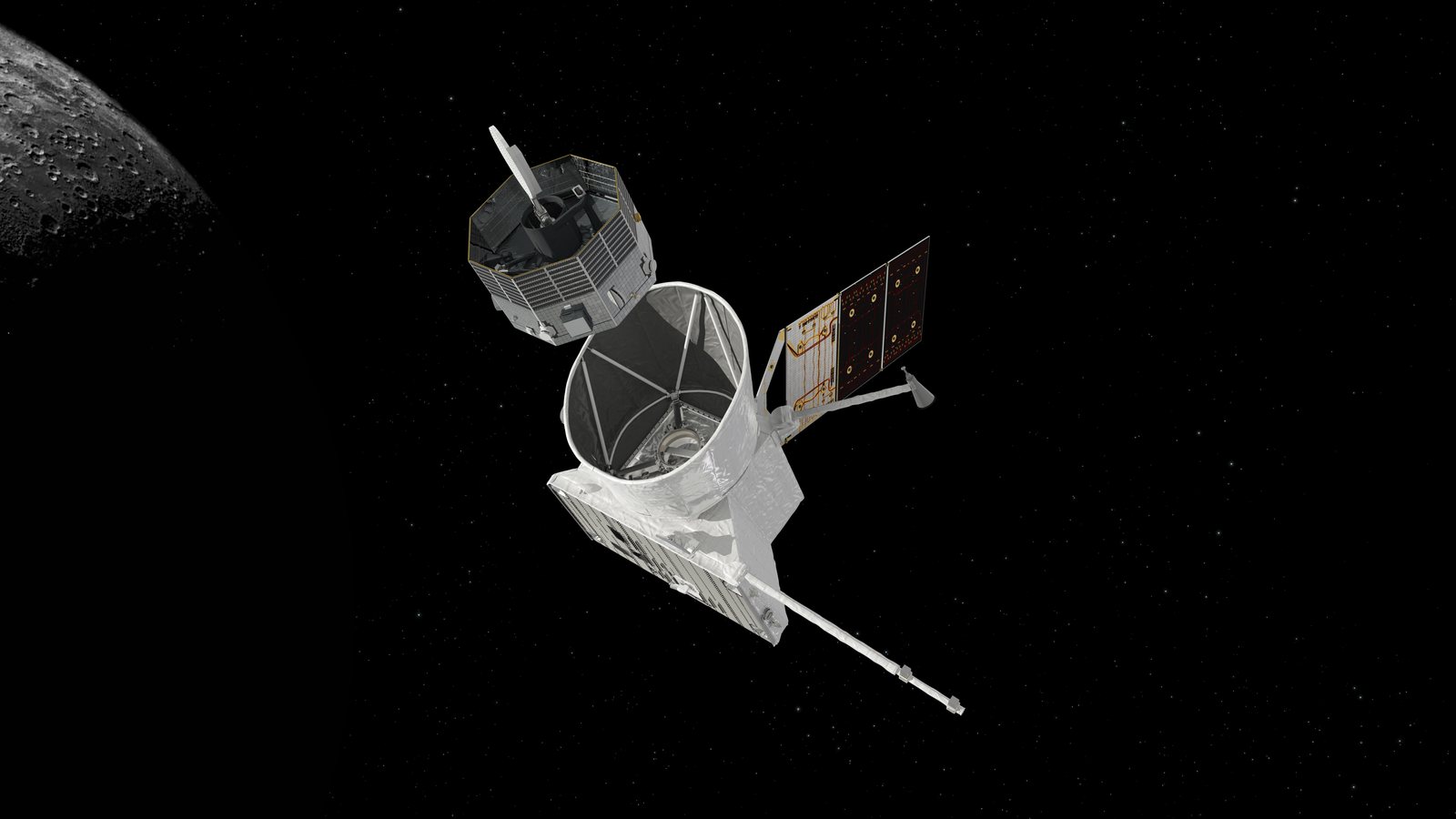
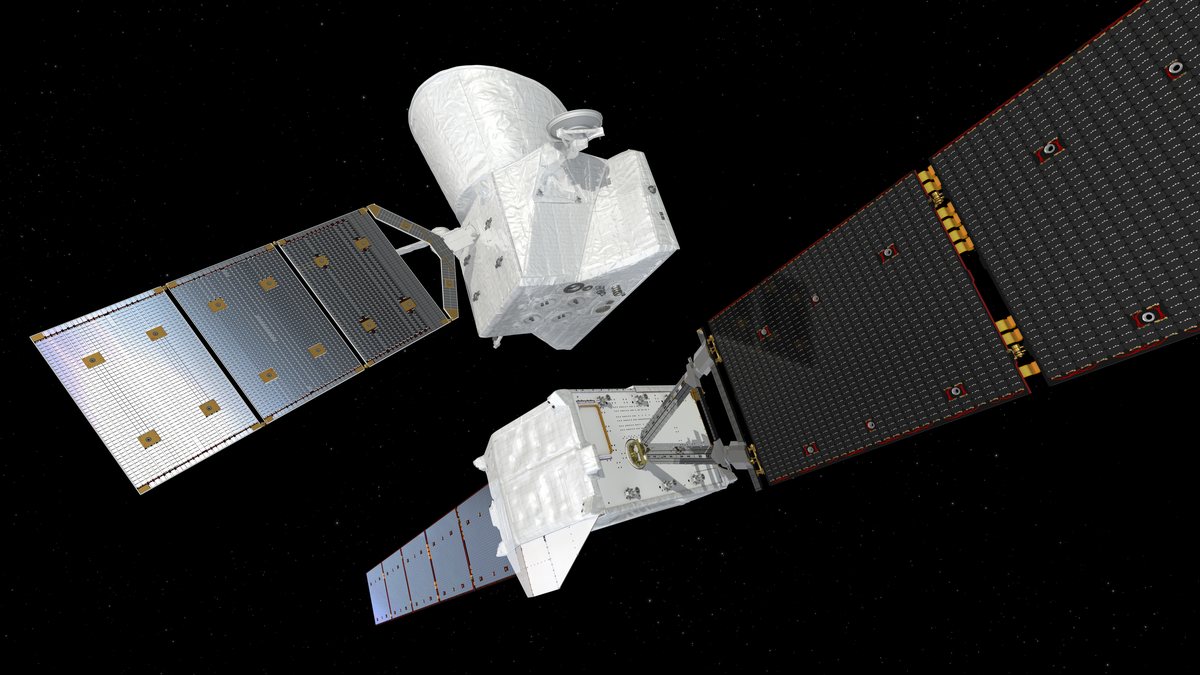
BepiColombo is two science spacecraft, called orbiters, that travelled to Mercury stacked together:
- Mercury Planetary Orbiter (MPO): built by ESA. It weighs about 1,230 kg and will study Mercury's surface, its inside and its make-up.
- Mio: built by JAXA, which also calls it the Mercury Magnetospheric Orbiter. It weighs about 255 kg and will study Mercury's magnetic field, the thin cloud of gas around the planet and the solar wind, the stream of particles from the Sun.
A third part, the MTM, carried them there using electric ion engines and big solar panels. It separated on 3 September 2026. ESA confirmed the separation at 15:52 Central European Summer Time (CEST) that day, through deep space antennas in Spain and Argentina.
The mission is named after Giuseppe "Bepi" Colombo (1920 to 1984), an Italian scientist. His work showed how a spacecraft could use a planet's gravity to change course, the trick BepiColombo relied on to get to Mercury.
Why did it take eight years to reach Mercury?
BepiColombo launched on an Ariane 5 rocket from Kourou, French Guiana, on 20 October 2018. Mercury is not far from Earth. The hard part is stopping there.
Anything heading towards the Sun speeds up as it falls. To be captured by Mercury, a spacecraft has to shed a lot of that speed. ESA says placing a spacecraft in a stable orbit around Mercury takes more energy than sending a mission to Pluto.
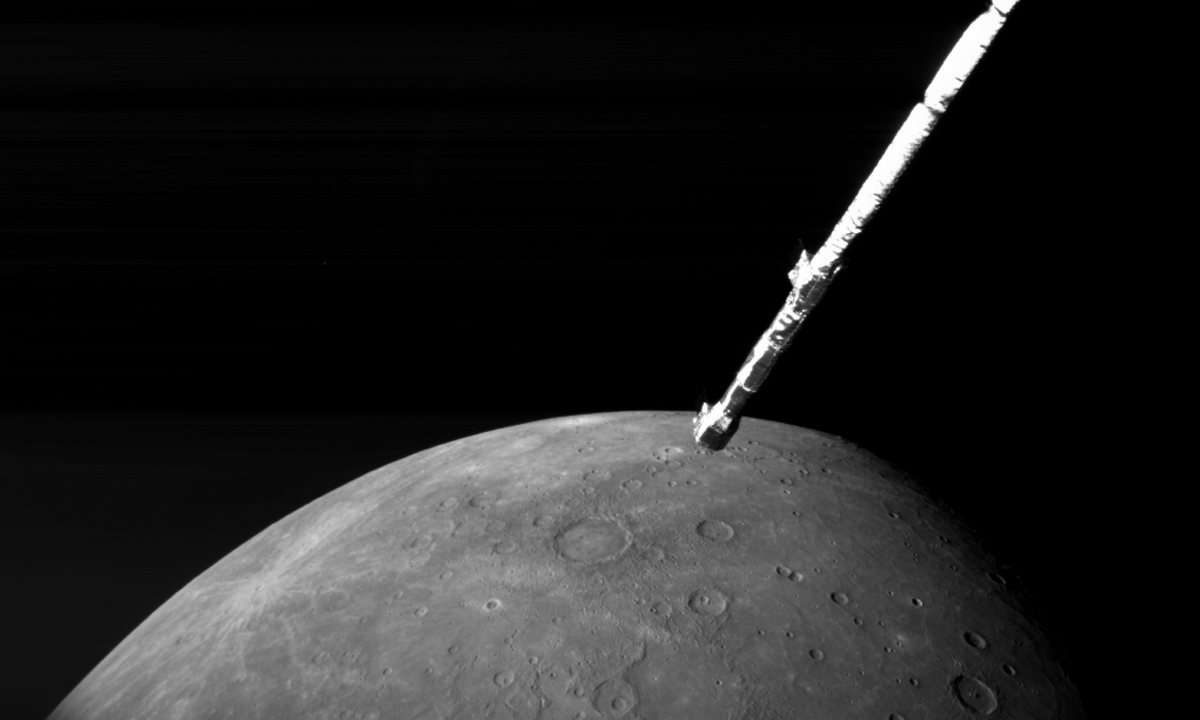
BepiColombo solved this with flybys, close passes that use a planet's gravity to change speed without using fuel. It made nine of them, the most ever for a planetary mission, JAXA says:
- Earth: one flyby, in April 2020.
- Venus: two flybys, in 2020 and 2021.
- Mercury: six flybys, from October 2021 to January 2025.
JAXA explains that the long trip is mostly waiting. The spacecraft had to loop around the Sun until each planet was in the right place.
What will BepiColombo do at Mercury?
The two orbiters will work from two very different orbits over Mercury's poles, ESA says:
- MPO: a low orbit, 480 to 1,500 km above the surface, taking about 2.3 hours per lap.
- Mio: a long oval orbit, 590 to 11,640 km above the surface, taking about 9.3 hours per lap.
Two spacecraft measuring at the same time is the big difference from earlier missions. JAXA says this lets scientists separate Mercury's own magnetic field from changes caused by the solar wind.
ESA lists five big mysteries the mission could help solve:
- Where did Mercury form? Its surface holds more potassium than expected for a planet so close to the Sun. One idea is that it formed farther out and was pushed inwards by a giant collision.
- Is there water ice? NASA's MESSENGER saw signs of ice in craters near the poles that never see sunlight. BepiColombo aims to measure it directly.
- Is Mercury still active? Strange shallow pits called hollows look young. If they change over time, the planet is still active.
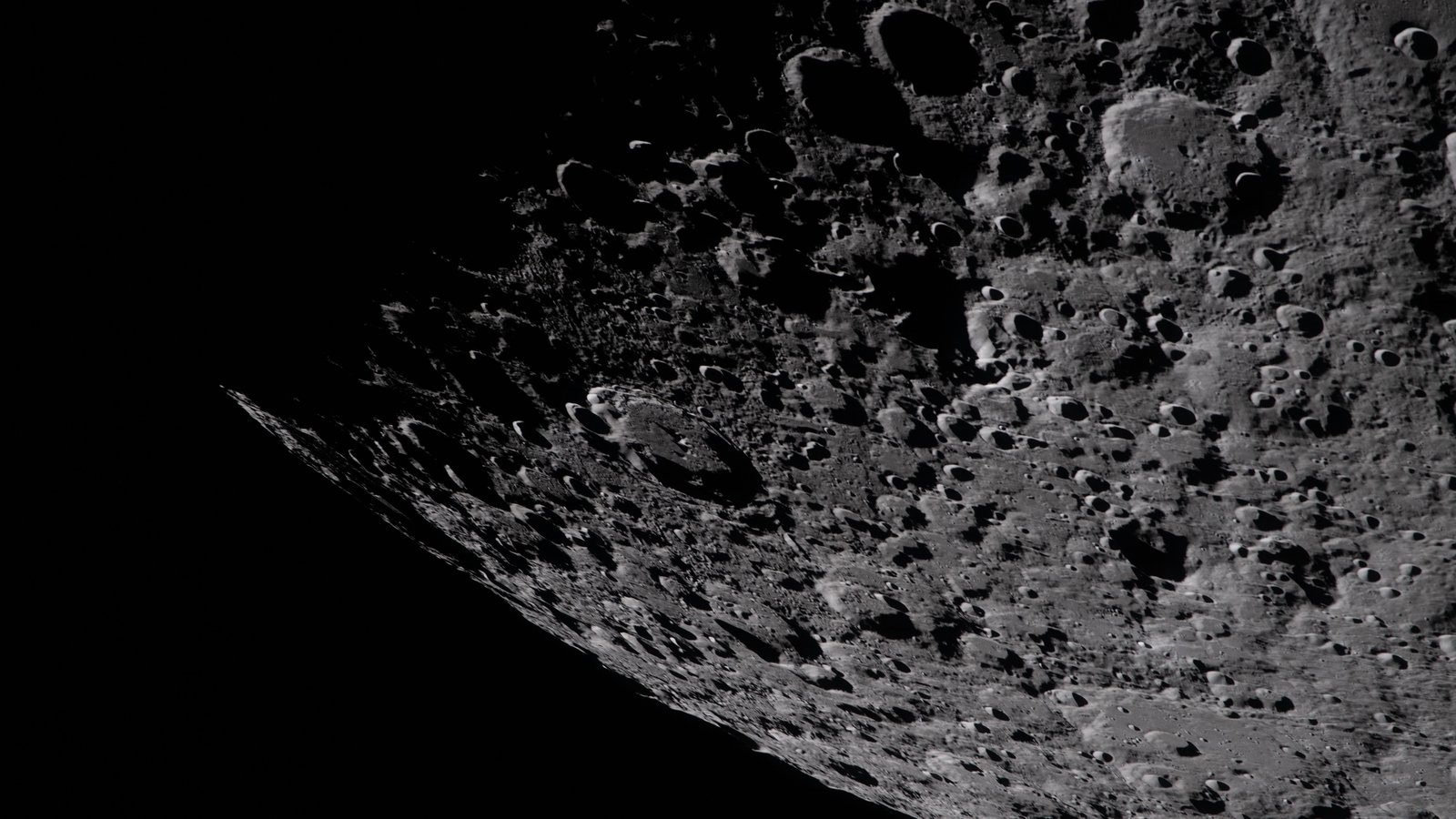
- Why is it so dark? Mercury reflects only about two-thirds as much light as Moon rock. Graphite near the surface is one possible reason.
- How does it have a magnetic field? Mercury is small, yet its field still works. ESA says its core must be partly molten. The core is huge: about 4,000 km across, inside a planet less than 5,000 km wide.
The orbiters also have to survive the heat. JAXA says Mio gets about 10 times more sunlight than a satellite near Earth, plus heat from a surface that reaches about 430°C in the day.
How does BepiColombo compare with earlier Mercury missions?
Only two spacecraft have visited Mercury before, ESA says:
- Mariner 10 (NASA): flew past three times in 1974 and 1975.
- MESSENGER (NASA): the only one to orbit, from 2011 to 2015.
BepiColombo's MPO will orbit closer to the planet than MESSENGER did, giving sharper images and better views of the southern half, ESA says.
For other robotic explorers, see our guides to robots on Mars and Japan's MMX mission to Mars's moon Phobos. For crewed exploration, read how NASA's Artemis program works.