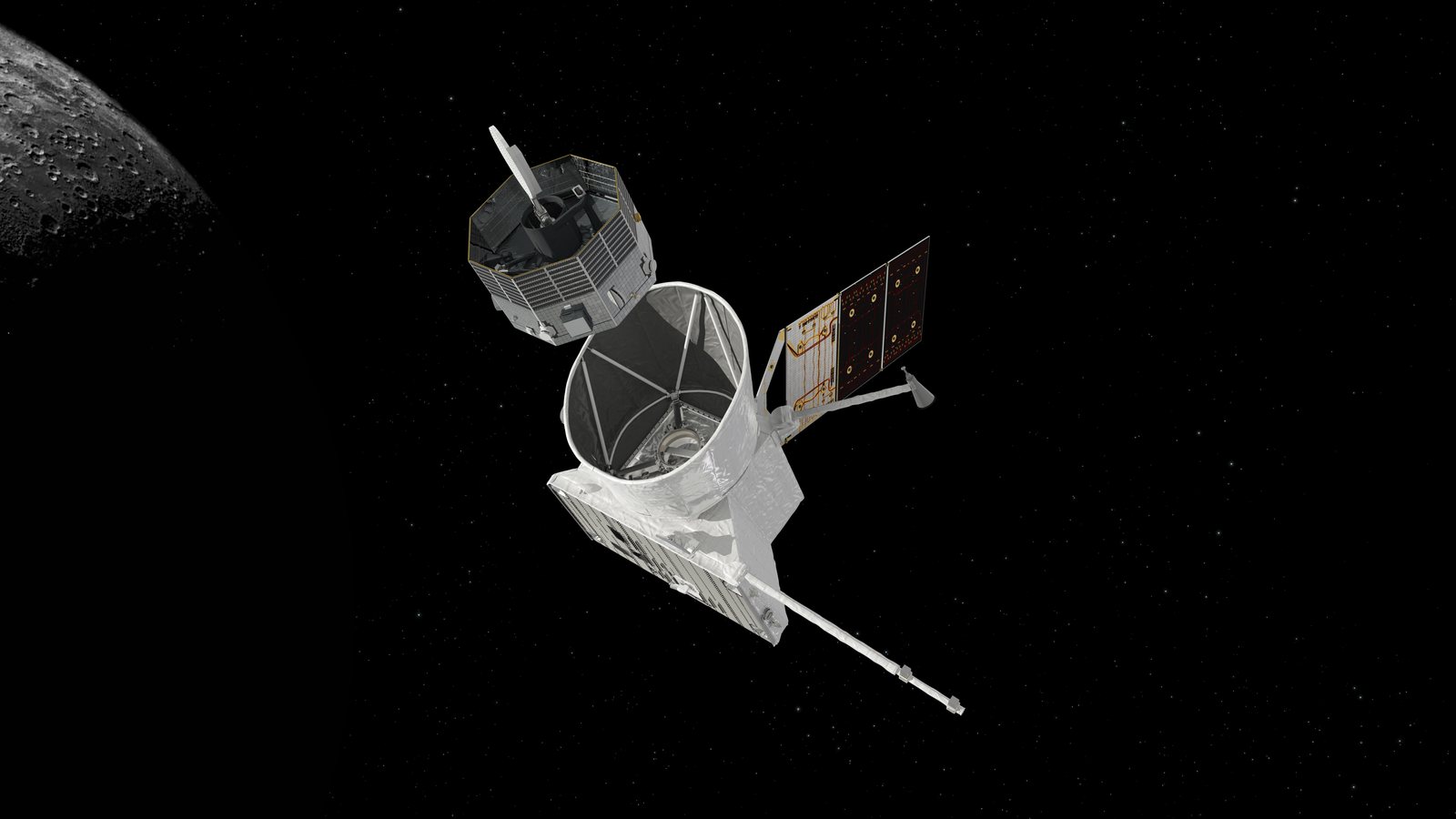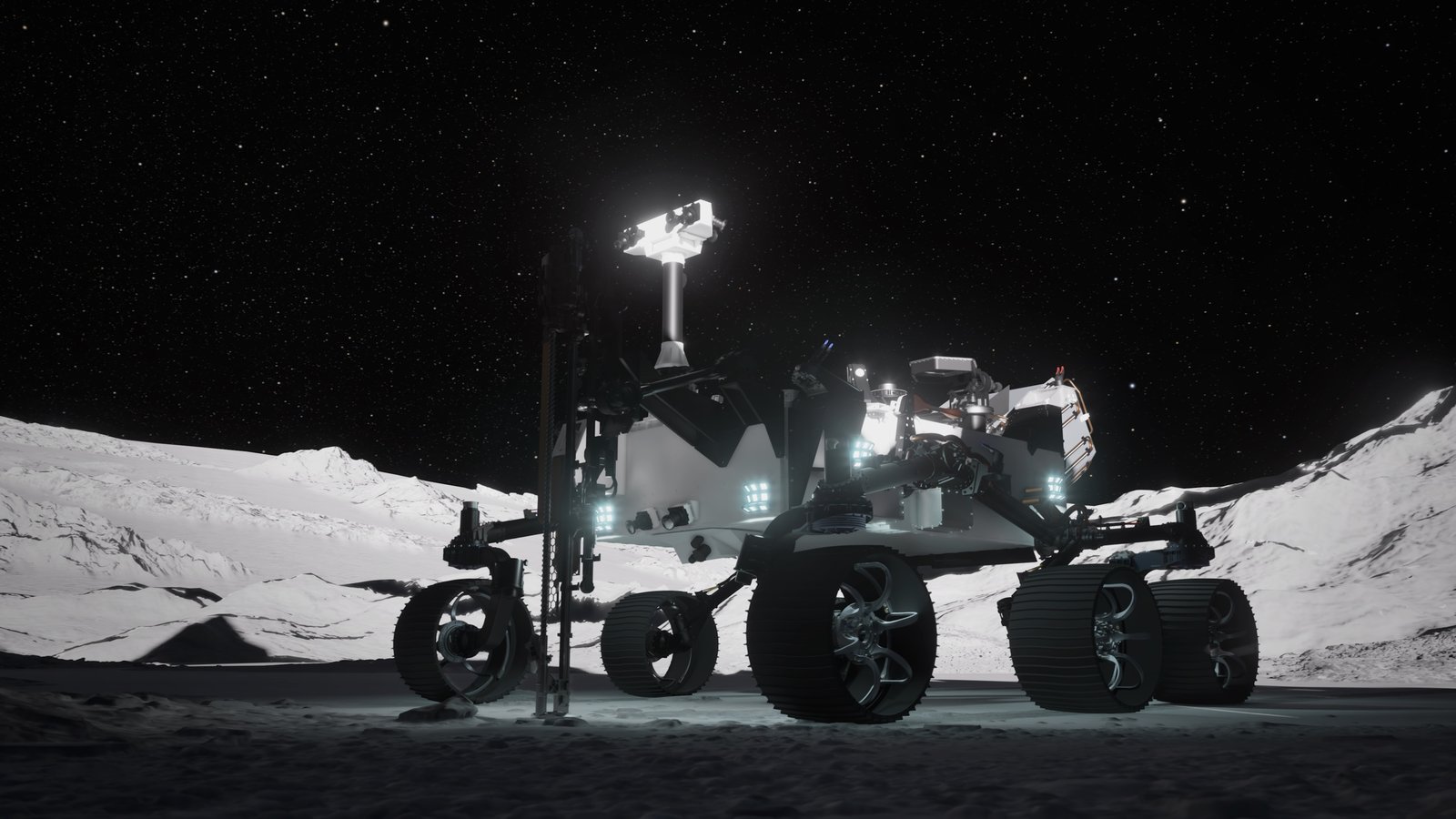

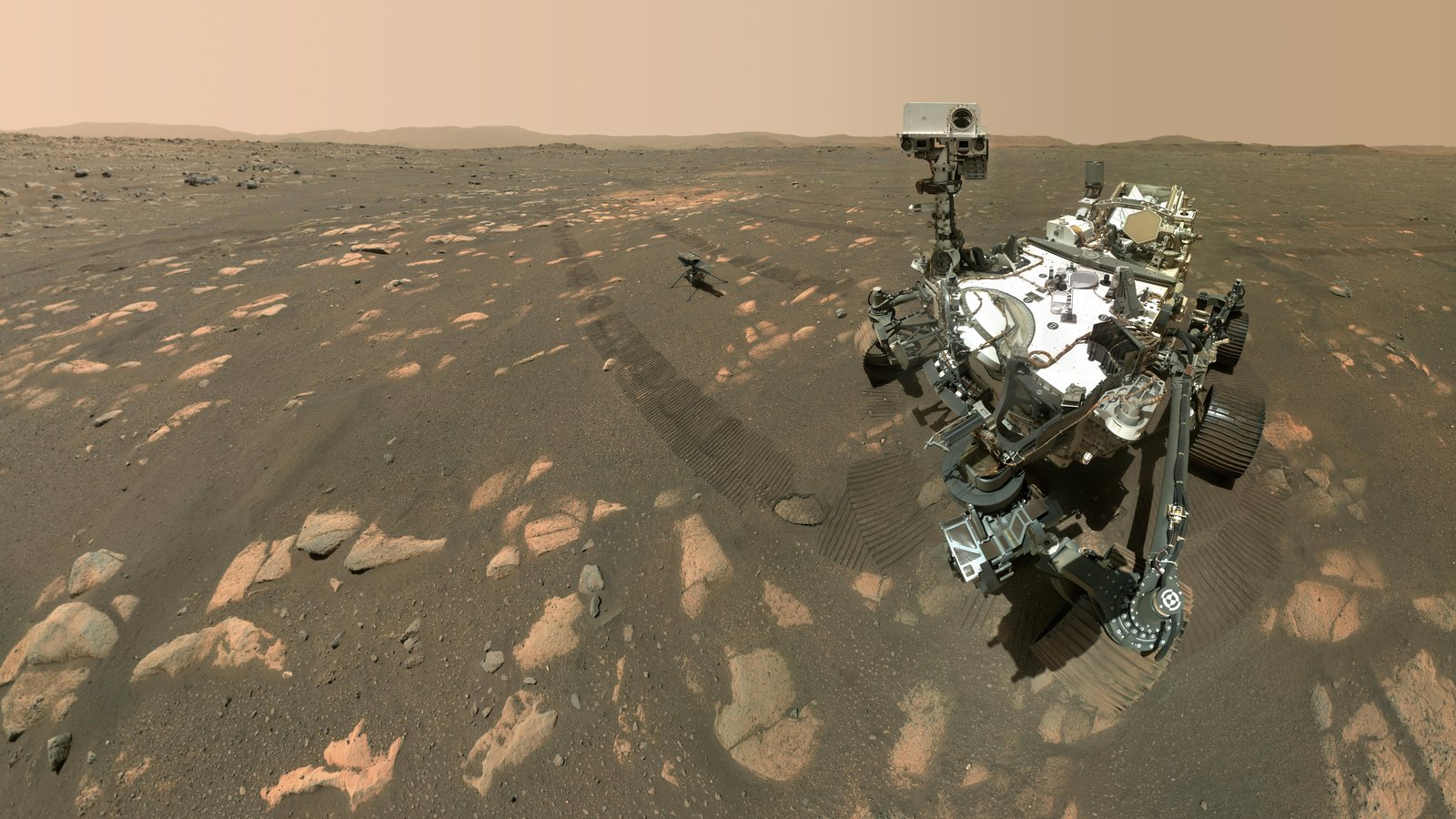
Mars is a planet of robots. No human has walked there. Soft landers, rovers, a helicopter and a ring of orbiters have done the exploring so far. As of November 2026, two NASA rovers, Curiosity and Perseverance, are still driving on the surface. China’s Zhurong rover has been silent since its 2022 hibernation. Several orbiters from NASA, ESA, the UAE and China continue to map the planet and relay data.
This guide covers the history, who is working now, and what is planned next. Every status below is dated to a public source where we could verify it.
What is on Mars right now?
Currently working on or around Mars (Nov 2026)
| Mission | Agency | Role | Status (as of) |
|---|---|---|---|
| Perseverance | NASA / JPL | Rover, Jezero Crater | Active. Passed Opportunity’s drive record at 45.22 km on 11 Oct 2026 (NASA) |
| Curiosity | NASA / JPL | Rover, Gale Crater / Mount Sharp | Active (NASA mission pages, 2026) |
| Mars Reconnaissance Orbiter | NASA | Orbiter / relay | Active since 2006 |
| Mars Odyssey | NASA | Orbiter | Active since 2001 |
| Mars Express | ESA | Orbiter | Active since 2003; ESA extended the mission again in 2026 |
| Trace Gas Orbiter | ESA / partners | Orbiter / relay | Active since 2016 |
| Hope (Emirates Mars Mission) | UAE | Orbiter | Active since 2021 |
| Tianwen-1 orbiter | CNSA | Orbiter | Active since 2021; continues surveying after delivering Zhurong |
| Zhurong | CNSA | Rover, Utopia Planitia | No public wake-up since May 2022 hibernation; treat as asleep, not active |
| Ingenuity | NASA | Helicopter | Mission ended after 72 flights; hard landing Jan 2024 |
| InSight | NASA | Lander | Mission ended Dec 2022 |
| MAVEN | NASA | Orbiter | Contact lost Dec 2025; NASA later said it could not be recovered |
How did Mars become a robot planet?
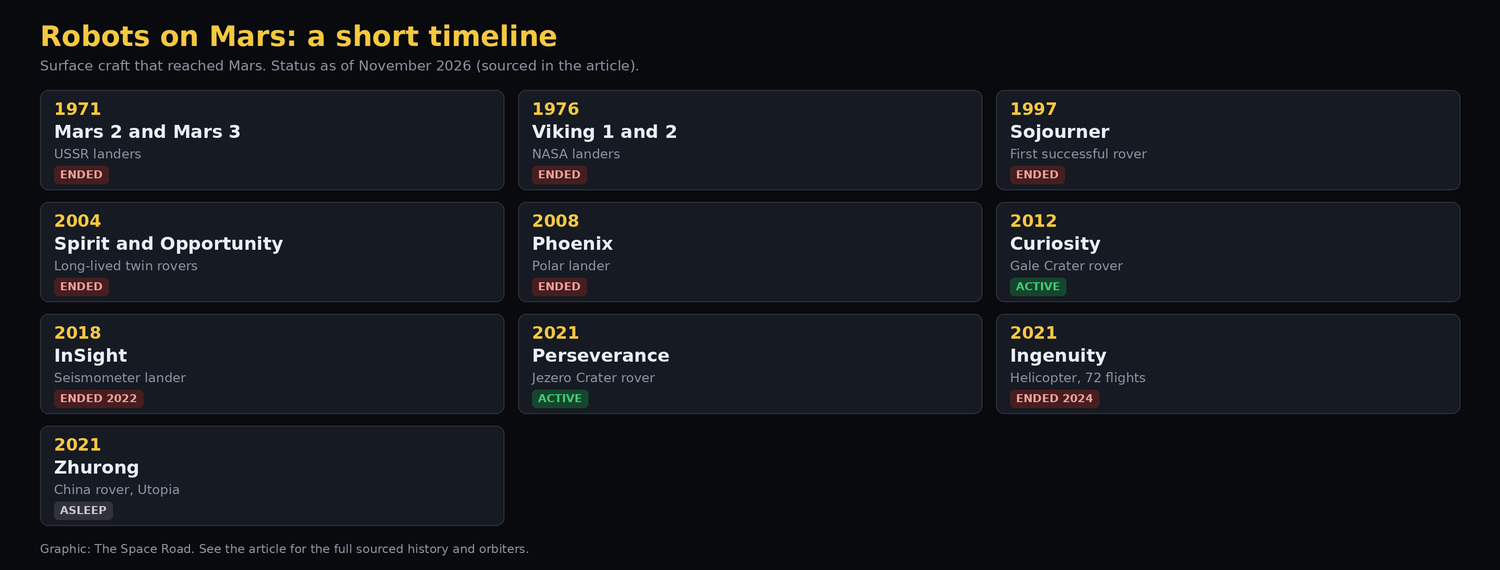
1971: Mars 2 and Mars 3 (USSR). Early lander attempts. Mars 3 achieved the first soft landing, with only a short surface signal.
1976: Viking 1 and 2 (NASA). Twin landers and orbiters. First long-lived surface stations and a huge imaging archive.
1997: Sojourner (NASA Pathfinder). First successful Mars rover. Small, short-lived, and proof that wheels work on Mars.
2004 to 2018 / 2011: Spirit and Opportunity (NASA). Twin rovers built for 90 sols. Opportunity worked until a 2018 global dust storm; Spirit stuck in 2009 and was declared done in 2011.
2008: Phoenix (NASA). Polar lander that confirmed water ice in the shallow subsurface.
2012 to present: Curiosity (NASA). Car-sized rover in Gale Crater, climbing Mount Sharp. Still active in 2026.
2018 to 2022: InSight (NASA). Seismometer lander. Ended when dust covered its solar panels.
2021 to present: Perseverance + Ingenuity (NASA). Perseverance hunts signs of ancient life in Jezero Crater and caches rock cores. Ingenuity made the first powered flights on another planet (72 flights) before a hard landing ended the helicopter mission in January 2024.
2021 to 2022: Tianwen-1 / Zhurong (China). Orbiter plus China’s first Mars rover. Zhurong entered hibernation in May 2022 and has not been publicly confirmed awake since.
What is Perseverance doing now?
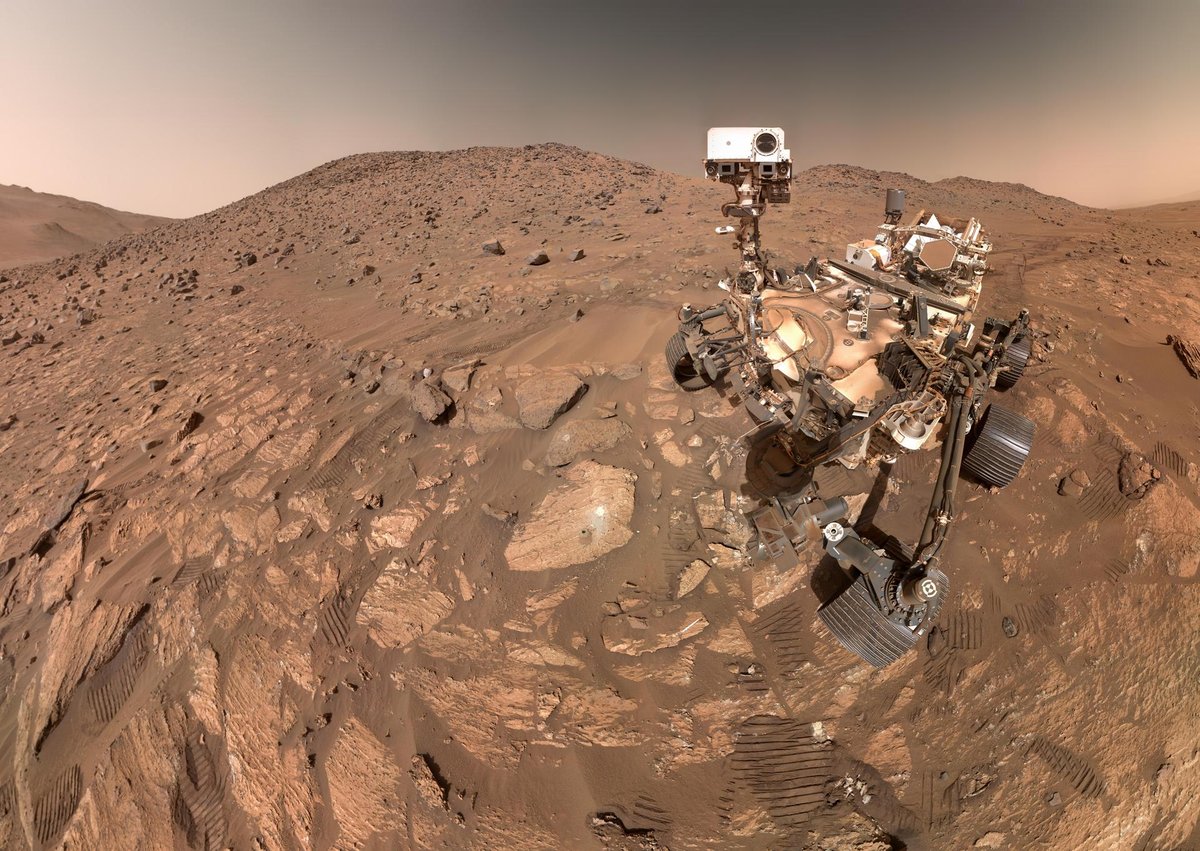
NASA says Perseverance is searching for signs of ancient microbial life, studying Jezero’s lake and river history, and sealing samples for a possible future return to Earth. On 11 October 2026 its odometer reached 28.10 miles (45.22 kilometres), passing Opportunity’s distance record. A peer-reviewed 2025 Nature paper discussed a “Sapphire Canyon” sample from the rock “Cheyava Falls” as containing potential biosignatures, clues that need more study before anyone claims past life.
What is coming next?
On the way
- ESCAPADE (NASA / UC Berkeley / Rocket Lab): twin orbiters Blue and Gold. Powered Earth flybys were scheduled for 7 and 9 November 2026; NASA’s 2 November preview said arrival is targeted for 7 and 9 September 2027. Burn results were still awaiting official confirmation when this draft was filed.
- MMX (JAXA): launched 20 October 2026. Heads for Phobos sample return around 2031, with Mars-system arrival planned for 2027.
In development (watch the dates)
- Rosalind Franklin (ESA): drilling rover for Oxia Planum. ESA and NASA have described a launch no earlier than late 2028 on a Falcon Heavy, with landing around 2030. Confirm against the latest ESA page before treating any month as firm.
- Tianwen-3 (CNSA): China’s planned Mars sample-return. Public Chinese statements have pointed to launches around 2028 and samples back around 2031. Treat as agency targets.
- NASA / ESA Mars Sample Return: Perseverance is already caching tubes. The larger architecture to bring those tubes home has faced cost and budget pressure; do not assume a funded launch date until NASA and ESA publish a current baseline.
- Starship uncrewed Mars ideas: SpaceX talks about eventual uncrewed Starships to Mars. That is a company goal, not a scheduled mission on our Starship tracker. See Is Starship going to Mars in 2026?.
Why only robots so far?
Mars is cold, dusty and months away. Robots do not need food, air or a return ticket. They can wait out dust storms (within limits) and send back data for years. Human missions will need landers, habitats, power and abort options that are still being designed. Until then, Mars remains a world explored by machines, and, for now, inhabited only by them.
Quick answers
Are there humans on Mars? No.
Which rovers still work? Curiosity and Perseverance, as of November 2026 NASA updates. Zhurong has not been confirmed active since 2022.
Did a helicopter fly on Mars? Yes. Ingenuity flew 72 times before its mission ended in 2024.
Will samples come to Earth? Perseverance has sealed cores. Separate sample-return missions (NASA/ESA concepts, China’s Tianwen-3, and Japan’s Phobos-focused MMX) are at different stages. Only MMX is already flying as of late 2026.