
Skyroot's next launch is the second orbital flight of Vikram-1, the small satellite rocket built by the Hyderabad company. The first Vikram-1 flight, Mission Aagaman, reached orbit from Sriharikota on 18 July 2026. Flight 2 is meant to show that the company can do it again, this time with named customer and partner hardware on board.
When is Skyroot's next launch?
There is no official date, time or target orbit. Skyroot has not published a countdown or a launch licence notice for Flight 2.
What the company has said is more limited. Its launch services page advertises a Q4 2026 rideshare window to low Earth orbit as filling fast, and another window in Q1 2027. The page does not say which of those windows is Flight 2.
A separate, unofficial target comes from a newspaper interview. On 5 November 2026, co-founder Naga Bharath Daka told The Times of India the company hoped to launch the second test mission in December or early January, and to go fully commercial from its third mission. That is a hope reported by the newspaper, not a date on Skyroot's own site. Until Skyroot or the Indian Space Research Organisation (ISRO) publish a time, treat any calendar date you see elsewhere as unofficial.
What will Vikram-1 Flight 2 carry?
On 20 November 2026, Skyroot announced the Flight 2 payload line-up after a four-company collaboration was presented at Space Tech Expo Europe 2026 in Bremen, Germany. The company put it this way: "Four companies, three countries, one flight."
The ride is Vikram-1. The satellites are:
- SCOPE, a CubeSat built by Skyroot. A partner announcement by OhmSpace describes it as a 4U spacecraft, meaning a small satellite made of four 10-centimetre units. A SCOPE satellite was also among the two spacecraft ISRO said were injected into low Earth orbit on the first Vikram-1 flight. Skyroot has not said whether the Flight 2 satellite is new hardware, or whether it is reusing the name.
- NILA III, a 4U CubeSat from Indian small-satellite company HEX20, the third spacecraft in HEX20's NILA series.
Both satellites will fly in a single 8U deployer from Exolaunch, a German deployment company, which will release them in orbit. NILA III will also carry a high-temperature resistojet from OhmSpace, which describes itself as UK-based. A resistojet is an electric thruster that heats its propellant and then pushes it out to change the satellite's orbit. Skyroot said the device is flying for an in-orbit demonstration.
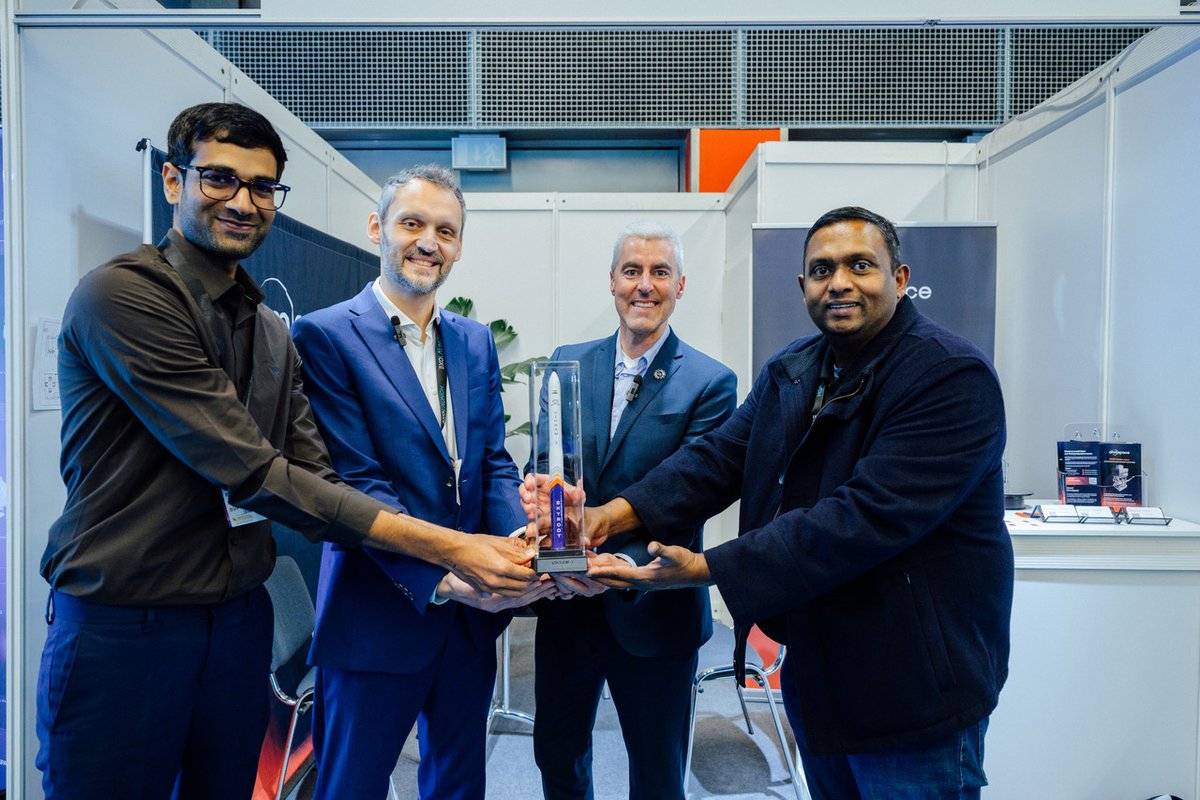
OhmSpace's mission page, dated 18 November 2026, repeats the same payload plan and carries comments from the four companies. HEX20 co-founder and chief executive Amal Chandran said NILA III had originally been booked on a SpaceX Transporter mission through Exolaunch, and that moving it to Skyroot "signifies a coming of age moment for the Indian space ecosystem." Exolaunch chief revenue officer Kier Fortier said the teams went from first talks to integration in under two months, and that this would be Exolaunch's first launch on a Vikram vehicle. Skyroot has not published a target orbit for the two CubeSats, or said whether any other payloads will share the flight.
What tests has Skyroot completed for Flight 2?
Skyroot has posted a public test trail for this vehicle, rather than a single static fire headline. The updates below are from the company's official account, with dates in Sriharikota local time, which is the same calendar date as the posts.
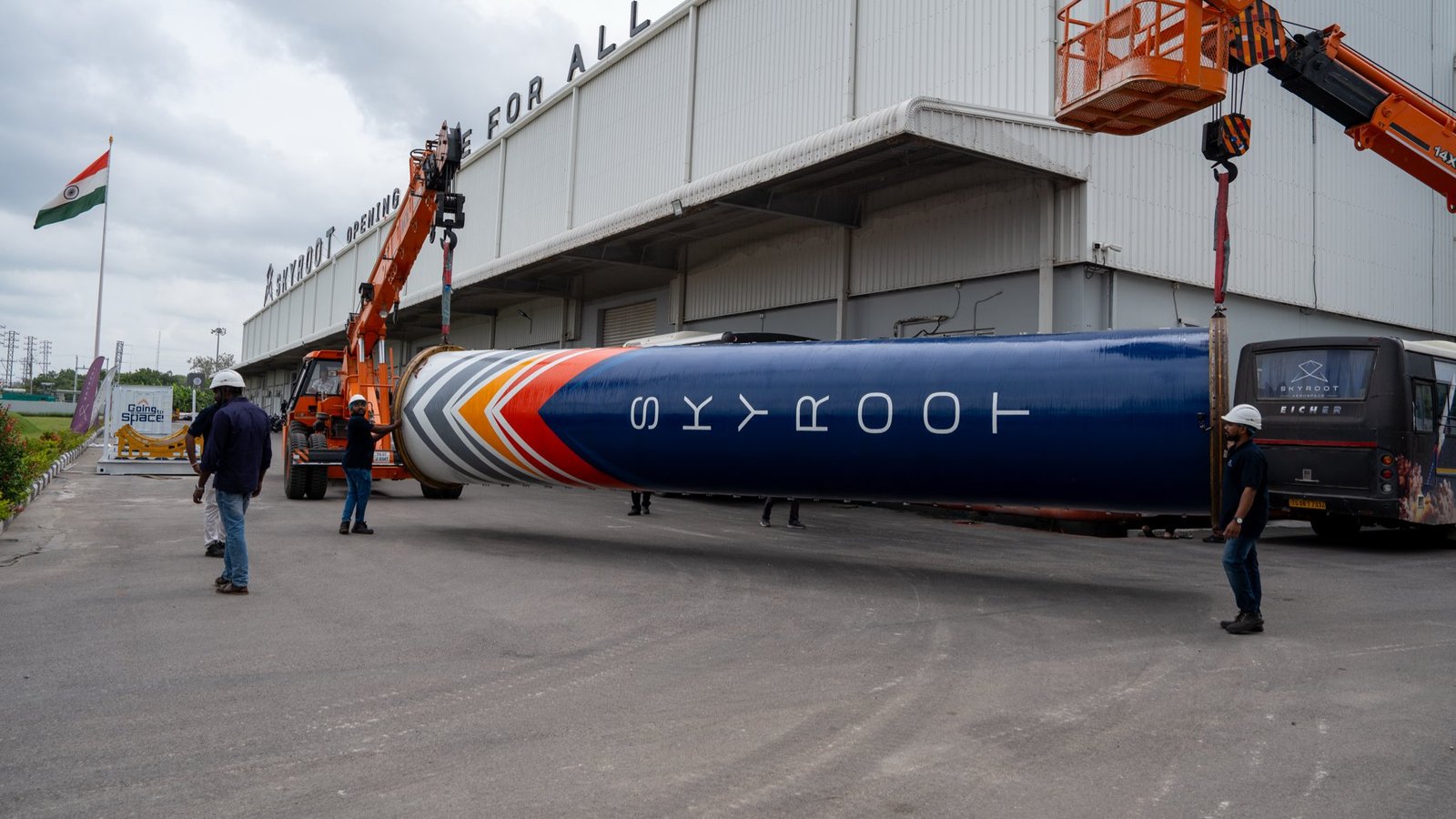
- 23 August 2026: Stage 1 for the second Vikram-1 "is already on its way to the spaceport at Sriharikota," Skyroot said on India's National Space Day, a little over a month after the first orbital flight.
- 12 September 2026: assembly of Interstage 1/2L, the structure that sits between stages, was under way.
- 10 October 2026: that interstage cleared vibration testing for Flight 2, from 20 Hz to 2000 Hz across all three axes. Vibration testing shakes a part on the ground to mimic the rough ride of launch.
- 9 November 2026: Raman-1 "wrapped its test fire and is ready for Flight 2." Skyroot said this is the thruster that controls the rocket's roll, the rotation around its long axis, so the vehicle holds its orientation in flight.
- 24 November 2026: Raman-2 cleared its acceptance test for Flight 2. Skyroot said the engine sits in the rocket's Orbital Adjustment Module (OAM), the upper stage unit used to place satellites into their intended orbits. It described Raman-2 as fully 3D-printed, regeneratively cooled, and designed for multiple restarts in space. The next steps, it said, are integration with the OAM and electrical checks.
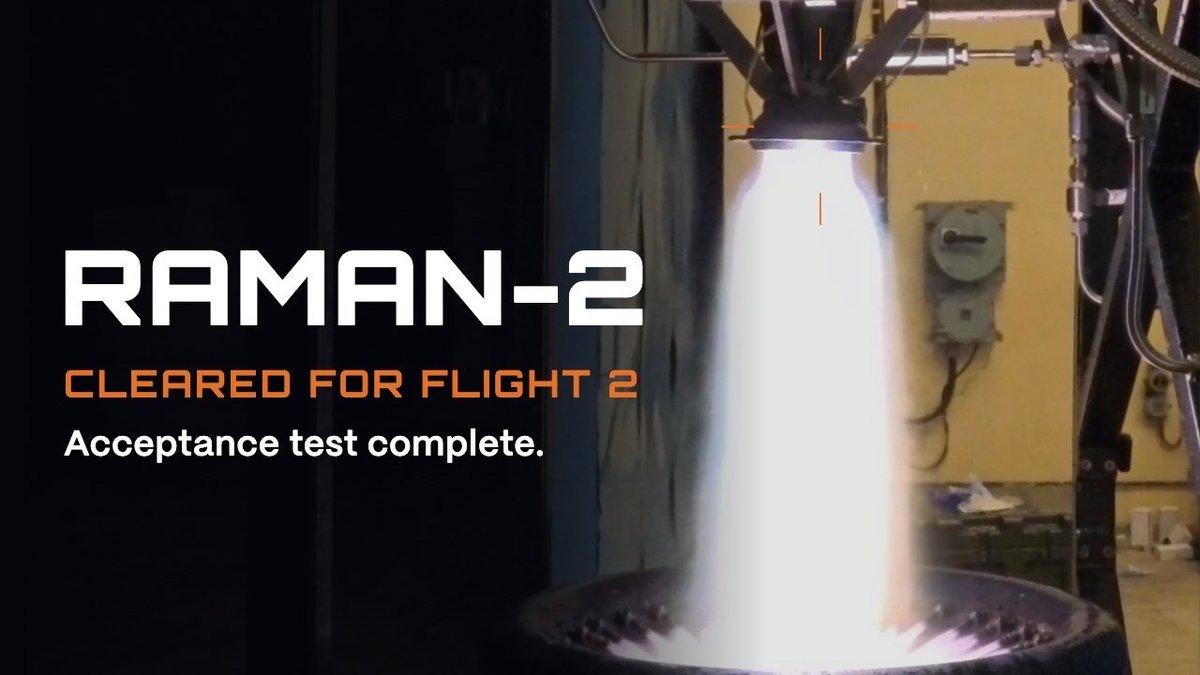
Those last two names matter. On Flight 2, Skyroot is talking about two different Raman engines: Raman-1 for roll control, and Raman-2 in the OAM for orbit adjustment. ISRO's July 2026 release on the first flight referred to the Vikram-I upper-stage liquid engine as RAMAN-I. The two sources are using similar names for hardware on the same rocket family, but they are not a single, clearly labelled parts list, so this page keeps each description attached to the organisation that published it.
The test series also shows what is still outstanding. As of 24 November, Raman-2 still needed to be integrated with the OAM and to go through electrical checks. Skyroot has not said that the full Flight 2 vehicle is stacked at Sriharikota, or that a flight readiness review is complete.
How does Flight 2 follow Vikram-S and Mission Aagaman?
Flight 2 is not Skyroot's second launch overall. It is the second orbital flight of Vikram-1, and the company's third rocket flight.
The first flight was Mission Prarambh on 18 November 2022, when the suborbital test rocket Vikram-S lifted off from Sriharikota. Skyroot and ISRO both describe that mission as the beginning of India's private space launch industry: the first time a privately built Indian rocket flew. Prarambh is a Hindi word for beginning. Vikram-S was a test vehicle, not an orbital launcher, so it did not place a satellite in orbit.
Vikram-1 followed. ISRO said the four-stage rocket, with three solid stages and a liquid stage, lifted off from the First Launch Pad at Satish Dhawan Space Centre at 12:05 p.m. on 18 July 2026. The agency said two satellites, SCOPE and Grahaa, were injected into low Earth orbit, and that the remaining payloads on the upper stage were for in-orbit experiments. It called this the first time a private Indian company had launched a rocket to orbit from Indian soil, and said the vehicle succeeded on its first attempt. The Press Information Bureau (PIB), in a post-launch release the same day, said the mission was Mission Aagaman, that Union minister Dr Jitendra Singh watched it from Sriharikota, and that Vikram-1 can place up to 350 kg in low Earth orbit. PIB also said the rocket stands about 22 metres tall and uses an all-carbon composite structure and a 3D-printed liquid engine on its Orbital Adjustment Module. Skyroot's own site lists the same 350 kg low Earth orbit figure, plus up to 260 kg to sun-synchronous orbit, a path often used by Earth-observation satellites.
ISRO said it and IN-SPACe, the Indian National Space Promotion and Authorization Centre, helped make that first orbital flight possible. The agency said Skyroot used solid-motor casting and static test facilities at Sriharikota, that the upper-stage liquid engine was tested at the Liquid Propulsion Systems Centre, and that IN-SPACe handled access to ISRO facilities, technical advice, mission readiness reviews and launch clearances.
Flight 2 sits after that successful first attempt. The point is no longer to prove that a private Indian orbital rocket can fly once. It is to fly again, on a shorter gap, with international deployment hardware and a customer satellite on board.
Where will the second flight launch from?
Sriharikota. That is the island launch base of Satish Dhawan Space Centre, on the coast of Andhra Pradesh in southern India, and the site of both earlier Skyroot flights. Skyroot's 23 August 2026 post is the official word that Stage 1 for this vehicle was heading to that spaceport.
The pad has not been named for Flight 2. The first orbital mission used the First Launch Pad, ISRO said. Until Skyroot or ISRO say otherwise, it is safer not to assume the same pad.
Why does this flight matter for India's private launch sector?
For a long time, putting an Indian satellite into orbit meant flying on an ISRO rocket, or buying a ride abroad. The 2020 space-sector reforms and the Indian Space Policy 2023 opened that work to private companies. Vikram-S in 2022 showed a private Indian rocket could leave the ground. Mission Aagaman in July 2026 showed one could reach orbit from Indian soil. PIB, quoting Dr Jitendra Singh, presented that first orbital flight as evidence that the reforms were working, and said India now has more than 400 space start-ups.
Flight 2 is the next test of whether that capability is repeatable. The payload announcement is part of that story. An Indian satellite builder, HEX20, is moving a spacecraft that had been planned for a SpaceX rideshare onto an Indian private launcher. A German deployer and a UK-based propulsion company are flying with them. If the mission succeeds, it gives those partners flight heritage on Vikram-1 and gives Skyroot a public, international customer flight to point to as it talks about later commercial missions.
It is still a test flight. Skyroot has not called Flight 2 a fully commercial launch. The newspaper interview in which a co-founder spoke of going commercial from the third mission is the only source for that plan, and the third mission has no official date either. Private Indian satellites also remain a small share of how many satellites India has in orbit. Most of the official national count is still government-built. A successful Flight 2 would not change that overnight, but it would add a second data point that Indian private launch is not a one-off.
For the government launcher side of the same story, see our guide to India's rockets and spacecraft, the PSLV, GSLV and LVM3 comparison, what GSLV stands for, and the ISRO 2026 launch record.
What happens next?
The clearest official items still ahead are the ones Skyroot has already named: Raman-2 being integrated with the Orbital Adjustment Module, electrical checks, and then the rest of vehicle assembly, range operations and a published launch time. Watch also for a pad assignment, a target orbit, and a confirmation of whether SCOPE and NILA III are the only payloads.
What not to watch for, at least not yet: a firm clock time. Unofficial launch lists sometimes fill in a placeholder date when a company has only given a season. This page will add a time when Skyroot, ISRO or IN-SPACe publish one.