
As of 26 November 2026, space data centers still means small satellites and test payloads, not a warehouse of computers circling the Earth. China's Three-Body Computing Constellation, Starcloud-1, Google's Project Suncatcher prototype, and early Axiom Space nodes are already in orbit. SpaceX's Starmind plan got a partial FCC authorization on 25 November 2026 for up to 1 million satellites, but none of those satellites has flown.
The term covers a range of ideas: on-board AI for Earth-observation data, off-planet data storage, and much larger plans to run cloud and AI workloads in orbit. This page is a verified roundup of who is doing what, with official sources, company claims labelled as claims, and no investment advice.
What is a space data center?
A space data center, also called an orbital data center, is computing or data storage that lives on a spacecraft. The usual pitch is that a satellite in a sun-synchronous orbit, a path that keeps it in sunlight for most or all of each lap, can use solar power almost continuously and reject heat by radiating it into space.
That is different from a ground data center, which draws power from the grid and uses air or water to stay cool. It is also different from Starlink or Amazon Leo, which are satellite internet networks. Some of the same companies are involved, and some of the same laser links may carry the data, but internet service and in-orbit computing are not the same thing.
Which space data centers are already in orbit?
These efforts have flown hardware, according to official company or agency statements:
- Three-Body Computing Constellation (China): Zhejiang Lab said the first 12 satellites launched at 12:12 p.m. Beijing Time on 14 May 2025 from Jiuquan, on a Long March 2D. ADA Space, also called Adaspace Technology, said an eight-satellite Group 02 launched from Jiuquan on 14 October 2026, taking the constellation to 20 satellites.
- Starcloud-1 (United States): SpaceX lists Starcloud-1 as a payload on the Bandwagon-4 mission, which lifted off at 1:09 a.m. ET on 2 November 2025 from Space Launch Complex 40 at Cape Canaveral. Starcloud says the satellite carries the first Nvidia H100 graphics processing unit (GPU) in space.
- Project Suncatcher prototype (United States): Google says a prototype built with Planet launched on SpaceX's Transporter-18 mission, which lifted off at 11:32 a.m. PT on 1 October 2026 from Space Launch Complex 4E at Vandenberg. Google later said the satellite sent back its first AI response.
- Axiom Space orbital data-center nodes (United States): Axiom says it placed a prototype called AxDCU-1 on the International Space Station in fall 2025, and that the first two dedicated orbital data-center nodes launched to low-Earth orbit on 11 January 2026 with Kepler Communications satellites.
- Lonestar Data Holdings (United States): Lonestar is focused on data storage rather than a full computing cluster. It says its Freedom payload operated in cislunar space, the region between Earth and the Moon, on Intuitive Machines' Athena mission after a 26 February 2025 launch, and that it has also flown earlier tests.
None of those operators has said it is running a commercial-scale data center in orbit. The hardware in space today is still at the prototype, test, or early-constellation stage.
What is Starcloud flying?
Starcloud is a Redmond, Washington company that wants to put GPU-based data centers in orbit. Its first satellite, Starcloud-1, launched on SpaceX's Bandwagon-4 mission on 2 November 2025. Starcloud says the spacecraft carries the first Nvidia H100 in space, and that in December 2025 it became the first satellite to run a version of Google's Gemini model and the first to train a large language model, Andrej Karpathy's nano-GPT.
A pre-launch Nvidia blog post, which quoted Starcloud, described Starcloud-1 as a 60-kilogram satellite about the size of a small fridge, and said it would offer 100 times more GPU compute than earlier space operations. Those figures are company claims, published before the flight.
Starcloud's next satellite, Starcloud-2, is described by the company as its first commercial mission, with a GPU cluster, persistent storage, and its own thermal and power systems. Starcloud says it will be fully operational in sun-synchronous orbit by 2027. That is a company target, not a confirmed launch date.
Nvidia has worked with Starcloud through its Inception startup program and has written about the project. Nvidia is a chip partner here, not the operator of a constellation.
What is Google's Project Suncatcher?
Project Suncatcher is Google's research moonshot to test whether an interconnected network of solar-powered satellites, carrying Google Tensor Processing Units (TPUs), could one day host machine-learning compute in space. Google announced it on 4 November 2025, and said it would first fly two prototype satellites with Planet by early 2027.
The first of those tests came earlier than that original public plan. Google says the prototype launched on 1 October 2026 on Transporter-18, that contact was confirmed, and that the satellite was operating as expected. In a 30 October 2026 update, Google said it had completed early commissioning, powered up the host and TPU trays, run early machine-learning tests, and received its first AI response from a data-center-class TPU in orbit: a haiku generated by an onboard Gemma 4 model. Google says the next milestone is twin interconnected satellites in 2027, which will test high-bandwidth laser links over short distances.
On 19 November 2026, Google said it is partnering with Blue Origin on the first heavy-lift Suncatcher launch, targeted for the first quarter of 2029 on New Glenn. Google says that flight would place satellites with roughly the capacity of a data-center rack into sun-synchronous orbit. For New Glenn's return-to-flight status, see when New Glenn will fly again.
Google has also set out the research problems it is trying to solve. It says satellites in low-Earth orbit can generate up to eight times more solar power than on Earth. It reports ground radiation tests of its Trillium TPUs at the University of California, Davis, and describes cooling in a vacuum, where heat can only be rejected by radiators, as a central engineering challenge. Those are Google's own research claims.
What has China put in orbit?
China is already flying the largest computing constellation that official sources have described. Xinhua, citing Zhejiang Lab, reported that the first 12 satellites of the Three-Body Computing Constellation lifted off at 12:12 p.m. Beijing Time on 14 May 2025 from the Jiuquan Satellite Launch Center, on a Long March 2D. Zhejiang Lab director Wang Jian said the project is designed to host thousands of satellites with a total computing power of 1,000 peta operations per second (POPS) once complete. The same launch report said the first 12 satellites offered a combined 5 POPS and 30 terabytes of storage.
In February 2026, after nearly nine months of in-orbit testing, Zhejiang Lab said the first group had deployed 10 AI models, including 8-billion-parameter remote-sensing and astronomy models, and had established inter-satellite links among six satellites. That later account said a planned constellation of 1,000-plus satellites would crunch 100 quintillion operations per second. That figure is also a lab claim, and it is not the same number given at launch.
On 25 November 2026, ADA Space, listed in Hong Kong as Adaspace Technology, said the eight-satellite Group 02 launched on 14 October 2026 from Jiuquan had taken the "Star Computing Plan" to about 50 POPS, which the company called the largest in-orbit computing constellation. The company said the China Academy of Information and Communications Technology released third-party test data, including a nominal 32 petaflops at 8-bit floating-point (FP8) precision on one satellite, in-orbit training and inference of Alibaba's Qwen3-32B model, a 10-kilowatt-class liquid-cooling system, and 45 minutes and 33 seconds of continuous full-parameter training in a single orbit. Those results are the company's account of a third-party test, not measurements we have independently verified.
What did the FCC approve for SpaceX Starmind?
Starmind is SpaceX's planned constellation of orbital data-center satellites. The official name on the FCC grant is the SpaceX Orbital Data Center System (Starmind). On 25 November 2026, the FCC granted SpaceX partial authority for up to 1 million non-geostationary satellites. The radio license covers backup and emergency telemetry, tracking and command only, not a regular radio service to the ground.
SpaceX's Starmind page describes a first satellite design called AI1, with a deployed height of 30 metres, a wingspan of 75 metres, and a compute payload of up to 250 kilowatts at peak and 175 kilowatts on average. SpaceX says the satellites would do the computing in orbit, then send the results through laser links to Starlink. It also says its Gigasat Factory in Bastrop, Texas, is planned to support production and deployment of thousands of AI satellites starting as soon as late 2027, and that Starship is critical for lifting large, heavy AI satellites. Those are company plans and published specifications, not a launch date.
No Starmind satellite has launched. The FCC grant is a license with conditions, including a deadline to have one authorized satellite in its assigned orbit and operating by 25 November 2033, or the authorization becomes void. Our Starmind explainer covers the grant, the orbits, and the remaining conditions in more detail.
Does Amazon or Blue Origin have a plan?
Amazon itself has not announced an orbital data-center programme. Amazon Leo is a satellite internet network, not a computing constellation.
Blue Origin, the space company founded by Jeff Bezos, has. In a 20 May 2026 interview with CNBC, Bezos said data centers in space are realistic, but that a two-to-three-year timeline is "a little ambitious." He said the biggest advantage is solar energy "24/7, no clouds, no weather," and that two things still have to change: energy must become a larger share of the cost of terrestrial data centers (he said it is typically less than 15 percent of total cost of ownership today), and launch cost has to come down "by a factor of 10." He named Sunrise as Blue Origin's "data centers in space constellation," alongside TeraWave, a communications network. He also talked about making solar cells from lunar material and, in the longer term, building data centers on the Moon or in space with materials from the Moon.
Blue Origin has not, in the official materials reviewed for this page, published a first-launch date for Sunrise, and no Sunrise satellite is known to be in orbit. Google's separate agreement to fly Suncatcher hardware on New Glenn in 2029 is a launch partnership, not proof that Blue Origin's own data-center constellation is underway.
Is India building a space data center?
Not yet, if the question means an operating system. On 11 December 2025, India's Department of Space told Parliament that ISRO is studying on-board data processing and storage. Preliminary evaluations indicated that a proof of concept for edge computing infrastructure in space was feasible, "and such a system is being conceived." The same official reply said a full-fledged system would still need breakthroughs in in-orbit power generation, radiation-hardened GPUs and CPUs, and security for orbiting satellites. The study was preliminary and had been carried out within the department. No public timeline or budget was given.
Private Indian companies have moved faster in their announcements:
- TakeMe2Space, a Hyderabad company, says it is building orbital computing satellites under a MOI programme. The company says a MOI-TD test in December 2024 succeeded. Its MOI-1 satellite was a co-passenger on ISRO's PSLV-C62 mission, which lifted off at 10:17 a.m. on 12 January 2026 from Sriharikota and encountered an anomaly at the end of the third stage. TakeMe2Space says MOI-1 was lost with that failure, that a later MOI-1A spacecraft launched on Transporter-18 was "lost in orbit," and that a MOI-1B mission was still listed as tentative for November 2026. As of 26 November 2026, the company had not posted a launch result for MOI-1B.
- NeevCloud and Agnikul Cosmos announced a partnership in February 2026 to host an orbital AI data-center payload, with a pilot discussed for later in 2026 and commercial operations discussed for 2027. That remains a company announcement. No official confirmation was found that the pilot has launched.
India has a growing private launch and satellite sector, which we cover in our guide to India's rockets and spacecraft. An operating Indian orbital data center is not part of that record yet.
Which other companies are working on orbital compute?
A few other efforts are far enough along, with official statements, to include:
- Axiom Space (United States): The Houston company, which is also building commercial space-station modules, says orbital data-center nodes can process satellite data in space and connect over optical links. It cites a 2.5-gigabit-per-second optical-link capability on the nodes flown with Kepler, and a longer-term aim of scaling from kilowatts to megawatts after 2030. Those are company figures and goals.
- Lonestar Data Holdings (United States): Lonestar sells off-planet data storage. It announced StarVault in April 2026 as a commercial space-based storage service, with a first payload then planned for October 2026 on Sidus Space's LizzieSat-4. In September 2026, Sidus said LizzieSat-4 and LizzieSat-5 were instead aligned with SpaceX's Bandwagon-6 mission, targeted for no earlier than April 2027, and that LizzieSat-4 would carry a hosted Lonestar payload. StarVault has not launched yet.
- Cowboy Space, formerly Aetherflux (United States): Cowboy Space says it is building orbital infrastructure that includes space-based power, optical communications, and data centers. Its first satellite, Reason-1, launched on Transporter-18 on 1 October 2026. The company says that mission is designed to test power beaming from orbit to Earth, not a data-center payload. A later compute demonstration remains a company plan.
- Sophia Space (United States): In November 2026 the company said its Sophia Orbital Operating System had been deployed on Kepler Communications satellites, ahead of its own TILE compute modules. That is a software milestone on partner hardware, as described by the company.
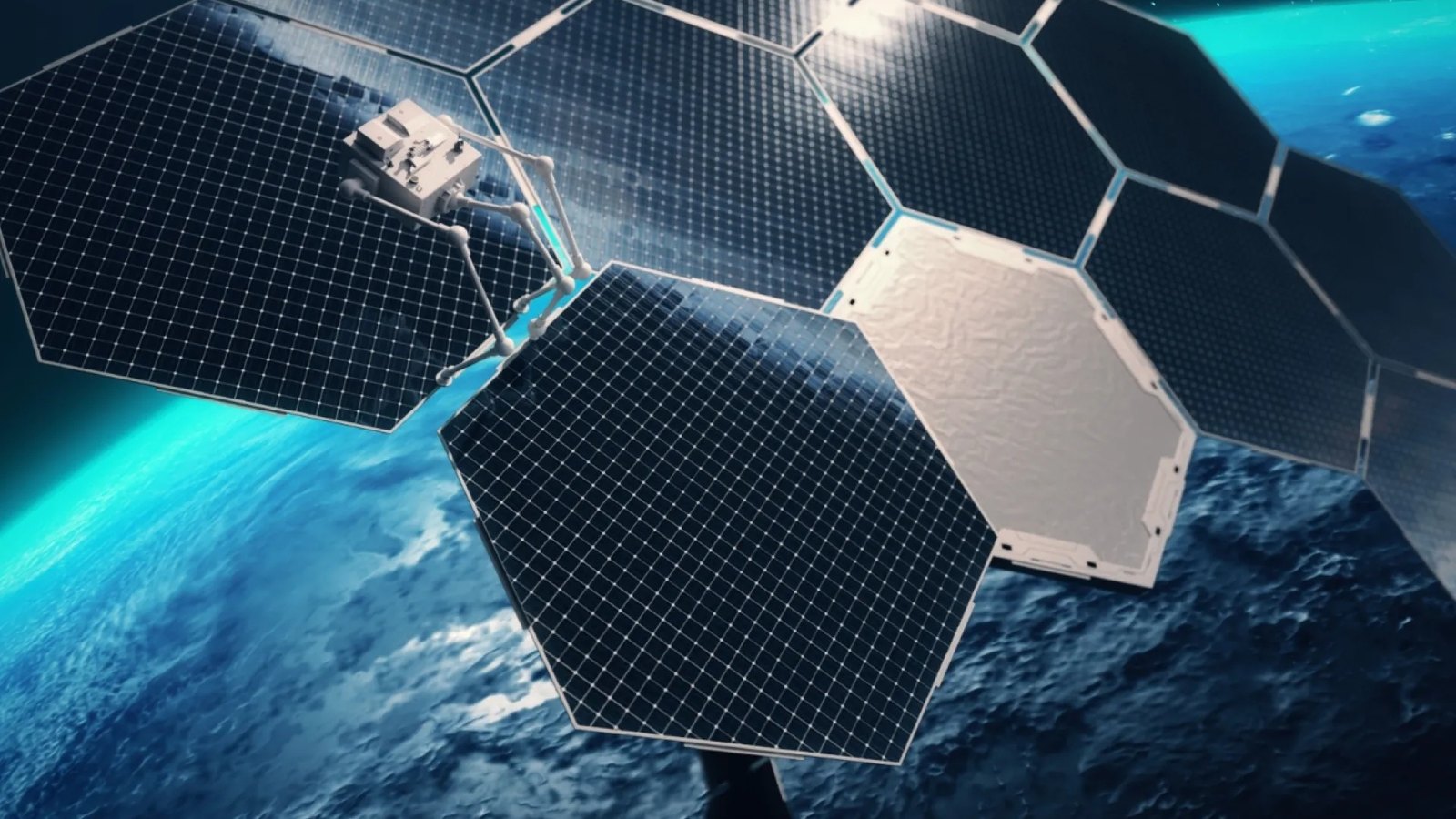
- Thales Alenia Space and the ASCEND study (Europe): In June 2024, Thales Alenia Space published results of ASCEND (Advanced Space Cloud for European Net zero emission and Data sovereignty), a European Commission-funded feasibility study. The study said space data centers could help Europe's climate and data-sovereignty goals, but that they would need a launcher about ten times less emissive over its life cycle, and that modular infrastructure would be assembled in orbit by robots. The project described a target of deploying one gigawatt before 2050. ASCEND is a study, not a flown system. The hero image on this page is a Thales Alenia Space concept render from that work.
Why put data centers in space?
The case, as the companies and agencies themselves make it, has three main parts.
Power. Solar arrays in a sun-synchronous orbit can generate electricity for most or all of each orbit, without clouds or night in the way a ground solar farm has them. Google says that can mean up to eight times more solar power than on Earth. SpaceX and Starcloud make a similar argument. Bezos, speaking for Blue Origin, called continuous solar power the biggest advantage, while also warning that energy is still a modest share of today's terrestrial data-center costs.
Cooling and land use. Ground data centers use large amounts of electricity and, in many designs, water. In orbit there is no air or river to dump heat into, but there is also no need for cooling towers on land. Heat has to be radiated into space. Companies present this as a way to add computing without using more land, water, or grid connections on Earth. Whether that ends up cheaper or cleaner depends on launch, hardware life, and the energy used to get the satellites there.
Where the data is. For Earth-observation and some government uses, the data is already in space. Processing it on the satellite, then sending down only the result, can cut the volume of radio or laser traffic to the ground. ISRO's parliamentary reply made that point for disaster management and for reconfigurable communications satellites. Axiom and Starcloud make a similar pitch for low-latency insights from satellites.
AI demand sits behind a lot of the newer, larger proposals. Ground data centers are competing for power and land. That does not, by itself, make orbit cheaper. It is the reason so many well-funded organisations are now running the numbers.
What are the real challenges?
The same official materials that promote orbital compute are frank about the hard parts.
Heat rejection. In a vacuum, there is no airflow. Google describes this as a crucial research challenge and is testing heat pipes and radiators. ADA Space says it has flown a 10-kilowatt-class liquid-cooling loop and large deployable radiator wings; that is the company's claim. Getting rid of the heat from a rack of AI chips is a different problem from cooling a small Earth-observation computer.
Radiation. Energetic particles can flip bits in memory and damage chips. Google tested TPUs in a proton beam before flight and is now gathering in-orbit data. ISRO listed radiation-hardened GPUs and CPUs as a gap that still has to be closed for a full system.
Launch cost and mass. Bezos said launch cost has to fall by a factor of 10. SpaceX says Starship is essential for heavy AI satellites. The European ASCEND study said a much less emissive heavy launcher would be needed for space data centers to help, rather than hurt, climate goals. Until launch is cheap, frequent, and cleaner, the economics remain a claim, not a demonstrated result.
Latency and links. A low-Earth orbit is not far, but a single satellite is only in view of one ground station for a few minutes at a time. Google, SpaceX, Axiom and others all lean on optical inter-satellite links, and in SpaceX's case on the existing Starlink mesh, to move results around. Those links have to work at high bandwidth while the spacecraft are moving.
Debris, disposal and servicing. A constellation of computing satellites is still a constellation of objects in crowded low-Earth orbits. The FCC's Starmind grant came with debris and disposal conditions, and part of SpaceX's request was deferred. Hardware in orbit is hard to repair. Several companies talk about replacing modules rather than servicing them.
Scale. A single GPU or a few TPUs in orbit is a research milestone. It is not a substitute for a terrestrial AI cluster. Anyone comparing today's flights with a "data center in space" should keep that gap in view.
How do the major space data center projects compare?
Figures in this table are official or clearly labelled company or lab claims. Status is as of 26 November 2026.
| Organisation (country) | Project | Status | Officially stated facts | Source |
|---|---|---|---|---|
| Zhejiang Lab and ADA Space (China) | Three-Body Computing Constellation / Star Computing Plan | In orbit | 12 satellites launched 14 May 2025; 8 more on 14 October 2026, for 20 in total according to ADA Space. First group: 5 POPS and 30 TB, per the official launch report. ADA Space later claimed about 50 POPS after Group 02. Planned scale has been described as thousands of satellites. | Official launch report, 14 May 2025; ADA Space HKEX announcement |
| Starcloud (United States) | Starcloud-1, then Starcloud-2 | In orbit (Starcloud-1); Starcloud-2 planned | Starcloud-1 launched 2 November 2025 with an Nvidia H100, according to SpaceX and Starcloud. Starcloud says it ran Gemini and trained nano-GPT in December 2025. Starcloud-2 is targeted to be operational in sun-synchronous orbit by 2027. | SpaceX Bandwagon-4; Starcloud |
| Google, with Planet and Blue Origin (United States) | Project Suncatcher | In orbit (first prototype); more planned | Prototype launched 1 October 2026; first AI response reported 30 October 2026. Twin laser-linked satellites planned in 2027. Rack-scale satellites on New Glenn targeted for the first quarter of 2029. | Google blog posts |
| SpaceX (United States) | Orbital Data Center System (Starmind) | Announced; FCC partial authorization | Up to 1 million satellites authorized in part on 25 November 2026, for backup and emergency command only. AI1 published specs: 30 m height, 75 m wingspan, up to 250 kW peak compute. No satellite has launched. First FCC deployment deadline: 25 November 2033. | FCC; SpaceX |
| Blue Origin (United States) | Sunrise | Planned | Bezos described Sunrise as Blue Origin's data-centers-in-space constellation on 20 May 2026. No official first-launch date found, and no satellite is known to be in orbit. | Bezos interview, 20 May 2026 |
| Axiom Space (United States) | Orbital Data Centers | In orbit (early nodes) | AxDCU-1 on the ISS in fall 2025; two dedicated nodes launched 11 January 2026 with Kepler. Company cites 2.5 Gbps optical links and a post-2030 scale-up. | Axiom Space |
| Lonestar Data Holdings (United States) | Lunar storage tests; StarVault | Tests flown; StarVault not yet launched | Freedom payload tested in cislunar space after a 26 February 2025 launch. StarVault's first Sidus-hosted payload is now aligned with a launch no earlier than April 2027. | Lonestar; Sidus Space |
| ISRO (India) | Edge-computing proof of concept | Planned (preliminary study) | A December 2025 parliamentary reply said a proof of concept is feasible and being conceived. No hardware programme or date was announced. | Press Information Bureau |
| TakeMe2Space, NeevCloud, Agnikul Cosmos (India) | MOI satellites; announced orbital AI hosting | Early tests and announcements | MOI-1 was lost on the failed PSLV-C62 launch of 12 January 2026. Other missions are company-reported. The NeevCloud-Agnikul pilot has been announced, not confirmed as launched. | ISRO; company statements |
| Thales Alenia Space and partners (Europe) | ASCEND | Study | 2024 feasibility study. Target of 1 GW before 2050, if a much less emissive heavy launcher is developed. No flight hardware under this name. | Thales Alenia Space |
What happens next?
The near-term watch list is concrete, and much of it is already dated:
- Google's twin Suncatcher satellites in 2027, and the 2029 New Glenn rack-scale launch
- Starcloud-2, which the company says should be operational in 2027
- Whether SpaceX names a first Starmind launch, or begins the Bastrop production it has described for late 2027
- Further Chinese computing-satellite groups, and whether independent operators can confirm the performance ADA Space has claimed
- Sidus and Lonestar's StarVault payload, now no earlier than April 2027
- Any official ISRO follow-up to the 2025 study, and whether an Indian private mission actually reaches orbit and stays there
A useful test for every new announcement is the same: has the hardware launched, what did the official operator say it did on orbit, and how far is that from a ground data center? Until those answers are measured, "space data centers" remain an early, competitive research field, not a finished industry.