
Starmind is SpaceX's name for a planned constellation of satellites that would work as data centers in orbit, running artificial intelligence (AI) computing and sending the results back to Earth through Starlink. On 25 November 2026, the FCC granted SpaceX partial authority for up to 1 million of those satellites. The decision is a radio license for backup and emergency command, not a schedule to put a million machines in orbit next year.
The official name on the grant is the SpaceX Orbital Data Center System (Starmind). That is the same name SpaceX uses on its Starmind page and in its own posts.
What is a Starmind satellite, and what would it do?
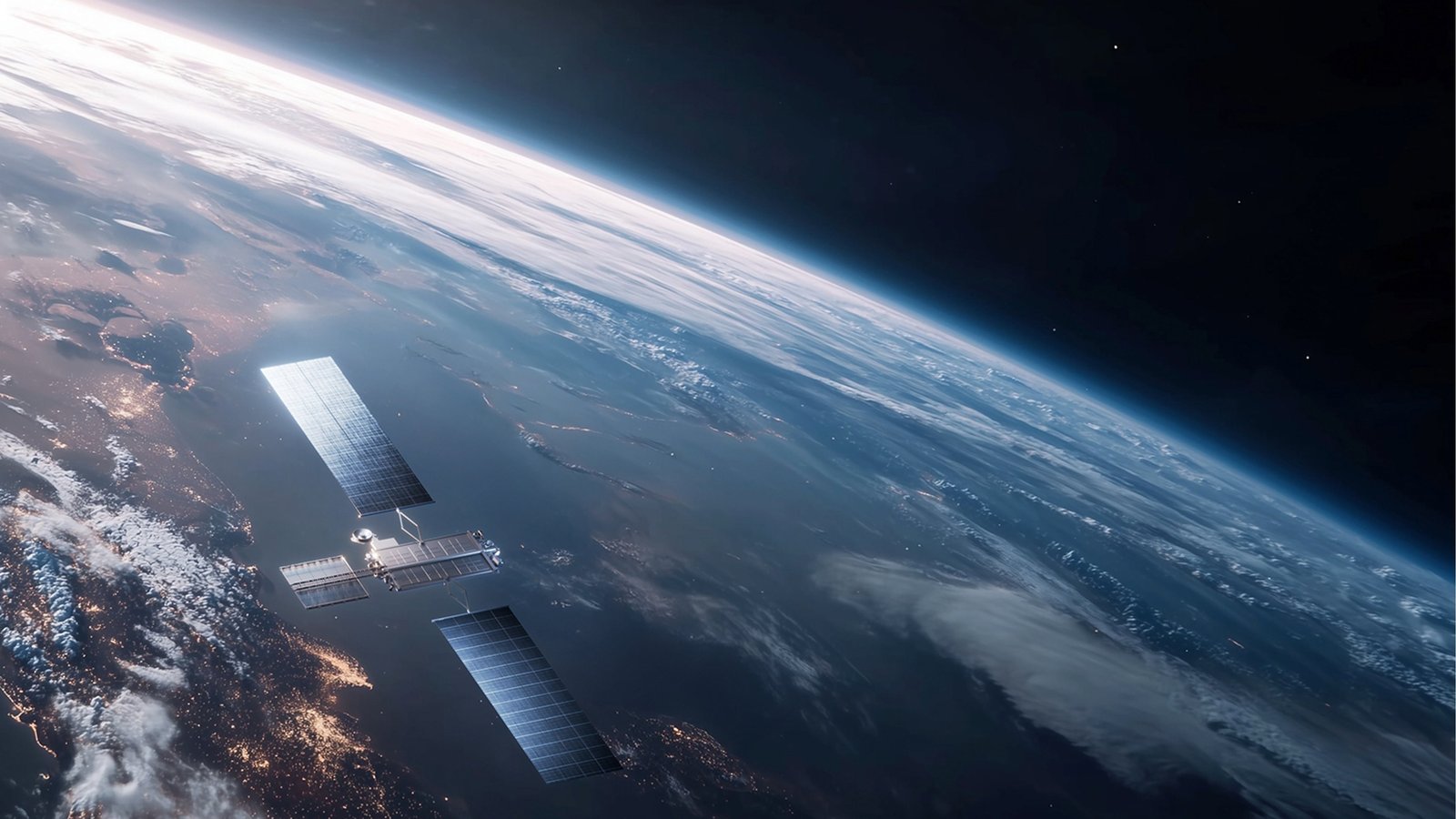
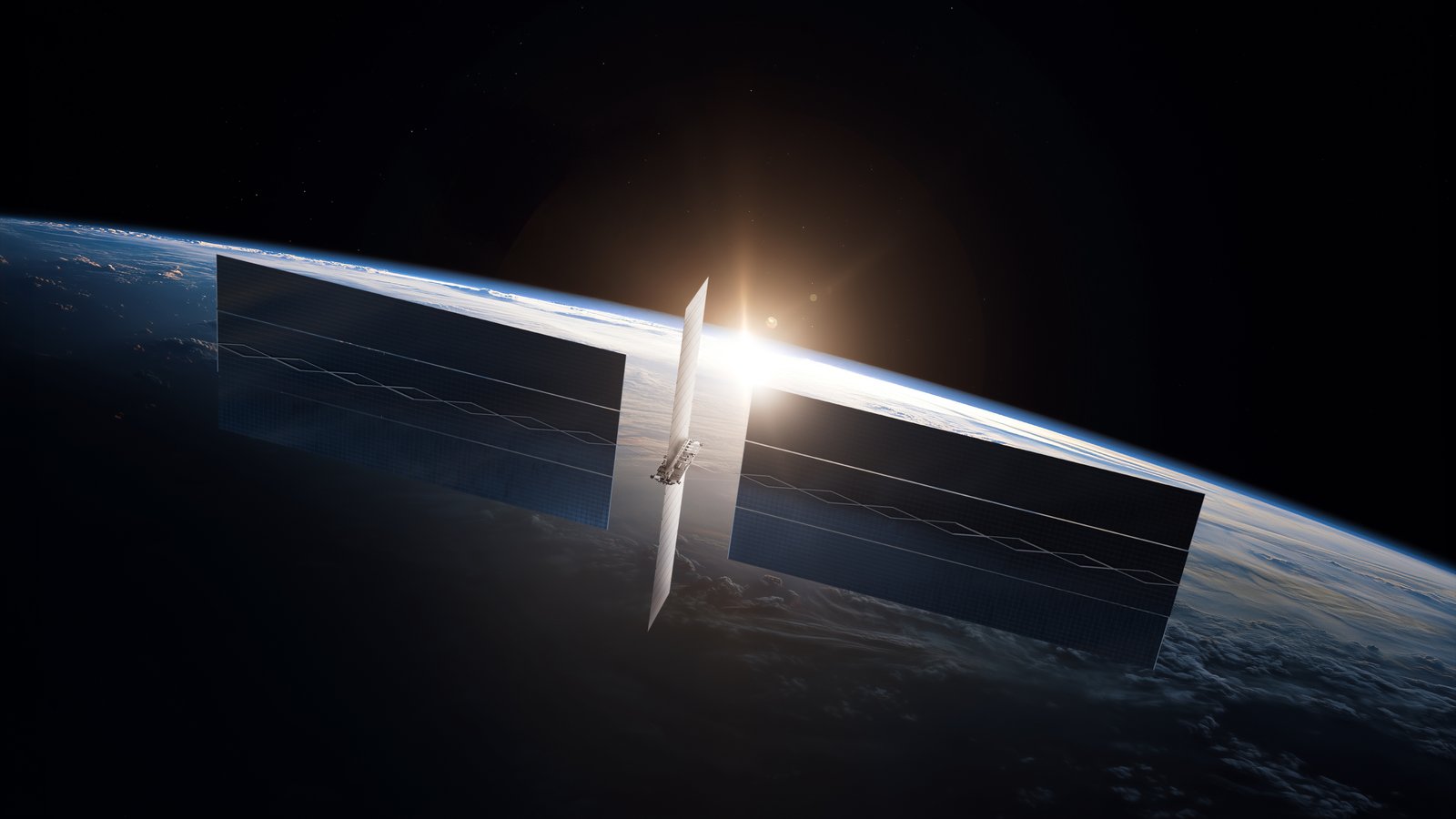
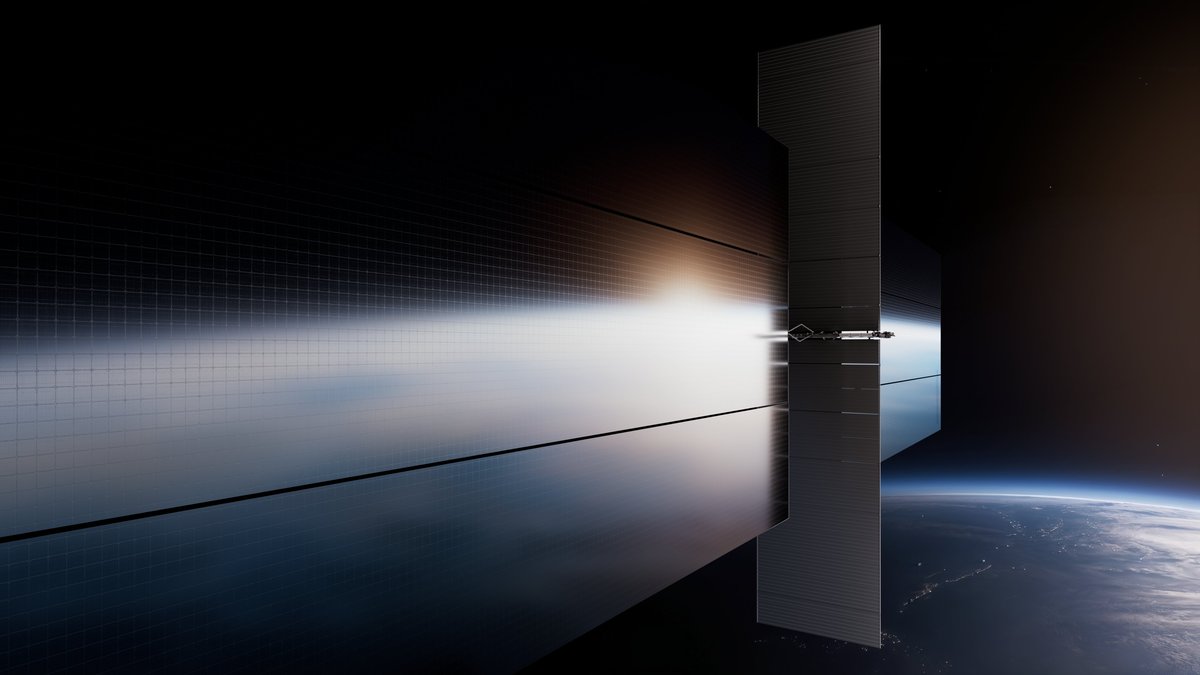
SpaceX describes each satellite as an orbital computer with its own solar power and cooling. The first design is called AI1. In SpaceX's account, the satellite would do the computing in orbit, then send the results down through high-speed laser links to the Starlink constellation, which would carry the traffic to the ground.
The company's published AI1 figures are:
- Deployed height: 30 metres (98 feet)
- Wingspan: 75 metres (246 feet)
- Compute payload: up to 250 kW at peak, 175 kW on average
- Vehicle efficiency: 75 kW per ton
Those sizes are much larger than today's Starlink satellites. SpaceX says the satellites use proven technology and are "more streamlined" than the Starlink satellites it already builds in large numbers. It also says heat would radiate into the vacuum of space, which it claims would cut cooling-power overhead by an order of magnitude compared with a data center on the ground.
On 4 August 2026, SpaceX said it is partnering with NVIDIA to design the AI1 compute payload, and that each Starmind satellite will include NVIDIA Rubin graphics processing units (GPUs) and Vera central processing units (CPUs). The same Starmind page says the architecture is "AI chip vendor agnostic" and can take compute modules from any provider. SpaceX also says it plans to make advanced AI chips in a new fabrication plant, described as a joint project with Tesla.
This article does not treat any of that as a reason to buy or sell a share. It is a description of what SpaceX and the FCC have put on the record.
What did the FCC approve?
The Space Bureau, acting on 25 November 2026 in order DA 26-1273, granted the application in part and deferred it in part, with conditions. The licensee is Space Exploration Holdings, LLC. The file number is SAT-LOA-20260108-00016, call sign S00798. SpaceX filed the application on 30 January 2026. The Bureau accepted it for filing on 4 February 2026.
The scope of the grant is narrow, and it is worth reading carefully. The FCC authorized radiofrequency communications for backup and emergency telemetry, tracking and command (TT&C), the basic radio link used to watch and control a spacecraft, for a constellation of 1 million non-geostationary satellites "to operate as data centers in space." The approved bands are 18.8 to 19.3 GHz from space to Earth, and 28.6 to 29.1 GHz from Earth to space. Those links must run on an unprotected, non-interference basis, and only if the optical links fail.
The order says Starmind will rely on optical links for communications. SpaceX told the FCC that the optical links may connect Starmind satellites to one another and to SpaceX's first- and second-generation Starlink systems, and that Starlink's laser mesh would then carry traffic to authorized earth stations. If a Starmind satellite ever has to use the backup radio bands, SpaceX said it would talk only to licensed Starlink gateway stations, and it must have the required earth-station authority first.
The FCC's news release called this the first US authorization for a constellation of data centers in space, and used the phrase "1 million orbital compute modules." Chairman Brendan Carr's statement presented the decision as support for American leadership in what he called super intelligence. The legal grant is more limited than that headline: it is authority to deploy and operate the satellites with backup radio command, not approval of a consumer service, and not a finding that every shell is ready to fly.
The Bureau denied petitions to deny filed by Kuiper Systems LLC (Amazon Leo), Viasat Inc. and the American Astronomical Society. SpaceX has 30 days from release of the grant to decline it as conditioned. If it does not respond, the grant is formally accepted.
How many satellites, and in which orbits?
The authorization is for up to 1 million satellites in non-geostationary orbit. They would fly in orbital shells, each 50 km thick, at altitudes from 500 to 1,002 km, in 30-degree inclinations and sun-synchronous inclinations. A sun-synchronous orbit is a path that keeps a satellite in daylight for long stretches, which is why SpaceX talks about continuous solar power.
The grant lists these nominal operational shells, from a SpaceX letter filed on 29 May 2026:
- 550 to 568 km, 26 to 32 degrees inclination
- 565 to 585 km, 97.7 degrees inclination
- 686 to 718 km, 30 degrees inclination
- 707 to 744 km, 97.2 degrees inclination
- 946 to 978 km, 30 degrees inclination
- 967 to 1,002 km, 99.4 degrees inclination
When the Bureau first put the application on public notice, SpaceX had asked for altitudes from 500 to 2,000 km, and for a slightly wider downlink starting at 18.3 GHz. The November grant is the narrower 500 to 1,002 km range and the 18.8 to 19.3 GHz downlink. "Up to 1 million" is the authorized maximum. It is not a promise that SpaceX will launch that many.
What conditions come with the approval?
The important conditions include:
- Backup radio use only, on an unprotected, non-interference basis. If someone documents harmful interference, SpaceX must stop the offending transmissions until the problem is fixed and must tell the FCC in writing.
- Coordination with US federal systems, including agencies involved in national security or safety of life, before using the 18.8 to 19.3 GHz band.
- A deferred decision on disposal for some higher satellites. Commission rules say satellites that end their missions below 2,000 km should re-enter the atmosphere, no later than five years after the mission ends. SpaceX asked for flexibility to put satellites operating above 600 km into Earth disposal orbits or heliocentric orbits (paths that leave Earth orbit around the Sun). The Bureau said SpaceX had not provided enough information, so the waiver is deferred. Before flying any Starmind satellite that will not be disposed of by atmospheric re-entry, SpaceX must file a modification and justify the waiver. Four of the six listed shells sit above 600 km.
- For satellites that will operate below 600 km, the Bureau found SpaceX's orbital debris plan complies with current rules. SpaceX has said it will test satellites at lower altitudes before raising them, keep the ability to dodge other objects, and steer re-entries over the ocean, with each satellite designed to burn up on the way down.
- Operations must stay consistent with SpaceX's International Telecommunication Union (ITU) filings.
- A report every six months on conjunctions (close approaches), satellites taken out of service, re-entries, how many are in orbit, and how many used the backup radio bands.
- Deployment milestones. The authorization becomes void if SpaceX misses them: one satellite by 25 November 2033; 10% of the authorized total (100,000, if the maximum stays 1 million) by 25 November 2035; 50% (500,000) by 25 November 2038; and the rest of the authorized constellation by 25 November 2040.
- A 15-year license term, which starts when SpaceX certifies that the first Starmind satellite is in orbit and operating under the grant.
The Bureau also granted waivers of processing-round, surety-bond and older milestone rules, after SpaceX asked to be held to the newer milestone schedule instead of escaping milestones altogether.
Commenters raised collision risk, congestion from a million new objects, harm to optical and infrared astronomy, and environmental effects from launches and re-entries. The Bureau addressed debris under its radio-licensing rules, said SpaceX's commitment to coordinate with the National Science Foundation was enough on optical astronomy, and said many environmental and business-feasibility arguments sit outside the FCC's authority. Those debates are not settled by this grant. They are only partly inside the FCC's remit.
How does Starmind relate to Starlink, Starship and xAI?
The Starlink link is official. SpaceX and the FCC both describe optical inter-satellite links to first- and second-generation Starlink as the primary way Starmind would move data. Backup radio, if needed, would go through licensed Starlink gateways. Starmind is not a new Starlink internet product. It is a planned compute constellation that would use Starlink as its path to Earth. For a dated count of Starlink satellites already in orbit, see our Starlink V3 explainer.
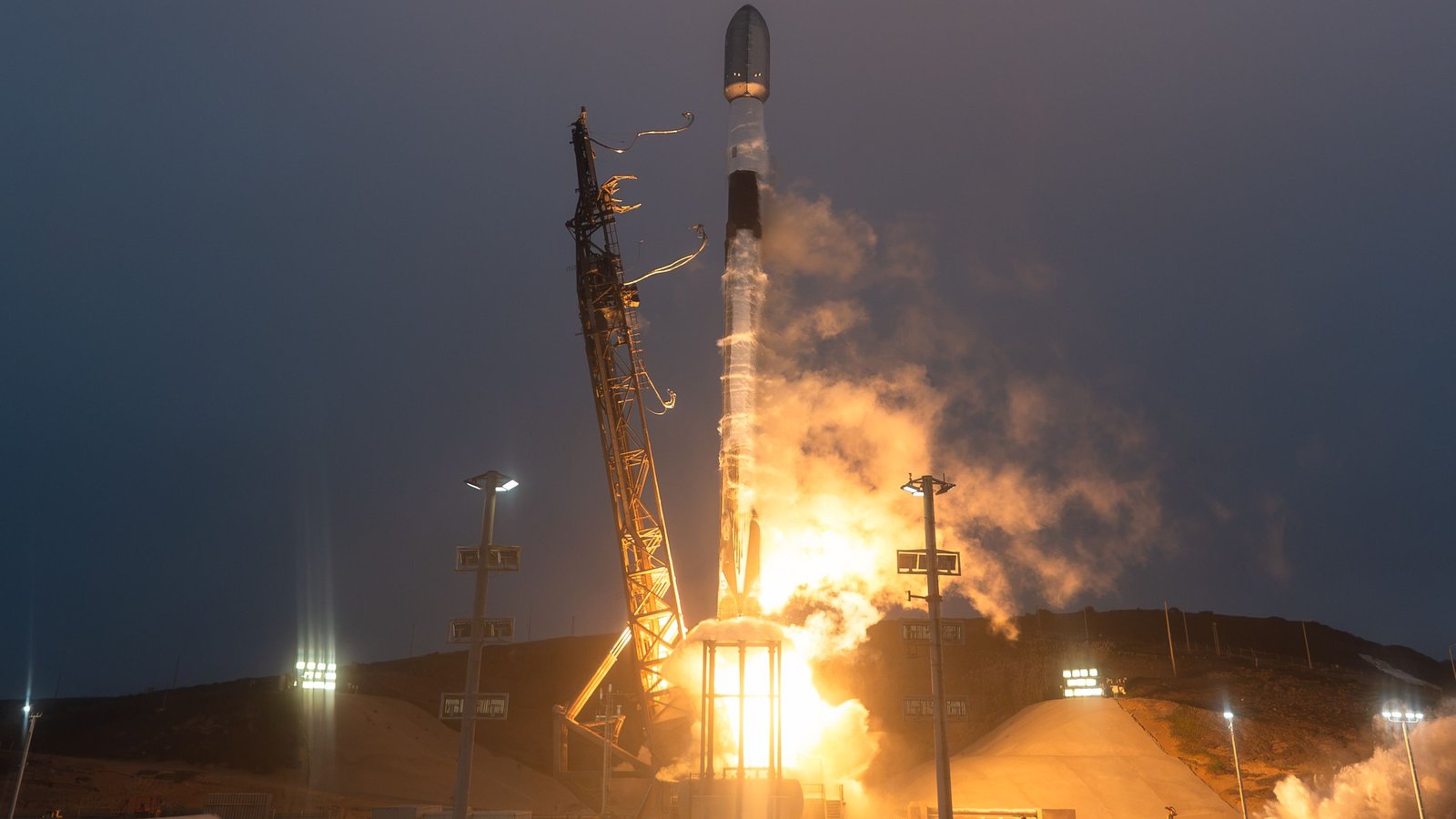
The Starship link is also official, but only at a high level. On the Starmind page, SpaceX says Starship's fully reusable design and payload capacity are critical for lifting large, heavy AI satellites. It has not published a Starmind launch date, a flight number, or a pad. Our guide to SpaceX rockets and spacecraft covers Starship, Falcon and Dragon; the Starship hub tracks the flights that have already flown.
The xAI link is not official. SpaceX's own page and FCC filings present Starmind as a SpaceX system. In a 20 May 2026 post, Elon said SpaceX is offering AI compute as a service at significant scale, pointing to an expanded partnership with Anthropic, and that orbital data centers are part of that longer-term plan. On 4 August 2026, he said the same Starmind V1 satellite design, minus the solar arrays and radiator, will be used on the ground in "our data centers." He has not, in the official SpaceX materials reviewed for this article, described Starmind as an xAI constellation. Until SpaceX or xAI says so clearly, that connection should be treated as unconfirmed.
When could Starmind start flying?
SpaceX has not announced a first launch date. What it has said is about factories and hardware, not a countdown:
- The Gigasat Factory in Bastrop, Texas, is "planned to enable rapid production and deployment of thousands of AI satellites starting as soon as late 2027."
- On 10 November 2026, SpaceX said it had signed a major supply contract with SINGULUS for advanced solar-cell manufacturing equipment, "to support more than 100 GW of equipment," as it accelerates Starmind production in Bastrop. Elon wrote the same day that SpaceX had ordered "100 GW/year" of heterojunction (HJT) solar manufacturing equipment from Singulus in Germany, and that this was "for Starmind to create a sentient sun." The "100 GW/year" figure and the "sentient sun" phrasing are Elon's words, not the wording in SpaceX's own post.
- On 6 November 2026, Elon said that when "the details of the Starmind computer" are unveiled "next year, it will blow people's minds." That is a promise of a future briefing, not a specification.
The FCC's 2033 to 2040 dates are license deadlines. A company can fly earlier, or miss the dates and lose the authorization. They should not be read as SpaceX's launch plan.
As of 26 November 2026, neither SpaceX nor Elon had posted about the FCC grant itself.
Why does this matter?
The decision is the first time a US regulator has authorized a constellation described as data centers in space, at a scale far larger than today's Starlink network. If SpaceX can actually build, launch and operate machines of AI1's size, it would be a new class of satellite: not a broadband relay, but a power station and computer in orbit, tied back to Earth through lasers.
That is still a plan. The FCC did not certify that the economics work, that a million satellites will fly, or that shells above 600 km have an approved disposal method. Power, heat, debris, astronomy and launch cadence will all be tested in public as hardware appears. Other companies are pursuing their own orbital compute ideas; this page stays on SpaceX. For who is already in orbit, who has announced plans, and what is still unproven, see our space data centers roundup.
What is still unconfirmed?
- A first launch date, launch site, or Starship flight assignment.
- Whether SpaceX will use the full authorized total of 1 million satellites.
- The disposal method for satellites in the four shells above 600 km, which still needs a modification application if they will not re-enter the atmosphere.
- Earth-station licenses for any backup radio use.
- An official statement that Starmind is an xAI project.
- Detailed "Starmind computer" specifications, which Elon has said will be unveiled next year.
- How the NVIDIA AI1 payload, the "vendor agnostic" architecture, and the planned Tesla joint chip plant fit together in the satellites that actually fly.
For more SpaceX context, see What is Starlink?, What is Starship?, the Starship hub, and our SpaceX rockets and spacecraft guide.