
Blue Origin has not posted a new official date for New Glenn's return to flight. In a letter on 30 June 2026, chief executive Dave Limp wrote: "We will return to flight by the end of this year." On 5 November, CNBC reported that Limp had told staff in a memo that the return had slipped to January 2027. Blue Origin has not announced a launch day.
Status as of 14 November 2026: no official return-to-flight date on Blue Origin's website. Reports point to January 2027. We will update this page when Blue Origin sets a date.
What has Blue Origin officially said?
Blue Origin's own words come from two places:
- The 30 June letter. Limp wrote that Blue Origin would return to flight "this year" and closed with "We will return to flight by the end of this year." The letter's return-to-flight page lists five phases: site secured, site recovery and cleanup, design and major repairs, systems integration, and flight readiness. When we read it on 14 November, it still showed the first two as complete and the third as in work.
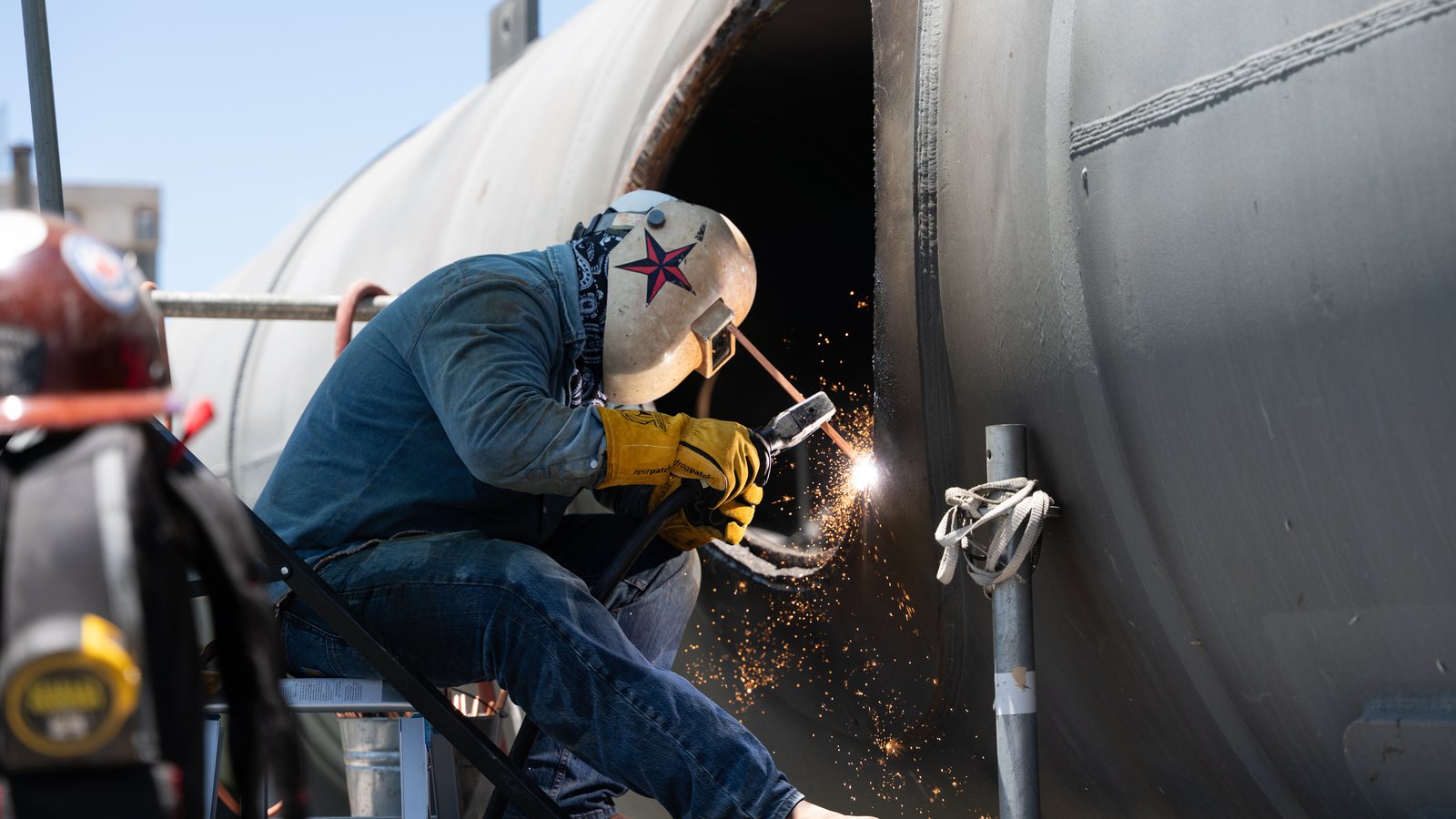
- Posts on X by Limp and Blue Origin. On 24 October, Limp posted that the Vehicle Access Tower at Launch Complex 36 (LC-36) was "fully assembled, with every module repaired and back in place." On 6 November he thanked the Secretary of the US Air Force for visiting LC-36 to see the rebuild, and the US Space Force for supporting "our return to flight".
Neither gives a new date.
What do the reports say?
These are reports from news outlets, not Blue Origin announcements:
- The 5 November report: Limp told employees in a memo that the launch timing slipped because of delays rebuilding the Cape Canaveral pad, including bad summer weather. The report says the memo moved the return to January 2027, and quotes Limp: "This small adjustment doesn't diminish what we've accomplished or the importance of the work still ahead." A person familiar with the matter said January is about 10 days later than the earlier target. The Financial Times reported the memo first.
- Mid-2028 was the first estimate. The same report says Limp told staff the first analysis after the explosion suggested New Glenn could not fly again until mid-2028. "And we just didn't accept that," he said.
- Earlier signals: on 28 October, SpaceNews reported that Blue Origin expected the rebuilt pad to be ready in the first half of December. On 23 October, NASA's Jeremy Parsons said Blue Origin was "shooting for pad operations to start back up in November", Aerospace America reported. Blue Origin founder Jeff Bezos told Fox News in October he expected a December flight, according to the 5 November report.
In my view, January 2027 is the best current guide, but it is not official until Blue Origin posts it. The first launch from a rebuilt pad, with a new way of raising the rocket, often finds small problems.
What happened to New Glenn?
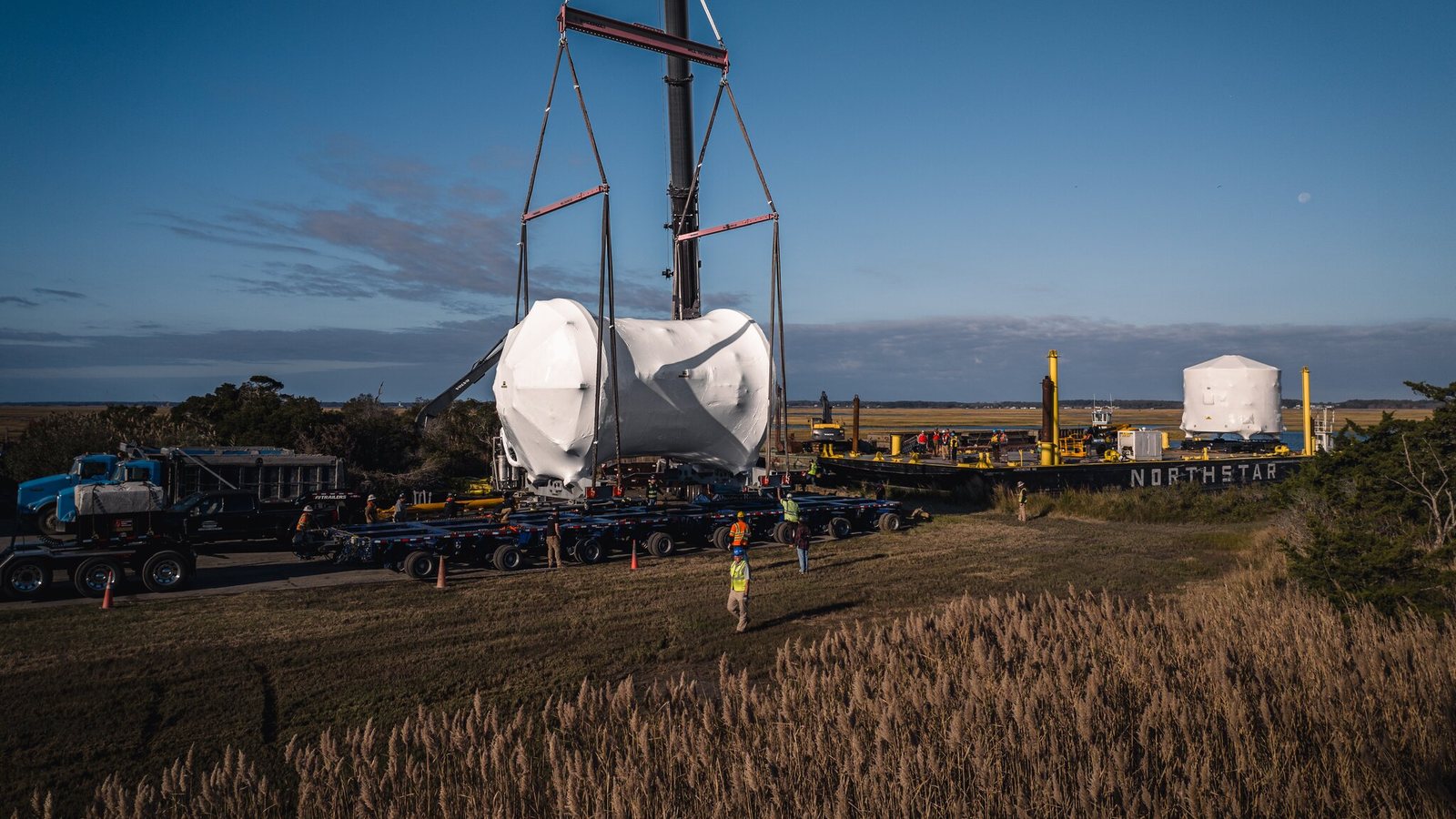
On 28 May 2026, a New Glenn exploded during a hotfire test, a test where the engines fire while the rocket is held down, at LC-36 at Cape Canaveral Space Force Station in Florida. In its June letter, Blue Origin said the blast destroyed the lightning tower, the transporter-erector that raised the rocket upright, and the hydraulic cylinders. The tank farm, the integration hangar, the vehicle access tower and the water tower survived.
In August, Limp said "the anomaly originated at the main oxygen valve on one of the BE-4 engines", according to Spaceflight Now. That is Blue Origin's account. It has not published a full root-cause report. Our full explainer is New Glenn explosion: what happened?
How is the pad being rebuilt?
Blue Origin is not rebuilding the old pad. It is switching to what it calls a horizontal and vertical hybrid method, which it had already planned for its larger New Glenn 9x4:
- The two stages are joined lying flat in the hangar and rolled out to the pad.
- A crane swings the rocket upright and lifts it onto a refurbished launch table.
- The payload is driven to the pad and lifted onto the top of the rocket.
- The crane moves away, and the rocket is ready to launch.
This replaces the transporter-erector that was lost. Blue Origin says it also gives "a common CONOPS across two pads". CONOPS means concept of operations, the way a launch is prepared and run. Limp also posted on 25 October about a 4,500 cubic yard concrete pour at a second pad, LC-36B, which he called "the foundation for our New Glenn 9x4 pad". That pad is not needed for the return to flight.
What is left before New Glenn can launch?
On Blue Origin's own five-phase list, two phases had not started when we checked:
- Systems integration: connecting and testing the rebuilt pad, the new crane method and the rocket together.
- Flight readiness: final checks before a launch is cleared.
Other steps that usually come before a launch include a static fire on the pad, which New Glenn was doing when it exploded, and licence approval from the US Federal Aviation Administration (FAA). Blue Origin has not said when either will happen.
Blue Origin has also not confirmed what the return-to-flight launch will carry. Launch databases list Blue Origin's own Blue Ring spacecraft for no earlier than January 2027, but that is not a Blue Origin announcement. On 6 November, Blue Origin said Blue Ring had finished acoustic testing, being blasted with sound to mimic a launch.
What new hardware did Blue Origin show in November?
On 5 November, at an event at Kennedy Space Center, Limp announced two additions. Both are company claims about future hardware:
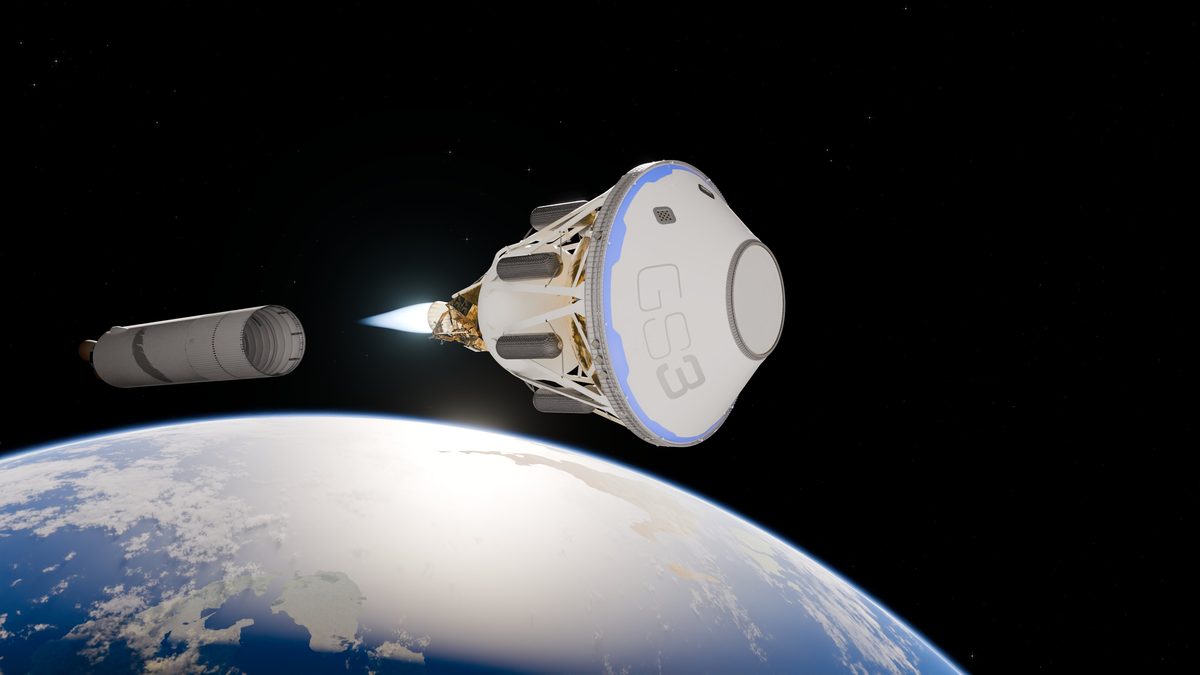
- GS3, a third stage. Blue Origin says it will carry up to 8 tonnes to geostationary orbit and 10 tonnes towards the Moon on today's New Glenn 7x2, and up to 14 and 20 tonnes on the bigger 9x4. Blue Origin says a government cislunar mission, meaning one to the space around the Moon, will use it in 2028.
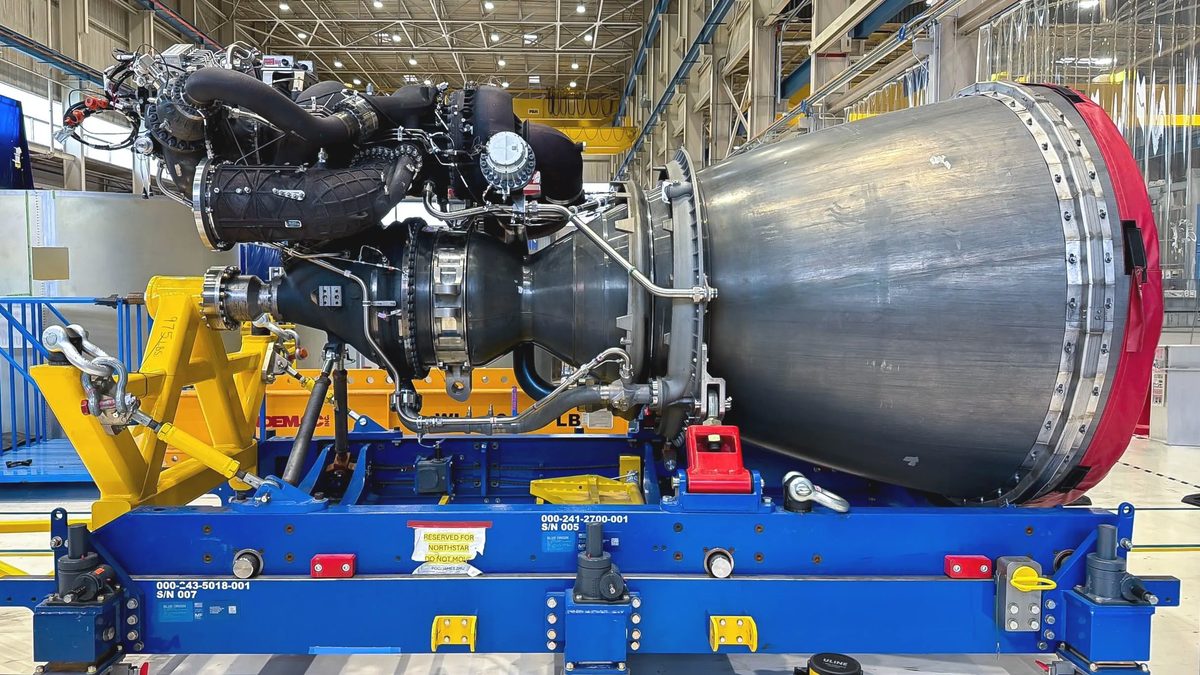
- Northstar, a new booster engine. Blue Origin says it produces 715,000 pounds of thrust, against 640,000 for the BE-4, with 30% less mass and half the parts. It runs on liquid oxygen and liquefied natural gas, like the BE-4.
Neither is needed for the return to flight. A person familiar with Northstar told reporters that the BE-4 will still fly on the return-to-flight mission, according to a 5 November report listed in our sources.
What has New Glenn flown so far?
New Glenn has flown three times, all from LC-36. Times are local Florida time.
| Flight | Date and time | Result |
|---|---|---|
| NG-1 | 16 Jan 2025, 2:03 a.m. EST | Reached orbit on the first try. The booster was lost on the way down. |
| NG-2 | 13 Nov 2025, 3:55 p.m. EST | Launched NASA's ESCAPADE Mars probes. The booster landed on the ship Jacklyn. |
| NG-3 | 19 Apr 2026, 7:25 a.m. EDT | The same booster flew again and landed. The upper stage left its satellite in too low an orbit. |
EST is Eastern Standard Time and EDT is Eastern Daylight Time. Details and sources for each flight are in our New Glenn explosion explainer.
Why does the date matter?
- NASA's Artemis III. Under NASA's current plan, New Glenn launches a Blue Moon lander test article before the crew. NASA's 4 November update still targets Artemis III in 2027. A later New Glenn return is a schedule risk, not a confirmed delay. See Artemis III's date and crew.
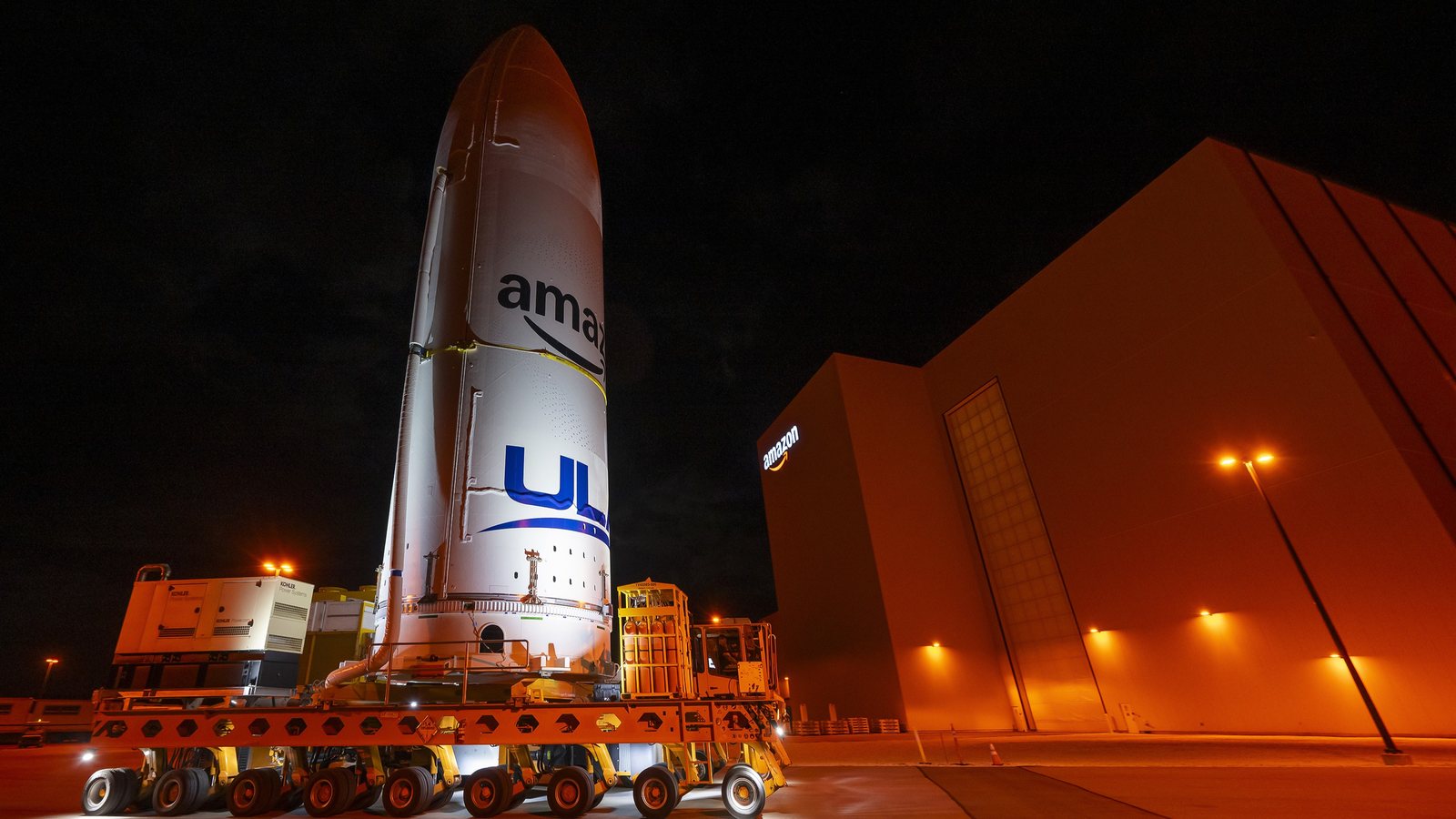
- Amazon Leo. New Glenn was due to launch 48 Amazon Leo satellites days after the explosion. Amazon has turned to other launch providers in the meantime, according to the 5 November report. Read what is Amazon Leo?
- Competition. New Glenn is one of the few heavy reusable rockets. For how it compares, read who else is landing rockets and what is Starship?
When Blue Origin sets a date, it will appear on our launch schedule in local Florida time.