
Gaganyaan is India's programme to launch its own astronauts on its own rocket. It is run by the Indian Space Research Organisation (ISRO), and the name roughly means "sky vehicle" in Sanskrit. The crewed mission plan is three people, an orbit of about 400 km, up to three days in space and a splashdown in Indian waters, according to ISRO's programme page. If it works, India will become the fourth country to fly people to orbit on its own rocket, after the Soviet Union, the United States and China.
As of 11 November 2026: the first uncrewed test flight, G1, has no announced launch date. ISRO chairman V. Narayanan said on 24 October that it would fly "in two months", UNI reported. The first crewed flight is targeted for 2027.
For the latest on that first flight, read our Gaganyaan G1 launch date explainer.
What is the Gaganyaan plan?
The programme flies uncrewed missions first, then people. The government's plan, set out in replies to Parliament in July and August 2026, is:
- G1: the first uncrewed orbital flight, carrying Vyommitra, a half-humanoid robot built by ISRO.
- Two more uncrewed flights: to repeat and fine-tune the mission.
- The first crewed flight: targeted for 2027.
Gaganyaan is also the first step towards an Indian space station. The government says the Bharatiya Antariksh Station ("Indian Space Station") will have five modules and be operational by 2035.
What does the Gaganyaan spacecraft look like?
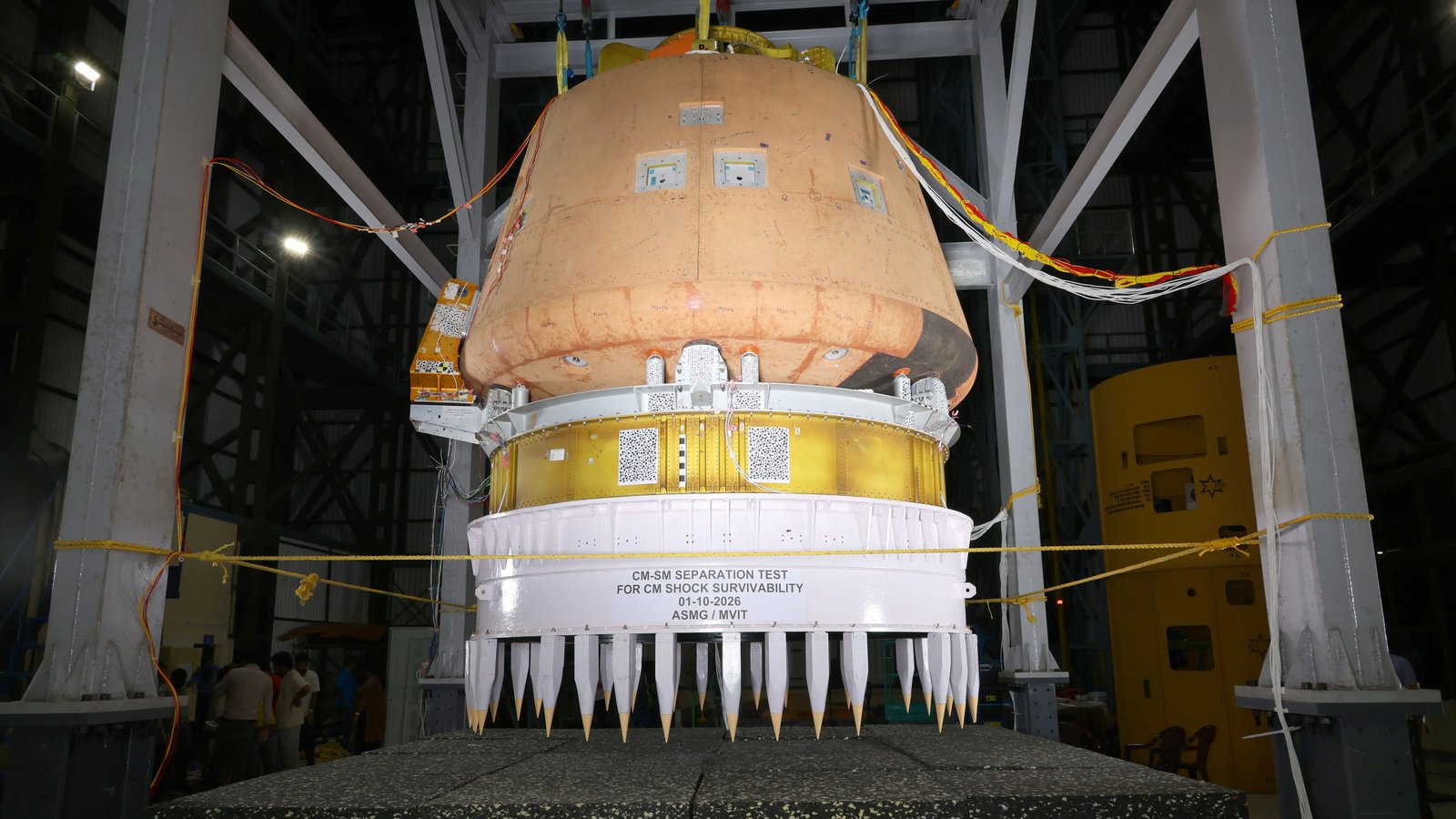
The spacecraft has two main parts:
- Crew module: the capsule the astronauts ride in. It has a pressurised cabin inside a heat-protected outer shell, and it is the only part that comes home.
- Service module: an unpressurised section under the capsule with engines, power and fuel. It is dropped before re-entry.
In October 2026, ISRO tested how the two modules separate at the Vikram Sarabhai Space Centre (VSSC) in Thiruvananthapuram. ISRO said G1 is "targeted for launch in 2026" when it reported those tests on 16 October.
Which rocket will launch Gaganyaan?
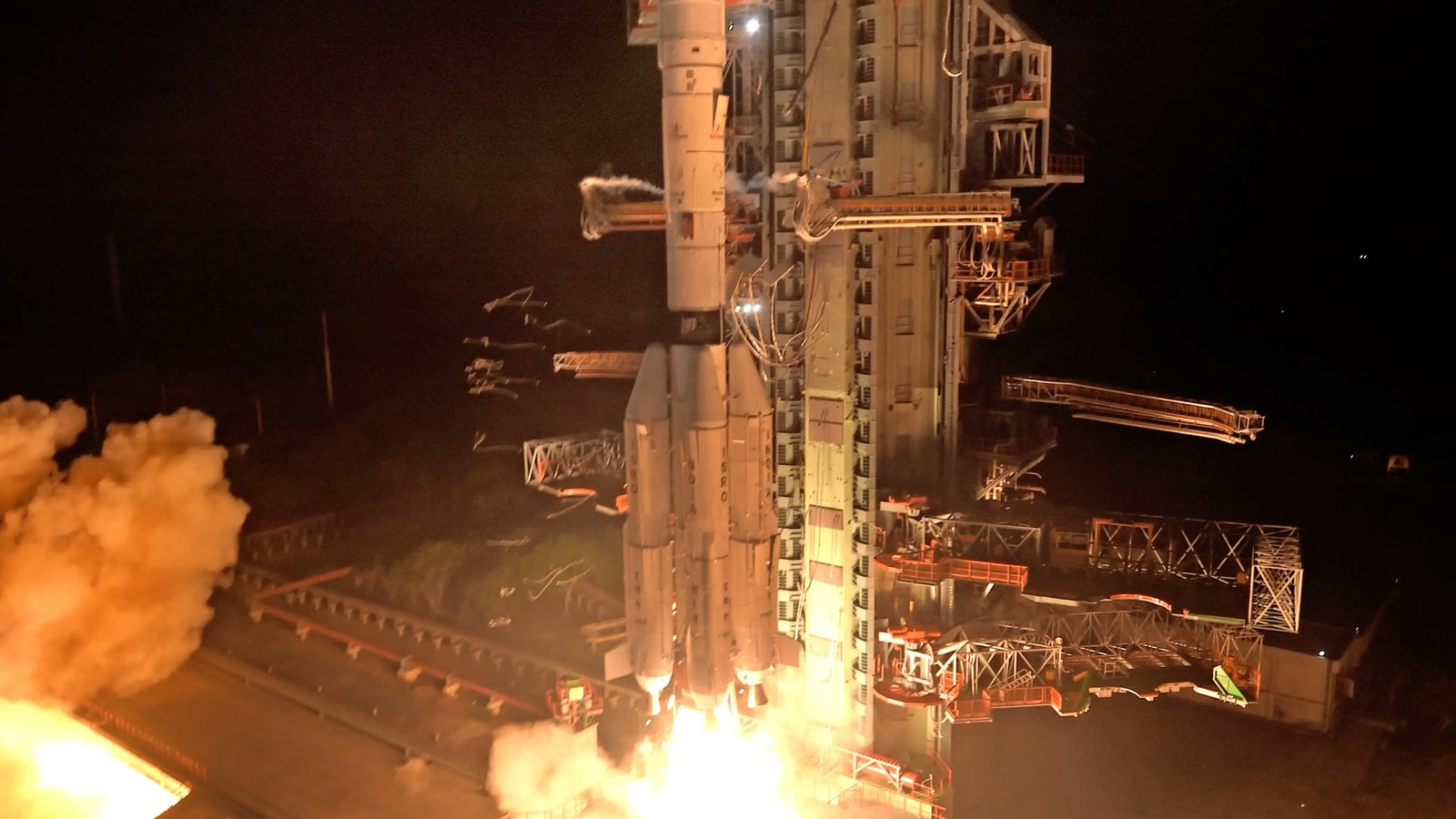
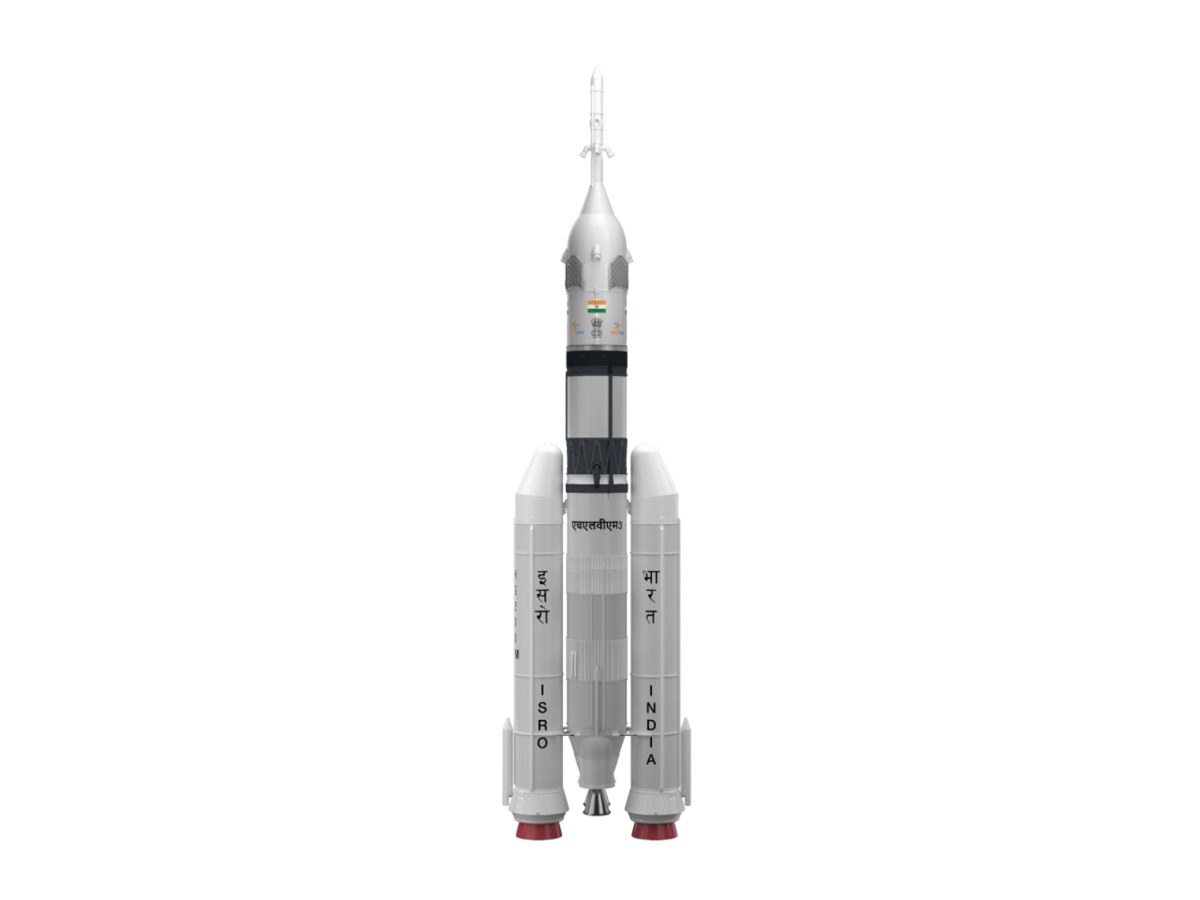
Gaganyaan flies on HLVM3, the human-rated version of the Launch Vehicle Mark 3 (LVM3), India's heaviest rocket. "Human-rated" means it has been redesigned and tested to the safety standard needed to carry people.
ISRO says HLVM3:
- Height: 53 metres.
- Mass: 640 tonnes at liftoff.
- Payload: about 10 tonnes to low Earth orbit (LEO).
- Stages: three, the S200 solid boosters, the L110 liquid core stage and the C32 cryogenic upper stage.
- Safety: a crew escape system that can pull the crew module away from the rocket if something goes wrong, from the pad until the rocket leaves the thick lower atmosphere.
Stacking of the first HLVM3 began at Sriharikota on 18 December 2024. To compare LVM3 with India's other rockets, see PSLV vs GSLV vs LVM3.
What tests has Gaganyaan passed?
Replies to the Lok Sabha (the lower house of India's Parliament) on 29 July and 5 August 2026 list the tests done so far:
- TV-D1: the first Test Vehicle flight, in October 2023. It tested the crew escape system and recovered a test capsule from the sea.
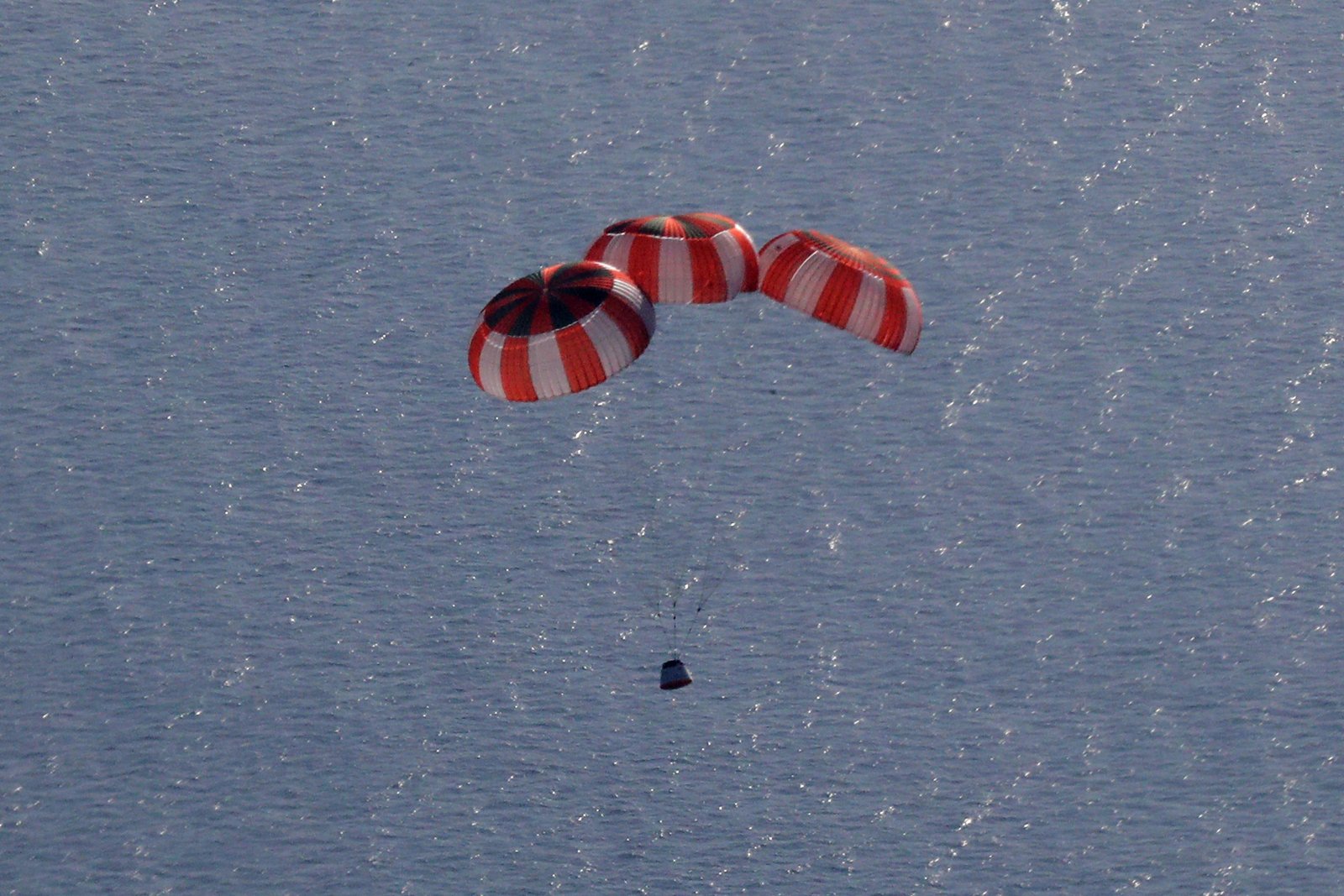
- IADT-01: the first Integrated Air Drop Test, on 24 August 2025. An Indian Air Force Chinook helicopter dropped a simulated crew module of about 4.8 tonnes from 3 km, and its parachutes opened in order, ISRO said.
- IADT-02: the second air drop test, also completed.
- HLVM3 stages: ground-tested and ready.
- Crew module and service module separation: tested at VSSC in October 2026.
The capsule uses ten parachutes in sequence, and the last three main parachutes slow it to about 8 metres per second for splashdown. Two of the three are enough for a safe landing, ISRO says.
Who are the Gaganyaan astronauts?
India's four astronaut-designates, called Gaganyatris ("sky travellers"), were announced by Prime Minister Narendra Modi on 27 February 2024, PIB said. PIB is the Press Information Bureau, the government's press office. All four are Indian Air Force test pilots:
- Group Captain Prashanth Balakrishnan Nair
- Group Captain Ajit Krishnan
- Group Captain Angad Pratap
- Wing Commander Shubhanshu Shukla (his rank when named)
Shukla has already been to space. He flew on the private Axiom-4 mission to the International Space Station in 2025 and splashed down on 15 July 2025, ISRO said. ISRO has not said which of the four will fly on the first crewed Gaganyaan mission.
Who is helping India with Gaganyaan?
A government reply in August 2026 named four foreign partners:
- European Space Agency (ESA): ground station support.
- Australian Space Agency: recovery support.
- CNES (Centre national d'études spatiales), France's space agency: flight surgeon training.
- Roscosmos, Russia's space agency: astronaut training.
Why does Gaganyaan matter?
Only three countries have launched people on their own rockets. Gaganyaan would add India to that list and open the way to the Bharatiya Antariksh Station. In my view, the date of G1 matters less than a clean result: if the capsule comes home safely, ISRO still has two more uncrewed flights to fix anything before people fly.
Follow every Indian launch on our ISRO page and the next ISRO launch tracker.