
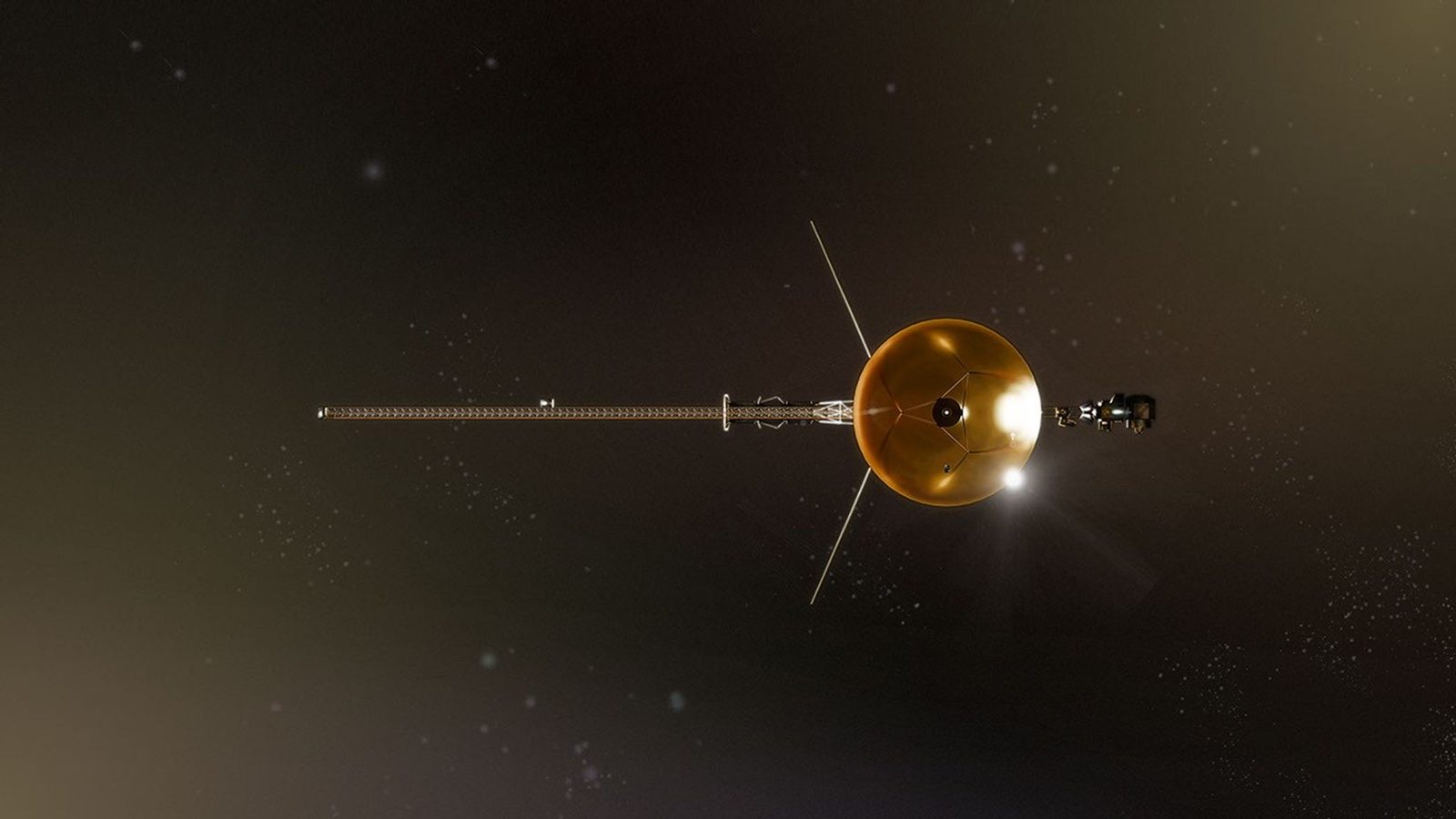
NASA's Voyager 1 will be one light-day from Earth at 5:16:07 a.m. Eastern Standard Time (EST) on Wednesday 18 November 2026, which is 10:16:07 UTC. A light-day is the distance light travels in 24 hours, about 25.9 billion km (16.1 billion miles). Voyager 1 will be the first human-made object ever to reach it, nearly 50 years after it launched.
At that distance, a radio command from Earth takes a full day to reach the spacecraft, and its answer takes another day to come back.
Voyager 1 at one light-day: the key facts
- When: 5:16:07 a.m. EST (2:16:07 a.m. PST), Wednesday 18 November 2026. That is 10:16:07 UTC.
- Distance: 25,902,068,356 km (16,094,799,096 miles) from Earth, NASA says.
- Signal time: 24 hours one way, 48 hours for a command and its reply.
- Speed: about 61,000 km/h (38,000 mph).
- Time taken: 49 years, two months and 11 days since launch on 5 September 1977.
- Where it is: in interstellar space, outside the Sun's bubble of particles and magnetic fields, the heliosphere. It crossed out of it in August 2012.
- Next to reach it: Voyager 2, in November 2035.
What is a light-day?
A light-day is a distance, not a time. Light moves at about 300,000 km (186,000 miles) every second. In 24 hours it covers 25,902,068,356 km, NASA explains. Radio waves travel at the speed of light too, which is why the light-day also tells you how long a message to Voyager 1 takes.
Measuring in light makes huge distances easier to picture. Here is how a light-day compares, using NASA's figures:
| From Earth to | Light travel time |
|---|---|
| The Moon | About 1.3 seconds |
| The Sun | About 8 minutes 20 seconds |
| Mars | 3 to 22 minutes, depending on where the planets are |
| Neptune (average) | About 4 hours 10 minutes |
| Voyager 1 on 18 November 2026 | 24 hours |
| Proxima Centauri, the nearest star after the Sun | About 4.24 years |
A light-year, the unit astronomers use between stars, is about 9.46 trillion km (5.88 trillion miles). So after almost half a century, Voyager 1 has covered roughly 1/365th of one light-year.
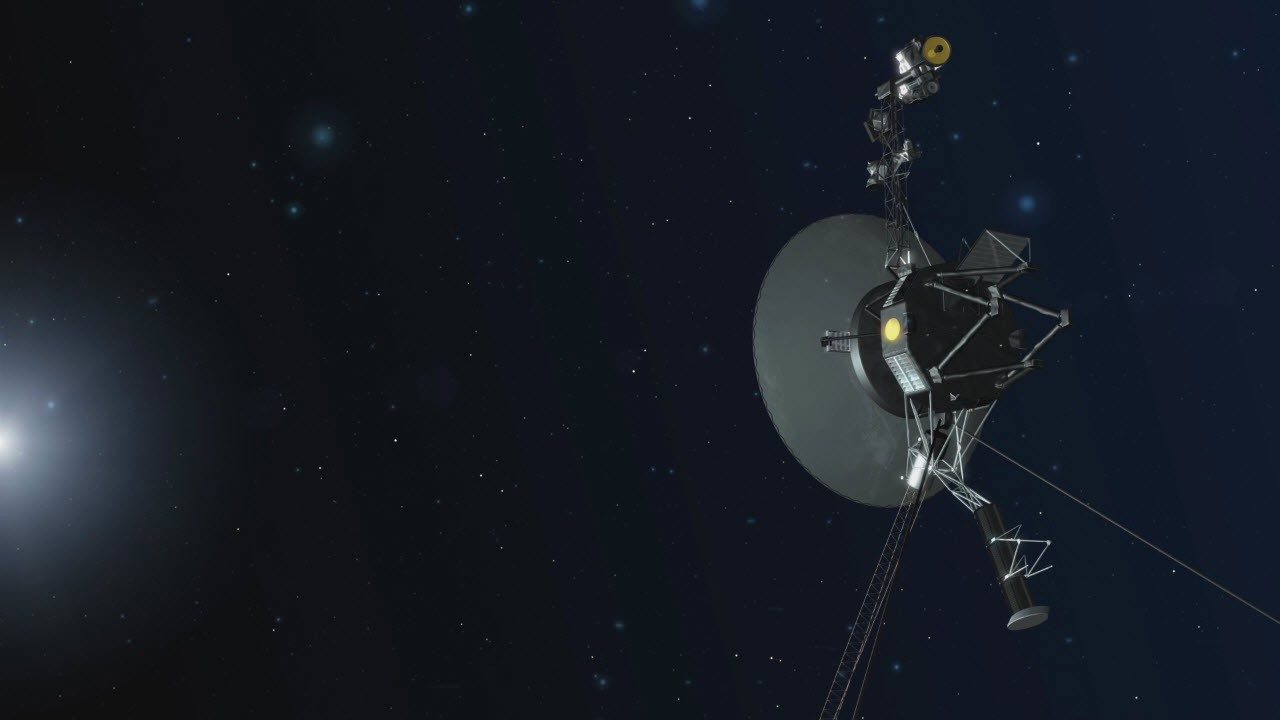
How long do signals take to reach Voyager 1?
On 18 November, 24 hours each way. So when engineers at NASA's Jet Propulsion Laboratory (JPL) send a command, they wait two days to learn whether it worked.
NASA talks to Voyager through its Deep Space Network, large radio dishes in California, Spain and Australia. That delay makes every fix slow and careful. When Voyager 1 went quiet on 18 and 19 October 2026, the team had not yet sent any commands when its signal came back on 20 October, JPL says. Engineers found that one group of thrusters had gone offline and backups had switched on by themselves, a safety response called fault protection. The root cause was still under investigation in NASA's 29 October update.
How did Voyager 1 get so far away?
Voyager 1 launched on 5 September 1977, about two weeks after its twin, Voyager 2. It flew past Jupiter in March 1979 and Saturn in November 1980, then turned away from the planets and headed out of the solar system. On 17 February 1998 it overtook NASA's Pioneer 10 to become the most distant human-made object, NASA says. NASA says it entered interstellar space in August 2012. Voyager 2 followed in 2018.
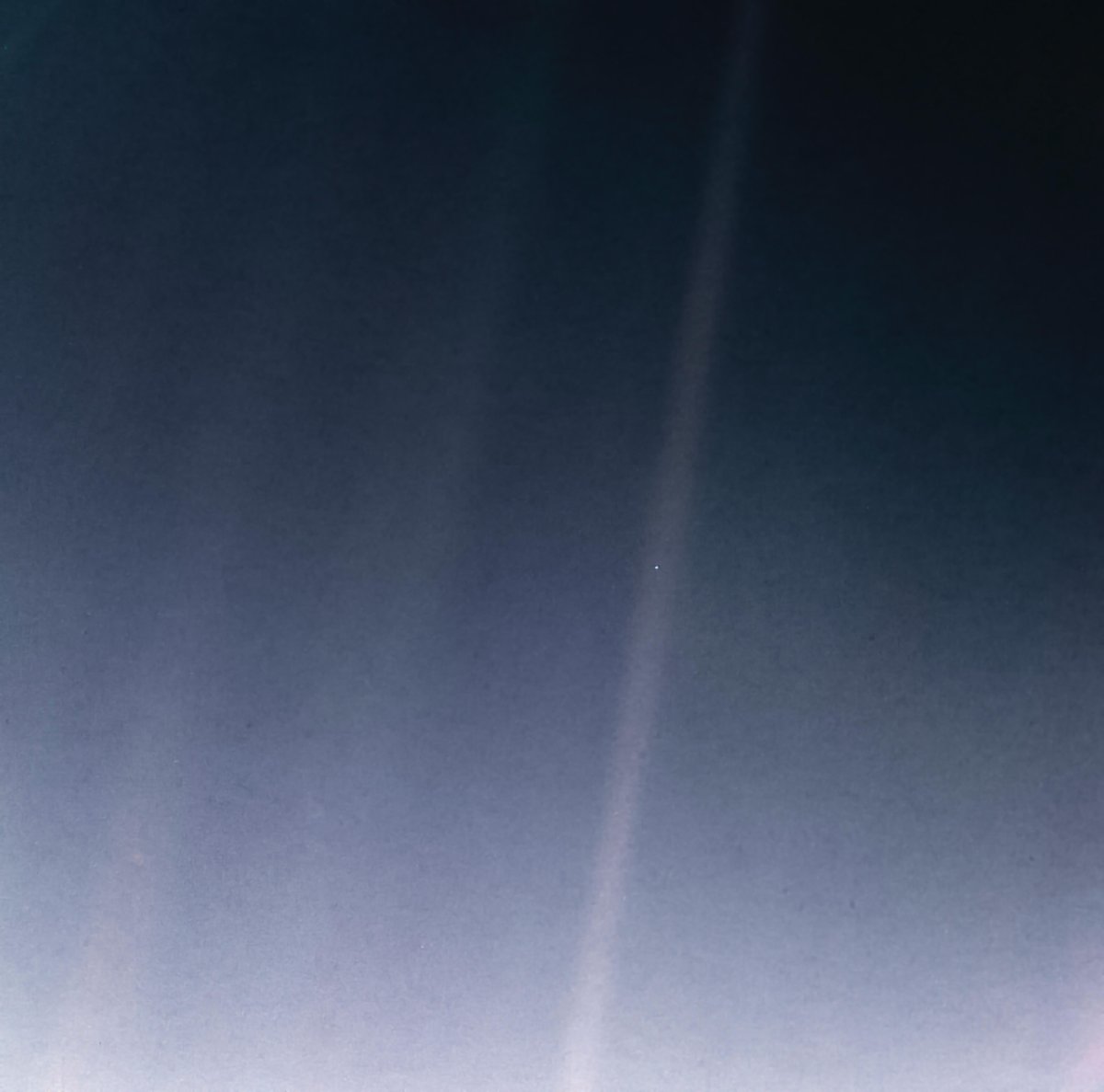
On Valentine's Day 1990, before its cameras were shut off to save power, Voyager 1 looked back and photographed Earth from about 6 billion km (3.8 billion miles) away. That is the famous "Pale Blue Dot" picture. Voyager 1 is now more than four times as far away.
Voyager 1 is heading in the direction of a star called AC +79 3888, also known as Gliese 445, in the constellation of the Little Bear (Ursa Minor). NASA says it will pass within about 1.7 light-years of that star in about 40,000 years.
When will Voyager 2 be one light-day away?
In November 2035, NASA says, about nine years after Voyager 1. Voyager 2 took a different, slower route so it could also visit Uranus and Neptune. It is still the only spacecraft to have flown past those two planets.
Is Voyager 1 still working?
Yes, but on very little power. Both Voyagers run on a radioisotope thermoelectric generator, a device that turns heat from decaying plutonium into electricity. Each loses about 4 watts of power a year, NASA says, so the team has been switching things off one by one.
According to NASA's instrument table, two of Voyager 1's science instruments are still on:
- Magnetometer: measures magnetic fields.
- Plasma Wave Subsystem: listens to waves in the thin gas between stars.
The Cosmic Ray Subsystem was turned off to save power in February 2025, and the Low-energy Charged Particles experiment on 17 April 2026. The cameras have been off since 1990.
In early September 2026, engineers completed what they nicknamed the "Big Bang": they turned off three devices at once and swapped in three lower-power ones, while keeping the spacecraft warm enough to work. NASA says that without it, another Voyager 1 instrument would have had to be turned off as early as summer 2027.
What happens next for Voyager 1?
NASA has planned two events around the milestone:
- Tuesday 17 November, after sunset where you are: "Shine Bright for Voyager's Light-Day". NASA invites everyone to flash "VGR", Voyager's call sign, in Morse code with a phone, tablet or flashlight. Its page at go.nasa.gov/shinebright can make your phone do it.
- Thursday 19 November, 12 p.m. EST (17:00 UTC): a discussion at JPL with the Voyager team and NASA leadership about the spacecraft's health and science, streamed on NASA's website. NASA will also preview a NASA+ Voyager documentary planned for 2027, the mission's 50th anniversary.
After that, Voyager 1 keeps going. The team hopes to keep both probes working to their 50th anniversaries in 2027, Voyager mission manager Kareem Badaruddin told Scientific American. In my view, the light-day is the last big round-number milestone we will see from Voyager 1 while it is still talking to us. Every year it has less power, and at some point NASA will no longer be able to run any instrument. Even then, it will keep coasting towards the stars, carrying the Golden Record, a disc of sounds and pictures from Earth.
For more on the robots exploring other worlds today, read Robots on Mars, or browse our Moon and Mars coverage.