
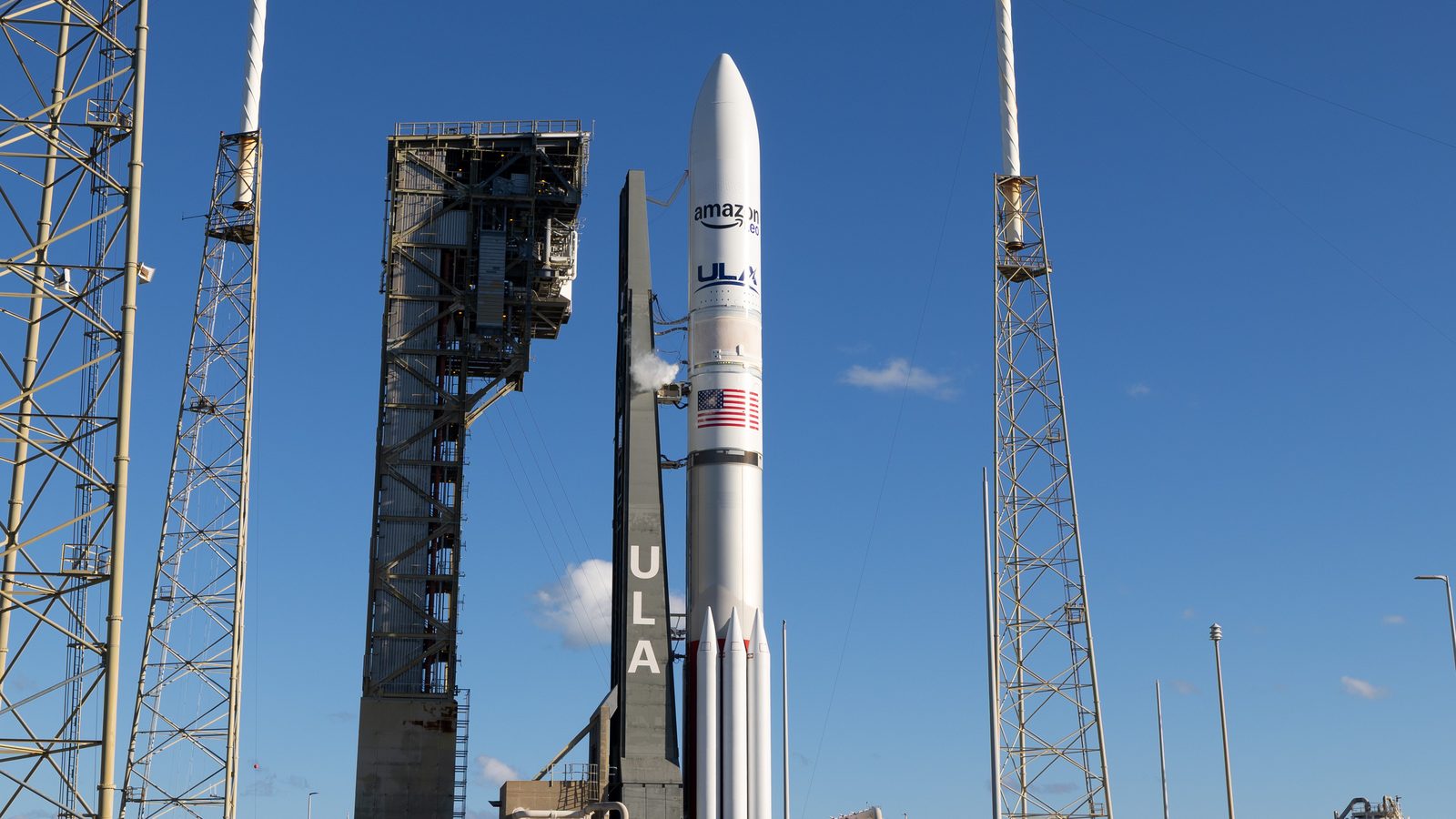
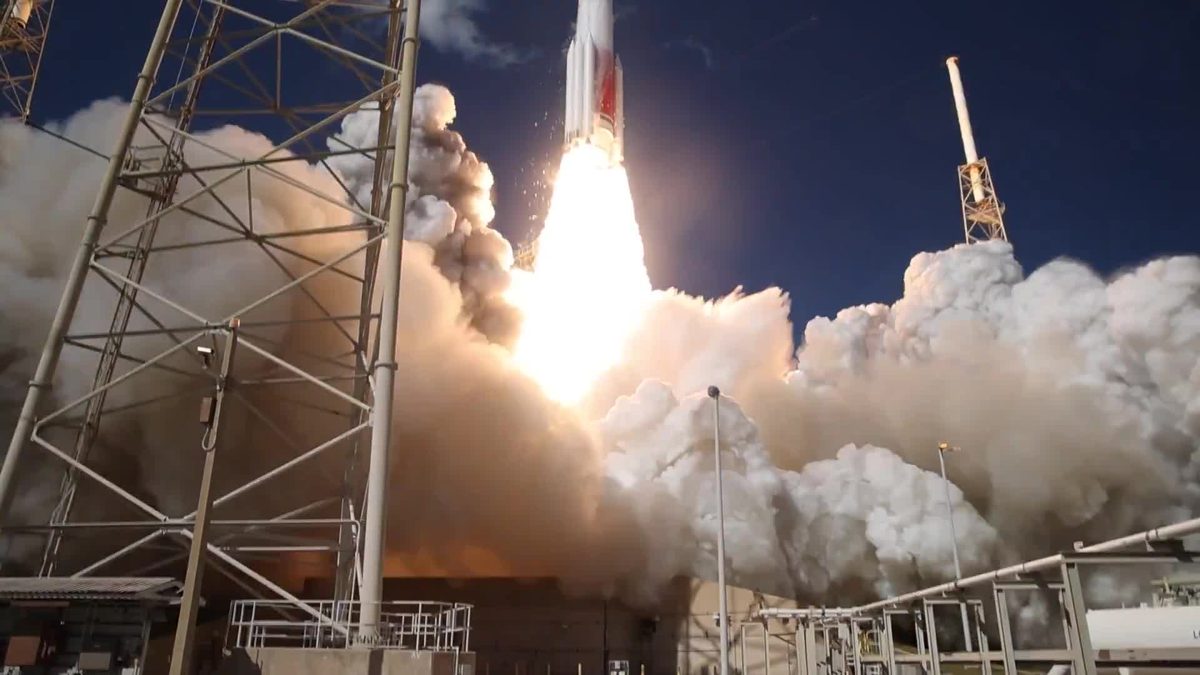
United Launch Alliance's (ULA) Vulcan rocket lifted off at 12:40:30 p.m. Eastern Standard Time (EST) on Sunday 15 November 2026 (17:40:30 UTC) with 40 Amazon Leo satellites, and failed to reach orbit. The satellites were lost. ULA says early data shows the first stage underperformed just after liftoff. The exact cause is not yet known.
The mission, called LV-01 (Leo Vulcan 1), was Amazon's first launch on Vulcan. For background on the network itself, read what is Amazon Leo.
Vulcan LV-01 failure: the key facts
- Liftoff: 12:40:30 p.m. EST (17:40:30 UTC), 15 November 2026, Space Launch Complex 41, Cape Canaveral Space Force Station, Florida.
- Rocket: Vulcan VC6L, with six solid rocket boosters and a new, shorter Centaur V upper stage built for low Earth orbit.
- Payload: 40 Amazon Leo satellites, the biggest Leo batch yet.
- Result: did not reach orbit. ULA lost telemetry, the flight's data link, about 10 minutes in.
- Early finding (ULA): low performance from the booster, Vulcan's liquid-fuelled first stage, just after liftoff.
- Investigation: led by ULA, overseen by the Federal Aviation Administration (FAA).
- Flight number: Vulcan's fifth flight since it first flew in January 2024.
What happened during the flight?
ULA's own timeline, from its statements and posts, runs like this:
- 13 and 14 November: two launch attempts were called off for ground problems. First a power cut at the Air Liquide plant that supplies nitrogen gas to the pad, then a network fault between ground equipment and the rocket, ULA said.
- 15 November, 12:40:30 p.m. EST: liftoff, at the end of a launch window that opened at 12:11 p.m. EST.
- About 2 minutes in: ULA posted that the six solid rocket boosters had burned out and dropped away, with Vulcan continuing on its two BE-4 main engines.
- About 10 minutes in: ULA lost telemetry and the mission.
- 1:30 p.m. EST: ULA confirmed the rocket "suffered an anomaly 10 minutes into the flight and failed to deliver the Amazon mission to orbit".
- 16 November: the FAA said it was requiring ULA to carry out a mishap investigation.
- 17 November, 9:30 a.m. EST: ULA gave its first detailed account of what went wrong.
What went wrong with Vulcan?
ULA says the problem began early, even though the mission was lost later. In its 17 November update, ULA said: "early indications are that just after liftoff the launch vehicle experienced low booster performance, resulting in stage separation occurring when the vehicle was low in altitude and below minimal velocity to reach orbit."
In plain words: the first stage did not push hard enough. When it let go of the upper stage, the rocket was too low and too slow. ULA says the Centaur V upper stage started normally and its RL10 engines worked as planned, but it "was unable to recover from the performance loss".
ULA also says the six solid rocket boosters, made by Northrop Grumman, appear to have worked normally. That matters because booster nozzle problems hit two earlier Vulcan flights, and ULA had changed the nozzle design for this launch.
ULA chief executive Mark Peller said on 17 November that the investigation is focused on the liquid-fuelled core stage, SpaceNews reports.
What is still not known?
The cause. ULA has not said why the first stage underperformed, and says it wants "to avoid speculation until the investigation is complete".
Here is what is confirmed and what is not:
- Confirmed by ULA: low first-stage performance just after liftoff, early stage separation, a normal upper stage, normal solid boosters.
- Confirmed by Amazon: the payload was lost.
- Not confirmed: whether one of the two BE-4 engines, built by Blue Origin, was at fault.
- Unconfirmed reporting: Ars Technica says two sources told it early data points to the rocket's propellant feed systems rather than the engines themselves, and that one engine may have run at lower thrust for most of the burn. Ars stresses the data is very preliminary.
The BE-4 question matters beyond Vulcan. Blue Origin's New Glenn uses seven BE-4s, and it has been grounded since a ground test explosion in May. See what happened to New Glenn and when New Glenn may fly again.
What happened to the 40 Amazon Leo satellites?
They were lost. Amazon's mission page says "the payload was lost", and Reuters reports the satellites were destroyed. Because the rocket never reached orbit, none of them went into service.
The FAA says it activated two Debris Response Areas during the flight. Those are zones where it moves aircraft away, or holds them on the ground, when debris falls outside the planned hazard area. Neither ULA nor the FAA has said exactly where the debris came down.
What does the failure mean for Amazon Leo?
It costs Amazon 40 satellites and, likely, time. Before LV-01, Amazon says it had launched nearly 400 Leo satellites on 14 missions since April 2025.
Vulcan is meant to be Amazon's main rocket. LV-01 was the first of 38 Vulcan launches Amazon has bought, and Amazon says Vulcan will carry more than 1,500 first-generation satellites, close to half the network. Amazon had said LV-02 could follow within weeks of a normal LV-01 flight. That now depends on the investigation.
Amazon's statement backed its partner: "There is risk with any launch, and that's especially true for inaugural missions like LV-01. ULA has been a trusted partner for Amazon, and we believe they'll learn from this mission and deliver on their long-term plans for Vulcan."
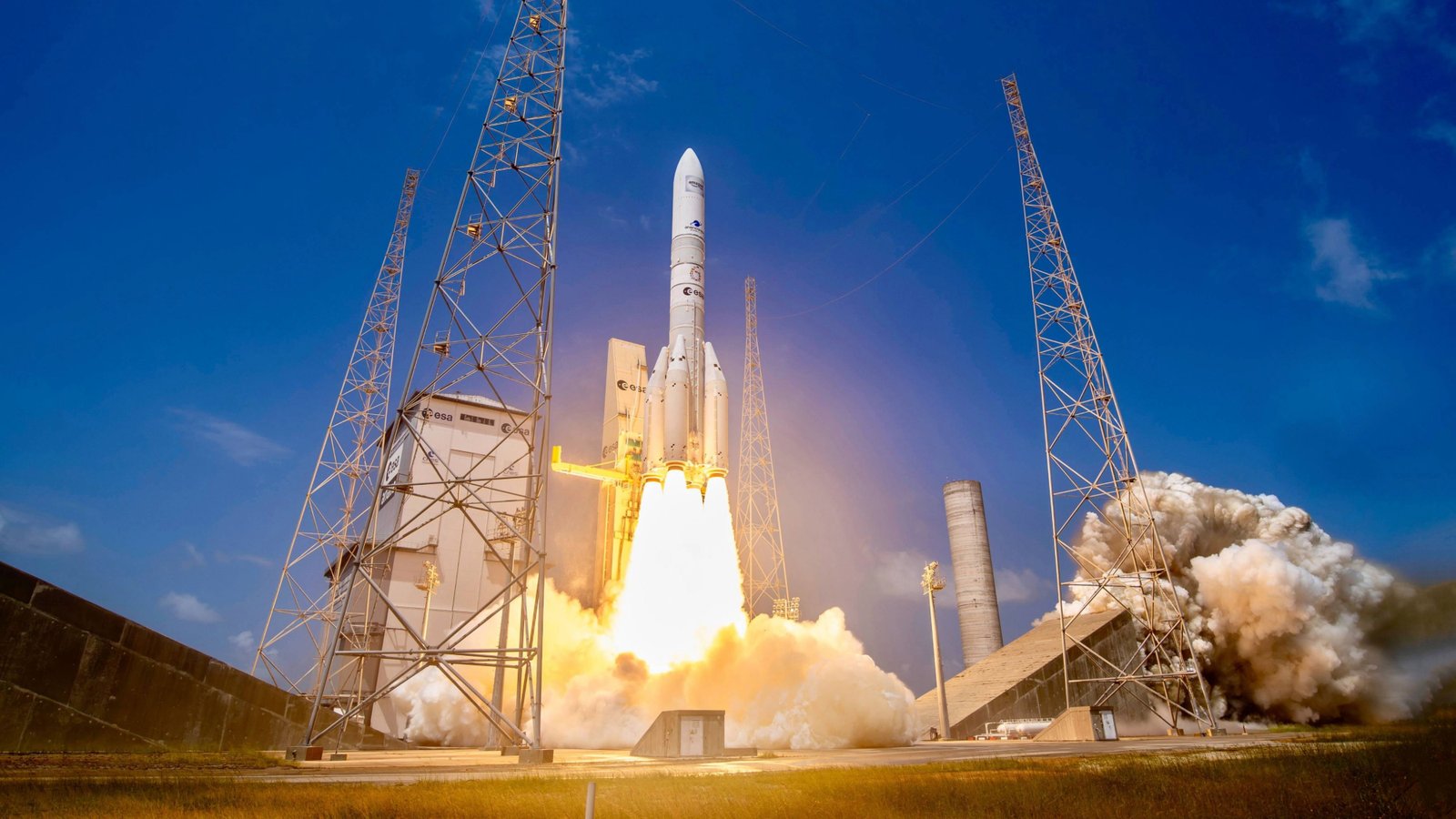
Amazon uses several rocket companies on purpose. Its next listed launch is LE-04 on Ariane 6, carrying 36 satellites from Kourou, French Guiana, no earlier than 23 November 2026.
What about the FCC deadline?
The July 2026 deadline is already gone. Amazon's licence from the Federal Communications Commission (FCC) required 1,616 satellites, half the network, in orbit by 30 July 2026. On 5 June 2026 the FCC waived that milestone, with conditions. The final deadline stays: all 3,232 first-generation satellites by 30 July 2029.
The conditions matter here. Satellites launched after 30 July 2026 temporarily lose their priority rights to radio spectrum, until 30 March 2028 or until Amazon has half the network working, whichever comes first, the FCC order says.
In my view, losing one launch of 40 satellites does not by itself break the 2029 deadline. A long Vulcan grounding is the bigger risk, because Vulcan is meant to carry so much of the network.
What does it mean for ULA and Vulcan?
Vulcan stays on the ground until the investigation is done. The FAA says a return to flight depends on it deciding that any system, process or procedure linked to the failure does not affect public safety. It will oversee ULA's investigation and must approve the final report and any fixes. Neither has given a timeline.
The US Space Force is also a big Vulcan customer. It had already paused national security launches on Vulcan after a booster nozzle problem on the February 2026 flight, Space.com reports. The Space Force has not made a public statement on LV-01 that we could find.
The same Ars report expects the failure to sideline Vulcan for at least half a year, and probably longer. That is a media estimate, not ULA's. See when will Amazon Leo and Vulcan fly next for the latest.
What happens next?
- Investigation: ULA works through the flight data with Blue Origin and others, under FAA oversight. ULA says it will share more as it learns more.
- Amazon Leo: LE-04 on Ariane 6, no earlier than 23 November 2026, is the next chance to add satellites.
- Vulcan: no return-to-flight date yet. We track this in when will Amazon Leo and Vulcan fly next.
We will update this page when ULA or the FAA names a cause. Follow upcoming flights on our launch schedule and in this week's launches, and see how Amazon's rival is doing in what is Starlink and Amazon Leo vs Starlink on price.