
LVM3 stands for Launch Vehicle Mark-3. It is the heaviest working rocket of the Indian Space Research Organisation (ISRO), the one that launched Chandrayaan-3 and is being adapted to carry India's first astronauts on Gaganyaan.
The Government of India's Press Information Bureau (PIB) spells out the name in a 28 October 2026 release: "LVM3 (Launch Vehicle Mark-3) is India's heavy-lift launch vehicle." ISRO's vehicle page still gives the older name too: Geosynchronous Satellite Launch Vehicle Mk III, or GSLV Mk III.
What does each part of LVM3 mean?
| Part | Meaning |
|---|---|
| L | Launch |
| V | Vehicle |
| M3 | Mark-3, the third major design |
"Mark" is an old way of numbering versions of a machine. The 3 is a carry-over from GSLV Mk III, the rocket's earlier name.
Why was GSLV Mk III renamed LVM3?
ISRO's own mission pages show the switch. The page for the 2019 Chandrayaan-2 launch calls the rocket "GSLV MkIII-M1". The page for the next launch, in October 2022, calls it "LVM3-M2". ISRO has not published a reason for the change on the pages we checked.
In my view, the new name avoids a real confusion. GSLV Mk III shares no stages with GSLV Mk II, the rocket most people mean by "GSLV". Our GSLV full form guide explains that rocket.
What is LVM3? Key facts
These figures are from ISRO's LVM3 vehicle page unless marked.
| Specification | LVM3 |
|---|---|
| Height | 43.5 m |
| Core diameter | 4 m |
| Payload fairing (nose cover) diameter | 5 m |
| Mass at liftoff | 640 tonnes |
| Stages | 3, plus 2 strap-on boosters |
| Payload to geosynchronous transfer orbit (GTO) | 4,000 kg (ISRO's M6 page says 4,200 kg) |
| Payload to low Earth orbit (LEO) | 8,000 kg to 600 km (PIB says "10-tonne class") |
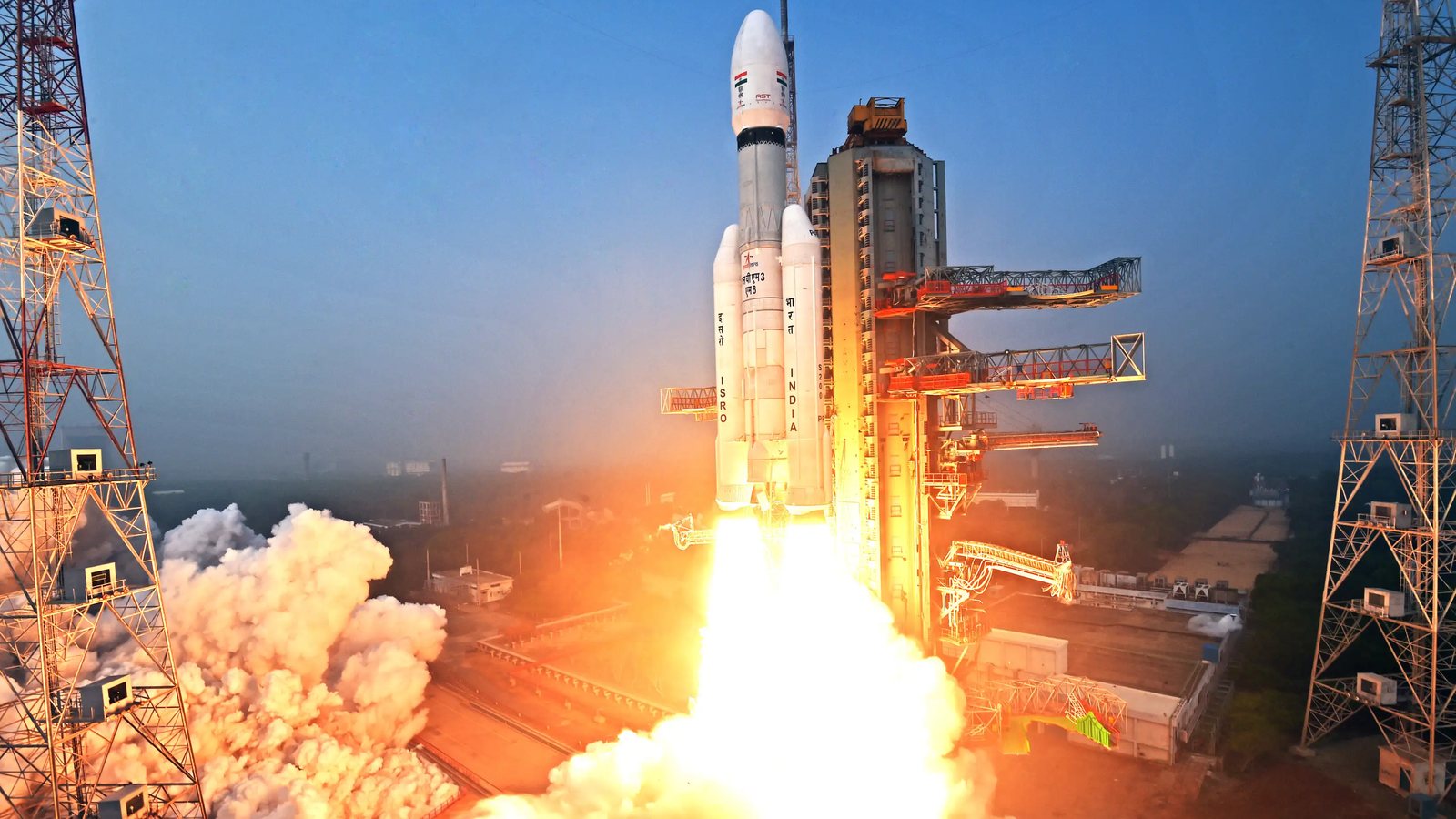
| Launch site | Second Launch Pad, Satish Dhawan Space Centre, Sriharikota |
A geosynchronous transfer orbit is a long, oval orbit that a communication satellite uses on the way to its final orbit 36,000 km up. ISRO's figures for LVM3 differ a little from page to page, so we show both where they differ.
What are the LVM3 stages?
- S200 strap-on boosters (two): solid rocket motors, each 25 m long and 3.2 m wide, with 205 tonnes of solid propellant called hydroxyl-terminated polybutadiene (HTPB).
- L110 core stage: a liquid stage with two Vikas engines, carrying 115 tonnes of propellant. ISRO's CARE mission page lists it as UH25, a hydrazine-based fuel, with nitrogen tetroxide (N2O4).
- C25 upper stage: a cryogenic stage, one that burns super-cold liquid oxygen and liquid hydrogen. It carries 28 tonnes of propellant and uses ISRO's CE-20 engine, which ISRO rates at 200 kilonewtons (kN) of thrust.
ISRO says LVM3 was developed "with completely indigenized technologies including the C25 cryo stage".
How many times has LVM3 launched?
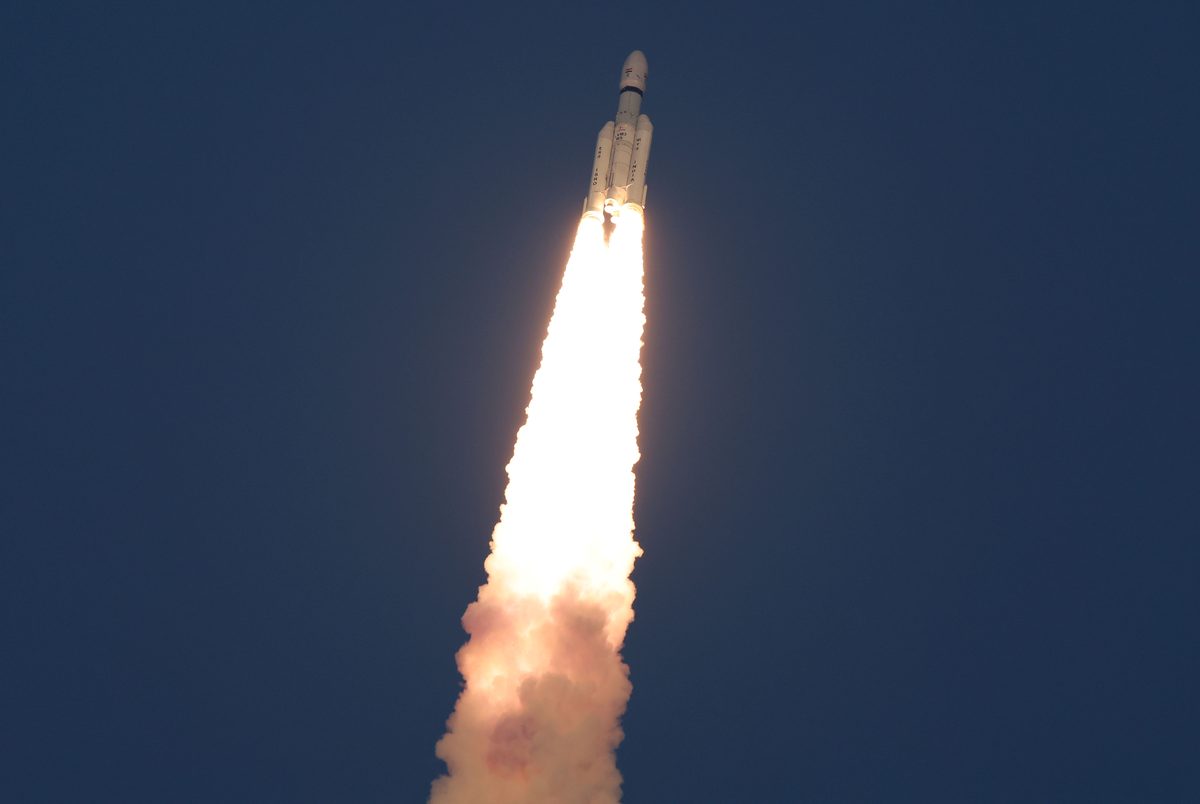
Nine times, on ISRO's LVM3 list. ISRO's launchers page says the rocket "has a track record of all successful launches even from the first development flight". Dates are Indian dates.
| Flight | Date | Payload | What ISRO says about it |
|---|---|---|---|
| GSLV Mk III-X | 18 Dec 2014 | CARE | Suborbital test with a dummy upper stage. Tested a crew module re-entering the atmosphere. |
| GSLV Mk III-D1 | 5 Jun 2017 | GSAT-19 | First development flight. Satellite of 3,136 kg to GTO. |
| GSLV Mk III-D2 | 14 Nov 2018 | GSAT-29 | Second development flight, a communication satellite. |
| GSLV MkIII-M1 | 22 Jul 2019 | Chandrayaan-2 | Moon orbiter, lander and rover. |
| LVM3-M2 | 23 Oct 2022 | OneWeb India-1 | 36 OneWeb satellites, 5,796 kg. First commercial LVM3 mission and first to low Earth orbit. |
| LVM3-M3 | 26 Mar 2023 | OneWeb India-2 | 36 more OneWeb satellites, 5,805 kg, to a 450 km orbit. |
| LVM3-M4 | 14 Jul 2023 | Chandrayaan-3 | Lander touched down near the Moon's south pole on 23 Aug 2023. |
| LVM3-M5 | 2 Nov 2025 | CMS-03 | About 4,400 kg. ISRO calls it the heaviest communication satellite launched to GTO from Indian soil. |
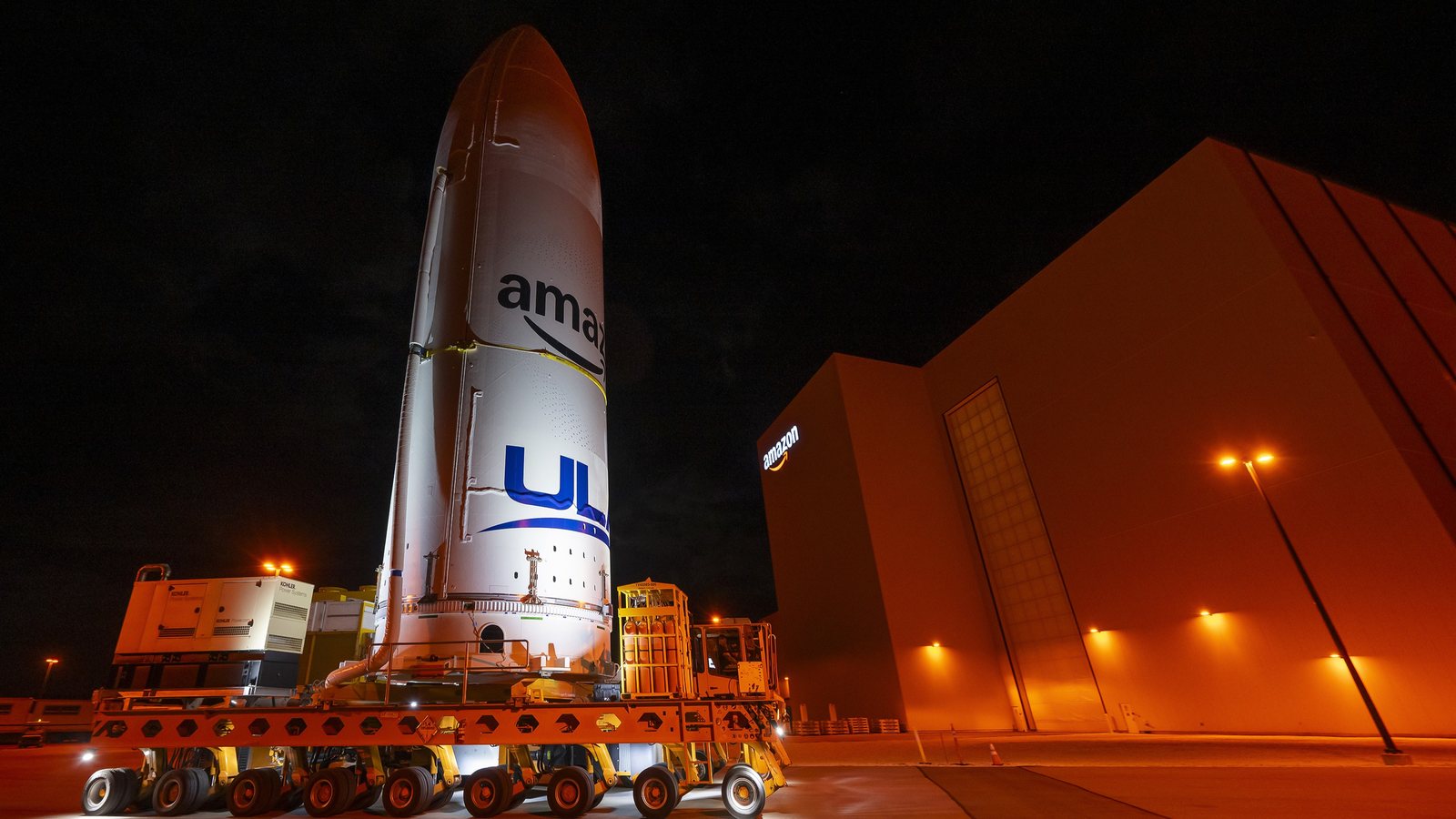
| LVM3-M6 | 24 Dec 2025 | BlueBird Block-2 | About 6,100 kg for AST SpaceMobile of the US, the heaviest LVM3 payload so far, per ISRO. |
The OneWeb and BlueBird launches were sold through NewSpace India Limited (NSIL), ISRO's commercial arm.
How does LVM3 compare with PSLV and GSLV?
LVM3 is the heaviest of India's three working rockets. The Polar Satellite Launch Vehicle (PSLV) flies most often and serves lower orbits. GSLV Mk II carries satellites of about 2 tonnes towards geostationary orbit. LVM3 carries about 4 tonnes there.
PSLV vs GSLV Mk II vs LVM3
| Specification | PSLV | GSLV Mk II | LVM3 (formerly GSLV Mk III) |
|---|---|---|---|
| Low Earth orbit capability | 1,750 kg to 600 km sun-synchronous polar orbit [1] | 6,000 kg to LEO [2] | 8,000 kg to 600 km LEO [3] |
| Transfer-orbit capability | 1,425 kg to sub-GTO, not a full-GTO rating [1] | 2,250 kg to GTO [2] | 4,000 kg to GTO [3] |
| Stages | 4: solid, liquid, solid, liquid; strap-ons vary by version [1] | 3: solid core with 4 liquid strap-ons; liquid second stage; cryogenic upper stage [2] | 3: 2 solid boosters, liquid core, cryogenic upper stage [3] |
| Height | 44 m in the specification table; 44.4 m for the XL configuration [1] | 51.73 m with ogive payload fairing [2] | 43.5 m [3] |
| First flight | 20 September 1993 [1] | 18 April 2001; first flight with an indigenous cryogenic stage: 5 January 2014 [2] | 18 December 2014 (CARE test); first orbital mission: 5 June 2017 (GSAT-19) [4] |
| Typical missions | Earth observation, polar-orbit and small-satellite rideshares; also science missions [1] | Communication and navigation satellites, and heavier payloads to lower orbits [2, 5] | Heavy communication satellites, lunar spacecraft and commercial constellation launches [3, 4] |
GTO means geosynchronous transfer orbit, an elliptical route towards a satellite's final high orbit. Sub-GTO has a lower apogee; PSLV's figure must not be read as equivalent to the GSLV or LVM3 figures. Payload limits depend on orbit and vehicle configuration. These are the cited vehicle-page figures, not a guarantee for every mission.
Sources, checked 8 November 2026 IST: [1] ISRO PSLV specifications; [2] ISRO GSLV Mk II specifications; [3] ISRO LVM3 specifications; [4] ISRO LVM3 mission record; [5] ISRO GSLV mission record.
For the full comparison, read PSLV vs GSLV vs LVM3.
What is LVM3's role in Gaganyaan?
Gaganyaan is India's programme to fly astronauts. ISRO's launchers page says "the Human rated LVM3 is identified as the launch vehicle for Gaganyaan mission, which is named as HRLV", short for Human Rated Launch Vehicle. It is also written HLVM3.
The first uncrewed test flight, G1, will use this rocket. ISRO has not announced its launch date. For the latest, read when is Gaganyaan G1?
What comes after LVM3?
The PIB's 28 October 2026 release says the Union Cabinet approved the Next Generation Launch Vehicle (NGLV) in September 2024. It is designed to lift up to 30 tonnes to low Earth orbit, three times LVM3's 10-tonne class, and a partly reusable version is planned. That is a government plan, not yet a flying rocket.
When is the next LVM3 launch?
ISRO has not yet announced a date for the next LVM3 flight. When it does, it will appear on our launch schedule and ISRO's next launch page, with times in Indian Standard Time (IST). See the Sriharikota launch site guide for where it flies from.