
Rocket Lab's Neutron rocket has no launch date yet. On 14 October 2026, Rocket Lab said Neutron's first launch "is now expected to occur in 2027". Chief executive Peter Beck said the company will share a new target date after the rebuilt Stage 1 tank passes its pressure and cryogenic tests, which he expects to finish in the first quarter of 2027.
Status as of 14 November 2026: first launch expected in 2027, no date. On 9 November, Rocket Lab described the first launch as "targeted for no earlier than 2027".
What has Rocket Lab said about the date?
Rocket Lab's 14 October release moved the debut from 2026 to 2027. In a video update posted on Rocket Lab's YouTube channel, Beck set out three steps before he gives a new date:
- Build a new forward dome for the Stage 1 propellant tank on Rocket Lab's automated fibre placement (AFP) machine, which lays carbon fibre by computer.
- Cure the dome, then check it with ultrasonic tests and other inspections to make sure there are no voids or other defects.
- Assemble the full first stage, then run a hydrostatic test campaign, where the tank is filled with water and pressurised, followed by a cryogenic test campaign with super-cold liquids.
"All going well, we expect the first two steps to be completed before Q1 with the third wrapped up within that quarter," Beck said. "From there, we expect to be in good shape to share a new target launch date." He added: "I'd rather show you real-time progress than give you a date that I might have to walk back."
So the earliest point for a firm date, on Rocket Lab's own plan, is around the end of March 2027. The launch would come after that. In my view, a launch in the second half of 2027 is more realistic than the first, because the full rocket still has to be stacked and static-fired after the tank tests.
Why was Neutron delayed again?
Because of the Stage 1 tank. Beck's account in the video:
- Early 2026: the first full-size Stage 1 tank failed qualification. Beck blamed a "third-party manual hand-lay process". Via Satellite reported that the tank ruptured during testing in January.
- The switch: Rocket Lab moved production to its own AFP machine. That let it remove joints and make parts of the forward and aft domes thicker for strength.
- The new problem: inspectors found voids, tiny air pockets, between the carbon fibre layers of the newly cured forward dome, in the thicker sections. "They don't necessarily mean that the dome would fail on flight," Beck said, "but our practice is to proceed only when we believe the system has the appropriate margins."
- The fix: Rocket Lab says it reproduced the problem in testing and changed its process. It ran the aft dome through the new process, which Beck says gave "the highest quality carbon composite dome to date".
The investigation, plus making a new dome, pushed the first launch into 2027, Rocket Lab says. Beck also said the team is using the extra time to bring forward upgrades planned for later flights.
What has happened since the delay?
Rocket Lab has posted steady progress on X:
| Date (2026) | What Rocket Lab posted |
|---|---|
| 20 October | Production of the new Stage 1 forward dome under way on the AFP machine |
| 21 October | Stage 2 tank assembly rotated to horizontal for handling |
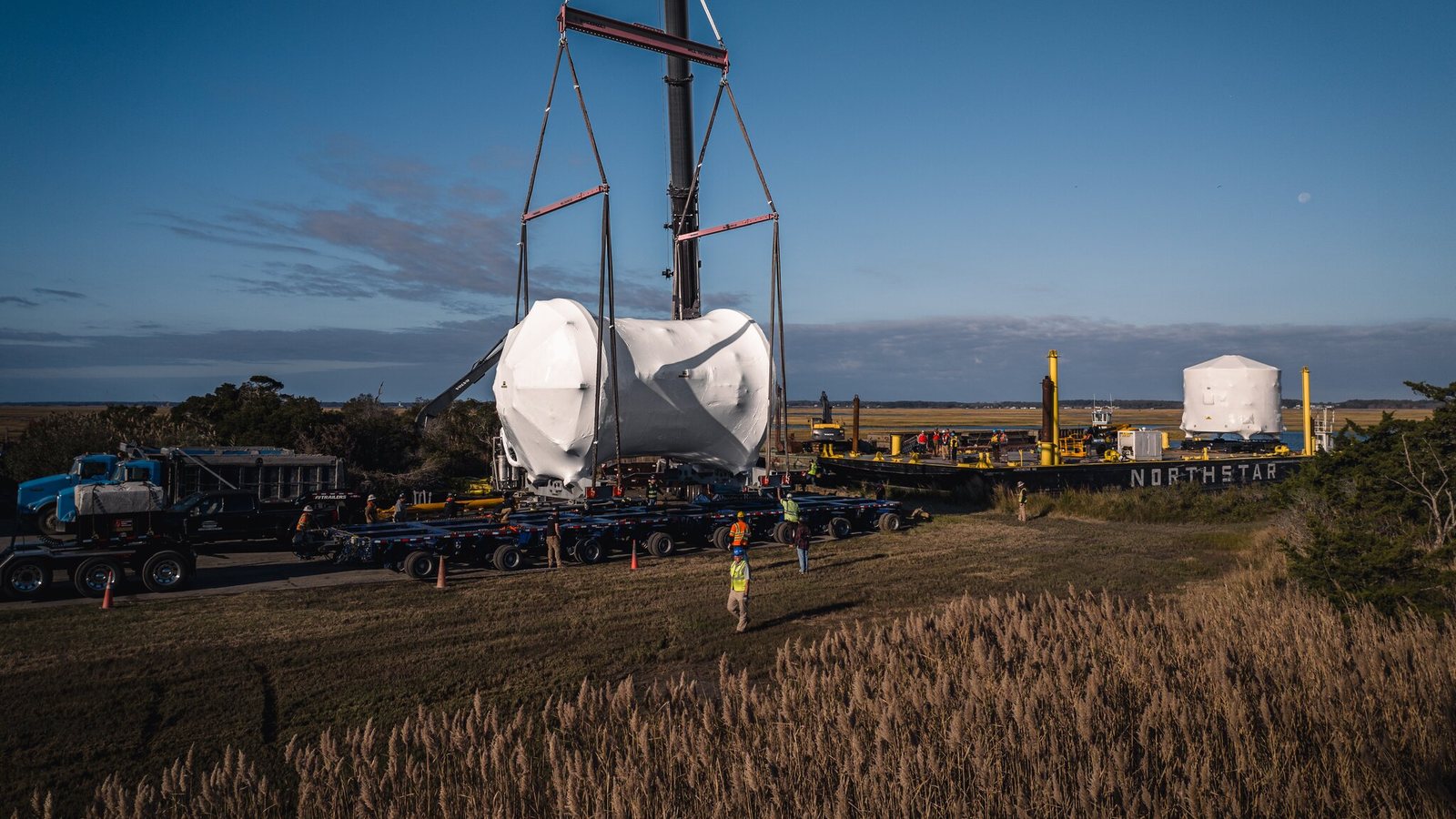
| 26 October | Stage 2 and the Thrust Module left the Neutron Factory in Maryland by barge |
| 28 October | Both arrived on Wallops Island, Virginia, for arrival checkouts; next up, integrated fluids testing |
| 30 October | Both arrived at Launch Complex 3 |
| 6 November | New Stage 1 forward dome "built and cured"; next, analysis and material tests to confirm quality and strength |
| 9 November | Neutron backlog grows to 16 missions, base price rises to $70 million |
What is Neutron?
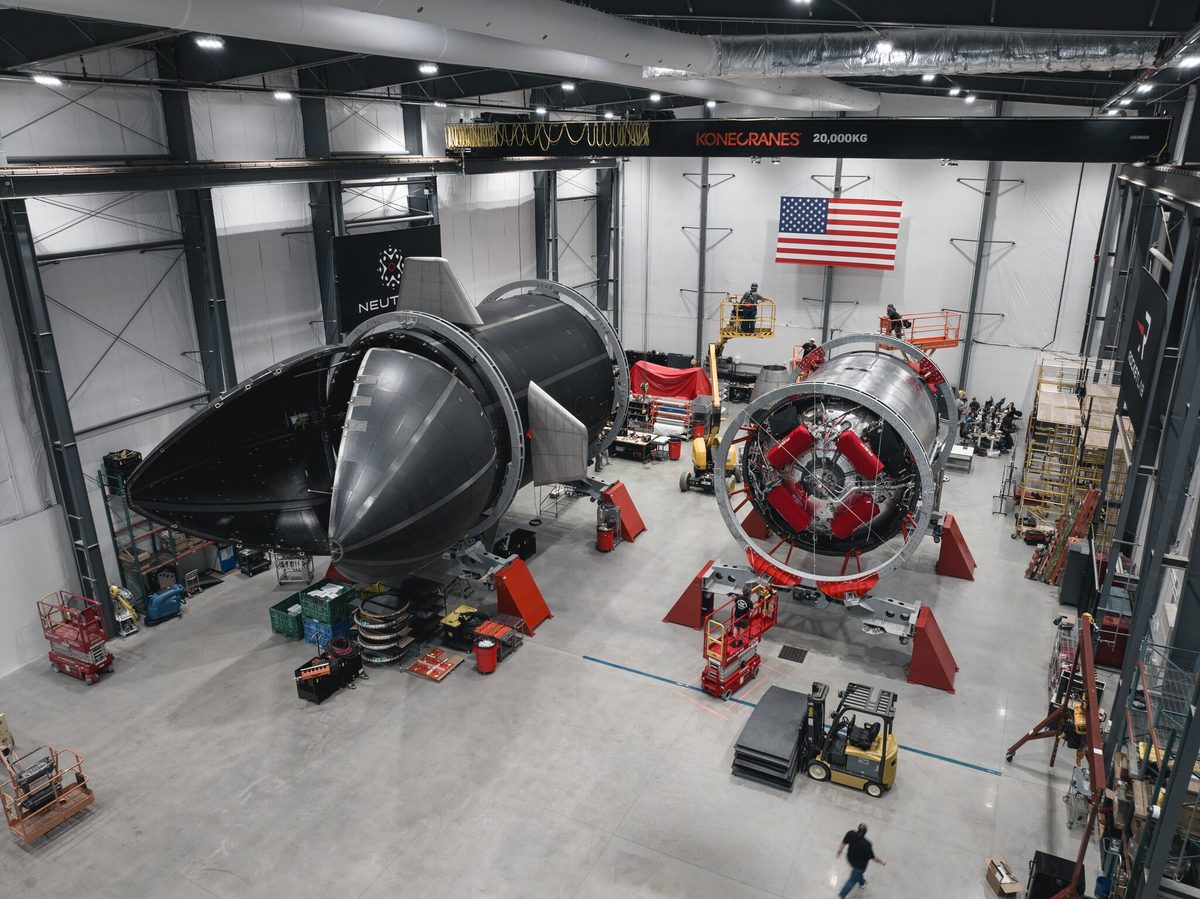
Neutron is Rocket Lab's medium-lift rocket, a big step up from its small Electron rocket. It is designed to launch satellite constellations, national security missions and planetary probes. Rocket Lab's Neutron page gives these figures:
| Neutron (Rocket Lab figures) | |
|---|---|
| Height | 43 m (141 ft) |
| Diameter | 7 m |
| Fairing diameter | 5 m |
| Liftoff mass | 480,000 kg |
| Payload to low Earth orbit (LEO) | 13,000 kg |
| Payload to Mars or Venus | 1,500 kg |
| Fuel | Liquid oxygen (LOX) and methane |
| First-stage engines | 9 Archimedes, 733 kilonewtons (kN) each, 1,450,000 pounds of thrust in total at liftoff |
| Second-stage engine | 1 Archimedes Vacuum, 890 kN |
| Reuse | First stage designed to land at sea and fly again |
Some features are unusual:
- Carbon composite structure. Rocket Lab calls Neutron the world's largest carbon composite reusable rocket.
- Hungry Hippo fairing. The nose fairing stays attached to the first stage. It opens like a clamshell to release the second stage, then closes for the trip back. Rocket Lab says this removes the need to recover the fairing from the sea.
- Landing at sea. The first stage is designed to land on Return On Investment, a 400-foot (about 120 m) ocean platform in the Atlantic, which then brings it back to Virginia.
These are Rocket Lab's design figures and claims. None has been shown in flight yet.
Where will Neutron launch from?
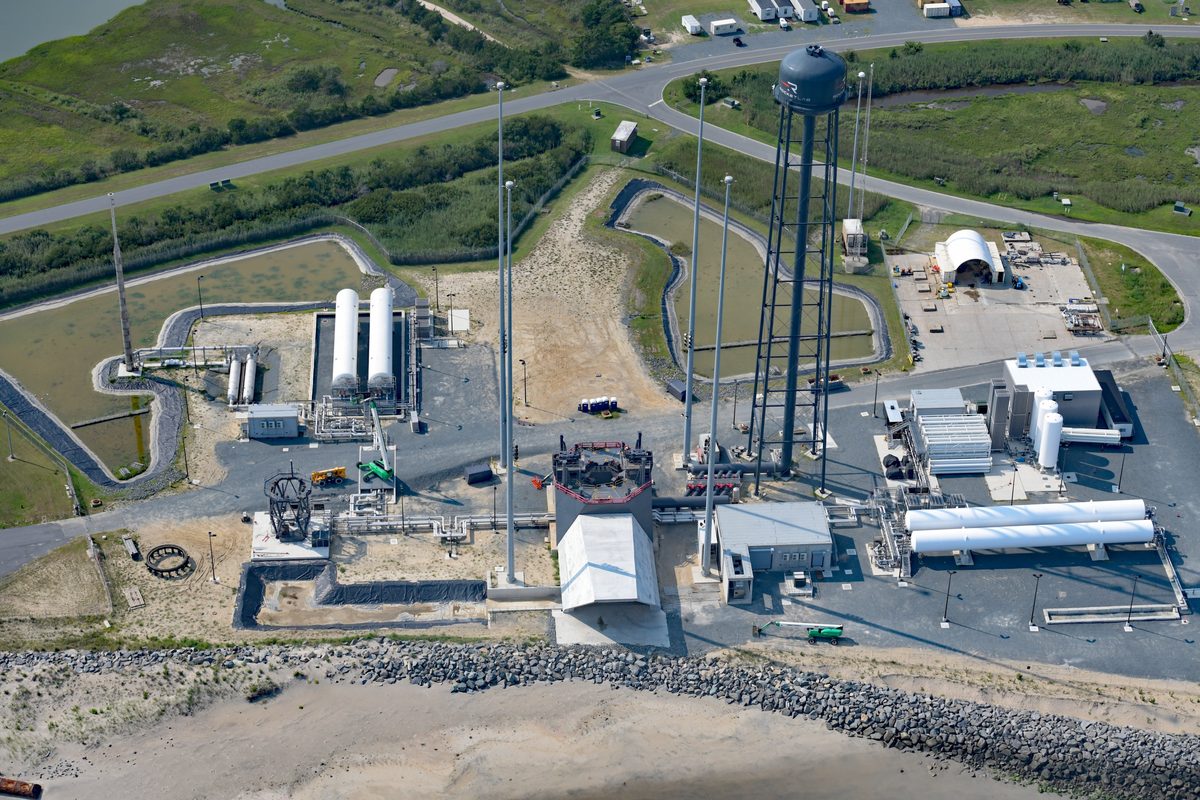
From Launch Complex 3 (LC-3) at the Mid-Atlantic Regional Spaceport on Wallops Island, Virginia. LC-3 sits next to Launch Complex 2, Rocket Lab's US pad for Electron. Rocket Lab says construction at LC-3 is complete, and in September 2026 it finished installing a test stand there, about 10 m tall, for Neutron's second stage.
Launch times will be given in US Eastern Time, the local time at Wallops, on our launch schedule once a date is set.
How has Neutron's first launch date moved?
| When | Target for first launch | Source |
|---|---|---|
| 2021, when Neutron was announced | 2024 | The Register |
| Later | 2025, then 2026 | The Register |
| After the January 2026 tank failure | Late 2026 | Via Satellite |
| August 2026 | Neutron on the pad in the fourth quarter of 2026 | The Register |
| 14 October 2026 | 2027 | Rocket Lab |
| 9 November 2026 | No earlier than 2027 | Rocket Lab |
Delays are common for new rockets. In my view, what stands out here is that Rocket Lab now refuses to give a date until the hardware is tested, instead of naming one and moving it.
What is left before Neutron can fly?
Rocket Lab's own "path to liftoff" list on its Neutron page includes these steps that have not yet been reported complete:
- Stage 1 qualification: the rebuilt first stage passing its structural and system tests.
- Regulatory approval: a US Federal Aviation Administration (FAA) launch licence for LC-3.
- Vehicle integration: joining the full rocket.
- Static fires: a second-stage engine firing on the ground, then all nine first-stage engines.
- Wet dress rehearsal: a full countdown with fuel loaded, stopping short of launch.
Rocket Lab lists Stage 2 qualification, fairing qualification, engine qualification and LC-3 construction as done.
Who is waiting to fly on Neutron?
On 9 November, Rocket Lab said Neutron's order book has grown to 16 missions, with the next open launch slots in the 2030s. Customers it named include:
- ICEYE: three dedicated launches, from late 2028.
- Muon Space: two launches, in 2029 and 2030.
- Starcloud: one launch in 2029, for a planned data centre in space.
- Kepler Communications: one dedicated launch.
- US Space Force: one launch for the Space-Based Airborne Moving Target Indicator (SB-AMTI) programme.
Rocket Lab also raised its base Neutron price from $55 million to $70 million. These are company statements about contracts.
For other companies trying to reuse rockets, read who else is landing rockets. For the biggest reusable rocket flying today, see what is Starship?, and for another heavy rocket waiting to fly again, read what happened to New Glenn.